 Ver en contexto
 Enviar
 Compartir
 Detalles

 Descargar
 Similares
 Radiografía
 Presentación de diapositivas
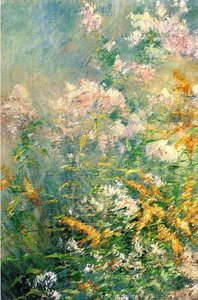
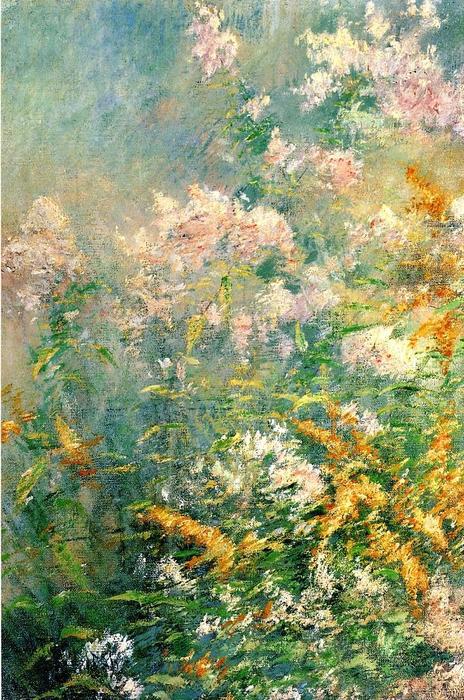
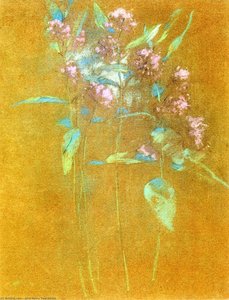
Flores del prado (también conocidas como vara de oro y ásteres silvestres)


 Ver más
Reproducción al óleo hecha a mano
Óleo sobre lienzo pintado a mano en el tamaño y marco de su elección, realizado por encargo por nuestros artistas. ( Comprar impresión Comprar imagen)




P118B $10

P118H $10

P118W $10

P438Z $10

P508JH $12

P508YH $12

P805H $10

P805Z $10

P919BZ $10

P919G $10

P919XJ $10

P959ZH $10

P968JZ $12

W106C $8

W218G $10

W218JH $8

W218Y $10

W307PJ $10

W316G $10

W316PJ $8

W316Y $10

W398PJ $8

W4111J $10

W500HY $15

W500JH $15

W692G $12

W849H $8

W940BG $15

W953PJ $8




Elija entre nuestros tamaños predefinidos que respetan las proporciones originales de la obra.

Puede ingresar sus propias dimensiones para adaptarse a un marco o espacio específico. Si el tamaño seleccionado no coincide con las proporciones de la imagen original, recortaremos la obra o extenderemos la pintura con elementos adicionales pintados a mano. Se le enviará una maqueta digital para su aprobación antes de comenzar la producción.
Tenga en cuenta que la vista previa en pantalla no refleja el recorte o la extensión reales. Solo la maqueta mostrará con precisión la composición final.
Si bien existen tamaños personalizados, recomendamos seleccionar una dimensión de la lista predefinida para preservar las proporciones originales.
Tras realizar el pedido, el equipo de ArtsDot.com enviará un correo electrónico al cliente para solicitar instrucciones y proporcionarle una vista previa del boceto.
Envío a todo el mundo () en 3-4 semanas en lugar de las 5 semanas estándar. (31 agosto). Sin comprometer la calidad.

Envío exprés gratuito a todo el mundo

Lienzo de lino de alta calidad

Seguro de envío total

Garantía de reembolso de impuestos aduaneros

Garantía de fidelidad cromática exacta

Política de devolución de 60 días (solo por defectos)

Garantía de devolución del 100% del dinero

Descuento por cantidad
 La opción de vidrio solo está disponible en tamaños inferiores a 110 cm.

Flores del prado (también conocidas como vara de oro y ásteres silvestres)
Técnica de reproducción
Dimensiones de la reproducción
-


Precio total final
$ 263
A Pioneer of American Impressionism: The Life and Art of John Henry Twachtman
John Henry Twachtman’s “Meadow Flowers,” painted in 1895, stands as a cornerstone of American Impressionist art—a testament to his unwavering dedication to capturing the ephemeral beauty of the natural world. Currently residing at the Brooklyn Museum, this oil on canvas masterpiece exemplifies Twachtman's distinctive approach: prioritizing light and color over meticulous detail to convey mood and atmosphere. His artistic journey began with formal training under Frank Duveneck in Cincinnati, Ohio, fostering a foundational understanding of academic principles that would later inform his groundbreaking stylistic innovations.The Impressionist Style – Embracing Light and Color
Twachtman’s artistic philosophy revolved around the tenets of Impressionism, championed by artists like Claude Monet and Pierre-Auguste Renoir. Rejecting the conventions of traditional painting—which sought to represent subjects with idealized accuracy—Impressionists aimed instead to depict fleeting moments in time, prioritizing sensory experience above all else. This is vividly realized in “Meadow Flowers,” where Twachtman skillfully employs bold brushstrokes and vibrant hues – predominantly yellows and pinks – to recreate the radiant glow of sunlight filtering through a meadow filled with wildflowers. The artist’s technique isn't about precise rendering; it’s about conveying the feeling of being *there*, experiencing the warmth and vibrancy of the scene firsthand.Composition and Technique: A Bold Departure from Tradition
Unlike many artists of his era who adhered to perspectival conventions, Twachtman deliberately eschewed traditional spatial representation. The canvas is dominated by a simplified composition—a vertical format emphasizing the upward movement of blossoms against an undefined horizon line—effectively minimizing depth perception. This stylistic choice underscores the painting’s core focus: not on accurately portraying space but on immersing the viewer in the sensory richness of the meadow itself. The artist's masterful brushwork contributes significantly to this effect, layering pigment onto the canvas with energetic strokes that create a textured surface and imbue the image with palpable movement. This deliberate abstraction speaks volumes about Twachtman’s artistic vision—a desire to transcend mere visual representation and tap into deeper emotional resonance.Historical Context: The Rise of Impressionism in America
The painting emerged during a period of significant artistic ferment in America, coinciding with the burgeoning influence of European Impressionist ideas. Artists like Twachtman were actively experimenting with new techniques and approaches, challenging established norms and forging their own paths toward expressive art. This movement represented a decisive break from academic realism—a rejection of idealized depictions favored by the Beaux Arts tradition—and embraced instead the immediacy and spontaneity of capturing fleeting impressions of nature. The Brooklyn Museum’s acquisition of “Meadow Flowers” reflects this broader cultural shift, recognizing its importance as an exemplar of American artistic innovation.Symbolism and Emotional Impact
Beyond its technical brilliance, “Meadow Flowers” carries symbolic weight—a celebration of springtime renewal and the beauty inherent in the natural world. The abundance of wildflowers symbolizes fertility and vitality, mirroring Twachtman’s own fascination with capturing the essence of organic life. More profoundly, however, the painting evokes a sense of tranquility and contemplation, inviting viewers to pause and appreciate the simple pleasures of observation. It's a piece that speaks to our innate desire for connection with nature—a reminder of beauty found in everyday moments and rendered with unparalleled sensitivity to light and color.- Artist: John Henry Twachtman
- Year: 1895
- Location: Brooklyn Museum
- Medium: Oil on Canvas
Obras relacionadas
Biografía del artista
Primeros años y desarrollo artístico
John Henry Twachtman, pintor estadounidense, nació el 4 de agosto de 1853 en Cincinnati, Ohio. Su viaje artístico comenzó bajo la tutela de Frank Duveneck en su ciudad natal. Esta formación fundamental sentó las bases para sus futuras exploraciones en varios movimientos artísticos.Etapa europea y evolución artística
Entre 1875 y 1877, Twachtman asistió a la Academia de Bellas Artes de Múnich, donde perfeccionó sus habilidades en una técnica sombría y con pinceladas sueltas. Este período se caracterizó por su visita a Venecia con William Merritt Chase, ampliando aún más sus horizontes artísticos. Sus paisajes de esta época reflejan las influencias de su educación europea.Interludio parisino y tonalismo
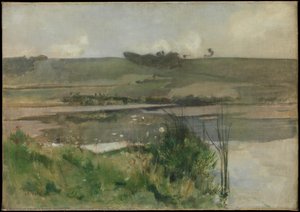
De 1883 a 1885, Twachtman estudió en la Académie Julian en París, lo que cambió significativamente su estilo hacia un enfoque tonalista suave, grisáceo y verdoso. Este período se considera a menudo el apogeo de su carrera, con obras notables como *Arques-la-Bataille* (en la colección del Museo Metropolitano de Arte de Nueva York) y *Primavera* (en la colección del Museo de Arte de Cincinnati).Regreso a América e influencia de Cos Cob
Tras regresar a Estados Unidos, Twachtman se estableció en Connecticut, comprando una granja en Greenwich. Su presencia en la colonia de arte de Cos Cob fue fundamental, impulsando las pasiones creativas de sus amigos y estudiantes con su arte, conversación y enseñanza.Legado y obras destacadas
El trabajo posterior de Twachtman se caracteriza por una técnica impresionista altamente personal, a menudo representando paisajes nevados de su granja y jardín. Su serie de vibrantes escenas en Gloucester, Massachusetts, anticipó un estilo más modernista en el arte americano.- Paisaje 3 (200 x 152 cm, Museo Metropolitano de Arte, Nueva York, tonalismo, óleo)
- El dique holandés (tonalismo, óleo)
- Más obras de John Henry Twachtman
Referencias:
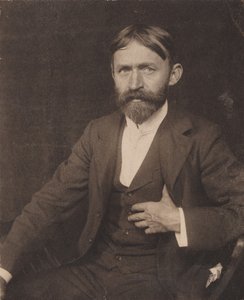
John Henry Twachtman
1853 - 1902 , Estados Unidos de América
Datos clave
- Artistas Que Influyeron:
- Frank Duveneck
- William Merritt Chase
- Fecha De Muerte: 8 de agosto de 1902
- Fecha De Nacimiento: 4 de agosto de 1853
- Influenciado A Artistas:
- Marsden Hartley
- Arthur Dove
- Milton Avery
- Lugar De Nacimiento: Cincinnati, EE. UU.
- Movimiento Artístico: Impresionismo americano, Tonalismo
- Nacionalidad: Estadounidense
- Nombre Completo: John Henry Twachtman
- Obras Notables:
- Paisaje 3
- The Holland Dyke
Artículos relacionados
Los 10 Cuadros Más Famosos en Tonos Rosa Pastel: Arte y Decoración
Descubre los 10 cuadros más icónicos en tonos rosa pastel. Explora la historia de Monet, Renoir y otros maestros del impresionismo y el arte moderno. Encuentra reproducciones de alta calidad para decorar tu hogar con .
Los 10 cuadros más famosos dominados por el ocre amarillo: Arte y decoración atemporal
Descubre los 10 cuadros más famosos con tonos ocres amarillos. Explora la historia de Van Gogh, Monet y otros artistas clave del impresionismo y postimpresionismo. Encuentra reproducciones de arte de museo en .
Blossoms of Time: A Historical & Aesthetic Exploration of Floral Painting Across Cultures
Explore the rich history of floral painting! Discover symbolism, techniques & masterpieces from Van Huysum to O'Keeffe. Expert insights for art lovers & collectors at ArtsDot.
Los 10 cuadros más famosos dominados por el 'amarillo cromo': Arte y decoración
Descubre los 10 cuadros más emblemáticos dominados por el 'amarillo cromo': Van Gogh, Monet y otros maestros. Historia del arte, técnicas y decoración con lienzos impresionistas. ¡Explora la colección completa en ArtsDot.com!
Blossoming Symbolism: A Historical Journey Through Flowers in Western Painting
Explore the rich history of flower symbolism in Western painting! Discover how artists from the Renaissance to Modernism used blossoms to convey meaning, emotion & beauty. Learn about iconic artworks and movements.