

 Ver en contexto
 Enviar
 Compartir
 Detalles

 Descargar
 Similares
 Radiografía
 Presentación de diapositivas
 Estadísticas
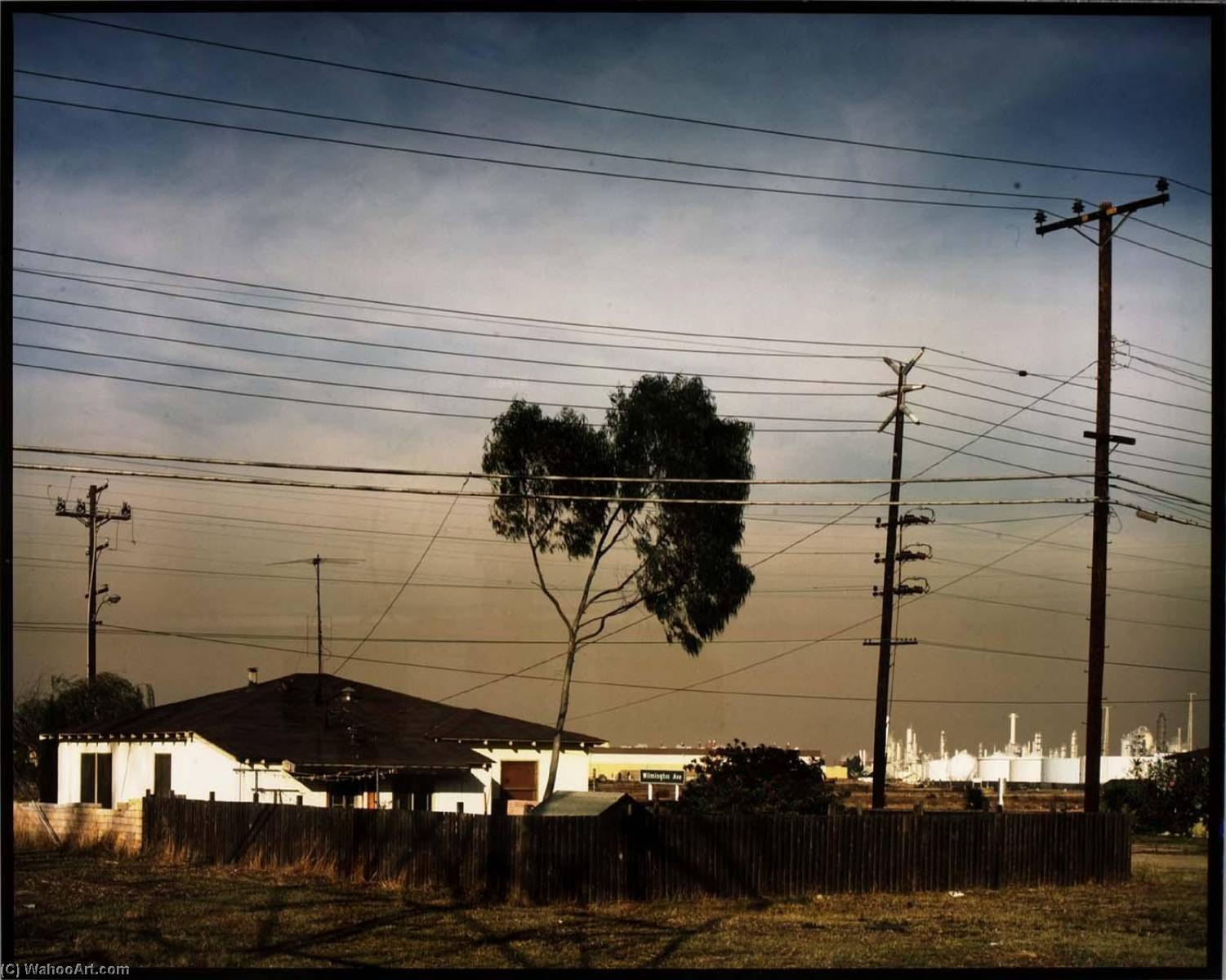
918 Sepulveda Blvd., Carson, from the Los Angeles Documentary Project
 1979
1979 39.0 x 50.0 cm
 Ver más
Reproducción al óleo hecha a mano
Óleo sobre lienzo pintado a mano en el tamaño y marco de su elección, realizado por encargo por nuestros artistas. ( Cambiar a Impresión Cambiar a imagen digital)




































Elija entre nuestros tamaños predefinidos que respetan las proporciones originales de la obra.

Puede ingresar sus propias dimensiones para adaptarse a un marco o espacio específico. Si el tamaño seleccionado no coincide con las proporciones de la imagen original, recortaremos la obra o extenderemos la pintura con elementos adicionales pintados a mano. Se le enviará una maqueta digital para su aprobación antes de comenzar la producción.
Tenga en cuenta que la vista previa en pantalla no refleja el recorte o la extensión reales. Solo la maqueta mostrará con precisión la composición final.
Si bien existen tamaños personalizados, recomendamos seleccionar una dimensión de la lista predefinida para preservar las proporciones originales.
Tras realizar el pedido, el equipo de ArtsDot.com enviará un correo electrónico al cliente para solicitar instrucciones y proporcionarle una vista previa del boceto.
Envío a todo el mundo () en 3-4 semanas en lugar de las 5 semanas estándar. (9 septiembre). Sin comprometer la calidad.

Envío exprés gratuito a todo el mundo

Lienzo de lino de alta calidad

Seguro de envío total

Garantía de reembolso de impuestos aduaneros

Garantía de fidelidad cromática exacta

Política de devolución de 100 días (solo por defectos)

Garantía de devolución del 100% del dinero

Descuento por cantidad
 La opción de vidrio solo está disponible en tamaños inferiores a 110 cm.

918 Sepulveda Blvd., Carson, from the Los Angeles Documentary Project
Técnica de reproducción
Dimensiones de la reproducción
-


Precio total final
$ 263
Obras relacionadas








Biografía del artista
The Quiet Observer: The Photographic Legacy of John Humble
In the sprawling, neon-lit expanse of Los Angeles, where grand narratives often drown out the subtle rhythms of daily life, the work of John Humble (1944–2025) serves as a profound act of visual listening. A singular figure in American photography, Humble did not seek the spectacular or the sensational; instead, he dedicated his lens to the meticulous documentation of the urban landscape's soul. His practice was defined by a deliberate rejection of spectacle, opting instead for a path of quiet observation that captured the transformative decades of the 1970s and beyond with unparalleled sensitivity to place and human experience.
Humble’s journey toward this mastery of the mundane began far from the Pacific coast. Born in Moreton, Essex, his early life was shaped by the profound shifts of a world in motion. His formative years were marked by military service during the Vietnam War, an experience that provided him with firsthand exposure to diverse cultures and environments. This period of intense global observation instilled in him a lifelong fascination with the ephemeral—the subtle shifts in light, texture, and gesture that constitute the true essence of existence. This foundational sensitivity would later become the hallmark of his photographic voice.
Technical Precision and the Large Format Vision
The evolution of Humble’s aesthetic was deeply intertwined with his rigorous technical training. After beginning his artistic education at Maryland University, he enrolled in the graduate program at the San Francisco Art Institute, where he mastered the use of a four-by-five large format camera. This choice was far from accidental; it represented a profound commitment to technical precision and a desire to minimize distortion while maximizing every minute detail. Through this medium, Humble could convey an astonishing level of realism, allowing the textures of concrete, the glint of chrome, and the hazy atmosphere of the California sky to emerge with startling clarity.
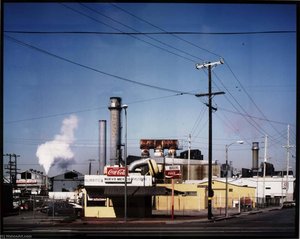
His work often navigated the delicate boundary between the familiar and the foreign. Whether capturing a gritty street corner in Downtown L.A. or the industrial silhouettes along the Pacific Coast Highway, Humble utilized light and shadow to create a sense of depth and dimensionality that transcended mere documentation. His ability to balance the industrial landscape with the natural environment allowed him to present Los Angeles not just as a city of infrastructure, but as a living, breathing organism. In his hands, even a factory with smokestacks or a roadside billboard became subjects of profound aesthetic contemplation.
A Legacy Etched in the Urban Fabric
As a teacher and an artist, Humble established himself as a vital chronicler of the Los Angeles character. He eschewed grand social pronouncements, choosing instead to depict the city as it was experienced by ordinary people—finding beauty in the oddities, absurdities, and mundane details of urban life. His photographic practice became a way of preserving the fleeting moments of 1980s car culture, neighborhood life, and the shifting architecture of a metropolis in flux.
The historical significance of his work is cemented by its presence in some of the world's most prestigious institutions. The enduring impact of his vision can be found within the permanent collections of:
- The J. Paul Getty Museum
- The Los Angeles County Museum of Art (LACMA)
- The San Francisco Museum of Modern Art (SFMOMA)
- The Smithsonian American Art Museum
- The Center for Creative Photography
Through these collections, Humble’s legacy continues to resonate, offering a nostalgic and deeply humanistic window into a specific era of the American experience. He remains a master of the unseen, reminding us that the most profound stories are often found in the quietest corners of our surroundings.
john humble
1944 -
Datos clave
- Artistic Movement Or Style: Documentary Photography
- Artists Or Movements Influenced By This Artist: ['New Topographics']
- Artists Who Influenced This Artist:
- Bruce Davidson
- Julius Shulman
- Date Of Death: 2025-04-13
- Full Name: John Humble
- Nationality: American
- Notable Artworks:
- Downtown L.A. from 600B1 Bixel St.
- A Place in the Sun
- Place Of Birth: Los Angeles, USA