

 Ver en contexto
 Enviar
 Compartir
 Detalles

 Descargar
 Similares
 Radiografía
 Presentación de diapositivas
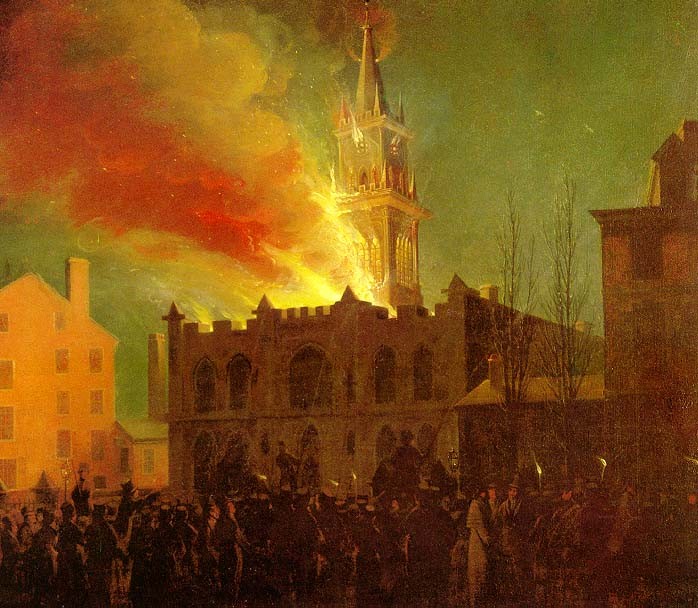
The Conflagration of the Masonic Hall, Chestnut Street Philadelphia

 Ver más
Reproducción al óleo hecha a mano
Óleo sobre lienzo pintado a mano en el tamaño y marco de su elección, realizado por encargo por nuestros artistas. ( Comprar impresión Comprar imagen)




































Elija entre nuestros tamaños predefinidos que respetan las proporciones originales de la obra.

Puede ingresar sus propias dimensiones para adaptarse a un marco o espacio específico. Si el tamaño seleccionado no coincide con las proporciones de la imagen original, recortaremos la obra o extenderemos la pintura con elementos adicionales pintados a mano. Se le enviará una maqueta digital para su aprobación antes de comenzar la producción.
Tenga en cuenta que la vista previa en pantalla no refleja el recorte o la extensión reales. Solo la maqueta mostrará con precisión la composición final.
Si bien existen tamaños personalizados, recomendamos seleccionar una dimensión de la lista predefinida para preservar las proporciones originales.
Tras realizar el pedido, el equipo de ArtsDot.com enviará un correo electrónico al cliente para solicitar instrucciones y proporcionarle una vista previa del boceto.
Envío a todo el mundo () en 3-4 semanas en lugar de las 5 semanas estándar. (1 septiembre). Sin comprometer la calidad.

Envío exprés gratuito a todo el mundo

Lienzo de lino de alta calidad

Seguro de envío total

Garantía de reembolso de impuestos aduaneros

Garantía de fidelidad cromática exacta

Política de devolución de 60 días (solo por defectos)

Garantía de devolución del 100% del dinero

Descuento por cantidad
 La opción de vidrio solo está disponible en tamaños inferiores a 110 cm.

The Conflagration of the Masonic Hall, Chestnut Street Philadelphia
Técnica de reproducción
Dimensiones de la reproducción
-


Precio total final
$ 263
Obras relacionadas
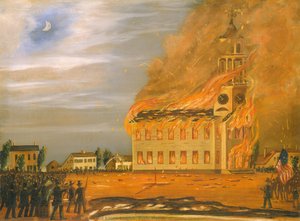
Biografía del artista
A Pioneer of American Genre Painting
John Lewis Krimmel, born Johann Ludwig Krimmel on May 30, 1786, in Ebingen, Württemberg, Germany, occupies a unique and pivotal position in the history of American art. He is rightfully recognized as America’s first true genre painter – an artist dedicated to capturing the everyday lives, customs, and scenes of ordinary people. His brief but remarkably productive career, cut short by his untimely death at age 35 on July 15, 1821, in Germantown, Pennsylvania, left an indelible mark on the development of a distinctly American artistic identity. Krimmel’s journey from aspiring businessman to celebrated painter is a testament to the power of self-discovery and the allure of capturing the vibrant spirit of a burgeoning nation.From Württemberg to Philadelphia: A New Artistic Path
Krimmel's initial path diverged significantly from his artistic destiny. He immigrated to Philadelphia in 1809 with his older brother, intending to pursue commercial ventures. However, the irresistible pull of creative expression soon superseded financial ambitions. Though lacking formal training – he may have received some watercolor instruction in London, but his education was largely self-directed upon arriving in America – Krimmel wholeheartedly embraced painting. He Anglicized his name to John Lewis and began tentatively with portraiture, quickly realizing that his true passion lay elsewhere. A transformative encounter occurred when he gazed upon a copy of David Wilkie’s “Blind Fiddler.” This artwork ignited within him an ardent desire to depict the humor, energy, and social interactions inherent in commonplace life – a genre largely unexplored in American art at the time. By 1812, Krimmel was listed as a painter in the Philadelphia city directory, signaling his unwavering commitment to this newfound vocation.Capturing the Pulse of Early America
Philadelphia during the early 19th century served as an ideal incubator for Krimmel’s artistic evolution. The city pulsed with cultural dynamism, fostering a thriving artistic milieu where he swiftly integrated into the ranks of luminaries like Thomas Sully and Rembrandt Peale. His breakthrough arrived with “Pepper-Pot: A Scene in the Philadelphia Market” (1811), an oil painting that immediately established his reputation. This vibrant depiction captures the bustling atmosphere of a Black woman selling spicy soup to a diverse clientele, showcasing Krimmel’s exceptional observational skills and masterful ability to convey the energy of urban life. He deliberately eschewed conventional artistic conventions, prioritizing authenticity and capturing the nuances of daily existence. Subsequent masterpieces like “Blind Man's Buff” (1814) and “Country Wedding” (1814) further solidified his distinctive style – characterized by meticulous characterizations, astute attention to detail, and a recurring motif: the inclusion of at least one animal, often a playful dog. These paintings exemplify Krimmel’s dedication to portraying the human experience with sensitivity and humor.Legacy and Influence
Krimmel's artistic legacy extends far beyond his relatively modest output. The “Svinin Portfolio,” comprised of watercolors acquired by Russian diplomat Pavel Svinin, stands as a cornerstone in documenting American life during this formative period – scenes like "Black People's Prayer Meeting" and "Deck Life on One of Fulton’s Steamboats" are now treasured holdings of the Metropolitan Museum of Art. His magnum opus, “Election Day 1815,” is celebrated for its unparalleled ability to individualize crowd members with remarkable precision, offering a vivid snapshot of American political culture. Krimmel's influence resonated deeply within subsequent generations of American artists. William Sidney Mount, George Caleb Bingham, and Thomas Eakins acknowledged his pioneering role in establishing genre painting as a distinct artistic idiom—building upon the foundational principles he championed for depicting authentically American subjects and narratives. Finally, Krimmel’s sketchbooks – now housed at the Winterthur Museum, Garden and Library – provide invaluable insight into his creative process, revealing approximately 700 drawings that underscore his unwavering devotion to observation and refinement of his craft. John Lewis Krimmel's contribution wasn't merely about painting scenes; it was about forging a uniquely American visual language—one that celebrated the everyday lives and experiences of its people. He remains, undeniably, a cornerstone in the narrative of American art history.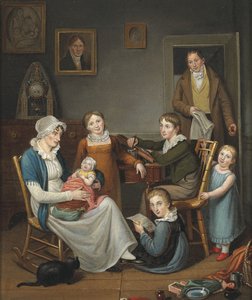
Johann Ludwig Krimmel
1786 - 1821 , Alemania
Datos clave
- Artistic Movement Or Style: Neoclásico, Romántico
- Artists Or Movements Influenced By This Artist:
- Mount, W.S.
- Bingham, G.C.
- Artists Who Influenced This Artist:
- David Wilkie
- Benjamin West
- Date Of Birth: Mayo 30, 1786
- Date Of Death: Julio 15, 1821
- Full Name: John Lewis Krimmel
- Nationality: Alemana-Americana
- Notable Artworks:
- Pepper-Pot
- Blind Man's Buff
- Wedding Campestre
- Place Of Birth: Ebingen, Alemania
Artículos relacionados

John Constable: Las 25 Obras Maestras del Paisaje Inglés | ArtsDot
Descubre las 25 obras maestras de John Constable, el pintor romántico inglés que capturó la belleza del paisaje. Explora su técnica, historia y significado en ArtsDot.com. Reproducciones de arte de alta calidad para tu hogar.

John Singer Sargent: Las 25 Obras Maestras del Retrato y la Belle Époque | ArtsDot
Descubre las 25 obras maestras de John Singer Sargent, el maestro del retrato y la Belle Époque. Explora su técnica impresionista, historias fascinantes y encuentra reproducciones de arte exclusivas para decorar tu hogar con elegancia en ArtsDot.com.
Las 25 Obras Maestras del MFA Boston: Arte, Historia y Decoración Exclusiva
Descubre las 25 obras maestras del Museo de Bellas Artes Boston. Explora la historia, el arte y las emociones detrás de Sargent, Monet, Degas y más. Reproducciones de alta calidad para tu hogar en ArtsDot.com.
John Frederick Lewis: Orientalism, Detail & Genre Painting in 19th-Century British Art
Explore the captivating Orientalist paintings of John Frederick Lewis! Discover his mastery of detail, genre scenes & influence on 19th-century British art. Learn about his life, techniques & legacy at ArtsDot.

Paisajes Románticos: 10 Obras Maestras que Definieron un Movimiento Artístico
Descubre los 10 paisajes románticos más influyentes de artistas como Caspar David Friedrich y Turner. Explora la belleza, el simbolismo y las técnicas del movimiento romántico. Reproducciones de arte exclusivas en ArtsDot.com.

