

 Ver en contexto
 Enviar
 Compartir
 Detalles

 Descargar
 Similares
 Radiografía
 Presentación de diapositivas
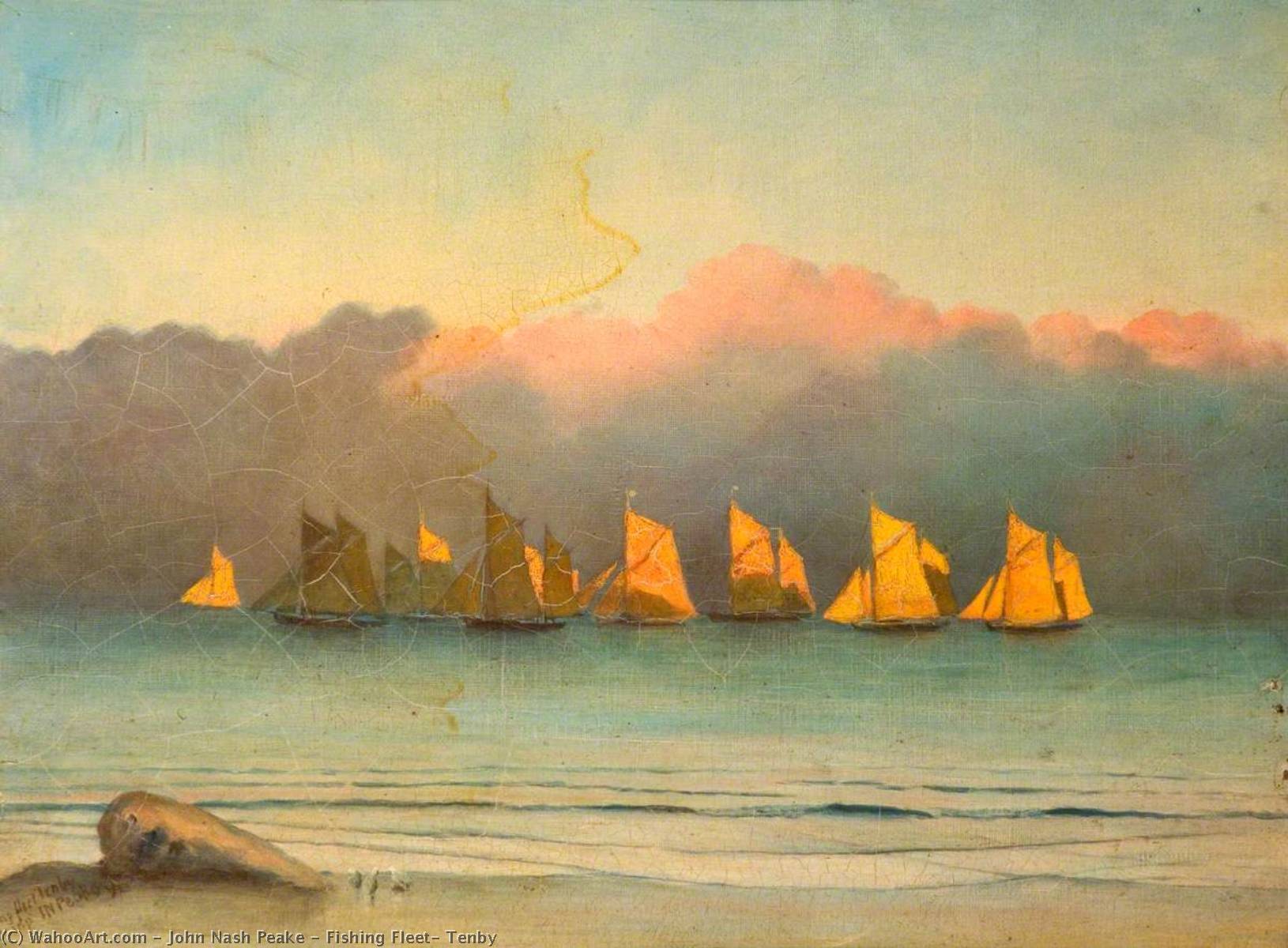
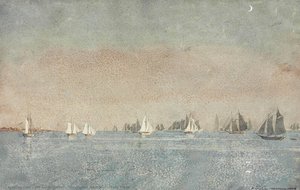
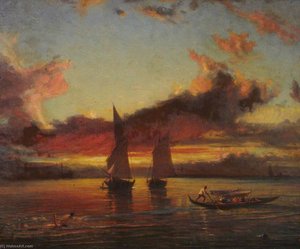
Fishing Fleet, Tenby
 Romanticism
 1896
1896 29.0 x 38.0 cm
 Ver más
Giclée / Impresión de arte
Impresiones giclée o en lienzo de calidad de museo con producción rápida y opciones de acabado flexibles. ( Comprar pintura hecha a mano Comprar imagen)




































Elija entre nuestros tamaños predefinidos que respetan las proporciones originales de la obra.

Puede introducir sus propias dimensiones para adaptarse a un marco o espacio específico. Si el tamaño seleccionado no coincide con las proporciones de la imagen original, recortaremos la obra de arte o extenderemos la imagen con un borde con efecto espejo o de color sólido. Se enviará una maqueta digital para su aprobación antes de que comience la producción.
Tenga en cuenta que la vista previa en pantalla no refleja el recorte o la extensión real. Solo la maqueta mostrará con precisión la composición final.
Aunque existen tamaños personalizados, recomendamos seleccionar una dimensión de la lista predefinida para preservar las proporciones originales.
Envío a todo el mundo () en 2 semanas en lugar de las 4/5 semanas estándar. (29 agosto)

Envío exprés gratuito a todo el mundo

Lienzo de lino de alta calidad

Seguro de envío total

Garantía de reembolso de impuestos aduaneros

Garantía de fidelidad cromática exacta

Política de devolución de 60 días (solo por defectos)

Garantía de devolución del 100% del dinero

Descuento por cantidad
 La opción de vidrio solo está disponible en tamaños inferiores a 110 cm.

Fishing Fleet, Tenby
Giclée / Impresión de arte
Dimensiones de la reproducción
-


Precio total final
$ 62
Obras relacionadas

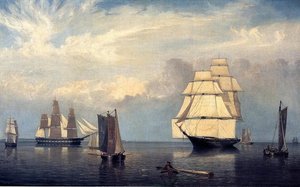
Biografía del artista
The Soul of the English Landscape: The Life and Legacy of John Nash Peake
In the annals of British Modernism, few artists possess the ability to bridge the gap between the serene romanticism of the countryside and the visceral, psychological shadows of war as profoundly as John Nash Peake. Born in London in 1896 into a lineage of creative distinction—his father being a noted sculptor—Peake was immersed in the language of form and visual storytelling from his earliest years. This foundational connection to the arts led him to the prestigious Slade School of Art, where he refined a technique that would eventually allow him to capture not just the physical world, but the very atmosphere of existence itself. His early training was deeply colored by the Impressionist masters; the light-drenched canvases of Claude Monet and the structural color explorations of Paul Cézanne became the pillars upon which he built his stylistic identity, instilling in him a lifelong devotion to capturing fleeting, atmospheric sensations with remarkable precision.
Peake’s artistic journey is often viewed through two distinct lenses: the sublime beauty of nature and the harrowing reality of human conflict. In his landscape works, he functioned as a romantic visionary, seeking to portray the majesty of the natural world while simultaneously acknowledging its fragility in an age of rapid industrialization. His ability to render grand, sweeping vistas—such as the breathtakingly detailed The Matterhorn—demonstrates a mastery of oil painting that utilizes bold, expressive brushstrokes to evoke a sense of awe and contemplation. In these works, the viewer is not merely looking at a mountain or a lake, but is invited into a space where the textures of rock and water feel palpably alive, reflecting a humanist concern for preserving the untouched beauty of the earth.
The Shadow of the Great War
However, the trajectory of Peake’s career was irrevocably altered by the onset of World War I. The transition from the tranquil landscapes of his youth to the grim, mud-soaked reality of the Western Front introduced a new, darker dimension to his palette and purpose. Witnessing the horrors of trench warfare firsthand, Peake moved beyond mere topographical representation to explore the profound psychological toll of combat. His wartime paintings serve as haunting chronicles of anxiety and disillusionment, where the landscape itself becomes a participant in the tragedy.
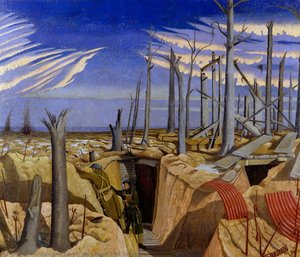
In masterpieces such as Oppy Wood, 1917. Evening, Peake captures a moment of heavy, palpable tension. The scene is not one of peace, but of a world suspended in the terrifying anticipation of violence. Through his skilled use of muted tones and the soft, hazy quality of twilight, he renders the rugged confines of the trenches with a grit that feels almost tactile. The inclusion of an airplane drifting through the dusk serves as a poignant symbol of the evolving nature of modern warfare, bridging the gap between the earthbound struggle of the infantry and the terrifying new dimension of aerial combat. In these works, the trees and woods are no longer just elements of nature; they become silent, somber witnesses to the unfolding human drama.
Artistic Significance and Enduring Influence
The historical significance of John Nash Peake lies in his ability to synthesize these opposing forces—the beautiful and the brutal. He did not merely document history; he translated the emotional landscape of a generation into a visual language that remains deeply moving today. His career, which spanned several decades as a painter, illustrator, and teacher, left an indelible mark on the British artistic landscape by proving that modernism could encompass both the delicate nuances of light and the heavy weight of human suffering.
To reflect upon Peake's contributions is to recognize a legacy defined by:
- Technical Mastery: A sophisticated application of Impressionist-inspired light and texture that brought landscapes to life.
- Emotional Depth: The courage to move from the romanticized view of nature into the psychological complexities of war.
- Historical Witness: Providing a visual record of the transition from 19th-century romanticism to the stark realities of 20th-century conflict.
Through his evocative canvases, Peake remains a pivotal figure for those seeking to understand the dual nature of the human experience—the capacity to find sublime beauty even amidst the encroaching shadows of history.
Datos clave
- Artistic Movement Or Style: British Modernism
- Artists Or Movements Influenced By This Artist: ['Romantic Landscape Painting']
- Artists Who Influenced This Artist: ['Paul Nash']
- Date Of Birth: 1896
- Date Of Death: 1970
- Full Name: John Nash Peake
- Nationality: British
- Notable Artworks:
- The Matterhorn
- Fishing Fleet, Tenby
- Oppy Wood, 1917. Evening
- Place Of Birth: London, England
Artículos relacionados

John Constable: Las 25 Obras Maestras del Paisaje Inglés | ArtsDot
Descubre las 25 obras maestras de John Constable, el pintor romántico inglés que capturó la belleza del paisaje. Explora su técnica, historia y significado en ArtsDot.com. Reproducciones de arte de alta calidad para tu hogar.
John Singer Sargent: Las 25 Obras Maestras del Retrato y la Belle Époque | ArtsDot
Descubre las 25 obras maestras de John Singer Sargent, el maestro del retrato y la Belle Époque. Explora su técnica impresionista, historias fascinantes y encuentra reproducciones de arte exclusivas para decorar tu hogar con elegancia en ArtsDot.com.
Paul Nash: Modernism, Myth & the British Landscape – A Visionary Artist
Explore the evocative landscapes & poignant war art of Paul Nash (1889-1946), a key figure in British Modernism. Discover his unique style and lasting impact on art history with ArtsDot.
John Hoppner: Portraiture, Patronage & British Identity in the Late Georgian Era
Explore the life & work of John Hoppner, a leading Georgian portraitist. Discover his vibrant style, influential patrons, and lasting impact on British art history. Expert insights for collectors.
John Piper: A Spiritual Vision of British Landscape & Modernism's Embrace
Explore the captivating world of John Piper, a celebrated British painter whose evocative landscapes & iconic church art captured the spirit of his time. Discover his legacy and find high-quality reproductions at ArtsDot.

