 Ver en contexto
 Enviar
 Compartir
 Detalles

 Descargar
 Similares
 Radiografía
 Presentación de diapositivas
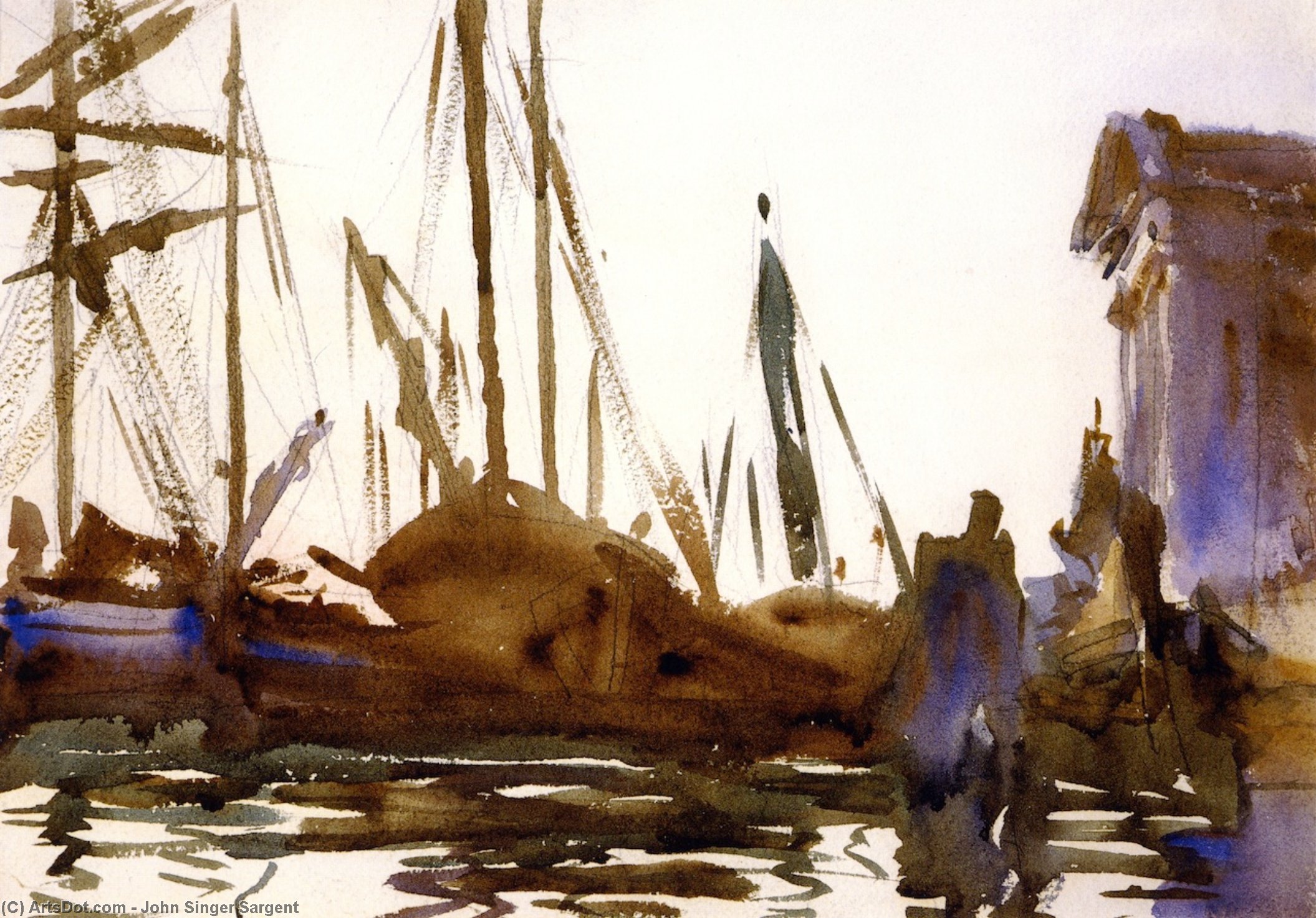
Shipping Venice: The Gesuati (also known as Boats on the Giudecca)


 Ver más
Giclée / Impresión de arte
Impresiones giclée o en lienzo de calidad de museo con producción rápida y opciones de acabado flexibles. ( Comprar pintura hecha a mano Comprar imagen)




P118B $10

P118H $10

P118W $10

P438Z $10

P508JH $12

P508YH $12

P805H $10

P805Z $10

P919BZ $10

P919G $10

P919XJ $10

P959ZH $10

P968JZ $12

W106C $8

W218G $10

W218JH $8

W218Y $10

W307PJ $10

W316G $10

W316PJ $8

W316Y $10

W398PJ $8

W4111J $10

W500HY $15

W500JH $15

W692G $12

W849H $8

W940BG $15

W953PJ $8




Elija entre nuestros tamaños predefinidos que respetan las proporciones originales de la obra.

Puede introducir sus propias dimensiones para adaptarse a un marco o espacio específico. Si el tamaño seleccionado no coincide con las proporciones de la imagen original, recortaremos la obra de arte o extenderemos la imagen con un borde con efecto espejo o de color sólido. Se enviará una maqueta digital para su aprobación antes de que comience la producción.
Tenga en cuenta que la vista previa en pantalla no refleja el recorte o la extensión real. Solo la maqueta mostrará con precisión la composición final.
Aunque existen tamaños personalizados, recomendamos seleccionar una dimensión de la lista predefinida para preservar las proporciones originales.
Envío a todo el mundo () en 2 semanas en lugar de las 4/5 semanas estándar. (29 agosto)

Envío exprés gratuito a todo el mundo

Lienzo de lino de alta calidad

Seguro de envío total

Garantía de reembolso de impuestos aduaneros

Garantía de fidelidad cromática exacta

Política de devolución de 60 días (solo por defectos)

Garantía de devolución del 100% del dinero

Descuento por cantidad
 La opción de vidrio solo está disponible en tamaños inferiores a 110 cm.

Shipping Venice: The Gesuati (also known as Boats on the Giudecca)
Giclée / Impresión de arte
Dimensiones de la reproducción
-


Precio total final
$ 62
Shipping Venice: The Gesuati – A Symphony of Light and Leisure
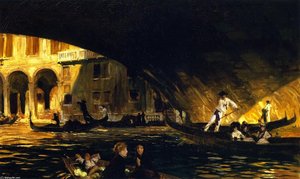
John Singer Sargent’s “Shipping Venice: The Gesuati” (also known as “Boats on the Giudecca”) is more than just a watercolor painting; it's a captured moment of exquisite beauty, a testament to the artist’s mastery of light and atmosphere. Created in 1902, this evocative piece transports us to the heart of Venetian harbor life, offering a glimpse into a world of leisure, elegance, and the quiet drama of water and sky. The painting's subject matter – sailboats gliding across the shimmering waters of the Giudecca Canal – is elevated by Sargent’s unparalleled ability to render texture and emotion with seemingly effortless strokes. It’s a scene brimming with subtle details: the reflections dancing on the water, the weathered hulls of the boats, the distant silhouettes of buildings, and the ever-changing play of light across the clouds.
The Artist's Hand – Watercolor Technique
- Watercolor Mastery: Sargent was a revolutionary figure in watercolor painting. He eschewed traditional approaches, favoring a loose, expressive style that prioritized capturing fleeting moments rather than meticulous detail. This is evident in the fluidity of the washes, the vibrant yet delicate hues, and the way he builds up layers to create depth and luminosity.
- Light and Atmosphere: The artist’s genius lies in his ability to evoke a sense of atmosphere – the hazy warmth of the afternoon sun, the cool shadows cast by the buildings, and the shimmering reflections on the water. He achieves this through careful observation and an intuitive understanding of how light interacts with different surfaces.
- Compositional Flow: The arrangement of elements—the boats in varying sizes and positions, the receding shoreline, and the expansive sky—creates a dynamic composition that draws the viewer’s eye across the canvas. Sargent skillfully uses perspective to create a sense of depth and space, further enhancing the painting's immersive quality.
Historical Context – The Gilded Age and Venetian Splendor
“Shipping Venice: The Gesuati” was painted during the height of John Singer Sargent’s career, a period often referred to as the “Gilded Age.” This era was characterized by immense wealth, extravagant social gatherings, and a fascination with luxury and leisure. Sargent himself became a favored portraitist for the wealthy elite, capturing their lives and tastes in opulent settings. Venice, at this time, remained a vibrant center of art and culture, attracting artists and intellectuals from around the world. The painting reflects this atmosphere – it’s a celebration of Venetian beauty and the refined lifestyle enjoyed by those who could afford it. The inclusion of “Gesuati” likely refers to the Gesuati family, prominent Venetian patrons of the arts.
Symbolism and Emotional Impact
Beyond its technical brilliance, the painting resonates with a profound sense of tranquility and nostalgia. The scene evokes a feeling of timelessness, inviting us to contemplate the beauty of nature and the simple pleasures of life. The boats themselves can be interpreted as symbols of movement, change, and perhaps even escape – mirroring Sargent’s own restless spirit and his constant pursuit of new artistic horizons. The cloudy sky adds an element of mystery and drama, hinting at unseen forces and possibilities. Ultimately, “Shipping Venice: The Gesuati” is a painting that speaks to the human desire for beauty, peace, and connection with the natural world.
Obras relacionadas
Biografía del artista
John Singer Sargent: Una Vida en el Arte
John Singer Sargent (1856-1925) fue un artista expatriado estadounidense considerado el “pintor de retratos líder” de su generación, para la sociedad de la clase alta eduardiana. Su obra encarna una mezcla única de brillantez técnica, influencias impresionistas e insight psicológico.
Vida Temprana y Formación
Nacido el 12 de enero de 1856 en Florencia, Italia, de padres estadounidenses Fitzwilliam y Mary Newbold Sargent, John Singer Sargent experimentó una infancia nómada. Sus padres eran expatriados que se mudaban con frecuencia entre Francia, Alemania, Italia y Suiza. Este estilo de vida fomentó una amplia conciencia cultural, pero significó una educación menos convencional. En lugar de escolarización formal, la educación temprana de Sargent se centró en visitar museos e iglesias por toda Europa.
En 1874, Sargent comenzó a estudiar con el artista francés de retratos Carolus-Duran en París. Esta mentoría resultó fundamental. Duran enfatizó la pintura directa – una técnica de aplicación de pintura sin bocetos preliminares – que afinó la notable destreza técnica de Sargent y su capacidad para capturar rasgos con asombrosa rapidez y precisión.
Carrera Artística y Estilo
La producción artística de Sargent se puede dividir ampliamente en dos categorías: retratos encargados e estudios informales. Su retrato formal, a menudo representando a las ricas y prominentes figuras de su tiempo, se adhería a la tradición del “estilo grandioso” – enfatizando la elegancia, el estatus y la profundidad psicológica.
Sin embargo, Sargent también persiguió un estilo más personal en sus paisajes y estudios al aire libre. Estas obras demuestran una clara afinidad con el Impresionismo, caracterizado por pinceladas sueltas, paletas de colores vibrantes y un énfasis en capturar momentos fugaces de luz y atmósfera.
Obras Maestras y Logros
- Madame X (1884): Quizás la obra más famosa de Sargent, este retrato causó controversia por su audaz representación de la socialite Virginie Amélie Avegno Gautreau.
- El Jaleo (1882): Una escena dinámica y colorida que captura una danza flamenca española, mostrando el dominio de Sargent del movimiento y la luz.
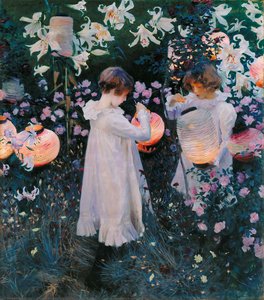
- Carnación, Lily, Lily, Rose (1886): Un cuadro sereno e evocador que representa a dos jóvenes chicas encendiendo faroles en un jardín inglés.
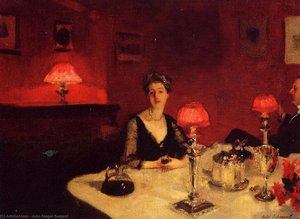
- Una Mesa de Cena por la Noche (1882-83): Una composición innovadora que captura la atmósfera íntima de una cena utilizando luz artificial.
Influencias
Sargent fue influenciado por una diversa gama de artistas y movimientos:
- Carolus-Duran: Su maestro, quien le inculcó una técnica de pintura directa.
- Diego Velázquez: Sargent admiró el magistral uso de luz y pincelada de Velázquez.
- Impresionismo: La énfasis de los impresionistas en capturar momentos fugaces y efectos atmosféricos impactó profundamente en sus pinturas de paisajes.
Significado Histórico y Legado
Inicialmente, Sargent enfrentó críticas por su enfoque poco convencional del retrato y su disposición a desafiar las normas artísticas tradicionales. Sin embargo, a principios del siglo XX, se había establecido como uno de los principales artistas de su tiempo.
En la década de 1980, hubo una reevaluación significativa de la obra de Sargent, particularmente sus desnudos masculinos previamente desatendidos. Esta redescubrimiento reveló un artista más complejo y matizado de lo que se había entendido anteriormente. Hoy en día, John Singer Sargent es celebrado por su virtuosismo técnico, su capacidad para capturar el espíritu de su época y su contribución perdurable al arte estadounidense.
Sus pinturas ofrecen una ventana fascinante a la lujos y las dinámicas sociales de la era eduardiana, mientras que también reflejan su propia visión artística personal. Su obra continúa inspirando a artistas y cautivando a audiencias en todo el mundo.

John Singer Sargent
1856 - 1925 , Italia
Datos clave
- Artistas Que Influyeron:
- Carolus-Duran
- Diego Velázquez
- Fecha De Muerte: 1925
- Fecha De Nacimiento: 12 de enero de 1856
- Lugar De Nacimiento: Florencia, Italia
- Movimiento Artístico: Impresionismo
- Nacionalidad: Estadounidense
- Nombre Completo: John Singer Sargent
- Obras Notables:
- Madame X
- El Jaleo
- Carnación, Lily, Lily, Rose
- Una Mesa de Cena por la Noche
Artículos relacionados

John Singer Sargent: Las 25 Obras Maestras del Retrato y la Belle Époque | ArtsDot
Descubre las 25 obras maestras de John Singer Sargent, el maestro del retrato y la Belle Époque. Explora su técnica impresionista, historias fascinantes y encuentra reproducciones de arte exclusivas para decorar tu hogar con elegancia en ArtsDot.com.

Acuarelas Legendarias: 10 Obras Maestras que Transformaron el Arte | ArtsDot
Descubre 10 acuarelas legendarias de Turner, Monet y Sargent que revolucionaron el arte. Explora la historia, técnica y belleza de estas obras maestras impresionistas y románticas. Reproducciones de museo en ArtsDot.com.

Ephemeral Visions: Exploring the Artistic Legacy & Contemporary Practice of Watercolor Painting
Explore the captivating world of watercolor painting! Discover its rich history, essential techniques, influential artists & collecting tips. A comprehensive guide for art enthusiasts from ArtsDot.

John Constable: Las 25 Obras Maestras del Paisaje Inglés | ArtsDot
Descubre las 25 obras maestras de John Constable, el pintor romántico inglés que capturó la belleza del paisaje. Explora su técnica, historia y significado en ArtsDot.com. Reproducciones de arte de alta calidad para tu hogar.
Visiones Efímeras: Historia y Resonancia Emocional de la Pintura Acuarela
Descubre la fascinante historia de la acuarela, desde sus orígenes hasta su expresión contemporánea. Explora técnicas, artistas clave como Paul Klee y encuentra reproducciones de alta calidad en ArtsDot.