

 Ver en contexto
 Enviar
 Compartir
 Detalles

 Descargar
 Similares
 Radiografía
 Presentación de diapositivas
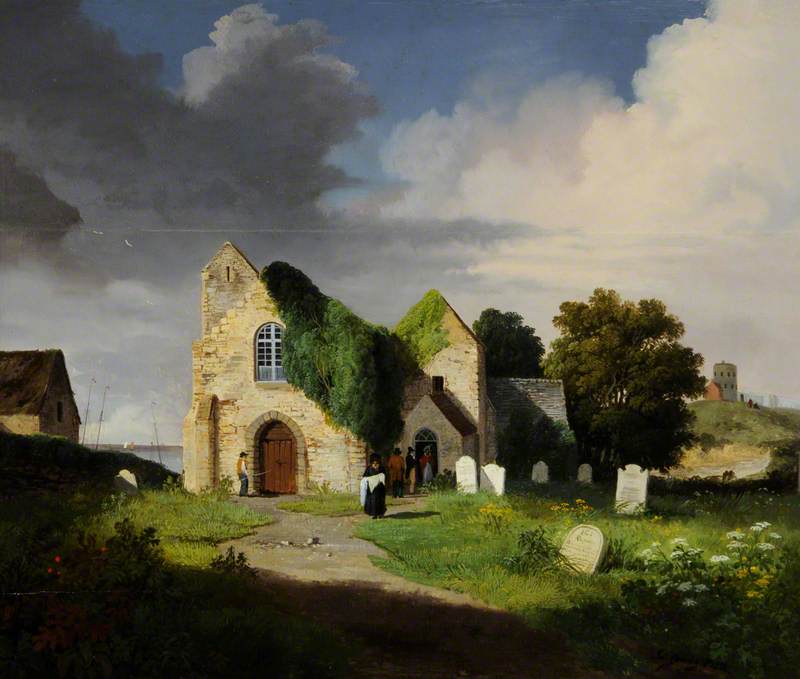
St Sampson's Church, Guernsey, Built AD 1111
 1826
1826 46.0 x 55.0 cm
 Ver más
Reproducción al óleo hecha a mano
Óleo sobre lienzo pintado a mano en el tamaño y marco de su elección, realizado por encargo por nuestros artistas. ( Comprar impresión Comprar imagen)




































Elija entre nuestros tamaños predefinidos que respetan las proporciones originales de la obra.

Puede ingresar sus propias dimensiones para adaptarse a un marco o espacio específico. Si el tamaño seleccionado no coincide con las proporciones de la imagen original, recortaremos la obra o extenderemos la pintura con elementos adicionales pintados a mano. Se le enviará una maqueta digital para su aprobación antes de comenzar la producción.
Tenga en cuenta que la vista previa en pantalla no refleja el recorte o la extensión reales. Solo la maqueta mostrará con precisión la composición final.
Si bien existen tamaños personalizados, recomendamos seleccionar una dimensión de la lista predefinida para preservar las proporciones originales.
Tras realizar el pedido, el equipo de ArtsDot.com enviará un correo electrónico al cliente para solicitar instrucciones y proporcionarle una vista previa del boceto.
Envío a todo el mundo () en 3-4 semanas en lugar de las 5 semanas estándar. (6 septiembre). Sin comprometer la calidad.

Envío exprés gratuito a todo el mundo

Lienzo de lino de alta calidad

Seguro de envío total

Garantía de reembolso de impuestos aduaneros

Garantía de fidelidad cromática exacta

Política de devolución de 100 días (solo por defectos)

Garantía de devolución del 100% del dinero

Descuento por cantidad
 La opción de vidrio solo está disponible en tamaños inferiores a 110 cm.

St Sampson's Church, Guernsey, Built AD 1111
Técnica de reproducción
Dimensiones de la reproducción
-


Precio total final
$ 263
Obras relacionadas








Biografía del artista
The Ethereal Vision of John Tobias Young
In the annals of British Romanticism, few names evoke such a poignant sense of fleeting beauty as John Tobias Young. Born around 1786 in the quiet environs of Mildenhall, near Marlborough, Young’s life was a brief but luminous chapter in the history of landscape painting. Though his career was tragically truncated by his death in December 1824 at the young age of thirty-eight, he left behind a visual legacy that transcends the mere documentation of scenery. His work serves as a window into a period where the boundaries between the physical world and the spiritual sublime were perpetually blurred, capturing the very soul of the landscapes he traversed.
Young’s artistic journey was deeply shaped by his early exposure to the theatrical and the atmospheric. Before establishing himself as a master of the canvas, he served as a stage designer for Lord Barrymore’s private theatre at Wargrave. This unique background in scenography—a discipline requiring meticulous attention to depth, light, and emotional resonance—undoubtedly informed his approach to the natural world. He did not merely paint what was visible; he constructed vistas that invited the viewer into a carefully orchestrated emotional experience, much like a stage set designed to evoke wonder or melancholy.
The Spectral Beauty of the Channel Islands
While his roots lay in England, it was the rugged and enchanting landscape of Jersey that became the true muse for Young’s most profound achievements. Between 1816 and 1824, he produced a remarkable series of works often referred to as his "Jersey Paintings." These pieces are far more than topographical records; they are atmospheric meditations on the Channel Islands' dramatic coastline. Through his brush, the cliffs of Jersey become sites of sublime power, where the interplay of light and shadow suggests a haunting, spectral quality.
His technique was heavily influenced by the Luminism movement, a style he refined under the tutelage of the celebrated watercolorist Tobias Ragg. By mastering soft tonal gradations and a delicate atmospheric haze, Young was able to capture the ephemeral qualities of dawn, twilight, and the mist-laden sea. His ability to manipulate color and light allowed him to portray the rugged terrain with a breathtaking realism that felt almost supernatural. In works such as “Castle on a Rocky Road above a Bay,” one can sense the artist's profound desire to convey the spiritual resonance of nature—a hallmark of the Romantic era.
Legacy and Artistic Significance
The significance of John Tobias Young lies in his ability to bridge the gap between the meticulous observation of the landscape and the emotional depth of the Romantic ideal. His work anticipates the grandeur found in the later Hudson River School, sharing a common devotion to the majesty of the natural world. Though much of his reputation was once confined to the Southampton region, where he practiced for many years, his influence resonates through the enduring collections held in institutions such as the Victoria and Albert Museum and the Salisbury Library.
To look upon a Young landscape is to experience a sense of sublime isolation. His paintings remain vital testaments to a period of transition in British art, moving away from Neoclassical rigidity toward a more fluid, emotive expression. Even today, his depictions of the Jersey coastline continue to captivate, reminding us that true art does not just capture a moment in time, but preserves the very feeling of existence within the vast, ever-changing theater of nature.
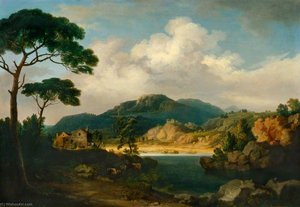
john tobias young
1786 - 1828
Datos clave
- Artistic Movement Or Style: Romantic Landscape Painting
- Artists Or Movements Influenced By This Artist: ['Hudson River School']
- Artists Who Influenced This Artist:
- Edwin Young
- Tobias Ragg
- Date Of Death: 1824
- Full Name: John Tobias Young
- Nationality: British
- Notable Artworks: ['Castle on a Rocky Road above a Bay ca. 1811-1822']
- Place Of Birth: Mildenhall, England