

 Ver en contexto
 Enviar
 Compartir
 Detalles

 Descargar
 Similares
 Radiografía
 Presentación de diapositivas
 Stats
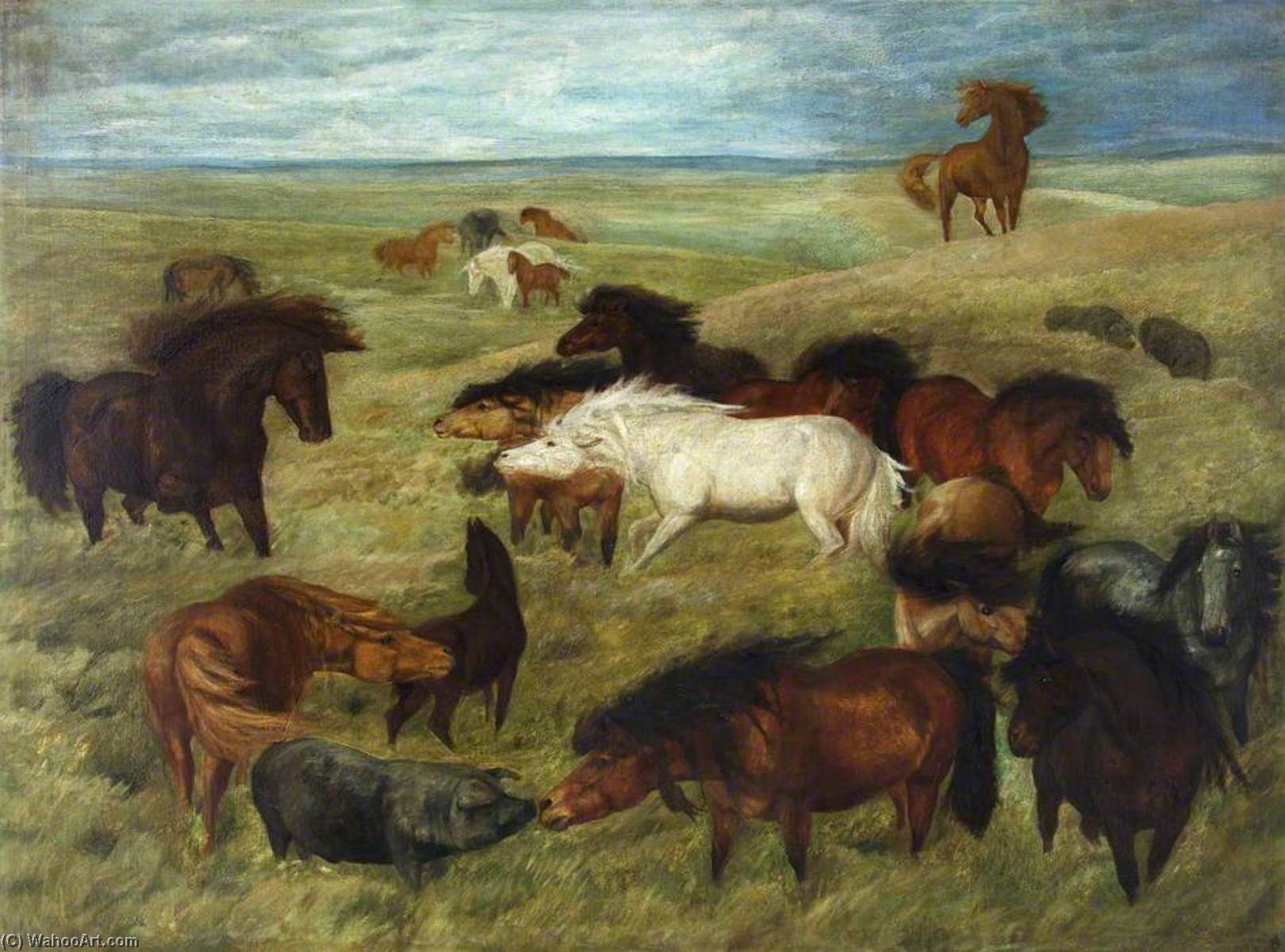
StatsWild Horses and Pigs
 1871
1871 89.0 x 121.0 cm
 Worcester College
 Ver más
Adquiera una imagen digital de alta resolución y optimizada, muy superior a la vista previa en línea.
Cada archivo es preparado meticulosamente por nuestros especialistas internos mediante el uso de herramientas avanzadas y un experto retoque manual. Nos aseguramos de que cada imagen posea una claridad excepcional, una precisión cromática impecable y un detalle minucioso.
El archivo final se entrega por correo electrónico en un plazo de 72 horas, optimizado para su uso inmediato en entornos profesionales, editoriales y de impresión. Esta es la misma calidad en la que confían los estudios de diseño, las editoriales y las galerías de primer nivel.
Imagen Digital
Descarga un archivo de alta resolución para exhibición personal, impresión y proyectos creativos. ( Switch to Print Comprar pintura hecha a mano)
Incluido en cada pedido de imágenes digitales
Entrega digital experta, garantizada.
Al elegir ArtsDot.com, no solo está adquiriendo una imagen; está recibiendo una obra de arte digital mejorada profesionalmente, elaborada con precisión y respaldada por una garantía de satisfacción. Esto es todo lo que incluye su pedido, automáticamente:

Entrega rápida por email
Recibirá su archivo de imagen digital en alta resolución por correo electrónico en un plazo de 72 horas tras realizar su pedido, listo para su uso inmediato.

Archivo digital optimizado por IA
Su obra de arte se optimiza profesionalmente mediante herramientas avanzadas de IA y edición manual, garantizando el máximo detalle, claridad y precisión cromática.

Reenvío gratuito de por vida
¿Has borrado o perdido tu archivo por error? No te preocupes: te lo volveremos a enviar en cualquier momento, sin coste adicional.

Sin gastos de importación, siempre
Disfrute de su obra de arte al instante sin aduanas, aranceles ni gastos de envío; las descargas digitales siempre están libres de impuestos.

Garantía de fidelidad de color
Garantizamos que su imagen digital refleje los colores originales con la mayor fidelidad posible, mediante el uso de herramientas profesionales y gestión del color.

Garantía de satisfacción de 100 días
Si no está satisfecho con su imagen digital, la revisaremos o le reembolsaremos el 100% en un plazo de 100 días, sin preguntas.

100% Garantía de devolución de dinero
¿No está satisfecho? Obtenga un reembolso completo dentro de los 100 días posteriores a la recepción de su archivo digital, sin preguntas.

Descuentos por pedidos grandes
Compra 3 imágenes, ahorra 10% - Compra 5, ahorra 15% - Compra 10+, ahorra 20%. Ideal para proyectos creativos, galerías y agencias.
Artistic Composition and Style
The painting depicts a serene scene of horses and pigs coexisting peacefully in a vast field. The artist's use of colors, with shades of brown, white, and black, adds depth and dimension to the piece. The brushstrokes are bold and expressive, conveying a sense of movement and energy among the animals.Artist's Background and Influences
John Trivett Nettleship was a talented artist who was part of the Worcester College community. His work was influenced by the college's rich history and cultural heritage. To learn more about the artworks of Worcester College, visit Discovering the Artworks of Worcester College, Oxford, United Kingdom.Other Notable Works and Artists
Some notable works from ArtsDot.com include:- Conversation Piece Worcester College, Oxford by Edward Irvine Halliday
- Promenade Arcachon II by Frederick Cuming
- Francis John Lys (1863–1947), Provost of Worcester College (1919–1946) by Henry Lamb
The Wild Horses and Pigs painting is a testament to the artist's skill in capturing the beauty of nature. With its serene composition and expressive brushstrokes, this piece is a must-see for art enthusiasts. To learn more about the artist and his works, visit Henry Lindley Fry.
Obras relacionadas









Biografía del artista
John Trivett Nettleship (1841–1902): The Lion’s Embrace
John Trivett Nettleship (1841-1902) stands as a singular figure in Victorian art, celebrated primarily for his masterful depictions of lions and other wild animals—a realm where meticulous observation met unwavering artistic conviction. More than just an artist, he was a prolific writer and literary critic whose early engagement with Robert Browning profoundly shaped his intellectual trajectory and cemented his reputation as a champion of poetic nuance. This biography delves into Nettleship’s formative years, artistic evolution, influential collaborations, and enduring legacy within the broader context of late nineteenth-century British art and culture.Early Life and Education
Born in Kettering, Northamptonshire, on February 11, 1841, Nettleship descended from a respectable family—his father, Henry John Nettleship, was a solicitor, and his mother, Isabella Ann Hogg, daughter of the vicar of Geddington—providing him with a stable upbringing steeped in intellectual curiosity. His formative years were marked by academic excellence; he excelled at New College Oxford as a chorister and subsequently attended Durham Cathedral School, where his brother Henry had preceded him. This grounding in classical scholarship undoubtedly instilled within him a disciplined aesthetic sensibility that would permeate his artistic endeavors. Notably, Nettleship’s prize-winning verse on “Venice” foreshadowed his future vocation as a literary critic—a connection that deepened during his friendship with Browning himself.Artistic Training and Early Career
Nettleship's artistic journey commenced at Heatherley’s School of Fine Art and the Slade School in London, where he honed his skills under renowned instructors. Unlike many artists of his time who pursued formal training abroad, Nettleship embraced a largely self-taught approach—a decision that nonetheless yielded exceptional results. His dedication to capturing the essence of animal subjects was unwavering; he meticulously studied specimens at the Zoological Gardens and sought inspiration from the natural world. The Royal Academy quickly recognized his talent, initiating his artistic career with exhibitions beginning in 1874, establishing him as a prominent voice within the Victorian art landscape. He practiced painting outdoors for extended periods, immersing himself in the immediacy of observation—a technique that would inform his later monumental lion paintings.The Lion Paintings: A Defining Achievement
Nettleship’s fame ascended to unparalleled heights thanks to his series of monumental oil paintings depicting lions—a project that consumed nearly three decades of his artistic life (1874–1901). These canvases, showcased repeatedly at the Royal Academy and Grosvenor Gallery, captivated audiences with their breathtaking realism and dramatic compositions. Critics lauded Nettleship’s ability to convey both the brute physicality and psychological complexity of these magnificent creatures—a feat achieved through painstaking observation and masterful brushwork. The sheer scale of his lion paintings solidified his position as one of Britain's foremost animal painters and cemented his reputation for capturing the sublime beauty of untamed nature. He employed a technique characterized by subtle gradations of color and meticulous attention to detail, striving to reproduce not merely what he saw but also what he felt—a testament to his artistic vision and unwavering commitment to realism.Literary Collaborations and Critical Influence
Beyond his artistic accomplishments, Nettleship possessed a formidable intellect and cultivated an expansive literary horizon. His seminal essay on Robert Browning’s poetry—published in 1868—established him as one of Browning's most astute interpreters and initiated a lifelong friendship between the poet and critic. This collaboration profoundly influenced Nettleship’s artistic vision, fostering a belief in the power of language to illuminate profound truths about human experience. His subsequent book illustrations further demonstrated his versatility as an artist and cemented his legacy as a champion of literary artistry—a testament to his multifaceted talent and enduring contribution to Victorian culture. He believed that art should aspire to capture not just visual beauty but also emotional resonance—a conviction that permeated his entire artistic practice. ### Legacy and Historical Significance John Trivett Nettleship’s artistic output remains remarkably influential, particularly within the realm of animal painting. His meticulous technique, unwavering commitment to realism, and profound understanding of animal behavior continue to inspire artists today. Moreover, his intellectual engagement with Browning—a figure whose poetic explorations mirrored Nettleship's own philosophical inquiries—underscores the importance of interdisciplinary dialogue in shaping artistic creativity. As a symbol of Victorian naturalism and literary scholarship, Nettleship’s work stands as an enduring reminder of Britain’s artistic heritage—a legacy secured through his unwavering devotion to capturing the majesty of the animal kingdom and illuminating the complexities of human thought.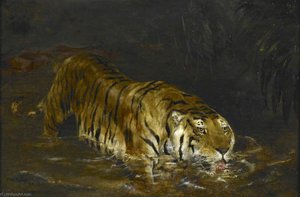
John Trivett Nettleship
1841 - 1902 , Reino Unido
Breves datos
- Artistic Movement Or Style: Animal Painting
- Artists Or Movements Influenced By This Artist: ['Blake Drawings']
- Artists Who Influenced This Artist: ['Robert Browning']
- Date Of Birth: Feb 11, 1841
- Date Of Death: Aug 31, 1902
- Full Name: John Trivett Nettleship
- Nationality: British
- Notable Artworks:
- Tiger Drinking at a Jungle Pool
- Wild Horses and Pigs
- A Lyme Mastiff 'Lion'
- Place Of Birth: Kettering, Northamptonshire