

 Ver en contexto
 Enviar
 Compartir
 Detalles

 Descargar
 Similares
 Radiografía
 Presentación de diapositivas
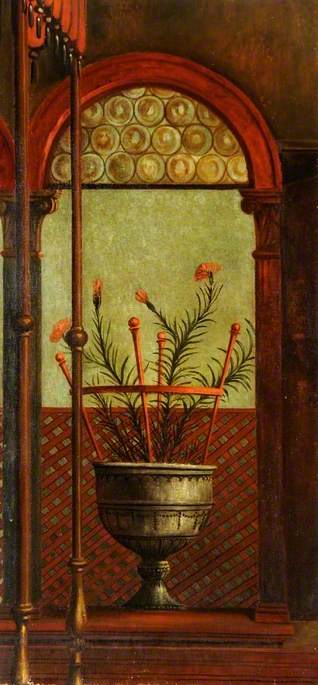
The Vision of St Ursula (detail) (after Vittore Carpaccio)
 1877
1877 88.0 x 42.0 cm
 Ver más
Adquiera una imagen digital de alta resolución y optimizada, muy superior a la vista previa en línea.
Cada archivo es preparado meticulosamente por nuestros especialistas internos mediante el uso de herramientas avanzadas y un experto retoque manual. Nos aseguramos de que cada imagen posea una claridad excepcional, una precisión cromática impecable y un detalle minucioso.
El archivo final se entrega por correo electrónico en un plazo de 72 horas, optimizado para su uso inmediato en entornos profesionales, editoriales y de impresión. Esta es la misma calidad en la que confían los estudios de diseño, las editoriales y las galerías de primer nivel.
Imagen Digital
Descarga un archivo de alta resolución para exhibición personal, impresión y proyectos creativos. ( Comprar impresión Comprar pintura hecha a mano)
Incluido en cada pedido de imágenes digitales
Entrega digital experta, garantizada.
Al elegir ArtsDot.com, no solo está adquiriendo una imagen; está recibiendo una obra de arte digital mejorada profesionalmente, elaborada con precisión y respaldada por una garantía de satisfacción. Esto es todo lo que incluye su pedido, automáticamente:

Entrega rápida por email
Recibirá su archivo de imagen digital en alta resolución por correo electrónico en un plazo de 72 horas tras realizar su pedido, listo para su uso inmediato.

Archivo digital optimizado por IA
Su obra de arte se optimiza profesionalmente mediante herramientas avanzadas de IA y edición manual, garantizando el máximo detalle, claridad y precisión cromática.

Reenvío gratuito de por vida
¿Has borrado o perdido tu archivo por error? No te preocupes: te lo volveremos a enviar en cualquier momento, sin coste adicional.

Sin gastos de importación, siempre
Disfrute de su obra de arte al instante sin aduanas, aranceles ni gastos de envío; las descargas digitales siempre están libres de impuestos.

Garantía de fidelidad de color
Garantizamos que su imagen digital refleje los colores originales con la mayor fidelidad posible, mediante el uso de herramientas profesionales y gestión del color.

Garantía de satisfacción de 100 días
Si no está satisfecho con su imagen digital, la revisaremos o le reembolsaremos el 100% en un plazo de 100 días, sin preguntas.

100% Garantía de devolución de dinero
¿No está satisfecho? Obtenga un reembolso completo dentro de los 100 días posteriores a la recepción de su archivo digital, sin necesidad de explicaciones.

Descuentos por pedidos grandes
Compra 3 imágenes, ahorra 10% - Compra 5, ahorra 15% - Compra 10+, ahorra 20%. Ideal para proyectos creativos, galerías y agencias.
Obras relacionadas




Biografía del artista
John Wharlton Bunney: A Venetian Master of Detail and Ruskin’s Faithful Observer
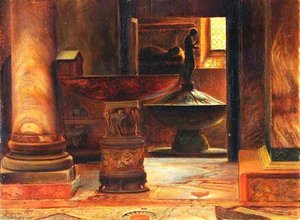
John Wharlton Bunney (1828-1882) wasn't a name that immediately resonates through the halls of art history, yet his meticulous renderings of Venice – its grand architecture, bustling canals, and atmospheric light – represent a significant chapter in 19th-century landscape painting. Often overshadowed by the flamboyant figures of Tintoretto and Carpaccio, Bunney’s legacy lies primarily in his profound devotion to faithfully recreating their masterpieces, transforming them into exquisitely detailed copies that offer intimate glimpses into the Venetian Renaissance.
Born in England, Bunney's early life was shaped by a unique upbringing. His father, a merchant captain, took him on voyages around the world, exposing him to diverse cultures and landscapes – experiences that undoubtedly informed his artistic sensibilities. Crucially, he became deeply influenced by John Ruskin, the renowned art critic and social reformer, studying under him at the Working Men’s College in London. This connection proved pivotal; Ruskin's emphasis on truthfulness, observation, and the importance of capturing the essence of a subject profoundly shaped Bunney’s artistic approach. He wasn’t interested in merely replicating appearances but in conveying the spirit and character of what he observed.
Bunney’s career took an unexpected turn when he was commissioned by Ruskin to travel to Venice, initially as a correspondent for the Society for the Protection of Ancient Buildings. This marked a dramatic shift from his earlier work and established him firmly within the vibrant artistic milieu of the city. He quickly immersed himself in the world of Venetian painting, particularly the works of Tintoretto and Carpaccio – artists whose dynamic compositions and masterful use of light captivated him. It was Ruskin who ultimately secured Bunney’s most enduring role: that of a meticulous copyist, tasked with preserving these iconic paintings for posterity.
The Art of Replication: A Deep Dive into Bunney's Technique
Bunney’s method wasn’t simply about tracing an image; it was a deeply considered process. He spent countless hours studying the originals, meticulously analyzing their structure, color palette, and brushstrokes. Ruskin himself recognized Bunney’s dedication, stating that his work “was so faithful and careful as almost to enable the spectator to imagine himself on the spot.” This commitment extended beyond mere duplication; Bunney sought to understand *why* the original artists had made certain choices – the placement of figures, the direction of light, the emotional impact of a scene.
His copies weren’t carbon copies, however. Bunney subtly adapted his technique, employing a slightly looser brushwork and adding nuances that reflected his own artistic interpretation while remaining true to the spirit of the original. He utilized a refined layering technique, building up color gradually to achieve remarkable depth and luminosity. His attention to detail was astonishing; he captured the texture of fabrics, the reflections in water, and the subtle gradations of light with unparalleled precision. The resulting paintings are not merely reproductions but rather sophisticated interpretations that reveal a deep understanding of both the original works and Bunney’s own artistic vision.
Venetian Landscapes and Religious Scenes: A Dual Focus
While his work is most celebrated for its faithful renderings of Tintoretto and Carpaccio, Bunney also produced a substantial body of landscape paintings depicting the Venetian environs. These scenes – often capturing the city's canals, bridges, and surrounding hills – demonstrate a keen eye for composition and an ability to evoke the atmosphere of Venice. He skillfully rendered the interplay of light and shadow, creating a sense of depth and realism that is characteristic of his style.
However, Bunney’s artistic output wasn't solely confined to landscapes. He also created numerous religious scenes, often based on works by Tintoretto. These paintings showcase his ability to capture the drama and emotion inherent in biblical narratives. His depictions of saints and angels are imbued with a sense of piety and reverence, reflecting Ruskin’s influence.
A Legacy Preserved: Bunney's Influence and Enduring Appeal
John Wharlton Bunney’s contribution to art history may not be immediately apparent, but his meticulous copies of Tintoretto and Carpaccio have had a lasting impact. They provide invaluable insights into the techniques and artistic sensibilities of these two masters, allowing viewers to appreciate their works on a deeper level. Furthermore, Bunney's dedication to faithful representation serves as an example of the importance of observation and understanding in art.
His work continues to be exhibited and studied today, demonstrating its enduring appeal. The National Portrait Gallery holds one of his self-portraits, offering a glimpse into the life of this dedicated artist. And through his copies, Bunney’s legacy lives on – a testament to his skill, devotion, and profound appreciation for the beauty and complexity of Venetian art.
john wharlton bunney
1828 - 1882
Breves datos
- Artistic Movement Or Style: Topographical & Landscape
- Artists Or Movements Influenced By This Artist:
- Tintoretto Copies
- Carpaccio Paintings
- Artists Who Influenced This Artist: ['John Ruskin']
- Date Of Birth: June 20, 1828
- Date Of Death: September 23, 1882
- Full Name: John Wharlton Bunney
- Nationality: English
- Notable Artworks:
- Venetian Architecture
- St. Mark's Basilica
- Florence Landscapes
- Place Of Birth: England