

 Ver en contexto
 Enviar
 Compartir
 Detalles

 Descargar
 Similares
 Radiografía
 Presentación de diapositivas
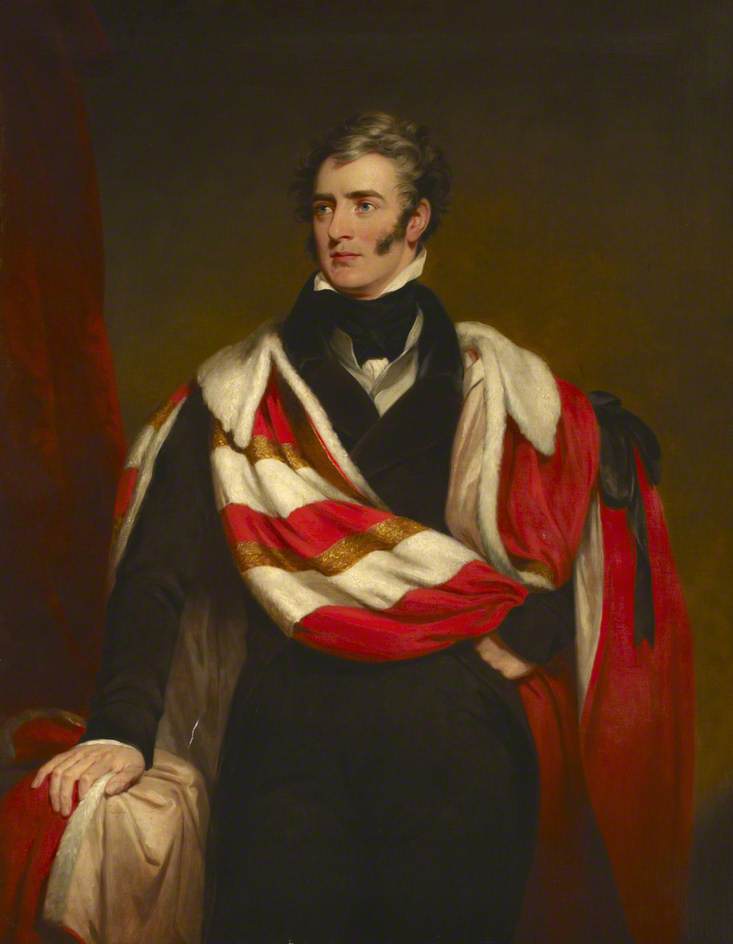
Thomas Philip (1781–1859), Earl de Grey, PRIBA (after William Robinson, 1799–1839)
 1860
1860 141.0 x 122.0 cm
 Colecciones de Dibujos y Archivos de la Biblioteca Riba
 Ver más
Reproducción al óleo hecha a mano
Óleo sobre lienzo pintado a mano en el tamaño y marco de su elección, realizado por encargo por nuestros artistas. ( Comprar impresión Comprar imagen)




































Elija entre nuestros tamaños predefinidos que respetan las proporciones originales de la obra.

Puede ingresar sus propias dimensiones para adaptarse a un marco o espacio específico. Si el tamaño seleccionado no coincide con las proporciones de la imagen original, recortaremos la obra o extenderemos la pintura con elementos adicionales pintados a mano. Se le enviará una maqueta digital para su aprobación antes de comenzar la producción.
Tenga en cuenta que la vista previa en pantalla no refleja el recorte o la extensión reales. Solo la maqueta mostrará con precisión la composición final.
Si bien existen tamaños personalizados, recomendamos seleccionar una dimensión de la lista predefinida para preservar las proporciones originales.
Tras realizar el pedido, el equipo de ArtsDot.com enviará un correo electrónico al cliente para solicitar instrucciones y proporcionarle una vista previa del boceto.
Envío a todo el mundo () en 3-4 semanas en lugar de las 5 semanas estándar. (24 agosto). Sin comprometer la calidad.

Envío exprés gratuito a todo el mundo

Lienzo de lino de alta calidad

Seguro de envío total

Garantía de reembolso de impuestos aduaneros

Garantía de fidelidad cromática exacta

Política de devolución de 60 días (solo por defectos)

Garantía de devolución del 100% del dinero

Descuento por cantidad
 La opción de vidrio solo está disponible en tamaños inferiores a 110 cm.

Thomas Philip (1781–1859), Earl de Grey, PRIBA (after William Robinson, 1799–1839)
Técnica de reproducción
Dimensiones de la reproducción
-


Precio total final
$ 263
Obras relacionadas










Biografía del artista
The Soul of the Landscape: The Artistic Journey of John Wood
Born in 1922, John Wood was a British artist whose creative spirit bridged the gap between the rolling hills of his English origins and the rugged, expansive majesty of the American West. Though his journey began in England, his heart found its true resonance within the traditions of mid-century American Regionalism. Wood was largely a self-trained master, possessing an innate ability to translate the raw textures of nature into delicate yet powerful visual narratives. His life’s work serves as a profound dialogue between two worlds, blending a meticulous British sensibility for detail with an enduring fascination for the untamed American frontier.
The evolution of Wood's style was deeply rooted in his ability to observe the subtle shifts of light and atmosphere. While he drew early inspiration from the Impressionist explorations of Claude Monet—particularly regarding the ephemeral qualities of color—he found a more permanent calling in the monumental landscapes of Thomas Moran and Frederic Remington. These masters of the American West provided him with a compositional blueprint that favored grandeur and emotional depth. Through his eyes, the landscape was not merely a subject to be recorded, but a living entity capable of conveying themes of resilience, permanence, and the passage of time.
Mastery of Medium and Technique
Wood’s technical prowess was most evident in his command over watercolor and engraving, two mediums that demand both extreme precision and a certain level of intuitive grace. In his watercolor paintings, he employed a sophisticated method of layering thin, translucent washes of pigment. This painstaking process allowed him to build up complex tonal gradations, creating a sense of depth that invited the viewer to step into the scene. He often favored a restrained, earthy palette, which allowed the organic textures of bark, stone, and foliage to emerge with remarkable clarity.
This same dedication to detail was mirrored in his work as an engraver. Utilizing meticulous hatching and cross-hatching techniques, Wood achieved a level of tonal control that rivaled his paintings. His engravings offered a more structured, rhythmic interpretation of the landscape, where every line contributed to the overall atmosphere of the piece. This duality in his technique allowed him to explore the same subject through different lenses: one soft and atmospheric, the other sharp and structural.
Legacy and Symbolic Resonance
The sheer breadth of Wood’s artistic output is a testament to his lifelong devotion to his craft. With over 300 watercolor paintings and approximately 1-50 engraved prints to his name, he left behind a substantial visual archive. His subjects were as varied as the terrains he traversed, ranging from the intimate, quiet beauty of the rural British countryside to the sweeping, awe-inspiring vistas of the Rocky Mountains and Yellowstone National Park.
Beyond mere topographical accuracy, Wood’s work is imbued with deep symbolism. He frequently returned to the motif of ancient trees—specifically oaks and maples—which he utilized as symbols of endurance and the steadfast spirit of the frontier. To view a John Wood original is to experience more than just a landscape; it is to encounter an emotional resonance that captures the very mood of the earth itself. His legacy remains that of a visual chronicler, one who captured the fleeting beauty of the natural world with a sensitivity that continues to inspire art lovers today.
john wood
1922 - 2012
Datos clave
- Artistic Movement Or Style: Regionalism art
- Artists Or Movements Influenced By This Artist: ['American Impressionists']
- Artists Who Influenced This Artist:
- Gustave Courbet
- Thomas Moran
- Date Of Birth: 1922
- Date Of Death: 2012
- Full Name: John Wood Dodge
- Nationality: British
- Notable Artworks:
- The Old Mill
- Cornfield
- Place Of Birth: London, England

