

 Ver en contexto
 Enviar
 Compartir
 Detalles

 Descargar
 Similares
 Radiografía
 Presentación de diapositivas
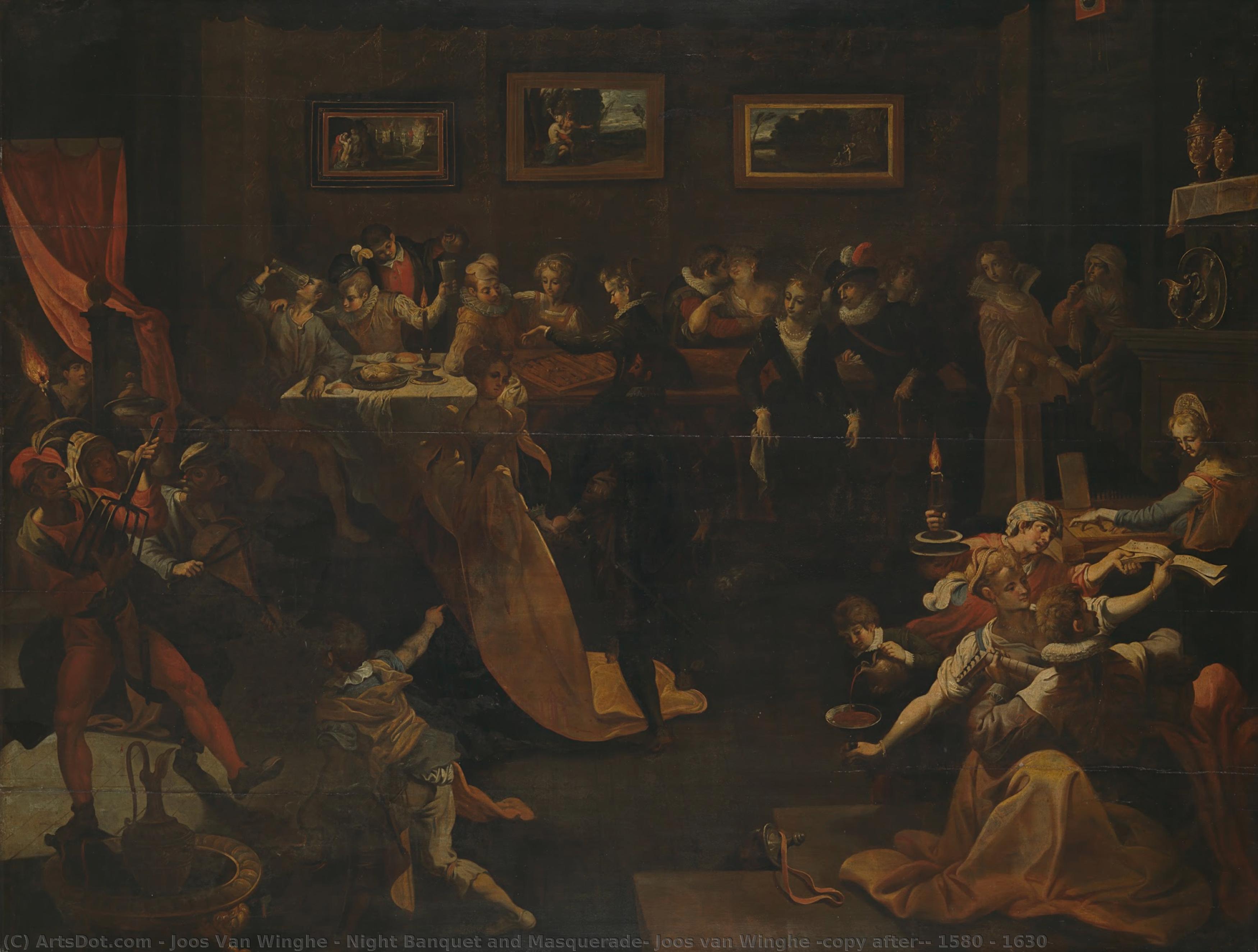
Night Banquet and Masquerade, Joos van Winghe (copy after), 1580 - 1630
 1630
1630 116.0 x 152.0 cm
 Ver más
Giclée / Impresión de arte
Impresiones giclée o en lienzo de calidad de museo con producción rápida y opciones de acabado flexibles. ( Comprar pintura hecha a mano Comprar imagen)




































Elija entre nuestros tamaños predefinidos que respetan las proporciones originales de la obra.

Puede introducir sus propias dimensiones para adaptarse a un marco o espacio específico. Si el tamaño seleccionado no coincide con las proporciones de la imagen original, recortaremos la obra de arte o extenderemos la imagen con un borde con efecto espejo o de color sólido. Se enviará una maqueta digital para su aprobación antes de que comience la producción.
Tenga en cuenta que la vista previa en pantalla no refleja el recorte o la extensión real. Solo la maqueta mostrará con precisión la composición final.
Aunque existen tamaños personalizados, recomendamos seleccionar una dimensión de la lista predefinida para preservar las proporciones originales.
Envío a todo el mundo () en 2 semanas en lugar de las 4/5 semanas estándar. (23 agosto)

Envío exprés gratuito a todo el mundo

Lienzo de lino de alta calidad

Seguro de envío total

Garantía de reembolso de impuestos aduaneros

Garantía de fidelidad cromática exacta

Política de devolución de 60 días (solo por defectos)

Garantía de devolución del 100% del dinero

Descuento por cantidad
 La opción de vidrio solo está disponible en tamaños inferiores a 110 cm.

Night Banquet and Masquerade, Joos van Winghe (copy after), 1580 - 1630
Giclée / Impresión de arte
Dimensiones de la reproducción
-


Precio total final
$ 62
Descripción de la pieza
Obras relacionadas






Biografía del artista
A Life Bridging Courts and Canvases: The World of Joos van Winghe
Joos van Winghe, a name resonating softly through the annals of Flemish Renaissance art, embodies a fascinating transition between the grandeur of courtly patronage and the burgeoning artistic freedoms of the late 16th century. Born in Brussels around 1544, his life was one marked by travel, adaptation, and a quiet mastery of both portraiture and genre scenes. While biographical details remain somewhat fragmented – largely reliant on the observations of Karel van Mander, a contemporary artist and historian – enough is known to paint a picture of an individual deeply connected to the artistic currents of his time, yet forging a path uniquely his own. Van Winghe’s early education likely took place within Brussels itself, a vibrant center for painting under the Spanish Netherlands. However, it was a four-year sojourn in Rome that fundamentally shaped his aesthetic sensibilities. Living with a cardinal afforded him access to the rich artistic heritage of the Italian Renaissance and exposure to the burgeoning Mannerist style. This period proved pivotal; he absorbed the elegance and sophistication of Roman art, which would later subtly infuse his own work. His time wasn’t confined solely to Rome, as van Mander notes experiences in Parma where he painted a fresco of the Last Supper for the Servites monastery, further broadening his artistic vocabulary under the guidance of Jacopo Bertoja, alongside fellow Flemish artist Bartholomaeus Spranger.From Brussels Court to Frankfurt Refuge
Upon returning to Brussels around 1568, van Winghe swiftly ascended to become a court painter in the service of Alexander Farnese, Duke of Parma. This position secured him a degree of financial stability and access to prominent members of society, providing ample opportunities for portraiture – a genre he would consistently return to throughout his career. However, the political turmoil brewing within the Netherlands cast a long shadow over his life. The Fall of Antwerp in 1584, a watershed moment in the Eighty Years’ War, prompted van Winghe and his family to seek refuge elsewhere. This exodus was not merely a relocation; it represented a shift away from the constraints of Spanish rule and towards a more tolerant environment. He settled in Frankfurt am Main, joining a growing community of Flemish artists who had similarly fled religious persecution and political instability. The loss of his court position was filled by Otto van Veen, marking a definitive end to his life within the established artistic circles of Brussels. In Frankfurt, he became a burgher in 1588, integrating himself into the local society while continuing to practice his art.A Diverse Palette: Portraits, Allegories and Genre Scenes
Van Winghe’s oeuvre is characterized by its diversity, encompassing portraits, allegorical paintings, and genre scenes – often depicting merry companies or intimate domestic moments. His portraits are notable for their refined elegance and psychological insight, capturing not just the likeness of his sitters but also a sense of their inner character. While he initially adhered to the established conventions of Flemish portraiture, his time in Italy instilled a certain gracefulness and sophistication into his depictions. Beyond portraiture, van Winghe demonstrated a keen interest in allegorical subjects, often imbued with moral or political undertones. One painting described by Van Mander depicts a chained personification of Belgica (the Netherlands), suggesting a sympathetic stance towards the cause of Dutch independence. His genre scenes, lively and detailed, offer glimpses into the everyday life of his time. These works are not simply depictions of merriment; they often contain subtle narratives or symbolic elements that reward closer examination.Legacy and Influence: A Father’s Hand and a Son's Continuation
The influence of Joos van Winghe extends beyond his own artistic production, notably through his son, Jeremias van Winghe (1578-1645). Jeremias followed in his father’s footsteps, becoming a painter himself and contributing to the artistic landscape of Frankfurt. While Jeremias developed his own distinct style – specializing in kitchen scenes and still lifes – he undoubtedly benefited from his father's training and guidance. The elder van Winghe’s impact can also be seen in the broader context of Flemish art during this period. His ability to blend Italianate elegance with Flemish realism helped bridge the gap between Renaissance traditions and the emerging Baroque style. Although not as widely celebrated as some of his contemporaries, Joos van Winghe remains a significant figure in understanding the complexities of artistic life during a time of profound political and religious upheaval. He represents a generation of artists who were forced to adapt, innovate, and seek new patrons while striving to maintain their artistic integrity. His works offer a captivating window into the world of 16th-century Europe, reflecting both the splendor of courtly life and the anxieties of a nation in turmoil.- Born: Brussels, c. 1544
- Died: Frankfurt am Main, 1603
- Style: Flemish Renaissance, Mannerism
- Key Subjects: Portraits, Genre Scenes, Allegories
joos van winghe
1544 - 1603
Datos clave
- Artistic Movement Or Style: Renaissance
- Artists Or Movements Influenced By This Artist: ['Dutch Masters']
- Artists Who Influenced This Artist: ['Pieter Bruegel the Elder']
- Date Of Birth: 1544
- Date Of Death: 1603
- Full Name: Joos van Winghe
- Nationality: Flemish
- Notable Artworks:
- Night Banquet and Masquerade
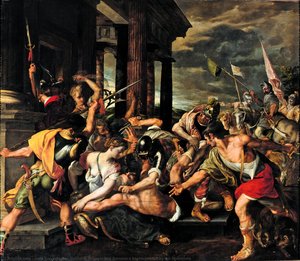
- Delilah’s Betrayal and Samson’s Imprisonment by the Philistines
- Samson and Delila
- Place Of Birth: Brussels

