

 Ver en contexto
 Enviar
 Compartir
 Detalles

 Descargar
 Similares
 Radiografía
 Presentación de diapositivas
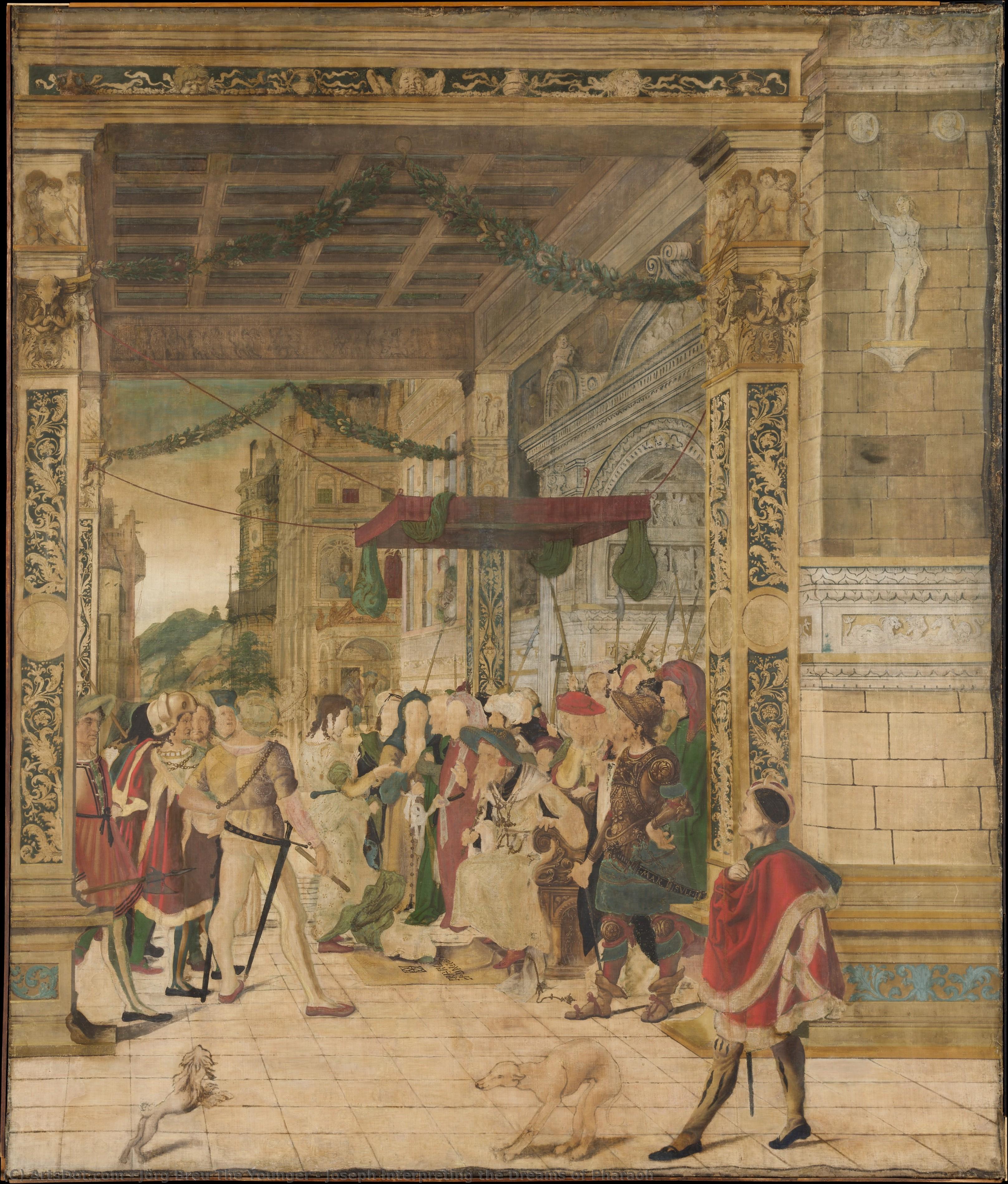
Joseph Interpreting the Dreams of Pharaoh
 Oil On Canvas
- WallArt
- Renaissance Early Renaissance
 1534
1534- Renaissance
 172.0 x 145.0 cm
 Museo Metropolitano de Arte
 Ver más
Reproducción al óleo hecha a mano
Óleo sobre lienzo pintado a mano en el tamaño y marco de su elección, realizado por encargo por nuestros artistas. ( Comprar impresión Comprar imagen)




P118B $10

P118H $10

P118W $10

P438Z $10

P508JH $12

P508YH $12

P805H $10

P805Z $10

P919BZ $10

P919G $10

P919XJ $10

P959ZH $10

P968JZ $12

W106C $8

W218G $10

W218JH $8

W218Y $10

W307PJ $10

W316G $10

W316PJ $8

W316Y $10

W398PJ $8

W4111J $10

W500HY $15

W500JH $15

W692G $12

W849H $8

W940BG $15

W953PJ $8




Elija entre nuestros tamaños predefinidos que respetan las proporciones originales de la obra.

Puede ingresar sus propias dimensiones para adaptarse a un marco o espacio específico. Si el tamaño seleccionado no coincide con las proporciones de la imagen original, recortaremos la obra o extenderemos la pintura con elementos adicionales pintados a mano. Se le enviará una maqueta digital para su aprobación antes de comenzar la producción.
Tenga en cuenta que la vista previa en pantalla no refleja el recorte o la extensión reales. Solo la maqueta mostrará con precisión la composición final.
Si bien existen tamaños personalizados, recomendamos seleccionar una dimensión de la lista predefinida para preservar las proporciones originales.
Tras realizar el pedido, el equipo de ArtsDot.com enviará un correo electrónico al cliente para solicitar instrucciones y proporcionarle una vista previa del boceto.
Envío a todo el mundo () en 3-4 semanas en lugar de las 5 semanas estándar. (3 septiembre). Sin comprometer la calidad.

Envío exprés gratuito a todo el mundo

Lienzo de lino de alta calidad

Seguro de envío total

Garantía de reembolso de impuestos aduaneros

Garantía de fidelidad cromática exacta

Política de devolución de 60 días (solo por defectos)

Garantía de devolución del 100% del dinero

Descuento por cantidad
 La opción de vidrio solo está disponible en tamaños inferiores a 110 cm.

Joseph Interpreting the Dreams of Pharaoh
Técnica de reproducción
Dimensiones de la reproducción
-


Precio total final
$ 263
A Vision from Ancient Egypt Meets Renaissance Splendor
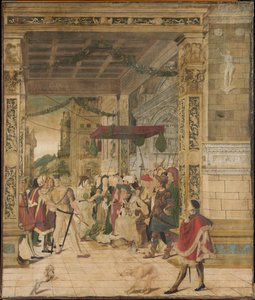
To gaze upon this depiction of Joseph Interpreting the Dreams of Pharaoh is to step across the threshold of time itself. The scene pulses with narrative weight, capturing a moment of profound divine revelation set against the backdrop of ancient Egyptian royalty. Yet, the execution—the very manner in which the figures are rendered and placed within what appears to be anachronistic Renaissance palace architecture—creates a fascinating dialogue between epochs. We see the gravity of prophecy meeting the refined artistry of the early sixteenth century. The composition is richly populated; Pharaoh sits amidst his court, while Joseph stands as the conduit for divine understanding. The sheer number of figures, coupled with the inclusion of domestic animals like horses and dogs scattered throughout the foreground, suggests a bustling, vital moment where destiny unfolds in plain sight.
Mastery in Medium: A Study in Early Canvas Technique
The technical aspects of this piece speak volumes about the artistic challenges and innovations of its time. Executed around 1534 by Jörg Breu the Younger, the work showcases a delicate handling of materials. The description notes that the painting was rendered using a water-based medium on ungrounded fine-weave canvas, a technique known to the Germans as Tüchlein. This choice offered an economical and lightweight alternative to the monumental scale of panel paintings or tapestries, allowing artists like Breu to pursue grand narratives on more portable supports. While this early adoption of oil on canvas presented vulnerabilities—the surface being susceptible to moisture damage—it speaks to the ambition of the artist to capture a large-scale vision with newfound material flexibility. The overall subdued tonality and matte finish lend an air of historical authenticity, inviting close contemplation.
Symbolism and Narrative Depth
At its heart, this artwork is a meditation on divine providence and human interpretation. The story of Joseph is one of unparalleled struggle, betrayal, and ultimate exaltation—a potent allegory for resilience. Pharaoh’s dreams, the catalyst for the entire scene, carry the weight of national fate, while Joseph's role is that of the divinely appointed interpreter. Symbolically, the presence of so many figures suggests a community gathered at a pivotal moment of transition. The decorative elements, such as the clock in the upper-right corner and the various vessels placed throughout the space, anchor the narrative within a tangible, if historically blended, reality. These details invite the viewer to search for meaning, connecting the timeless struggle between man and fate with the specific cultural markers of the Renaissance.
An Echo for the Modern Collector
For the collector or designer seeking an object imbued with historical gravitas and narrative power, this reproduction offers a unique confluence of styles. It is not merely a depiction of scripture; it is a testament to artistic adaptation—a moment where deep biblical storytelling was translated through the sophisticated lens of Northern Renaissance craftsmanship. The intricate detail, from the placement of the five horses to the quiet dignity of Joseph’s posture, ensures that even in reproduction, the viewer feels connected to the painstaking labor and profound belief systems of Jörg Breu the Younger. Owning this piece is acquiring a conversation starter, a richly textured narrative centerpiece that speaks eloquently of enduring human drama.
Obras relacionadas
![Leyenda De San Francisco - [03] - Sueño Del Palacio — Giotto Di Bondone, Gótico](/media/artworks/images-thumb/47/85/4785472aa265f95fe6962555859f4ab5.jpg)
Biografía del artista
Early Life and Collaborations
Jörg Breu the Younger, a painter hailing from Augsburg, Germany, graced the artistic landscape of the 16th century (approximately 1510 – 1547). Rooted deeply within the venerable traditions of his family lineage—specifically, the legacy of Jörg Breu the Elder—he absorbed formative influences that would shape his distinctive style and skillset. His initial endeavors involved significant collaborations with his father on diverse artistic undertakings, a partnership that served as a crucible for honing his craft and establishing foundational principles of his oeuvre. These collaborative projects weren’t merely exercises in technique; they instilled within him an understanding of the broader context of Augsburg's burgeoning artistic milieu.Notable Works and Contributions
The 1540s witnessed Breu’s involvement in a monumental undertaking: the creation of the Fechtbucher, commissioned by Paulus Hector Mair—a project that brilliantly demonstrated his capacity to execute expansive, intricately detailed artworks. Beyond this grand commission, he dedicated himself to crafting wooden carvings known as Lebenstreppen, engaging in fruitful partnerships with Cornelis Antonisz. These sculptures exemplify Breu’s mastery of wood carving techniques and reflect the prevailing aesthetic sensibilities of the era. His artistic output embodies a commitment to capturing both visual beauty and functional purpose—characteristics that resonate throughout his oeuvre.Artistic Legacy and Influence
Jörg Breu the Younger's contributions to Augsburg’s artistic heritage endure as a testament to his enduring impact on subsequent generations of artists. His works are proudly displayed in esteemed institutions such as the Kunstsammlungen und Museen Augsburg /es/art/show/art-d3b449-es/ cementing his place as a cornerstone of Augsburg’s cultural heritage. Although his life concluded prematurely in 1547, Breu's influence continues to reverberate through the annals of art history—a legacy characterized by meticulous craftsmanship and an unwavering dedication to portraying subjects with remarkable realism.Key Points About Jörg Breu the Younger
- Lived from approximately 1510 to 1547
- Collaborated extensively with his father, Jörg Breu the Elder, on various projects
- Played a pivotal role in crafting the Fechtbucher commissioned by Paulus Hector Mair
- Excelled in sculpting Lebenstreppen alongside Cornelis Antonisz
Jörg Breu el Joven
1547 , Alemania
Datos clave
- Artistic Movement Or Style: Renaissance
- Artists Or Movements Influenced By This Artist: ['Augsburg Art History']
- Artists Who Influenced This Artist: ['Jörg Breu the Elder']
- Date Of Death: 1547
- Full Name: Jörg Breu the Younger
- Nationality: German
- Notable Artworks:
- Fechtbucher
- Lebenstreppen
- Place Of Birth: Augsburg, Germany
Artículos relacionados

Legado en las Paredes: Frescos Familiares que Trascienden el Tiempo
Descubre el arte del fresco muralístico para inmortalizar tu historia familiar. Expertos en frescos personalizados y técnicas ancestrales. Crea un legado visual único con .

The Enduring Legacy of Fresco Painting: Techniques, History & Contemporary Relevance
Explore the rich history & enduring artistry of fresco painting – from Giotto to Michelangelo! Discover techniques, conservation efforts, & modern applications. Learn how ArtsDot brings this timeless art form to your home.

The Enduring Legacy of Fresco: Technique, History & Artistic Expression Across Cultures
Explore the rich history & enduring legacy of fresco painting! Discover ancient techniques, Giotto's masterpieces, and modern applications. Expert insights for art lovers & professionals.

¿El Arte que Habita Contigo: El Poder Emocional de un Fresco Interior Personalizado?
Descubre el poder emocional de un fresco interior personalizado. Expertos en arte te guían para crear una obra única que refleje tu estilo y valore tu hogar. : calidad, confianza y diseño excepcional.
El Fresco a Través de los Siglos: Técnica, Historia y Expresión Artística Duradera
Descubre la historia y técnica del fresco, desde sus orígenes en la antigüedad hasta los maestros renacentistas. Guía completa sobre conservación, restauración y el legado artístico de este arte milenario.

