 Ver en contexto
 Enviar
 Compartir
 Detalles

 Descargar
 Similares
 Radiografía
 Presentación de diapositivas
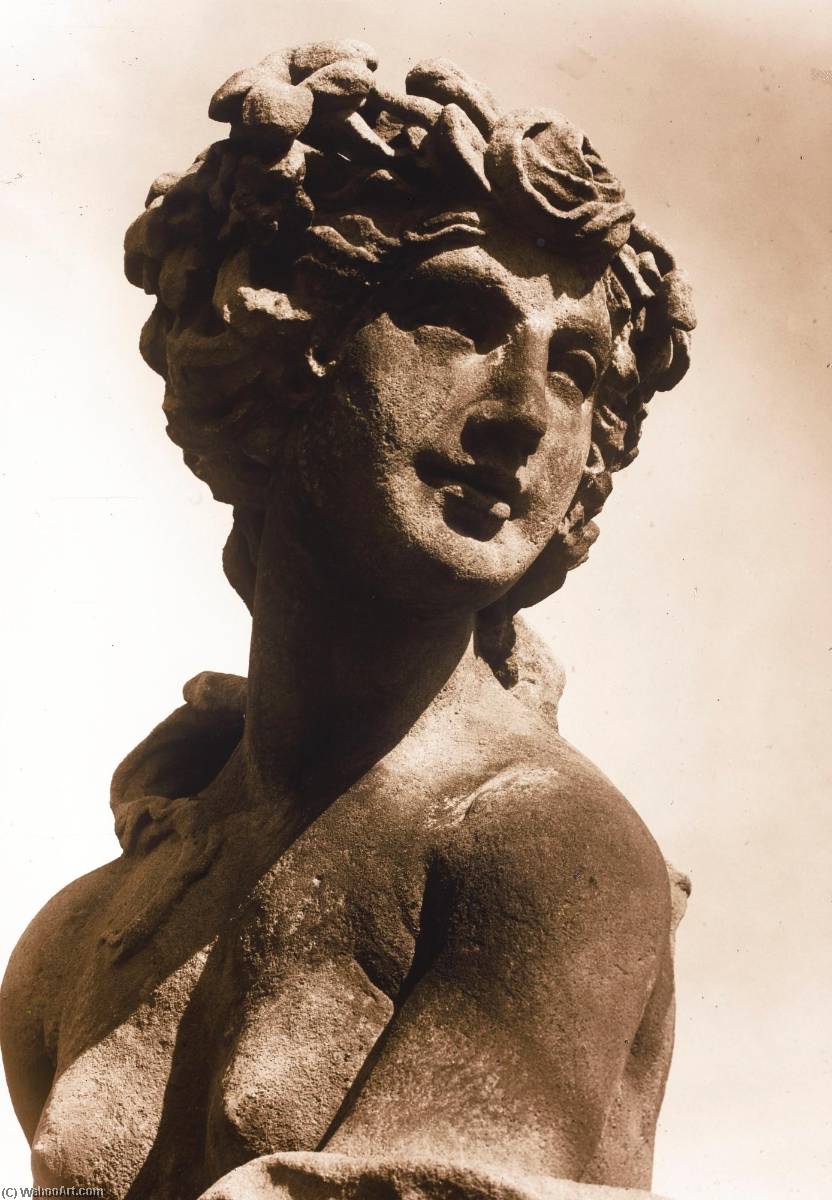
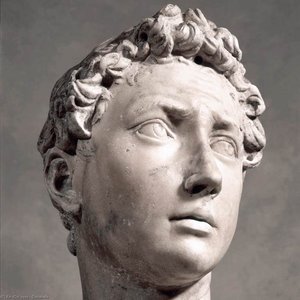
Tres fotografías (i) Cabeza de una escultura de Matthias Braun (ii) Floración del Castillo de Troya (iii) La llegada del otoño

 Ver más
Giclée / Impresión de arte
Impresiones giclée o en lienzo de calidad de museo con producción rápida y opciones de acabado flexibles. ( Comprar pintura hecha a mano Comprar imagen)




































Elija entre nuestros tamaños predefinidos que respetan las proporciones originales de la obra.

Puede introducir sus propias dimensiones para adaptarse a un marco o espacio específico. Si el tamaño seleccionado no coincide con las proporciones de la imagen original, recortaremos la obra de arte o extenderemos la imagen con un borde con efecto espejo o de color sólido. Se enviará una maqueta digital para su aprobación antes de que comience la producción.
Tenga en cuenta que la vista previa en pantalla no refleja el recorte o la extensión real. Solo la maqueta mostrará con precisión la composición final.
Aunque existen tamaños personalizados, recomendamos seleccionar una dimensión de la lista predefinida para preservar las proporciones originales.
Envío a todo el mundo () en 2 semanas en lugar de las 4/5 semanas estándar. (6 septiembre)

Envío exprés gratuito a todo el mundo

Lienzo de lino de alta calidad

Seguro de envío total

Garantía de reembolso de impuestos aduaneros

Garantía de fidelidad cromática exacta

Política de devolución de 100 días (solo por defectos)

Garantía de devolución del 100% del dinero

Descuento por cantidad
 La opción de vidrio solo está disponible en tamaños inferiores a 110 cm.

Tres fotografías (i) Cabeza de una escultura de Matthias Braun (ii) Floración del Castillo de Troya (iii) La llegada del otoño
Giclée / Impresión de arte
Dimensiones de la reproducción
-


Precio total final
$ 62
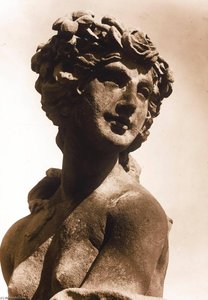
Una Mirada a la Belleza Clásica: "Cabeza de una Escultura por Matthias Braun" de Josef Sudek
Esta evocadora fotografía, parte de la serie “Tres Fotografías” de Josef Sudek, presenta un cautivador estudio en primer plano de una escultura atribuida a Matthias Braun. Más que un simple retrato, es una meditación sobre la forma, la textura y el poder perdurable de los ideales clásicos. El sujeto mismo – una cabeza esculpida – encarna serenidad y atemporalidad, insinuando el rico patrimonio artístico de Europa. La composición magistral de Sudek eleva esta imagen aparentemente sencilla a una obra de profundo interés visual.Estilo y Técnica: Pictorialismo que Encuentra la Modernidad
El estilo fotográfico de Sudek ocupa un espacio intrigante entre el pictorialismo y las primeras vanguardias modernas. Si bien inicialmente abrazó la estética romántica y pictórica característica del pictorialismo – evidente en sus trabajos anteriores – constantemente desafió sus convenciones. Esta fotografía demuestra una transición más allá de la representación puramente decorativa. El enfoque es intensamente nítido sobre los rasgos de la escultura, capturando cada rizo de cabello y sutil matiz de expresión. La iluminación, cuidadosamente orquestada para proyectar sombras a través del rostro, crea profundidad y dramatismo, destacando la habilidad del escultor para representar la forma humana. El uso de una cámara de gran formato por parte de Sudek, a pesar de sus limitaciones físicas tras su lesión en la guerra, subraya su compromiso con el detalle y la precisión. Manipula hábilmente la luz y la sombra para evocar una sensación de tranquila contemplación, alejándose de la fotografía puramente representacional hacia un enfoque más subjetivo y emocionalmente resonante.Contexto Histórico y el Legado de Matthias Braun
Se cree que la escultura representada es obra de Matthias Braun (1836-1915), un importante escultor checo conocido por sus obras neoclásicas, a menudo representando figuras mitológicas y retratos. El estilo de Braun refleja el renacimiento más amplio de las formas clásicas en Europa durante el siglo XIX, inspirándose en el arte griego y romano antiguo. La elección de Sudek para fotografiar esta escultura en particular no es arbitraria; se conecta con una línea de excelencia artística y habla del atractivo perdurable de los ideales clásicos dentro de la cultura checa. La fotografía misma fue creada durante un período de significativo experimento artístico en Praga, donde Sudek jugó un papel fundamental en el fomento de un movimiento fotográfico más progresista.Impacto Emocional y Simbolismo
Más allá de su brillantez técnica, esta fotografía resuena con un poder emocional silencioso. La expresión serena en el rostro de la escultura evoca sentimientos de paz e introspección. El suave iluminación y el fondo atenuado crean una atmósfera de tranquilidad, invitando a los espectadores a hacer una pausa y reflexionar. La inclusión de lo que parecen ser hojas o flores entrelazadas en el cabello sugiere temas de naturaleza, belleza e incluso mortalidad – un hilo común en el arte clásico. La fotografía de Sudek no es simplemente documentar una escultura; está capturando un momento de profunda quietud, transformando un objeto inanimado en un vehículo para la emoción humana y la expresión artística. Nos invita a considerar el poder perdurable del arte para trascender el tiempo y conectarnos con nuestro ser más profundo.Obras relacionadas
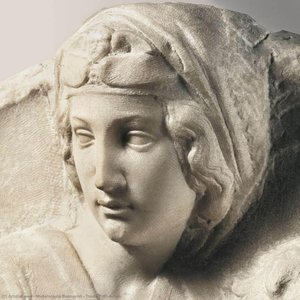
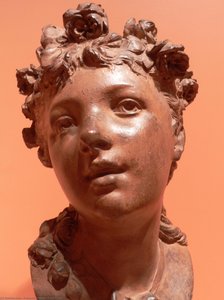
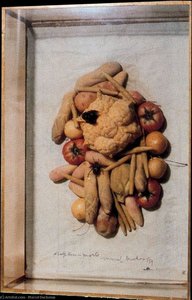
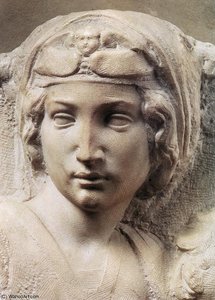


Biografía del artista
The Poet of Prague: The Soulful Vision of Josef Sudek
To step into the photographic world of Josef Sudek is to wander through a dreamscape where light and shadow perform a melancholic dance across the cobblestones of old Prague. Known affectionately as the "Poet of Prague," Sudek possessed an uncanny ability to transform the mundane—a pane of glass, a weathered sculpture, or a shifting autumn leaf—into profound meditations on existence. Born in 1896 in Kolín, Bohemia, his early life was rooted in the meticulous traditions of craftsmanship, having trained as a bookbinder. This foundational respect for texture and detail would later manifest in his photographic prints, which often possessed a tactile, almost sculptural quality that blurred the lines between photography and fine art.
The trajectory of Sudek’s life was irrevocably altered by the horrors of the First World War. Serving on the Italian Front, he suffered a devastating injury that resulted in the amputation of his right arm at the shoulder. While such a physical limitation might have silenced many artists, for Sudek, it became the crucible of his creative spirit. Navigating the world with a single arm, he learned to master cumbersome, large-format cameras, often relying on assistants to manage the heavy equipment. This struggle fostered a unique intimacy with his subject matter; because he could not move with frantic speed, he was forced to wait, to observe, and to feel the slow, rhythmic pulse of light as it moved through his studio window.
A Journey Through Pictorialism and Modernity
Sudek’s artistic evolution was a delicate negotiation between tradition and the avant-garde. In his early years, he was deeply immersed in Pictorialism, a movement that sought to elevate photography to the status of painting through soft focus and emotive compositions. Alongside contemporaries like Jaromír Funke, he helped found the Czech Photographic Society in 1924, championing an aesthetic that prioritized atmosphere over mere documentation. Yet, Sudek was never a stagnant artist. While his heart remained tethered to the romantic and the evocative, he was not immune to the shifting tides of modernism. During the 1930s, he engaged with more commercial, graphic styles, proving his versatility by contributing to influential periodicals like Pestrý týden.
His work is often characterized by a deep sense of Neo-romanticism, a style that found beauty in the ephemeral and the decaying. This is perhaps most evident in his legendary series, The Window of My Atelier. Through this singular vantage point, Sudek captured the changing seasons, the play of rain on glass, and the way sunlight filtered through the foliage of his garden. These images were not merely landscapes; they were psychological portraits of a man in communion with his environment. His ability to find the infinite within the infinitesimal allowed him to create a visual language that felt both deeply personal and universally resonant.
Legacy and the Labyrinths of Light
As the decades progressed and the political landscape of Europe grew increasingly dark, Sudek’s photography took on even more haunting, introspective tones. His later works, such as the Labyrinths series, explored the crowded, cluttered interiors of his studio, turning a small space into an expansive, psychological maze of objects and shadows. This period of his work serves as a testament to his enduring resilience; despite the physical and political upheavals surrounding him, his gaze remained fixed on the spiritual essence of his subjects.
The historical significance of Josef Sudek lies in his refusal to let photography be a mere mirror of reality. Instead, he used it as a prism to refract the soul of Prague. His achievements include:
- Mastery of Light: Redefining how shadow and luminosity could convey complex human emotions.
- Artistic Resilience: Overcoming profound physical disability to pioneer a new, intimate way of seeing.
- Cultural Preservation: Capturing the vanishing textures and atmospheres of pre-war and wartime Prague, creating a vital historical and emotional record.
Today, Sudek stands as a titan of 20th-century photography, an artist whose work continues to haunt and inspire. He remains a reminder that even in the face of loss and darkness, there is a profound, poetic beauty waiting to be discovered by those who know how to truly look.
josef sudek
1896 - 1976
Datos clave
- Artistic Movement Or Style: Neo-romantic photography
- Artists Or Movements Influenced By This Artist: ['Pictorialism']
- Artists Who Influenced This Artist: ['Jaromir Funke']
- Date Of Death: 1976
- Full Name: Josef Südek
- Nationality: Czech
- Notable Artworks:
- The Window of My Atelier Series
- Prague Nightscapes
- Place Of Birth: Prague, Czech Republic
Artículos relacionados

Esculturas de Bronce Legendarias: 10 Obras Maestras que Transformaron el Arte | ArtsDot
Descubre las 10 esculturas de bronce más legendarias que revolucionaron el arte. Explora la historia de Rodin, Degas y otros maestros del bronce. Encuentra reproducciones de alta calidad e inspiración para tu hogar en ArtsDot.com.

The Enduring Form: Exploring Themes & Techniques in Sculpture Across Historical Periods
Explore the rich history of sculpture from ancient masterpieces to contemporary innovations. Discover key techniques, influential artists & investment potential for discerning art collectors.

Las 10 Obras Maestras de Bronce que Revolucionaron la Historia del Arte | ArtsDot
Descubre las 10 esculturas de bronce más influyentes de la historia del arte. Explora obras maestras de Rodin, Degas y otros genios. Encuentra reproducciones de arte de calidad museo en ArtsDot.com.

The Enduring Form: Sculpture Across History, Technique & Emotional Resonance
Explore the rich history of sculpture with ArtsDot. Discover key techniques, influential artists & investment potential for discerning collectors. Expert insights into valuing and collecting timeless masterpieces.
Beyond the Lens: Photography's Enduring Influence on Modern & Contemporary Art
Explore photography's pivotal role in shaping modern & contemporary art. Discover key movements, influential artists like Stieglitz, and expert collecting advice from ArtsDot.