 Ver en contexto
 Enviar
 Compartir
 Detalles

 Descargar
 Similares
 Radiografía
 Presentación de diapositivas
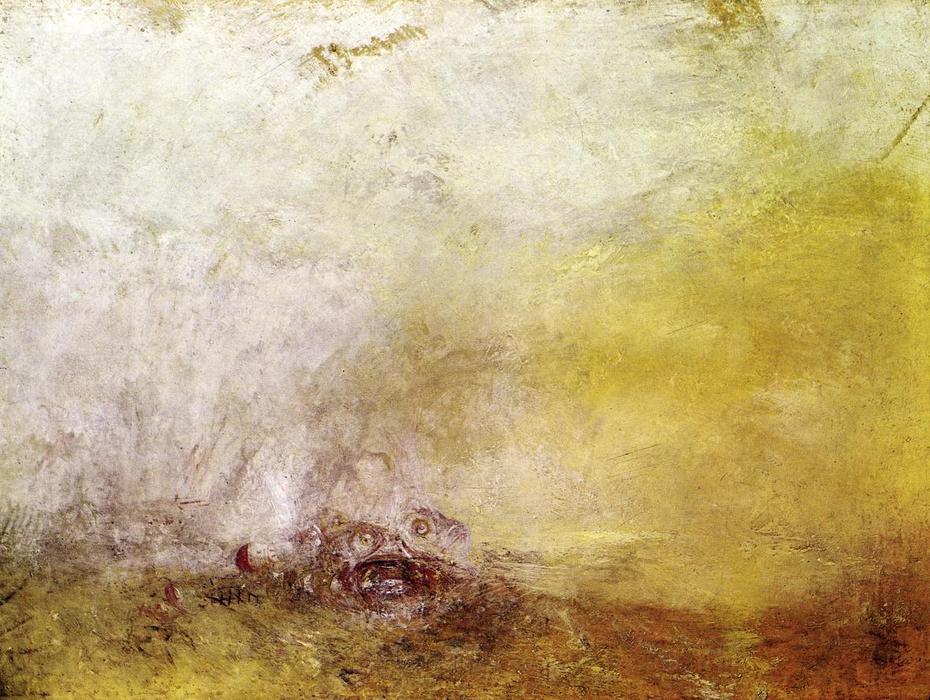
Sunrise with Sea Monsters


 Ver más
Reproducción al óleo hecha a mano
Óleo sobre lienzo pintado a mano en el tamaño y marco de su elección, realizado por encargo por nuestros artistas. ( Comprar impresión Comprar imagen)




P118B $10

P118H $10

P118W $10

P438Z $10

P508JH $12

P508YH $12

P805H $10

P805Z $10

P919BZ $10

P919G $10

P919XJ $10

P959ZH $10

P968JZ $12

W106C $8

W218G $10

W218JH $8

W218Y $10

W307PJ $10

W316G $10

W316PJ $8

W316Y $10

W398PJ $8

W4111J $10

W500HY $15

W500JH $15

W692G $12

W849H $8

W940BG $15

W953PJ $8




Elija entre nuestros tamaños predefinidos que respetan las proporciones originales de la obra.

Puede ingresar sus propias dimensiones para adaptarse a un marco o espacio específico. Si el tamaño seleccionado no coincide con las proporciones de la imagen original, recortaremos la obra o extenderemos la pintura con elementos adicionales pintados a mano. Se le enviará una maqueta digital para su aprobación antes de comenzar la producción.
Tenga en cuenta que la vista previa en pantalla no refleja el recorte o la extensión reales. Solo la maqueta mostrará con precisión la composición final.
Si bien existen tamaños personalizados, recomendamos seleccionar una dimensión de la lista predefinida para preservar las proporciones originales.
Tras realizar el pedido, el equipo de ArtsDot.com enviará un correo electrónico al cliente para solicitar instrucciones y proporcionarle una vista previa del boceto.
Envío a todo el mundo () en 3-4 semanas en lugar de las 5 semanas estándar. (22 agosto). Sin comprometer la calidad.

Envío exprés gratuito a todo el mundo

Lienzo de lino de alta calidad

Seguro de envío total

Garantía de reembolso de impuestos aduaneros

Garantía de fidelidad cromática exacta

Política de devolución de 60 días (solo por defectos)

Garantía de devolución del 100% del dinero

Descuento por cantidad
 La opción de vidrio solo está disponible en tamaños inferiores a 110 cm.

Sunrise with Sea Monsters
Técnica de reproducción
Dimensiones de la reproducción
-


Precio total final
$ 263
Descripción de la obra
Sunrise with Sea Monsters: A Romantic Vision of Turbulent Beauty
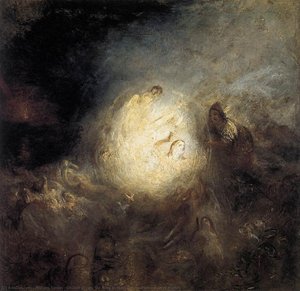
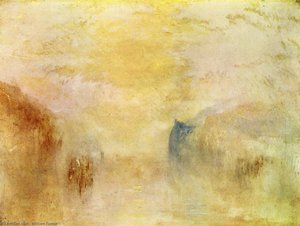
J.M.W. Turner’s “Sunrise with Sea Monsters,” painted in 1845, isn't merely a depiction of dawn; it’s an immersive experience—a visceral journey into the heart of nature’s raw power and the sublime beauty that resides within its chaos. This oil on canvas, currently residing at the Tate Britain in London, transcends simple landscape painting, becoming a profound meditation on light, atmosphere, and the human response to the overwhelming forces of the natural world. Turner, already a master of capturing fleeting moments and dramatic effects, pushes his artistic boundaries here, venturing into a realm where observation yields to intuition and emotion takes precedence over precise representation.
The scene unfolds with an almost hallucinatory intensity. A bruised, ochre-colored sky dominates the upper portion of the canvas, swirling with clouds rendered in thick, impasto strokes that seem to writhe and shift before the viewer’s eyes. Below this turbulent expanse lies a vast, grey sea, its surface alive with movement—not the gentle lapping of waves, but a roiling, almost violent energy. And then, emerging from the mist and shadows, are the “sea monsters” – colossal, vaguely defined shapes that have captivated viewers for generations. These aren’t monstrous creatures in the traditional sense; they possess an ethereal quality, appearing more like manifestations of the sea itself than literal beasts. Their forms are ambiguous, suggesting fish, whales, or perhaps even the swirling mists themselves, blurring the line between reality and imagination.
The Language of Light and Color
Turner’s genius lies not just in his subject matter but in his masterful manipulation of light and color. He employs a technique known as “atmospheric perspective,” where distant objects appear paler and less distinct due to the scattering of light by the atmosphere. This creates a sense of depth and distance, drawing the viewer into the scene. The use of complementary colors—the warm oranges and reds of the sunrise juxtaposed against the cool blues and greys of the sea—intensifies the drama and adds to the painting’s overall emotional impact. Notice how Turner builds up layers of color, applying paint in thick, textured strokes that create a palpable sense of movement and energy. The light isn't simply illuminating the scene; it *is* the scene – an active force shaping and transforming everything it touches.
The painting’s palette is remarkably restrained, dominated by muted tones—ochres, browns, greys, blues, and pinks. Yet, within this limited range, Turner achieves a breathtaking richness of color and texture. He utilizes glazing techniques – applying thin layers of translucent paint over dried underlayers – to build up depth and luminosity, creating an effect that is both luminous and atmospheric. The brushwork itself is incredibly expressive, with visible strokes that convey the artist’s hand and his passionate engagement with the subject matter.
Romanticism and the Sublime
"Sunrise with Sea Monsters" stands as a quintessential example of Romantic art—a movement that emphasized emotion, imagination, and the beauty of nature. The Romantics rejected the Enlightenment's focus on reason and logic, instead celebrating the power of intuition and feeling. Turner’s painting embodies this spirit perfectly, capturing not just what he *saw* but what he *felt* – a sense of awe, wonder, and perhaps even a touch of fear in the face of nature’s overwhelming grandeur. The concept of the “sublime,” as articulated by Edmund Burke, is central to understanding the painting's impact. The sublime refers to experiences that inspire both terror and delight—a recognition of our own insignificance in the face of something vast and powerful.
Turner’s work resonated deeply with his contemporaries, who saw in it a reflection of the changing world – the rise of industrialization and its impact on the natural landscape. The “sea monsters” can be interpreted as symbols of this disruption—a warning about the destructive potential of human progress. However, the painting ultimately offers a more hopeful message: a reminder that even amidst chaos and destruction, there remains an enduring beauty to be found in the power and majesty of nature.
Collecting the Vision
Reproductions of “Sunrise with Sea Monsters” capture only a fraction of the original’s immersive quality. To truly appreciate this masterpiece, consider commissioning a hand-painted reproduction from ArtsDot.com – an exquisite opportunity to bring Turner's vision into your home or office. The meticulous detail and vibrant colors will transport you back to that dramatic coastal scene, allowing you to experience the sublime beauty of nature in all its turbulent glory.
Obras relacionadas
Biografía del artista
Primeros años y formación
Joseph Mallord William Turner, una figura destacada en el arte británico, nació el 23 de abril de 1775 en Maiden Lane, Covent Garden, Londres. Su padre, William Turner, era barbero y fabricante de pelucas, mientras que su madre, Mary Marshall, provenía de una familia de carniceros. A los 14 años, Turner ingresó a la Royal Academy of Art en 1789, marcando el inicio de su ilustre carrera.Estilo artístico e influencias
La obra de Turner se caracteriza por sus colorizaciones expresivas, paisajes imaginativos y mares tempestuosos. Fue un artista profundamente experimental y progresista, influyendo en pintores tan diversos como Claude Monet y Mark Rothko. Su influencia puede verse en las obras de muchos artistas que le siguieron. Sus innovaciones en el uso de la luz y la atmósfera lo convirtieron en una figura clave del Romanticismo.Obras destacadas y colecciones
- La mañana después del diluvio (1843): Una notable pintura al óleo sobre lienzo, ubicada en la Tate Collection, Londres, que muestra la forma estilística de Turner para representar las fuerzas de la naturaleza.
- Canal de Chichester (1828): Comisionada por George Wyndham, 3er conde de Egremont, esta pintura representa el Canal de Chichester y actualmente se encuentra en la Tate Collection.
- Ruinas de Tintern Abbey: Una obra acuática, ahora en el Museo Calouste Gulbenkian (Lisboa, Portugal), que muestra la maestría de Turner para capturar la luz y la atmósfera.
Evolución artística y logros
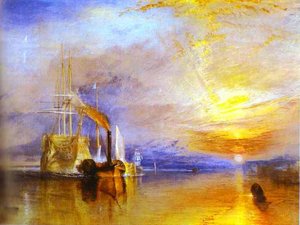
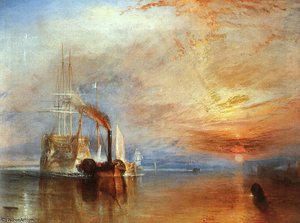
Turner experimentó constantemente con nuevas técnicas y materiales a lo largo de su carrera. Inicialmente influenciado por los paisajes clásicos, evolucionó hacia un estilo más libre y expresivo, donde la luz y el color se convirtieron en los elementos dominantes. Sus obras tardías, como "La batalla del Temeraire", son ejemplos paradigmáticos de su capacidad para combinar observación realista con una visión poética e imaginativa. Su habilidad para representar fenómenos atmosféricos, como tormentas y nieblas, es legendaria.Legado e importancia histórica
Turner dejó atrás más de 2000 pinturas y 19000 dibujos y bocetos. Es ampliamente considerado uno de los mayores maestros de la pintura paisajística y marina británica en acuarela, a menudo referido como "el pintor de la luz". Su influencia en artistas posteriores es innegable, convirtiéndolo en una figura fundamental en la historia del arte.- Se puede ver más obras de Turner en https://ArtsDot.com/@/williamturner
- Explorar la colección Tate, Londres, que alberga muchas de las notables piezas de Turner: /es/art/show/art-d3c5y9-es/
- Descubrir el mundo del arte en https://ArtsDot.com/@@/all-popular-artists, con los mejores artistas de todos los tiempos.
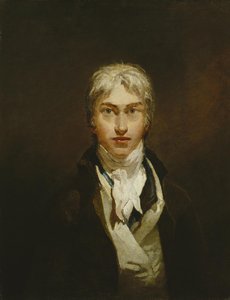
Joseph Mallord William Turner
1775 - 1851 , Reino Unido
Datos clave
- Artistas Que Influyeron:
- Claude Monet
- Mark Rothko
- Estilo Artístico: Romanticismo, Paisajismo
- Fecha De Nacimiento: 23 de abril de 1775
- Lugar De Nacimiento: Covent Garden, Reino Unido
- Nacionalidad: Británico
- Nombre Completo: Joseph Mallord William Turner
- Obras Notables:
- La mañana después del diluvio
- El Temeraire
- Ruinas de Tintern Abbey
Artículos relacionados

Paisajes Románticos: 10 Obras Maestras que Definieron un Movimiento Artístico
Descubre los 10 paisajes románticos más influyentes de artistas como Caspar David Friedrich y Turner. Explora la belleza, el simbolismo y las técnicas del movimiento romántico. Reproducciones de arte exclusivas en ArtsDot.com.

Evocations of Place: A Historical Journey Through Landscape Art
Explore the rich history of landscape art with ArtsDot. Discover renowned artists, movements like Impressionism & Romanticism, and expert guidance for collecting timeless pieces. Find your perfect serene escape today!

John Constable: Las 25 Obras Maestras del Paisaje Inglés | ArtsDot
Descubre las 25 obras maestras de John Constable, el pintor romántico inglés que capturó la belleza del paisaje. Explora su técnica, historia y significado en ArtsDot.com. Reproducciones de arte de alta calidad para tu hogar.
J.M.W. Turner: Light, Atmosphere & the Romantic Sublime
Explore the life & art of J.M.W. Turner, a master of Romantic landscape painting. Discover his innovative techniques, key works, and lasting influence on Impressionism. Find high-quality reproductions at ArtsDot.
Evoking Nature's Sublime: A Comprehensive Exploration of 19th-Century Landscape Painting
Explore the captivating world of 19th-century landscape painting! Discover renowned artists like Friedrich & Monet, key movements, and find the perfect artwork to bring nature's serenity into your home. Expert insights at ArtsDot.