 Ver en contexto
 Enviar
 Compartir
 Detalles

 Descargar
 Similares
 Radiografía
 Presentación de diapositivas
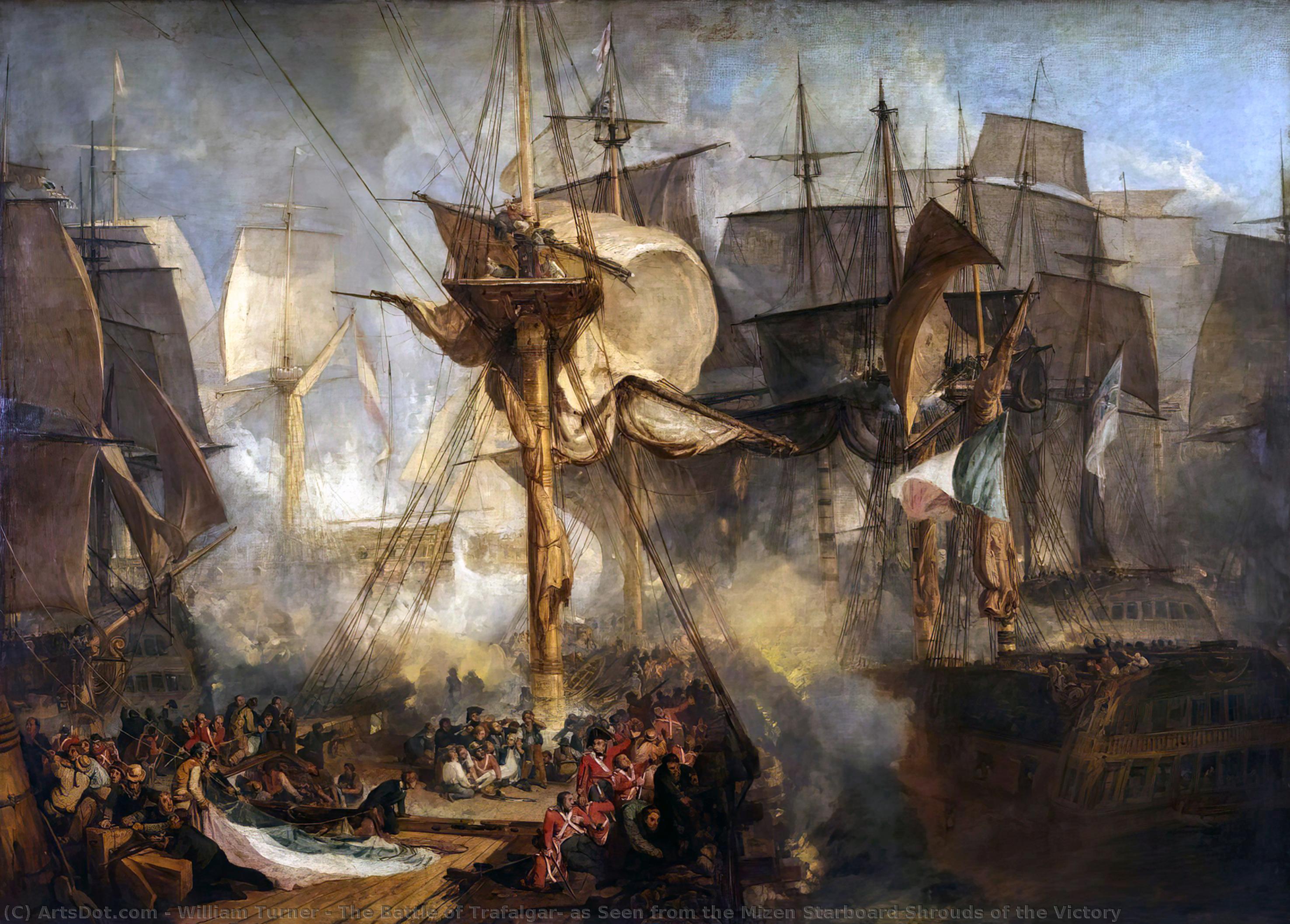
The Battle of Trafalgar, as Seen from the Mizen Starboard Shrouds of the Victory


 Ver más
Reproducción al óleo hecha a mano
Óleo sobre lienzo pintado a mano en el tamaño y marco de su elección, realizado por encargo por nuestros artistas. ( Comprar impresión Comprar imagen)




P118B $10

P118H $10

P118W $10

P438Z $10

P508JH $12

P508YH $12

P805H $10

P805Z $10

P919BZ $10

P919G $10

P919XJ $10

P959ZH $10

P968JZ $12

W106C $8

W218G $10

W218JH $8

W218Y $10

W307PJ $10

W316G $10

W316PJ $8

W316Y $10

W398PJ $8

W4111J $10

W500HY $15

W500JH $15

W692G $12

W849H $8

W940BG $15

W953PJ $8




Elija entre nuestros tamaños predefinidos que respetan las proporciones originales de la obra.

Puede ingresar sus propias dimensiones para adaptarse a un marco o espacio específico. Si el tamaño seleccionado no coincide con las proporciones de la imagen original, recortaremos la obra o extenderemos la pintura con elementos adicionales pintados a mano. Se le enviará una maqueta digital para su aprobación antes de comenzar la producción.
Tenga en cuenta que la vista previa en pantalla no refleja el recorte o la extensión reales. Solo la maqueta mostrará con precisión la composición final.
Si bien existen tamaños personalizados, recomendamos seleccionar una dimensión de la lista predefinida para preservar las proporciones originales.
Tras realizar el pedido, el equipo de ArtsDot.com enviará un correo electrónico al cliente para solicitar instrucciones y proporcionarle una vista previa del boceto.
Envío a todo el mundo () en 3-4 semanas en lugar de las 5 semanas estándar. (2 septiembre). Sin comprometer la calidad.

Envío exprés gratuito a todo el mundo

Lienzo de lino de alta calidad

Seguro de envío total

Garantía de reembolso de impuestos aduaneros

Garantía de fidelidad cromática exacta

Política de devolución de 60 días (solo por defectos)

Garantía de devolución del 100% del dinero

Descuento por cantidad
 La opción de vidrio solo está disponible en tamaños inferiores a 110 cm.

The Battle of Trafalgar, as Seen from the Mizen Starboard Shrouds of the Victory
Técnica de reproducción
Dimensiones de la reproducción
-


Precio total final
$ 263
A Tempestuous Vision: Turner’s ‘The Battle of Trafalgar’
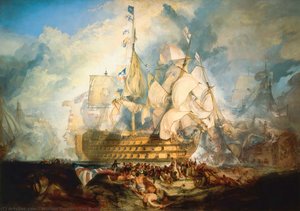
William Turner's “The Battle of Trafalgar, as Seen from the Mizen Starboard Shrouds of the Victory” is not merely a depiction of a naval engagement; it is an immersive experience, a visceral plunge into the heart of chaos and heroism. Painted between 1806 and 1808, this iconic work captures a pivotal moment in British history – the decisive victory at Trafalgar – through Turner’s unparalleled mastery of light, color, and atmosphere. The painting's unique perspective, derived from the vantage point of the HMS Victory’s mizen shrouds, offers an unprecedented intimacy with the unfolding drama, drawing the viewer directly into the storm-tossed sea.
- Subject Matter: The scene portrays the intense battle between British and combined French/Spanish fleets in 1805.
- Artist: Created by Joseph Mallord William Turner, a leading figure of the Romantic movement.
- Historical Significance: A powerful representation of Britain’s naval dominance during the Napoleonic Wars.
Romanticism and the Sublime
Turner was a pivotal figure in the burgeoning Romantic movement, rejecting the Neoclassical emphasis on reason and order in favor of emotion, imagination, and the raw power of nature. “The Battle of Trafalgar” exemplifies this shift dramatically. The painting’s core is rooted in the concept of the ‘sublime,’ an aesthetic experience characterized by awe, terror, and a sense of one's own insignificance when confronted with overwhelming forces – in this case, the fury of the sea and the destructive power of naval warfare. Turner wasn’t interested in providing a precise historical record; instead, he sought to evoke the *feeling* of the battle, translating it into an intensely emotional visual language.
Technique and Composition
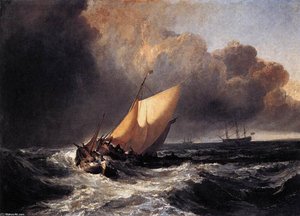
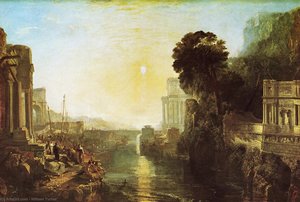
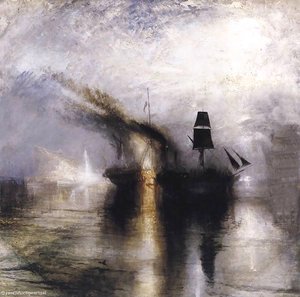
Turner's technique is instantly recognizable. He employed loose, expressive brushstrokes, layering colors with remarkable speed to capture the fleeting effects of light and smoke. The composition itself is deliberately unsettling. The viewer is placed almost within the heart of the action, surrounded by swirling clouds of vapor, exploding projectiles, and the fragmented silhouettes of ships engaged in deadly combat. The use of predominantly dark blues, grays, and whites creates a sense of depth and movement, while flashes of orange and yellow represent the fires and explosions. The diagonal lines created by the ship's sails and the turbulent water further heighten the dynamism of the scene.
Symbolism and Legacy
Beyond its immediate depiction of the battle, “The Battle of Trafalgar” carries significant symbolic weight. It represents British naval power, courage, and strategic brilliance – qualities deeply valued at the time. Nelson’s presence, though not explicitly depicted, is felt throughout the canvas, embodying leadership and sacrifice. The painting's enduring legacy lies in its ability to transcend a simple historical record, becoming an iconic representation of Britain’s maritime heritage and a testament to Turner’s revolutionary approach to art. It continues to inspire awe and wonder, reminding us of the power and beauty – and the inherent danger – of nature.
Obras relacionadas
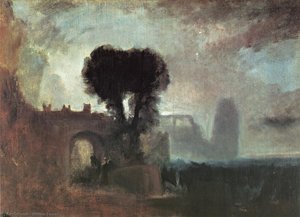
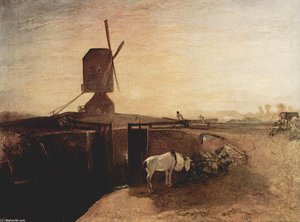
Biografía del artista
Primeros años y formación
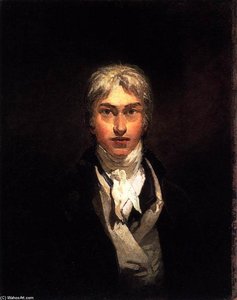
Joseph Mallord William Turner, una figura destacada en el arte británico, nació el 23 de abril de 1775 en Maiden Lane, Covent Garden, Londres. Su padre, William Turner, era barbero y fabricante de pelucas, mientras que su madre, Mary Marshall, provenía de una familia de carniceros. A los 14 años, Turner ingresó a la Royal Academy of Art en 1789, marcando el inicio de su ilustre carrera.Estilo artístico e influencias
La obra de Turner se caracteriza por sus colorizaciones expresivas, paisajes imaginativos y mares tempestuosos. Fue un artista profundamente experimental y progresista, influyendo en pintores tan diversos como Claude Monet y Mark Rothko. Su influencia puede verse en las obras de muchos artistas que le siguieron. Sus innovaciones en el uso de la luz y la atmósfera lo convirtieron en una figura clave del Romanticismo.Obras destacadas y colecciones
- La mañana después del diluvio (1843): Una notable pintura al óleo sobre lienzo, ubicada en la Tate Collection, Londres, que muestra la forma estilística de Turner para representar las fuerzas de la naturaleza.
- Canal de Chichester (1828): Comisionada por George Wyndham, 3er conde de Egremont, esta pintura representa el Canal de Chichester y actualmente se encuentra en la Tate Collection.
- Ruinas de Tintern Abbey: Una obra acuática, ahora en el Museo Calouste Gulbenkian (Lisboa, Portugal), que muestra la maestría de Turner para capturar la luz y la atmósfera.
Evolución artística y logros
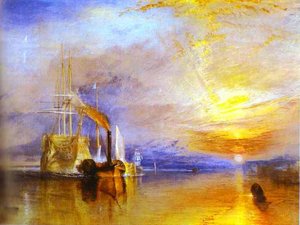
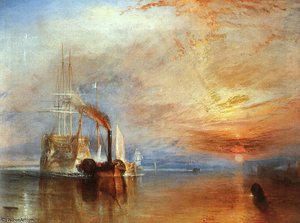
Turner experimentó constantemente con nuevas técnicas y materiales a lo largo de su carrera. Inicialmente influenciado por los paisajes clásicos, evolucionó hacia un estilo más libre y expresivo, donde la luz y el color se convirtieron en los elementos dominantes. Sus obras tardías, como "La batalla del Temeraire", son ejemplos paradigmáticos de su capacidad para combinar observación realista con una visión poética e imaginativa. Su habilidad para representar fenómenos atmosféricos, como tormentas y nieblas, es legendaria.Legado e importancia histórica
Turner dejó atrás más de 2000 pinturas y 19000 dibujos y bocetos. Es ampliamente considerado uno de los mayores maestros de la pintura paisajística y marina británica en acuarela, a menudo referido como "el pintor de la luz". Su influencia en artistas posteriores es innegable, convirtiéndolo en una figura fundamental en la historia del arte.- Se puede ver más obras de Turner en https://ArtsDot.com/@/williamturner
- Explorar la colección Tate, Londres, que alberga muchas de las notables piezas de Turner: /es/art/show/art-d3c5y9-es/
- Descubrir el mundo del arte en https://ArtsDot.com/@@/all-popular-artists, con los mejores artistas de todos los tiempos.
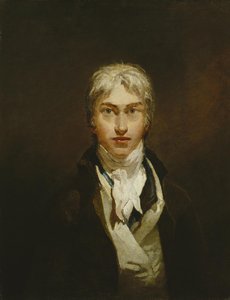
Joseph Mallord William Turner
1775 - 1851 , Reino Unido
Datos clave
- Artistas Que Influyeron:
- Claude Monet
- Mark Rothko
- Estilo Artístico: Romanticismo, Paisajismo
- Fecha De Nacimiento: 23 de abril de 1775
- Lugar De Nacimiento: Covent Garden, Reino Unido
- Nacionalidad: Británico
- Nombre Completo: Joseph Mallord William Turner
- Obras Notables:
- La mañana después del diluvio
- El Temeraire
- Ruinas de Tintern Abbey
Artículos relacionados

Giclée Prints: Archival Quality & Aesthetic Nuances for the Discerning Collector
Explore the world of giclée prints with ArtsDot. Learn about archival quality, aesthetic nuances & investment potential. Expert guidance for discerning art collectors seeking museum-quality reproductions and lasting value.
J.M.W. Turner: Light, Atmosphere & the Romantic Sublime
Explore the life & art of J.M.W. Turner, a master of Romantic landscape painting. Discover his innovative techniques, key works, and lasting influence on Impressionism. Find high-quality reproductions at ArtsDot.

The Enduring Legacy of Fine Art Prints: Technique, History & Aesthetic Impact
Explore the rich history & techniques of fine art prints. Discover investment potential, assess authenticity, and learn how to preserve your collection with expert guidance. Trusted insights for discerning collectors.

Echoes of Time: Exploring the Enduring Appeal & Historical Context of Vintage Art Prints
Explore the captivating world of vintage art prints! Discover their history, collecting tips & enduring appeal. Expert insights on chromolithography and building a legacy collection with ArtsDot.
Romantic Realism's Finest: 10 Masterpieces for Your Home | ArtsDot
Explore 10 defining masterpieces of Romantic Realism! Discover Courbet, Millet & Daumier's powerful paintings—capturing emotion and social realities. Find museum-quality reproductions for your home at ArtsDot.com.