 Vista previa
 Compartir
 Compartir
 Ver detalles

 Descargar
 Ver similares
 Radiografía
 Presentación de diapositivas
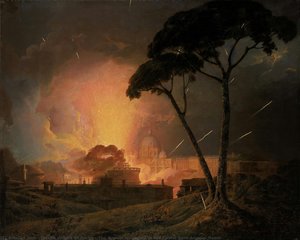
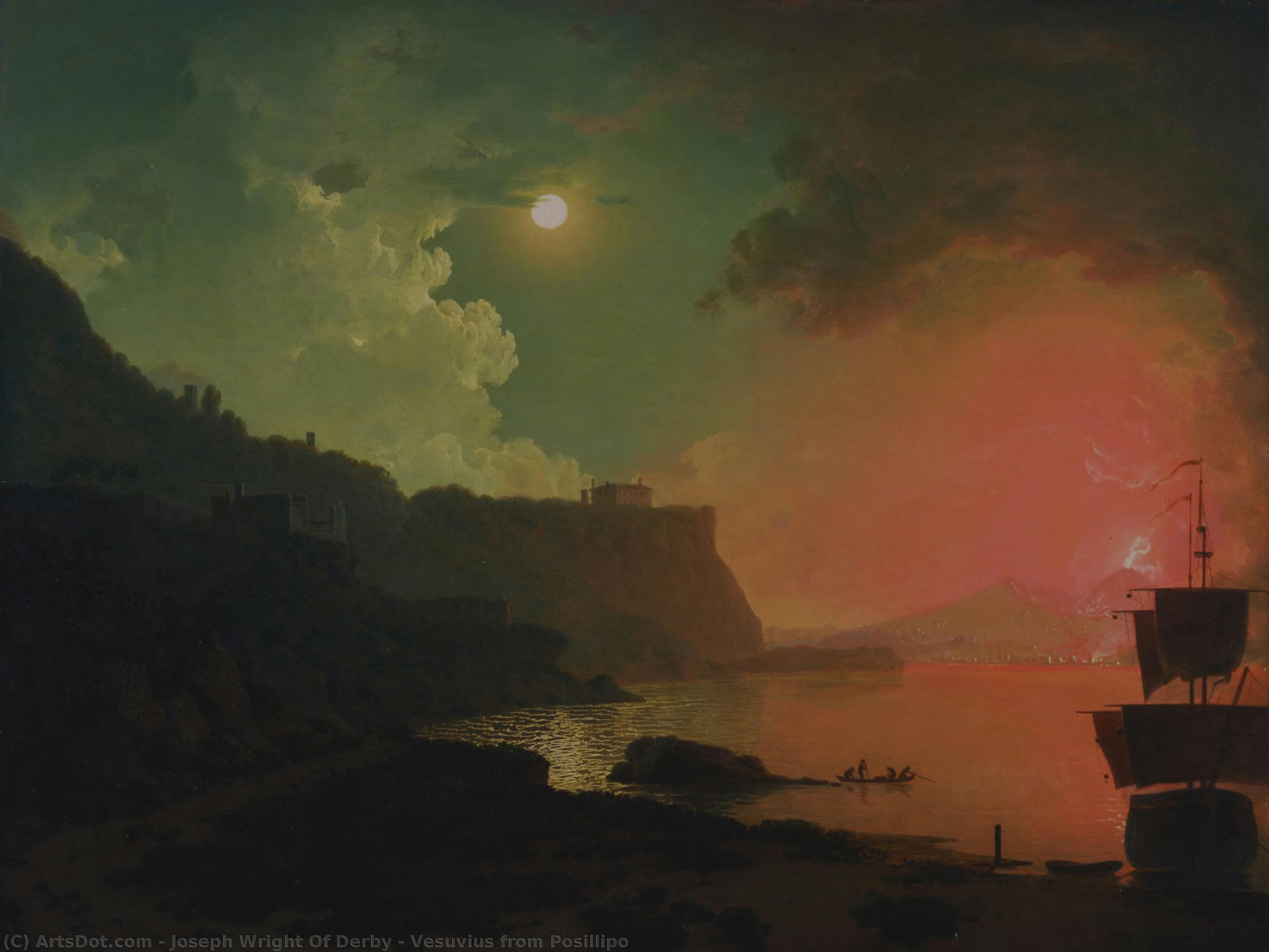
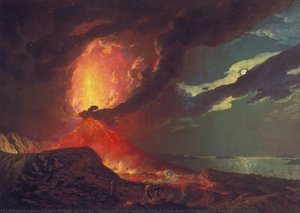
Vesuvius from Posillipo
 Oil On Canvas
- WallArt
- Romanticism
 1788
1788 63.0 x 83.0 cm
 Yale Center for British Art
 Leer más
Reproducción al óleo hecha a mano
Óleo sobre lienzo pintado a mano en el tamaño y marco de su elección, realizado por encargo por nuestros artistas. ( Pedir impresión Comprar descarga)




P118B $10

P118H $10

P118W $10

P438Z $10

P508JH $12

P508YH $12

P805H $10

P805Z $10

P919BZ $10

P919G $10

P919XJ $10

P959ZH $10

P968JZ $12

W106C $8

W218G $10

W218JH $8

W218Y $10

W307PJ $10

W316G $10

W316PJ $8

W316Y $10

W398PJ $8

W4111J $10

W500HY $15

W500JH $15

W692G $12

W849H $8

W940BG $15

W953PJ $8




Elija entre nuestros tamaños predefinidos que respetan las proporciones originales de la obra.

Puede ingresar sus propias dimensiones para adaptarse a un marco o espacio específico. Si el tamaño seleccionado no coincide con las proporciones de la imagen original, recortaremos la obra o extenderemos la pintura con elementos adicionales pintados a mano. Se le enviará una maqueta digital para su aprobación antes de comenzar la producción.
Tenga en cuenta que la vista previa en pantalla no refleja el recorte o la extensión reales. Solo la maqueta mostrará con precisión la composición final.
Si bien existen tamaños personalizados, recomendamos seleccionar una dimensión de la lista predefinida para preservar las proporciones originales.
Tras realizar el pedido, el equipo de ArtsDot.com enviará un correo electrónico al cliente para solicitar instrucciones y proporcionarle una vista previa del boceto.
Envío a todo el mundo () en 3-4 semanas en lugar de las 5 semanas estándar. (20 agosto). Sin comprometer la calidad.

Envío exprés gratuito a todo el mundo

Lienzo de lino de alta calidad

Seguro de envío completo

Garantía de reembolso de aranceles aduaneros

Garantía de fidelidad cromática exacta

Política de devolución de 60 días (solo por defectos)

Garantía de devolución del 100% del dinero

Oferta por volumen
 La opción de vidrio solo está disponible en tamaños inferiores a 110 cm.

Vesuvius from Posillipo
Técnica de reproducción
Tamaño de la reproducción
-


Precio total
$ 263
Descripción de la obra
Vesuvius from Posillipo: A Window into Enlightenment’s Dramatic Soul
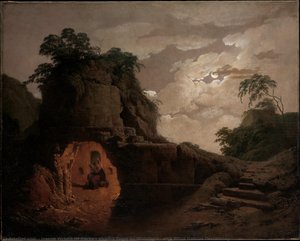
Joseph Wright of Derby's "Vesuvius from Posillipo," painted in 1788, isn’t merely a landscape; it’s a carefully orchestrated drama of light, shadow, and the sublime. This captivating work transcends simple depiction, offering a profound meditation on nature’s power, human perception, and the burgeoning spirit of scientific inquiry that defined the era. Wright, often dubbed “the painter of light,” masterfully employs his signature technique of *tenebrism* – an intense contrast between illumination and darkness – to draw the viewer into the heart of the scene, creating a palpable sense of awe and even a touch of foreboding.
The painting captures the view from Posillipo, a coastal suburb of Naples, looking out towards Mount Vesuvius. The volcano dominates the background, not as a terrifying monster, but as a majestic, almost ethereal presence. Wright doesn’t depict an eruption—he was fortunate enough to have witnessed only dormant activity during his Italian sojourn – instead, he focuses on the *potential* for destruction and the raw power simmering beneath the surface. The smoke billowing from the crater is rendered in delicate shades of grey and black, subtly hinting at the volatile forces contained within. The sea, a deep, reflective blue, mirrors the sky above, creating an illusionistic depth that pulls the viewer into the scene.
A Masterclass in Chiaroscuro and Scientific Observation
Wright’s skill lies not just in his ability to capture a landscape, but in how he uses light to shape our understanding of it. The foreground is bathed in a soft, diffused glow, suggesting moonlight reflecting off the water – a detail that adds an element of mystery and romance. The volcano itself is partially obscured by shadow, emphasizing its imposing scale and hinting at the darkness within. This careful manipulation of light and dark isn’t arbitrary; it reflects Wright's fascination with optics and his desire to represent the world as he *perceived* it, informed by his growing interest in scientific principles.
Interestingly, analysis of the painting reveals that Wright employed a unique approach to color. The ground is painted using gypsum rather than chalk, a detail that contributes to the overall sense of drama and depth. The use of subtle yellows and oranges within the smoke suggests the presence of sulfur, further grounding the scene in scientific observation. This meticulous attention to detail speaks volumes about Wright’s commitment to capturing not just the appearance of Vesuvius, but also its underlying geological reality.
Symbolism and the Age of Enlightenment
“Vesuvius from Posillipo” is deeply intertwined with the intellectual currents of the late 18th century. Wright's trip to Italy coincided with a renewed interest in classical antiquity and a growing fascination with scientific discovery. The painting can be seen as an allegory for the forces shaping Europe at the time – the potential for both creation and destruction, progress and ruin. The Lunar Society of Birmingham, a group of scientists, philosophers, and industrialists that Wright frequented, were deeply interested in understanding the natural world through observation and experimentation. This painting embodies their spirit of inquiry, prompting viewers to contemplate the relationship between humanity and nature.
Furthermore, the dramatic lighting evokes the theatricality favored by Enlightenment thinkers who sought to illuminate complex ideas through compelling narratives. Wright’s use of chiaroscuro mirrors the philosophical debates of the era, exploring themes of light and darkness, reason and intuition. The painting serves as a visual representation of this intellectual ferment, capturing the excitement and uncertainty of a world undergoing rapid transformation.
A Timeless Vision: Reproduction and Beyond
Reproductions of “Vesuvius from Posillipo” offer a remarkable opportunity to experience Wright’s masterful technique and evocative vision. Whether adorning a grand salon or a more intimate space, this painting continues to captivate viewers with its dramatic intensity and profound symbolism. It's a testament to Wright's ability to transform a natural phenomenon into a powerful meditation on the human condition – a timeless reminder of nature’s beauty, power, and inherent drama.
Obras relacionadas


Biografía del artista
Los Orígenes y Formación de un Maestro de la Luz
Joseph Wright of Derby, nacido en Puerta de Hierro, Reino Unido, el 3 de septiembre de 1734, fue mucho más que un pintor; fue un cronista visual de una época de transformación radical. Hijo de un abogado, su temprano interés por el arte lo llevó a Londres en 1751 para estudiar bajo la tutela del respetado Thomas Hudson. Esta formación inicial sentó las bases de su técnica, pero Wright pronto desarrolló un estilo distintivo que trascendía las convenciones de su época. Su paso por Liverpool entre 1768 y 1771 le permitió perfeccionar sus habilidades retratando a prominentes ciudadanos, aunque fue en Derby donde realmente encontró su voz artística. La influencia de Alexander Cozens en la composición es evidente en su obra, demostrando una búsqueda constante de nuevas formas de expresión. Su matrimonio con Ann Swift, hija de un minero de plomo, marcó un punto importante en su vida y lo llevó a emprender un viaje crucial a Italia en 1773, acompañado por su esposa y Richard Hurleston.El Viaje a Italia y el Nacimiento del Claroscuro Dramático
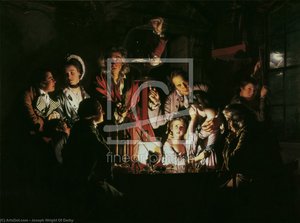
La estancia italiana entre 1773 y 1775 resultó ser una experiencia transformadora para Wright. Testigo de la erupción del Vesubio, un evento que lo marcó profundamente, plasmó su impacto en varias pinturas, capturando la fuerza indomable de la naturaleza. Sin embargo, más allá de los paisajes volcánicos, fue el estudio de la luz y la sombra, el claroscuro, lo que realmente definió su estilo. Wright no se limitaba a representar la luz; la manipulaba, la exageraba, creando atmósferas dramáticas e intensas. Este dominio del claroscuro, llevado al extremo en obras como "Un Filósofo dando una lección sobre el orrey", no solo iluminaba los sujetos sino que también revelaba sus pensamientos y emociones, dotando a sus retratos de una profundidad psicológica inusual para la época. El uso magistral de la luz artificial, simulada con velas o lámparas, se convirtió en su sello distintivo, diferenciándolo de otros artistas de su tiempo.El Espíritu de la Revolución Industrial: Más que un Testigo
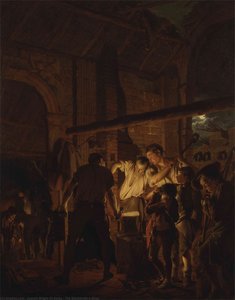
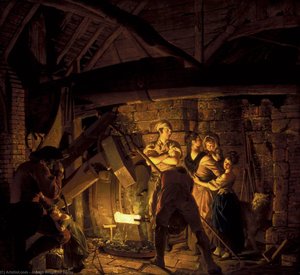
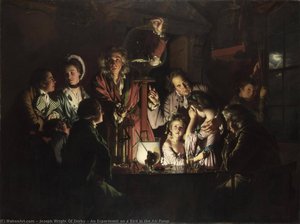
Joseph Wright of Derby no fue simplemente un observador de la Revolución Industrial; fue su intérprete visual. Sus pinturas, especialmente aquellas que representan a científicos e inventores trabajando en sus laboratorios o talleres, capturan el fervor intelectual y la innovación tecnológica que caracterizaban esa época. "Un Experimento con un pájaro en una bomba de aire", quizás su obra más emblemática, es mucho más que una representación literal de un experimento científico; es una reflexión sobre la relación entre la humanidad y la naturaleza, sobre los límites del conocimiento y las implicaciones éticas del progreso. Wright se codeaba con figuras clave de la Sociedad Lunar de Birmingham, como Josiah Wedgwood y Richard Arkwright, lo que le permitió acceder a un mundo de ideas y descubrimientos que plasmó en sus lienzos. Su capacidad para combinar el rigor científico con una sensibilidad artística única lo convirtió en un cronista invaluable de su tiempo.Un Legado de Luz y Sombra: El Reconocimiento Tardío
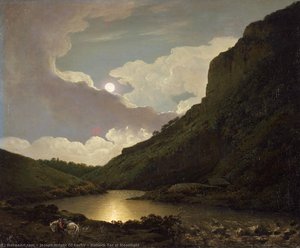
A pesar de su talento innegable, Wright enfrentó desafíos a lo largo de su carrera. Su estilo innovador no siempre fue bien recibido por la Royal Academy, y sus intentos de obtener un mayor reconocimiento fueron frustrados en ocasiones. Sin embargo, su perseverancia y su fe en su propia visión artística finalmente dieron frutos. En sus últimos años, Wright exploró paisajes nocturnos con una maestría sorprendente, como se evidencia en "Dovedale a la luz de la luna", donde la luz plateada de la luna transforma el paisaje en un escenario onírico. Su muerte en Derby el 29 de agosto de 1797 marcó el final de una vida dedicada al arte, pero su legado perduró. Hoy en día, Joseph Wright of Derby es reconocido como uno de los pintores más importantes del siglo XVIII, un maestro de la luz y la sombra que capturó el espíritu de una época de cambio radical. Su obra continúa inspirando a artistas y cautivando a espectadores de todo el mundo, confirmando su lugar en la historia del arte británico.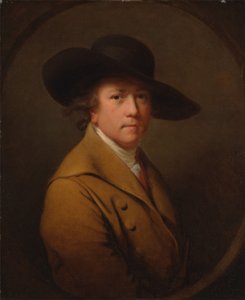
Joseph Wright de Derby
1734 - 1797 , Reino Unido
Datos clave
- Artistas Que Influyeron:
- Thomas Hudson
- Alexander Cozens
- Fecha De Muerte: 29 de agosto de 1797
- Fecha De Nacimiento: 3 de septiembre de 1734
- Lugar De Nacimiento: Puerta de Hierro, Reino Unido
- Movimiento Artístico: Romanticismo, Ilustración
- Nacionalidad: Británico
- Nombre Completo: Joseph Wright de Derby
- Obras Notables:
- Un Experimento con un Ave
- Reverendo Basil Bury Beridge
- Dovedale por la luz de la luna
- A Philosopher Lecturing
Artículos relacionados

Los 10 Paisajes Más Icónicos de la Historia del Arte | ArtsDot
Descubre los 10 paisajes más emblemáticos de la historia del arte, desde Monet a Van Gogh. Explora su significado, técnica y belleza atemporal. Encuentra reproducciones de alta calidad e inspira tu hogar con ArtsDot.com.

Paisajes Románticos: 10 Obras Maestras que Definieron un Movimiento Artístico
Descubre los 10 paisajes románticos más influyentes de artistas como Caspar David Friedrich y Turner. Explora la belleza, el simbolismo y las técnicas del movimiento romántico. Reproducciones de arte exclusivas en ArtsDot.com.

Evocations of Place: A Historical Journey Through Landscape Art
Explore the rich history of landscape art with ArtsDot. Discover renowned artists, movements like Impressionism & Romanticism, and expert guidance for collecting timeless pieces. Find your perfect serene escape today!

John Constable: Las 25 Obras Maestras del Paisaje Inglés | ArtsDot
Descubre las 25 obras maestras de John Constable, el pintor romántico inglés que capturó la belleza del paisaje. Explora su técnica, historia y significado en ArtsDot.com. Reproducciones de arte de alta calidad para tu hogar.

Evoking Atmosphere & Identity: A Journey Through Landscape Painting's History
Explore the rich history of landscape painting! Discover renowned artists, movements like Romanticism, & techniques such as atmospheric perspective. Find inspiration and quality reproductions at ArtsDot.