 Ver en contexto
 Enviar
 Compartir
 Detalles

 Descargar
 Similares
 Radiografía
 Presentación de diapositivas
Infante Don Baltazar Carlos
 Oil On Canvas
- WallArt
- Baroque Painting
 1635
1635 144.0 x 109.0 cm
 Museo de las Artes de Budapest
 Ver más
Reproducción al óleo hecha a mano
Óleo sobre lienzo pintado a mano en el tamaño y marco de su elección, realizado por encargo por nuestros artistas. ( Comprar impresión Comprar imagen)




P118B $10

P118H $10

P118W $10

P438Z $10

P508JH $12

P508YH $12

P805H $10

P805Z $10

P919BZ $10

P919G $10

P919XJ $10

P959ZH $10

P968JZ $12

W106C $8

W218G $10

W218JH $8

W218Y $10

W307PJ $10

W316G $10

W316PJ $8

W316Y $10

W398PJ $8

W4111J $10

W500HY $15

W500JH $15

W692G $12

W849H $8

W940BG $15

W953PJ $8




Elija entre nuestros tamaños predefinidos que respetan las proporciones originales de la obra.

Puede ingresar sus propias dimensiones para adaptarse a un marco o espacio específico. Si el tamaño seleccionado no coincide con las proporciones de la imagen original, recortaremos la obra o extenderemos la pintura con elementos adicionales pintados a mano. Se le enviará una maqueta digital para su aprobación antes de comenzar la producción.
Tenga en cuenta que la vista previa en pantalla no refleja el recorte o la extensión reales. Solo la maqueta mostrará con precisión la composición final.
Si bien existen tamaños personalizados, recomendamos seleccionar una dimensión de la lista predefinida para preservar las proporciones originales.
Tras realizar el pedido, el equipo de ArtsDot.com enviará un correo electrónico al cliente para solicitar instrucciones y proporcionarle una vista previa del boceto.
Envío a todo el mundo () en 3-4 semanas en lugar de las 5 semanas estándar. (31 agosto). Sin comprometer la calidad.

Envío exprés gratuito a todo el mundo

Lienzo de lino de alta calidad

Seguro de envío total

Garantía de reembolso de impuestos aduaneros

Garantía de fidelidad cromática exacta

Política de devolución de 60 días (solo por defectos)

Garantía de devolución del 100% del dinero

Descuento por cantidad
 La opción de vidrio solo está disponible en tamaños inferiores a 110 cm.

Infante Don Baltazar Carlos
Técnica de reproducción
Dimensiones de la reproducción
-


Precio total final
$ 263
A Portrait of Young Royalty: Juan Bautista Martínez del Mazo’s *Infante Don Baltazar Carlos*
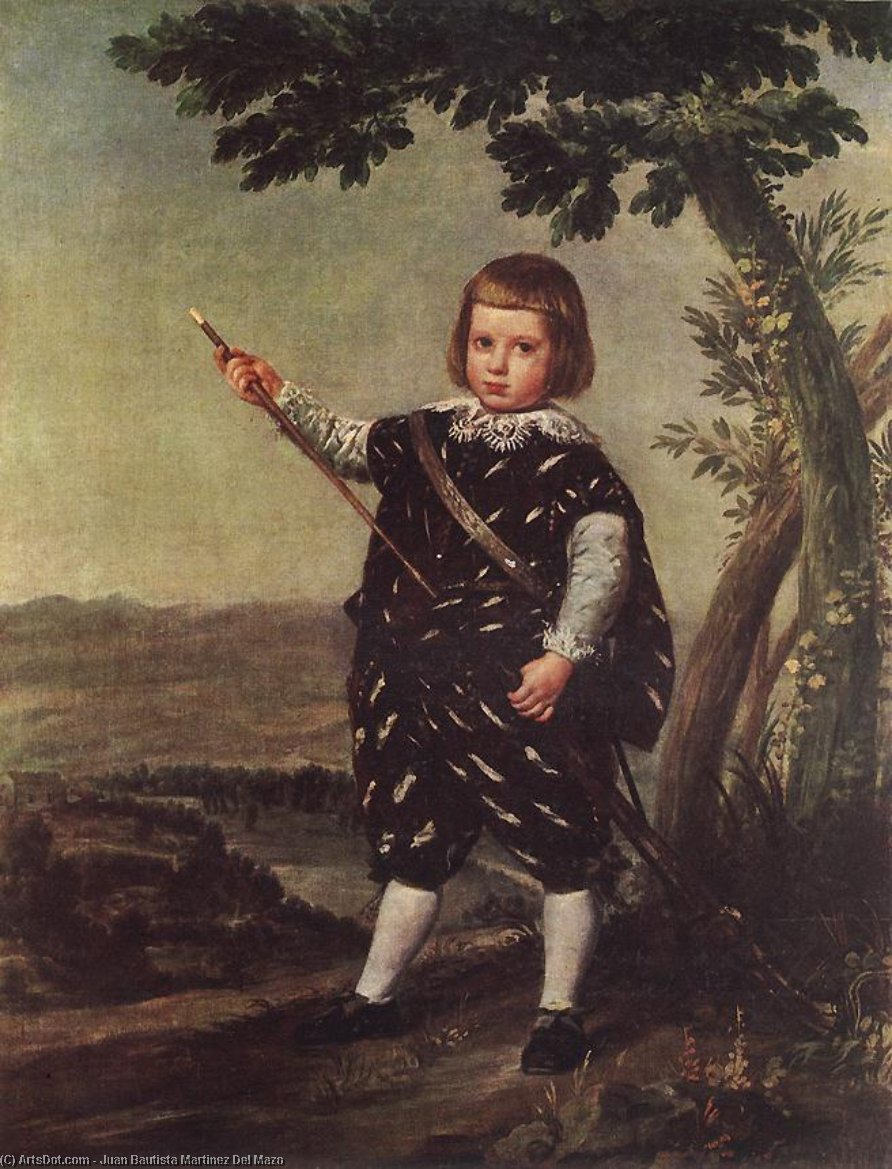
Juan Bautista Martínez del Mazo's 1635 portrait, *Infante Don Baltazar Carlos*, is more than just a depiction of a young boy; it’s a carefully constructed tableau of youthful privilege and nascent contemplation. Painted during the height of the Spanish Baroque era, this work offers a rare glimpse into the world of the Spanish court through the discerning eye of an artist deeply influenced by his mentor, Diego Velázquez. The painting immediately draws the viewer in with its vibrant palette – rich reds and blues dominate, contrasted against the muted greens and browns of the distant landscape – creating a sense of both warmth and quiet solemnity.
The subject himself, Infante Don Baltazar Carlos, is presented as a figure of considerable poise despite his youth. Dressed in a sumptuous ruffled shirt, embroidered with intricate detail, he holds a miniature sword—a symbol not just of military prowess but also of nascent authority and the burdens of royal lineage. His gaze, directed towards an unseen horizon, suggests a thoughtful introspection, hinting at the weighty responsibilities that lie ahead. The artist masterfully captures the subtle nuances of youth: the slightly furrowed brow, the delicate features, and the inherent vulnerability within his expression.
Velázquez’s Shadow and Martínez del Mazo's Distinct Voice
Martínez del Mazo’s relationship with Velázquez is pivotal to understanding this painting. He served as a court painter for years, working closely alongside his father-in-law, absorbing the techniques of observation, light, and color that defined Velázquez’s style. However, *Infante Don Baltazar Carlos* reveals a distinct artistic voice emerging from within this influential apprenticeship. While echoes of Velázquez's meticulous detail and atmospheric perspective are undeniably present, Martínez del Mazo introduces a greater emphasis on emotional resonance and a more expressive use of color. The landscape background, for instance, is not merely a decorative element but actively contributes to the painting’s mood—a subtly melancholic vista that mirrors the boy’s contemplative gaze.
The choice of subject matter itself speaks volumes about the era. Portraits of young royals were frequently commissioned during this period, serving as powerful symbols of dynastic stability and reinforcing the legitimacy of the Habsburg monarchy. Yet, Martínez del Mazo elevates this genre beyond mere propaganda, imbuing the portrait with a profound sense of humanity. He doesn’t simply present a royal heir; he presents a boy on the cusp of adulthood, grappling with his future role within the complex tapestry of Spanish society.
Technique and Composition: A Masterclass in Baroque Realism
The painting's technical brilliance lies in Martínez del Mazo’s masterful command of chiaroscuro – the dramatic interplay of light and shadow. Velázquez’s influence is particularly evident here, with carefully placed highlights illuminating the Infante’s face and clothing while leaving the background softly shrouded in darkness. This technique not only adds depth and volume to the portrait but also directs the viewer's attention to the central figure, emphasizing his importance.
The composition is equally deliberate. The pyramidal arrangement of the figures—the boy at its apex—creates a sense of stability and formality, while the slightly off-center placement of the sword subtly introduces an element of dynamism and intrigue. The artist’s attention to detail is remarkable; from the intricate folds of the fabric to the texture of the boy's hair, every element contributes to the overall realism and immediacy of the portrait.
Symbolism and Emotional Resonance
*Infante Don Baltazar Carlos* resonates with a quiet dignity and an undercurrent of melancholy. The toy sword, a symbol of power and potential, is held delicately in his hand, suggesting a hesitant embrace of responsibility. The distant landscape, bathed in the soft light of twilight, evokes a sense of longing and introspection—a reflection perhaps of the boy’s awareness of his future role within the vast and often turbulent world of European politics.
This painting is more than just a portrait; it's a window into the soul of a young prince and a testament to the enduring legacy of Spanish Baroque art. Reproductions offer an accessible way to appreciate the artistry and historical significance of this captivating work, bringing its quiet beauty and profound emotional depth into any space.
Obras relacionadas



Biografía del artista
Juan Bautista Martínez del Mazo: Una Vida a la Sombra de Velázquez
- Nacido: Cuenca, España (c. 1605)
- Fallecido: 1667
Juan Bautista Martínez del Mazo se erige como una figura significativa dentro del arte barroco español, reconocido principalmente por su estrecha asociación y emulación de Diego Velázquez. Si bien a menudo eclipsado por la imponente reputación de su suegro, Mazo desarrolló en sus propias manos como un hábil retratista y pintor paisajista, dejando atrás un legado que revela tanto su deuda con Velázquez como su emergente personalidad artística.
Vida Temprana y Formación
Los detalles sobre la vida temprana de Martínez del Mazo permanecen algo oscuros. Su lugar de nacimiento es debatido entre Cuenca y Madrid, con estimaciones que sitúan su nacimiento alrededor de 1605-1612 basándose en la fecha de nacimiento de su madre y los registros matrimoniales. Los detalles específicos de su formación artística también son poco claros; sin embargo, se cree ampliamente que pasó tiempo en el taller de Velázquez antes de su matrimonio. Este aprendizaje probablemente le proporcionó una exposición invaluable a las prácticas artísticas líderes de la corte española.
Matrimonio y Patronato Real
Un momento crucial en la carrera de Martínez del Mazo llegó con su matrimonio con Francisca de Silva Velázquez y Pacheco, la única hija superviviente de Velázquez, en 1633. Esta unión aseguró su posición dentro del círculo real. Poco después, en 1634, Velázquez facilitó el nombramiento de Martínez del Mazo como Portador de la Cámara del Rey, un cargo prestigioso que señaló el favor real y proporcionó acceso al patrocinio de la corte. A lo largo de su carrera, Velázquez defendió activamente a Martínez del Mazo, asegurando más cargos y comisiones para él y su familia.
Estilo Artístico y Desarrollo
El estilo artístico de Martínez del Mazo estuvo profundamente influenciado por Velázquez, inicialmente caracterizado por una estrecha imitación de las técnicas de su mentor. Se destacó en el retrato, demostrando una habilidad aguda para capturar los rasgos individuales al tiempo que incorporaba elementos de drama barroco. Sin embargo, Martínez del Mazo también se distinguió a través de sus paisajes y escenas de caza, mostrando un estilo personal en desarrollo que enfatizaba el detalle y la observación. Su celebrado Vista de Zaragoza (1646) ejemplifica esta transición, revelando una paleta más vibrante y una mayor énfasis en la representación de la bulliciosa actividad dentro de un entorno paisajístico.
- Influencias: Diego Velázquez, maestros venecianos (Tintoretto, Tiziano, Veronese), pintores flamencos (Paul de Vos, Rubens, Jordaens)
- Características Clave: Naturalismo, meticuloso detalle, paleta de colores vibrante, composiciones dinámicas, énfasis en figuras pequeñas.
Obras Principales y Significado Histórico
Si bien Martínez del Mazo rara vez firmaba sus obras, lo que contribuyó a la confusión histórica con el corpus de Velázquez, varias pinturas ahora se atribuyen a él con certeza razonable:
- Vista de Zaragoza (Prado)
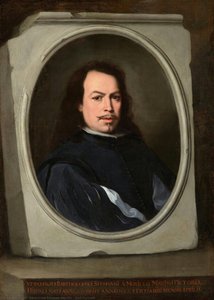
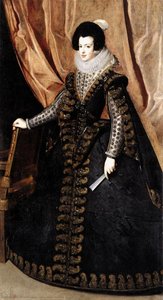
- Retrato de la Reina Mariana con Vestido de Luto (National Gallery, Londres)
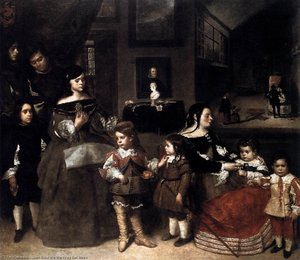
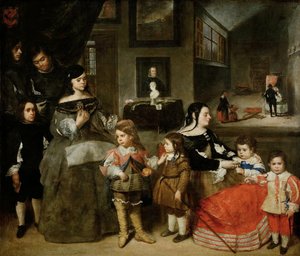
- La Familia del Pintor (Kunsthistorisches Museum, Viena)
El significado histórico de Martínez del Mazo radica no solo en sus logros artísticos sino también en su papel como conducto para el legado de Velázquez. Preservó y transmitió fielmente muchas de las técnicas e innovaciones estilísticas de Velázquez a generaciones posteriores de artistas españoles. La crítica artística moderna ha ayudado a separar sus obras, permitiendo una apreciación más matizada de las contribuciones individuales de Martínez del Mazo al rico tapiz de la pintura barroca española.
Juan Bautista Martínez del Mazo
1605 - 1667 , España
Datos clave
- Artistas Que Influyeron:
- Diego Velázquez
- Tintoretto
- Tiziano
- Rubens
- Fecha De Fallecimiento: 1667
- Fecha De Nacimiento: c. 1605
- Lugar De Nacimiento: Cuenca, España
- Movimiento Artístico: Barroco Español
- Nacionalidad: Española
- Nombre Completo: Juan Bautista Martínez del Mazo
- Obras Notables:
- Vista de Zaragoza
- Retrato de Mariana
- La Familia del Pintor
Artículos relacionados

The Golden Age Reforged: Dramatic Realism & Religious Zeal in Spanish Baroque Art
Explore the dramatic world of Spanish Baroque art! Discover masters like Zurbarán & the powerful influence of religious zeal on painting techniques – a guide for collectors and enthusiasts.
Las 25 Obras Maestras del Prado: Arte Español e Inspiración para tu Hogar
Descubre las 25 obras maestras del Museo del Prado: Velázquez, Goya, El Greco y más. Explora la historia, técnica y belleza de cada cuadro español. Encuentra reproducciones de arte exclusivas e inspira tu hogar con ArtsDot.com.

The Dramatic Flourish: Exploring the Baroque Movement's Enduring Legacy in Art History
Explore the dramatic world of Baroque art! Discover iconic artists like Caravaggio & Rubens, defining techniques, and its lasting impact on art history. Expert insights for collectors & enthusiasts at ArtsDot.

Barroco Sublime: 10 Obras Maestras que Definieron una Época |
Descubre las 10 obras maestras del Barroco que marcaron una época. Caravaggio, Bernini y Velázquez cobran vida en . Reproducciones de arte de calidad museo para decorar tu hogar con elegancia. ¡Explora la colección online!

Drama Barroca: Llevando la Grandeza y la Emoción a los Interiores Contemporáneos
Descubre cómo el drama y la grandeza del arte barroco pueden transformar tus interiores. Guía experta, inspiración y reproducciones de alta calidad en .