 Ver en contexto
 Enviar
 Compartir
 Detalles

 Descargar
 Similares
 Radiografía
 Presentación de diapositivas
Finis Gloriae Mundi
 Acrylic On Canvas
- WallArt
- Baroque
 1670
1670 220.0 x 216.0 cm
 Hospital de la Caridad
 Ver más
Reproducción al óleo hecha a mano
Óleo sobre lienzo pintado a mano en el tamaño y marco de su elección, realizado por encargo por nuestros artistas. ( Comprar impresión Comprar imagen)




P118B $10

P118H $10

P118W $10

P438Z $10

P508JH $12

P508YH $12

P805H $10

P805Z $10

P919BZ $10

P919G $10

P919XJ $10

P959ZH $10

P968JZ $12

W106C $8

W218G $10

W218JH $8

W218Y $10

W307PJ $10

W316G $10

W316PJ $8

W316Y $10

W398PJ $8

W4111J $10

W500HY $15

W500JH $15

W692G $12

W849H $8

W940BG $15

W953PJ $8




Elija entre nuestros tamaños predefinidos que respetan las proporciones originales de la obra.

Puede ingresar sus propias dimensiones para adaptarse a un marco o espacio específico. Si el tamaño seleccionado no coincide con las proporciones de la imagen original, recortaremos la obra o extenderemos la pintura con elementos adicionales pintados a mano. Se le enviará una maqueta digital para su aprobación antes de comenzar la producción.
Tenga en cuenta que la vista previa en pantalla no refleja el recorte o la extensión reales. Solo la maqueta mostrará con precisión la composición final.
Si bien existen tamaños personalizados, recomendamos seleccionar una dimensión de la lista predefinida para preservar las proporciones originales.
Tras realizar el pedido, el equipo de ArtsDot.com enviará un correo electrónico al cliente para solicitar instrucciones y proporcionarle una vista previa del boceto.
Envío a todo el mundo () en 3-4 semanas en lugar de las 5 semanas estándar. (24 agosto). Sin comprometer la calidad.

Envío exprés gratuito a todo el mundo

Lienzo de lino de alta calidad

Seguro de envío total

Garantía de reembolso de impuestos aduaneros

Garantía de fidelidad cromática exacta

Política de devolución de 60 días (solo por defectos)

Garantía de devolución del 100% del dinero

Descuento por cantidad
 La opción de vidrio solo está disponible en tamaños inferiores a 110 cm.

Finis Gloriae Mundi
Técnica de reproducción
Dimensiones de la reproducción
-


Precio total final
$ 263
Descripción de la obra
The Weight of Mortality: Juan de Valdés Leal’s *Finis Gloriae Mundi*
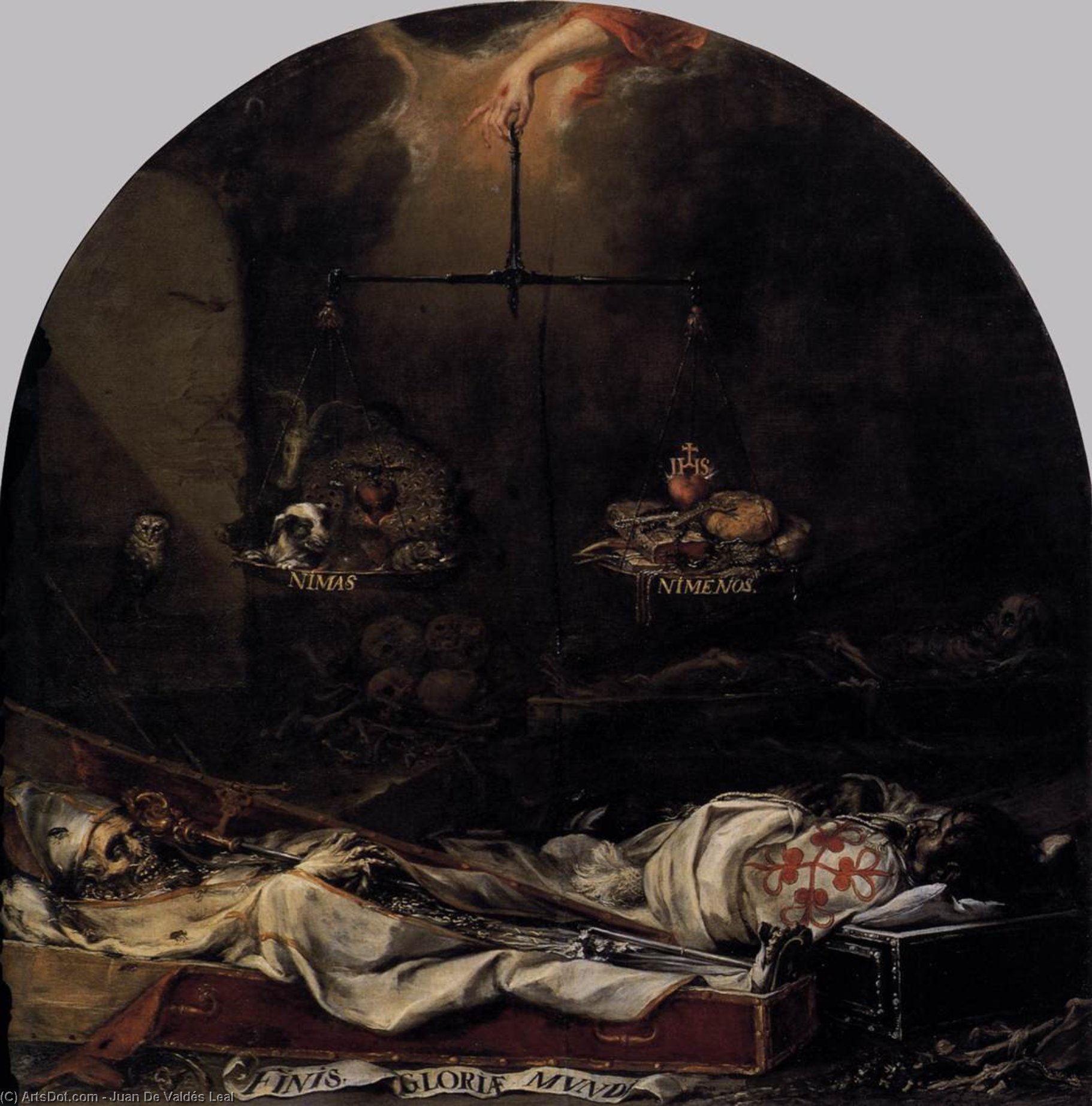
Juan de Valdés Leal's 1670 painting, *Finis Gloriae Mundi* (End of Worldly Glory), is not merely a depiction of death; it’s a profound meditation on the ephemeral nature of existence, rendered with a stark and unsettling beauty. Commissioned for the Hospital de la Claridad in Seville during a period of immense social upheaval – marked by plague outbreaks and religious fervor – the work transcends its immediate setting to offer a universal reflection on human vanity and the inevitability of decay. Leal, a master of the Baroque era, expertly employs dramatic chiaroscuro, a technique deeply rooted in the Counter-Reformation’s desire to evoke emotional intensity, to amplify the painting's somber message.
The scene unfolds within a modestly furnished chamber – a bed, a chair, and a table bearing simple objects: a book, a cup, and a bird perched on what appears to be a piece of wood. These earthly possessions, arranged with meticulous detail, immediately establish the painting’s central theme: the futility of material pursuits. However, it is not the objects themselves that draw attention, but their context – the decaying bodies sprawled across the floor. Two corpses, rendered in exquisite anatomical realism, dominate the foreground. One, a bishop draped in ecclesiastical robes, lies amidst insects and dust, symbolizing the corruption and ultimate insignificance of worldly power. The other, a knight clad in armor, represents the ideals of chivalry and military glory, now reduced to a state of lifelessness.
Symbolism and the Vanitas Tradition
Leal’s work is firmly embedded within the *Vanitas* tradition – a genre that flourished during the 17th century, characterized by its deliberate inclusion of symbols representing mortality, decay, and the transience of earthly pleasures. The carefully chosen elements—the decaying bodies, the insects, the extinguished flame (implied in the bird’s position), and even the dust motes suspended in the air – all contribute to this overarching message. The skull, subtly incorporated into the composition, serves as a stark reminder of death's ultimate dominion. The inclusion of clocks, visible in the upper corners, further emphasizes the relentless passage of time and the fleeting nature of human life. These aren’t simply decorative elements; they are potent symbols of the vanity of earthly ambition.
The balance scale, positioned prominently in the scene, is a key visual device. It represents the judgment of souls – a common motif in religious art of the period. On one side, we find objects associated with worldly success and honor: a book (representing knowledge), a cup (symbolizing indulgence), and a heart adorned with letters—likely representing virtues or perhaps even sins. On the other side, however, are symbols of decay and corruption: a pig (representing gluttony), a goat (suggesting lust), a peacock (signifying pride), and a dog (symbolizing wrath). The equilibrium of the scale suggests that earthly achievements ultimately lead to damnation, while virtuous actions—however small—are necessary for salvation.
Contextualizing the Painting: Seville in the 17th Century
To fully appreciate *Finis Gloriae Mundi*, it’s crucial to understand the historical context in which it was created. Seville, during the late 17th century, was a city grappling with profound social and religious changes. The devastating Great Plague of 1647-1652 decimated the population, exposing the fragility of life and prompting a renewed focus on mortality. Simultaneously, the Counter-Reformation demanded that the Catholic Church reaffirm its authority and combat the spread of Protestantism. Leal’s painting reflects this atmosphere of anxiety and spiritual urgency – a poignant reminder of the impermanence of earthly glory in the face of divine judgment.
A Timeless Meditation on Human Existence
*Finis Gloriae Mundi* is more than just a historical artifact; it's a deeply moving meditation on the human condition. Leal’s masterful use of light, shadow, and symbolism creates an intensely emotional experience for the viewer, prompting reflection on our own mortality and the values we prioritize in life. The painting’s enduring power lies not only in its technical brilliance but also in its profound exploration of universal themes—the fleeting nature of earthly pleasures, the inevitability of death, and the search for meaning in a world marked by uncertainty. Reproductions of this powerful work offer a chance to contemplate these weighty subjects within the comfort of one’s own space.
Obras relacionadas
Biografía del artista
Primeros años y formación
Juan de Valdés Leal, un renombrado pintor y grabador español, nació el 4 de mayo de 1622 en Sevilla, España. Se convirtió en pintor, escultor y arquitecto, mostrando su versatilidad en el mundo del arte. En sus veinte años, estudió bajo Antonio del Castillo en Córdoba, perfeccionando sus habilidades durante la era barroca.Obras destacadas y colaboraciones
Las obras notables de Valdés Leal incluyen:- Historia del profeta Elías para la iglesia de los Carmelitas.
- Martirio de San Andrés para la iglesia de San Francisco en Córdoba.
- Triunfo de la Cruz para La Caridad en Sevilla.
Vida personal y legado
Valdés Leal se casó con Isabella Carasquilla, también pintora, en 1647. La pareja tuvo cinco hijos, varios de los cuales se convirtieron en artistas, incluyendo Lucas, María y Laura. Valdés Leal falleció el 15 de octubre de 1690 en Sevilla, dejando atrás un legado en el mundo del arte.Estilo artístico e influencia
El estilo de Valdés Leal se caracteriza por su dramatismo barroco, con una marcada inclinación hacia temas religiosos y la representación de escenas de sufrimiento y muerte. Su obra refleja la influencia de artistas como Caravaggio, visible en el uso del claroscuro y la intensidad emocional. A diferencia de la serenidad y gracia que caracterizaba a Murillo, Valdés Leal se enfocó en una estética más austera y melancólica, explorando las profundidades de la condición humana y la inevitabilidad de la muerte. Su habilidad para transmitir emociones intensas y su maestría técnica lo convirtieron en un artista respetado y admirado en su época.Legado e impacto
Juan de Valdés Leal es recordado como uno de los pintores barrocos más importantes de Sevilla, contribuyendo significativamente al desarrollo del arte español del siglo XVII. Su obra, aunque a menudo eclipsada por la popularidad de Murillo, ha sido objeto de creciente interés en las últimas décadas, reconociendo su singular visión artística y su capacidad para abordar temas complejos con profundidad y sensibilidad. Su influencia se puede apreciar en generaciones posteriores de artistas españoles que continuaron explorando los temas de la vanitas y la mortalidad en sus obras.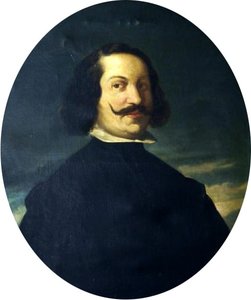
Juan de Valdés Leal
1622 - 1690 , España
Datos clave
- Artistas Influyentes: ['Antonio del Castillo']
- Colaboraciones Destacadas: Bartolomé Esteban Murillo
- Estilo Artístico: Barroco
- Fecha De Fallecimiento: 15 de octubre de 1690
- Fecha De Nacimiento: 4 de mayo de 1622
- Lugar De Nacimiento: Sevilla, España
- Nacionalidad: Española
- Nombre Completo: Juan de Valdés Leal
- Obras Notables:
- Historia del profeta Elías
- Martirio de San Andrés
- Triunfo de la Cruz
Artículos relacionados
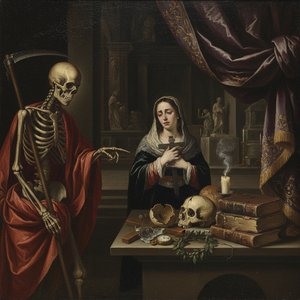
Juan de Valdés Leal: Baroque Realism, Memento Mori & Theatricality of Spanish Grief
Explore the powerful Baroque realism of Juan de Valdés Leal (1622-1690). Discover his somber masterpieces, iconic 'In Ictu Oculi', and profound explorations of mortality. Museum-quality reproductions available at ArtsDot.

Goya: Las 25 Obras Maestras del Genio Español | Reproducciones de Arte en ArtsDot
Descubre las 25 obras maestras de Goya, el genio español. Explora retratos icónicos, 'Los Caprichos' y 'Las Pinturas Negras'. Reproducciones de arte en lienzo de alta calidad para decorar tu hogar con estilo. ¡Encuentra tu obra favorita en ArtsDot.com!

Acerca de nosotros
Descubre nuestra historia! Llevamos el arte de clase mundial a tu vida gracias a una selección experta, creaciones personalizadas y vistas previas gratuitas. Aprobado por particulares y empresas desde el año 2000.

Drama Barroca: Llevando la Grandeza y la Emoción a los Interiores Contemporáneos
Descubre cómo el drama y la grandeza del arte barroco pueden transformar tus interiores. Guía experta, inspiración y reproducciones de alta calidad en .

Barroco Sublime: 10 Obras Maestras que Definieron una Época |
Descubre las 10 obras maestras del Barroco que marcaron una época. Caravaggio, Bernini y Velázquez cobran vida en . Reproducciones de arte de calidad museo para decorar tu hogar con elegancia. ¡Explora la colección online!