

 Ver en contexto
 Enviar
 Compartir
 Detalles

 Descargar
 Similares
 Radiografía
 Presentación de diapositivas
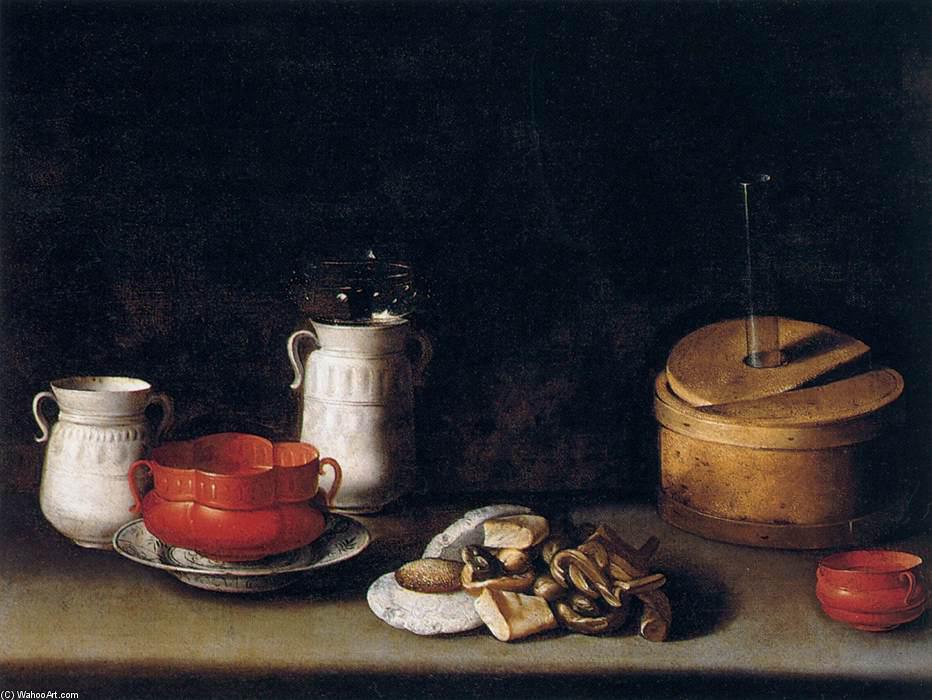
Still-Life with Crockery and Cakes
 Acrylic On Canvas
- WallArt
- Baroque Spanish Painting
 1627
1627 77.0 x 100.0 cm
 Museo Nacional Thyssen-Bornemisza
 Ver más
Adquiera una imagen digital de alta resolución y optimizada, muy superior a la vista previa en línea.
Cada archivo es preparado meticulosamente por nuestros especialistas internos mediante el uso de herramientas avanzadas y un experto retoque manual. Nos aseguramos de que cada imagen posea una claridad excepcional, una precisión cromática impecable y un detalle minucioso.
El archivo final se entrega por correo electrónico en un plazo de 72 horas, optimizado para su uso inmediato en entornos profesionales, editoriales y de impresión. Esta es la misma calidad en la que confían los estudios de diseño, las editoriales y las galerías de primer nivel.
Imagen Digital
Descarga un archivo de alta resolución para exhibición personal, impresión y proyectos creativos. ( Comprar impresión Comprar pintura hecha a mano)
Incluido en cada pedido de imágenes digitales
Entrega digital experta, garantizada.
Al elegir ArtsDot.com, no solo está adquiriendo una imagen; está recibiendo una obra de arte digital mejorada profesionalmente, elaborada con precisión y respaldada por una garantía de satisfacción. Esto es todo lo que incluye su pedido, automáticamente:

Entrega rápida por email
Recibirá su archivo de imagen digital en alta resolución por correo electrónico en un plazo de 72 horas tras realizar su pedido, listo para su uso inmediato.

Archivo digital optimizado por IA
Su obra de arte se optimiza profesionalmente mediante herramientas avanzadas de IA y edición manual, garantizando el máximo detalle, claridad y precisión cromática.

Reenvío gratuito de por vida
¿Has borrado o perdido tu archivo por error? No te preocupes: te lo volveremos a enviar en cualquier momento, sin coste adicional.

Sin gastos de importación, siempre
Disfrute de su obra de arte al instante sin aduanas, aranceles ni gastos de envío; las descargas digitales siempre están libres de impuestos.

Garantía de fidelidad de color
Garantizamos que su imagen digital refleje los colores originales con la mayor fidelidad posible, mediante el uso de herramientas profesionales y gestión del color.

Garantía de satisfacción de 60 días
Si no está satisfecho con su imagen digital, la revisaremos o le reembolsaremos el 100% en un plazo de 60 días, sin preguntas.

100% Garantía de devolución de dinero
¿No está satisfecho? Obtenga un reembolso completo dentro de los 60 días posteriores a la recepción de su archivo digital, sin necesidad de explicaciones.

Descuentos por pedidos grandes
Compra 3 imágenes, ahorra 10% - Compra 5, ahorra 15% - Compra 10+, ahorra 20%. Ideal para proyectos creativos, galerías y agencias.
Descripción del coleccionable
A Still Life Bathed in Light – Juan van der Hamen’s ‘Still-Life with Crockery and Cakes’
Juan van der Hamen y León's “Still-Life with Crockery and Cakes,” painted in 1627, is more than a simple arrangement of food; it’s a meticulously crafted meditation on abundance, mortality, and the fleeting beauty of earthly pleasures. Born into a unique heritage – his father, a Flemish courtier who had settled in Spain, and his mother descended from Toledan nobility – van der Hamen inherited a blend of Northern European precision and Spanish artistic sensibility, a combination that profoundly shaped his distinctive style. This painting exemplifies this fusion, showcasing the artist’s mastery of light, shadow, and detail within the burgeoning Baroque tradition.
The scene unfolds on a dark wooden table, its surface subtly illuminated by an unseen source, creating a dramatic chiaroscuro effect characteristic of the period. Van der Hamen doesn't merely depict objects; he renders them with astonishing realism – the delicate folds of the linen cloth beneath the dishes, the glistening sheen of the fruit, and the textured surfaces of the cakes. The artist’s attention to detail is relentless, capturing not just the appearance but also the implied weight and volume of each item. Notice particularly how he uses subtle variations in tone to suggest the dampness of the bread or the ripeness of the peaches.
The Language of Still Life
Still life painting, or ‘bodegón’ as it was known in Spain, held a complex and layered significance during the 17th century. It wasn't simply about recording objects; it served as a vehicle for exploring philosophical and religious themes. Van der Hamen masterfully employs this tradition here. The abundance of food – the cakes, fruits, and earthenware – can be interpreted as a symbol of earthly prosperity and the pleasures of life, but also as a poignant reminder of their transient nature. The presence of decaying fruit and wilted flowers hints at mortality and the inevitability of decay, a common motif in Baroque art reflecting the Counter-Reformation’s emphasis on human vulnerability.
Furthermore, the arrangement itself is carefully considered. The placement of each object – the central cake, slightly off-center; the bottles flanking the scene; the varied heights and textures – creates a dynamic composition that draws the eye through the painting. The artist utilizes perspective to create depth and spatial relationships, inviting the viewer into this intimate tableau.
A Master’s Technique
Van der Hamen's technique is characterized by his painstaking layering of glazes—thin, translucent layers of paint applied over each other to build up color and luminosity. This method allowed him to achieve a remarkable level of detail and richness in his palette. Observe how he uses subtle shifts in hue – the warm browns of the earthenware contrasting with the cool greens of the foliage – to create visual harmony. The artist’s brushwork is remarkably controlled, demonstrating a deep understanding of color theory and light.
He was particularly adept at capturing the reflective qualities of surfaces—the sheen on the polished pewter, the gleam of the fruit, and the subtle highlights on the fabrics. This mastery of light and reflection elevates the painting beyond a simple depiction of objects, transforming it into a luminous and captivating experience for the viewer.
A Window to 17th-Century Spain
“Still-Life with Crockery and Cakes” offers a valuable glimpse into the artistic and cultural landscape of 17th-century Madrid. It reflects the growing interest in realism and naturalism that characterized the Baroque period, while also retaining elements of Northern European influence. Van der Hamen’s work is considered a cornerstone of Spanish still life painting, influencing generations of artists who followed. Today, reproductions of this exquisite piece continue to captivate art lovers with its beauty, detail, and profound symbolism.
Consider how the painting's rich colors and intricate details would enhance any interior space – bringing warmth, elegance, and a touch of historical sophistication. A high-quality reproduction offers a remarkable opportunity to experience the artistry of Juan van der Hamen in your own home.
Obras relacionadas
Biografía del artista
Juan van der Hamen y León: Un Maestro del Bodegón Español
- Nacido: Madrid, España (1596)
- Fallecido: 1631
Vida Temprana y Orígenes
- Juan van der Hamen y León fue bautizado el 8 de abril de 1596 en Madrid. Era hijo de Jan van der Hamen, un cortesano flamenco que se había trasladado a Madrid desde Bruselas antes de 1586, y Dorotea Witman Gómez de León, una madre mestiza flamenca de noble ascendencia toledana.
- Su padre sirvió como arquero en la corte de Felipe II y posteriormente ocupó cargos honoríficos en la corte. Aunque existe especulación sobre si Jan van der Hamen fue pintor también, no hay evidencia concreta al respecto.
- Juan y sus hermanos, Pedro y Lorenzo (escritores), enfatizaron su herencia española incorporando "Gómez de León" a sus nombres.
- La conexión familiar con la corte fue significativa, ya que Juan heredó las posiciones de su padre y sirvió como pintor no remunerado para el rey.
Trayectoria Artística y Desarrollo
- Su carrera artística comenzó en 1619 cuando recibió un pago por un bodegón encargado para el palacio de campo El Pardo.
- Van der Hamen demostró una notable versatilidad, produciendo pinturas históricas religiosas, alegorías, paisajes, escenas de la vida cotidiana, retratos y, sobre todo, bodegones.
- Sirvió en las cortes de Felipe III y Felipe IV, estableciendo la popularidad de la pintura de bodegón en Madrid durante la década de 1620.
- Su prolífica producción se concentró dentro de la primera década del reinado de Felipe IV, con un volumen particularmente alto de bodegones pintados en 1622.
- Inicialmente influenciado por el arte flamenco, sus primeros bodegones mostraban una técnica precisa y composiciones espaciosas. Posteriormente adoptó arreglos asimétricos, inspirado por Sánchez Cotán, creando construcciones espaciales más complejas.
Logros Destacados y Obras Notables
- Pintura de Bodegón: Van der Hamen es recordado principalmente por popularizar el género del bodegón en Madrid. Sus realistas representaciones de objetos cotidianos elevaron el estatus de esta forma de arte previamente menos valorada.
- Retratismo: Obtuvo un considerable éxito personal como retratista, capturando a destacados intelectuales y escritores de su época, incluyendo a Lope de Vega, Francisco de Quevedo y Luis de Góngora, entre otros. Una serie de estos retratos fue muy apreciada y objeto de discusiones filosóficas sobre el arte del retrato.
- "Ofrenda a Flora" (1627): Esta pintura alegórica a gran escala demuestra su habilidad para combinar retrato y bodegón floral, representando a la diosa de las flores rodeada por una cornucopia de flores primaverales. Refleja técnicas compositivas flamencas y un interés en el efecto de la luz sobre los tejidos.
- Retrato de un Enano (c. 1623): Esta representación naturalista anticipó obras posteriores de Velázquez y mostró su capacidad para capturar el carácter individual.
- Retrato del Cardenal Francesco Barberini (1626): Después de que un retrato inicial de Velázquez no satisfizo al cardenal, Van der Hamen fue comisionado, resultando en una obra tan admirada que Barberini adquirió tres piezas adicionales de él.
Significado Histórico y Legado
- Juan van der Hamen jugó un papel crucial en el establecimiento de la pintura de bodegón como un género respetado dentro del arte español.
- Su estilo realista, meticuloso detalle e innovadoras composiciones influyeron en generaciones posteriores de artistas españoles.
- Puso un puente entre las tradiciones artísticas flamencas y el emergente estilo barroco español.
- A pesar de su relativamente corta carrera (falleció a los 35 años), Van der Hamen dejó atrás una obra significativa que continúa siendo admirada por su habilidad técnica y mérito artístico. Sus pinturas se exhiben ahora en importantes museos europeos y estadounidenses, consolidando su lugar como una figura clave en la historia del arte español.

Juan van der Hamen
1596 - 1631 , España
Breves datos
- Artistas Influyentes:
- Jan Brueghel el Viejo
- Sánchez Cotán
- Fecha De Fallecimiento: 1631
- Fecha De Nacimiento: 1596
- Influenciado Por: ['Diego Velázquez']
- Lugar De Nacimiento: Madrid, España
- Movimiento Artístico: Barroco, Bodegones
- Nacionalidad: Española
- Nombre Completo: Juan van der Hamen y León
- Obras Notables:
- Ofrenda a Flora
- Bodegón con perro

