

 Ver en contexto
 Enviar
 Compartir
 Detalles

 Descargar
 Similares
 Radiografía
 Presentación de diapositivas
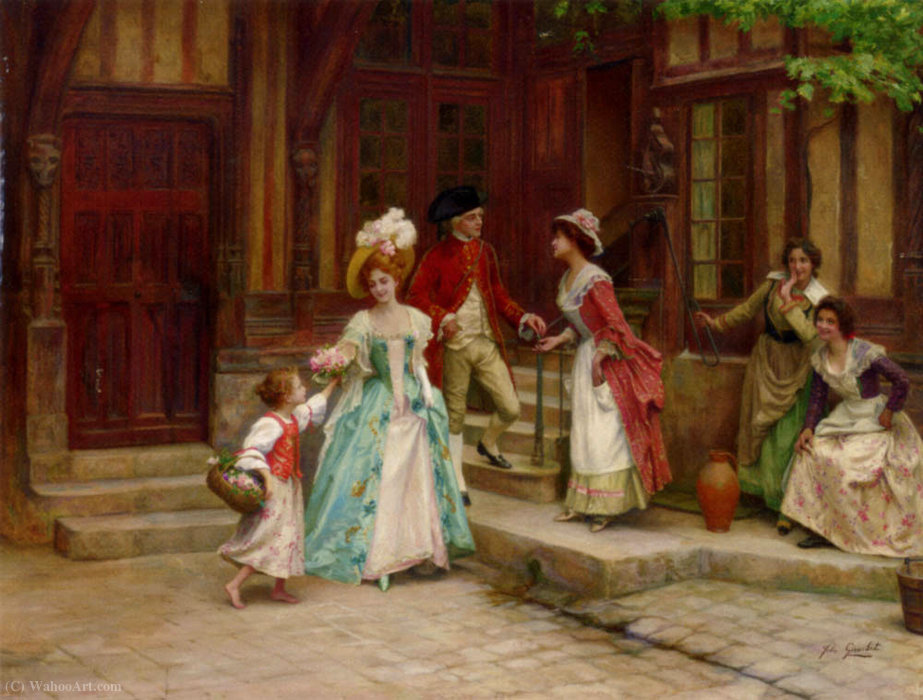
Le lendemain des noces
 Ver más
Reproducción al óleo hecha a mano
Óleo sobre lienzo pintado a mano en el tamaño y marco de su elección, realizado por encargo por nuestros artistas. ( Comprar impresión Comprar imagen)




































Elija entre nuestros tamaños predefinidos que respetan las proporciones originales de la obra.

Puede ingresar sus propias dimensiones para adaptarse a un marco o espacio específico. Si el tamaño seleccionado no coincide con las proporciones de la imagen original, recortaremos la obra o extenderemos la pintura con elementos adicionales pintados a mano. Se le enviará una maqueta digital para su aprobación antes de comenzar la producción.
Tenga en cuenta que la vista previa en pantalla no refleja el recorte o la extensión reales. Solo la maqueta mostrará con precisión la composición final.
Si bien existen tamaños personalizados, recomendamos seleccionar una dimensión de la lista predefinida para preservar las proporciones originales.
Tras realizar el pedido, el equipo de ArtsDot.com enviará un correo electrónico al cliente para solicitar instrucciones y proporcionarle una vista previa del boceto.
Envío a todo el mundo () en 3-4 semanas en lugar de las 5 semanas estándar. (29 agosto). Sin comprometer la calidad.

Envío exprés gratuito a todo el mundo

Lienzo de lino de alta calidad

Seguro de envío total

Garantía de reembolso de impuestos aduaneros

Garantía de fidelidad cromática exacta

Política de devolución de 60 días (solo por defectos)

Garantía de devolución del 100% del dinero

Descuento por cantidad
 La opción de vidrio solo está disponible en tamaños inferiores a 110 cm.

Le lendemain des noces
Técnica de reproducción
Dimensiones de la reproducción
-


Precio total final
$ 263
Obras relacionadas








Biografía del artista
The Soul of the Belle Époque: The Life and Art of Jules Girardet
In the heart of nineteenth-century France, a period defined by both profound social upheaval and unparalleled artistic flourishing, Jules Girardet emerged as a master of narrative and emotion. Born on April 10, 1856, in the historic surroundings of Versailles, Girardet was a man of dual heritage, carrying the meticulous discipline of his Swiss Huguenot ancestry into the vibrant, often turbulent, atmosphere of Parisian art circles. His very lineage was steeped in the craft of visual storytelling; as the son of the skilled engraver Paul Girardet, Jules inherited an eye for fine detail and a profound respect for the technical precision required to breathe life into a composition. This foundation allowed him to navigate the transition from the rigid structures of Academicism to the more fluid, emotive realms of Impressionism with remarkable grace.
Girardet’s artistic education was as prestigious as it was transformative. Studying at the École des Beaux-arts in Paris, he found himself under the mentorship of Alexandre Cabanel, a titan of Academic Impressionism. It was within these hallowed studios that Girardet refined his ability to capture light and shadow, learning to balance classical form with a burgeoning interest in atmospheric truth. While many of his contemporaries sought only the grandeur of myth, Girardet’s gaze often drifted toward the human condition. His early explorations were marked by expeditions to North Africa alongside his brother, the renowned Orientalist Eugène Girardet. These journeys through sun-drenched landscapes and vibrant desert scenes provided him with a rich palette of color and a sense of exotic wonder, yet they ultimately served as a prelude to his true passion: the intimate and the historical.
From Orientalist Vistas to the Intimacy of Genre
As his career matured, Girardet began to pivot away from the sweeping vistas of the Orient, choosing instead to anchor his brush in the lived experiences of his era. He became a preeminent practitioner of genre painting, an art form dedicated to capturing the quiet, often overlooked moments of everyday life. Whether portraying the soft light filtering through a domestic interior or the bustling energy of a rural market, Girardet possessed a rare sensitivity for human interaction. His work was never merely observational; it was imbued with a palpable sense of mood and psychological depth, making the viewer feel like an unobserved guest in the very scenes he depicted.
This mastery of the "everyday" was complemented by his profound talent as an illustrator. Girardet’s ability to translate literary drama onto the page was evidenced in his work for Frédéric Dillaye's Mademoiselle de Fierlys, where his illustrations captured the high stakes of maritime adventure with cinematic flair. This versatility—the ability to move between the delicate nuances of a portrait and the sweeping drama of a narrative illustration—marked him as one of the most complete artists of the Belle Époque.
A Legacy Written in History and Honor
Beyond the domestic and the decorative, Girardet held a deep fascination with the historical currents that shaped France. He found profound inspiration in the political tremors of his time, frequently returning to themes surrounding the Paris Commune and the iconic figure of Louise Michel. Through these history paintings, he did not merely document events; he sought to capture the spirit of resistance and the heavy cost of social transformation. His work served as a bridge between the documented past and the emotional present, ensuring that the struggles of his era were immortalized through an artistic lens.
The recognition of his talent was widespread and prestigious. A pivotal moment in his career arrived at the 1889 Exposition Universelle, where he was awarded a Silver Medal, a distinction that solidified his standing among the leading artists of France. This accolade reflected not just his technical prowess, but his ability to resonate with the cultural zeitgeist of a nation in flux. By the time of his passing in Boulogne-Billancourt in 1938, Jules Girardet had left behind an oeuvre that stood as a testament to the enduring power of narrative art—a collection of works that continue to invite us into the intimate, the historical, and the profoundly human.
jules girardet
1856 - 1938
Datos clave
- Artistic Movement Or Style: Genre Painting & Historical Impressionism
- Artists Or Movements Influenced By This Artist: ['Romantic Art']
- Artists Who Influenced This Artist: ['Alexandre Cabanel']
- Date Of Birth: April 10, 1856
- Date Of Death: January 25, 1938
- Full Name: Jules Girardet
- Nationality: French
- Notable Artworks:
- The Commune
- Louise Michel
- Place Of Birth: Versailles, France

