

 Ver en contexto
 Enviar
 Compartir
 Detalles

 Descargar
 Similares
 Radiografía
 Presentación de diapositivas
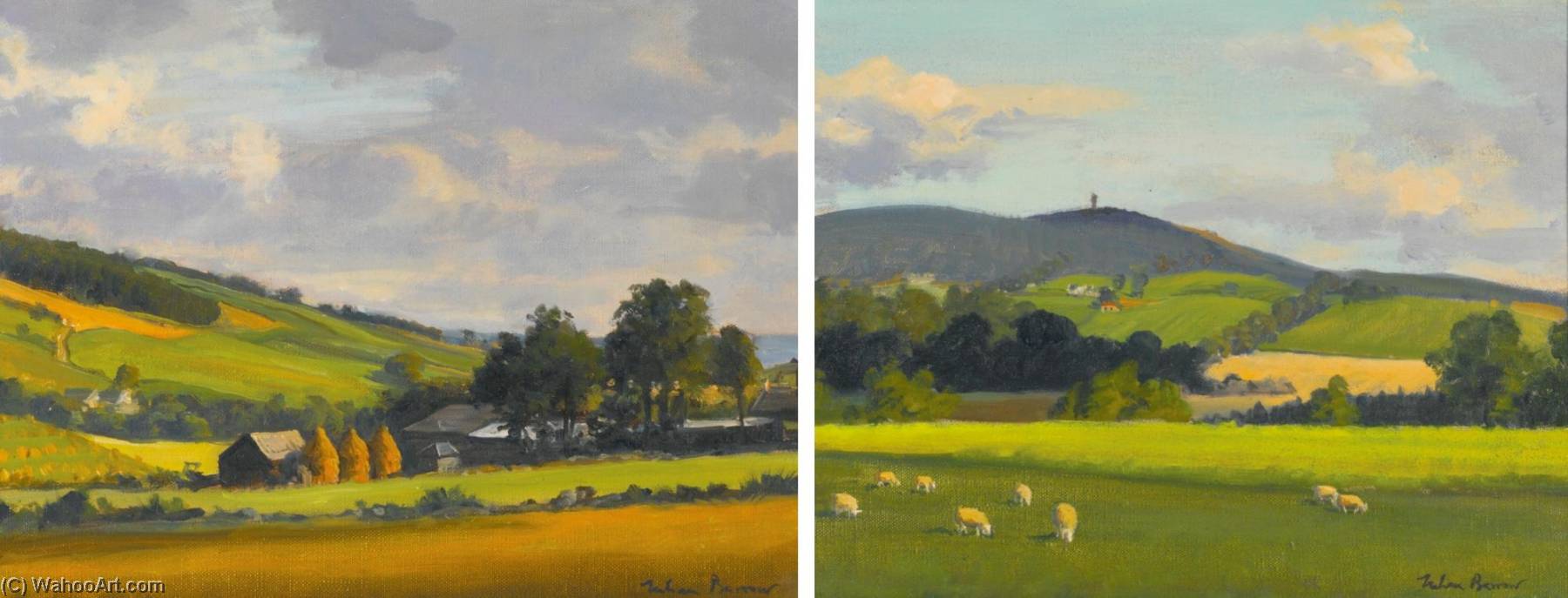
Cross Bog, Glen Clova, Angus, Scotland and Airlie Monument, The Holl , Glen Prosen, Angus, Scotland A Pair of Paintings
 1975
1975 21.0 x 26.0 cm
 Ver más
Reproducción al óleo hecha a mano
Óleo sobre lienzo pintado a mano en el tamaño y marco de su elección, realizado por encargo por nuestros artistas. ( Comprar impresión Comprar imagen)




































Elija entre nuestros tamaños predefinidos que respetan las proporciones originales de la obra.

Puede ingresar sus propias dimensiones para adaptarse a un marco o espacio específico. Si el tamaño seleccionado no coincide con las proporciones de la imagen original, recortaremos la obra o extenderemos la pintura con elementos adicionales pintados a mano. Se le enviará una maqueta digital para su aprobación antes de comenzar la producción.
Tenga en cuenta que la vista previa en pantalla no refleja el recorte o la extensión reales. Solo la maqueta mostrará con precisión la composición final.
Si bien existen tamaños personalizados, recomendamos seleccionar una dimensión de la lista predefinida para preservar las proporciones originales.
Tras realizar el pedido, el equipo de ArtsDot.com enviará un correo electrónico al cliente para solicitar instrucciones y proporcionarle una vista previa del boceto.
Envío a todo el mundo () en 3-4 semanas en lugar de las 5 semanas estándar. (6 septiembre). Sin comprometer la calidad.

Envío exprés gratuito a todo el mundo

Lienzo de lino de alta calidad

Seguro de envío total

Garantía de reembolso de impuestos aduaneros

Garantía de fidelidad cromática exacta

Política de devolución de 100 días (solo por defectos)

Garantía de devolución del 100% del dinero

Descuento por cantidad
 La opción de vidrio solo está disponible en tamaños inferiores a 110 cm.

Cross Bog, Glen Clova, Angus, Scotland and Airlie Monument, The Holl , Glen Prosen, Angus, Scotland A Pair of Paintings
Técnica de reproducción
Dimensiones de la reproducción
-


Precio total final
$ 263
Obras relacionadas








Biografía del artista
A Legacy of Light: The Life and Art of Julian Barrow
The history of British landscape painting is often defined by a profound connection to the land, yet few artists captured the ephemeral dance of light and the enduring spirit of place as poignantly as Julian Barrow. Born in 1939 in Longtown, Cumberland, Barrow’s early years were steeped in the rugged beauty of the English countryside. Growing up amidst the dramatic vistas of the Lake District, he developed an innate sensitivity to the shifting atmospheres of the natural world. His formative education was a blend of classical rigor and personal exploration; while his roots remained firmly planted in the soil of Cumbria, his artistic soul was shaped by the prestigious halls of the RWA and the transformative experience of studying at Signorina Simi’s Academy in Florence, Italy. This fusion of English pastoralism and Italian classical training would become the cornerstone of his unique visual language.
Barrow’s artistic development was characterized by a restless, wandering spirit that saw him traversing the globe, from the bustling streets of London and New York to the ancient landscapes of the Middle East, India, and the Far East. He was not merely a traveler but an observer, an artist who sought to distill the very essence of his surroundings onto canvas. His technique, heavily influenced by the Impressionist masters such as Monet and Sisley, focused on the mastery of light and color. He possessed a rare ability to capture fleeting moments—the way sunlight pierces through a heavy cloud over Ullswater or the soft, muted tones of a historical portrait. His brushwork was both masterful and emotive, capable of rendering the architectural grandeur of a London streetscape with realistic precision while simultaneously imbuing it with an impressionistic, dreamlike quality.
Mastery of Subject and Spirit
The breadth of Barrow’s oeuvre is truly remarkable, spanning landscapes, architectural portraits, and deeply psychological portraiture. He was particularly celebrated for his ability to capture the "Englishness" of a building, a feat noted by critics who admired how he could convey the social and historical weight of an estate through mere pigment and light. His landscapes were never static; they breathed with the life of the seasons. Whether depicting the intimidating silhouettes of the Scottish Highlands or the tranquil, verdant stretches of Devon, his work invited the viewer into a shared experience of nostalgia and wonder.
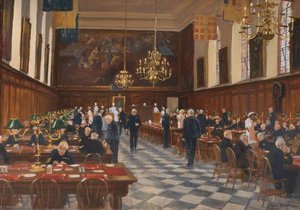
Beyond the horizon of the natural world, Barrow’s talent for portraiture allowed him to explore the human condition with profound empathy. His portraits were more than mere likenesses; they were studies in character, capturing subtle nuances of expression that revealed the inner life of his subjects. This versatility extended to his architectural paintings, where he treated structures like 1 Parliament Street or the Great Hall of the Royal Hospital Chelsea as living entities, rich with history and social significance. His work often bridged the gap between the contemporary moment and historical reverence, creating a sense of timelessness that resonated deeply with collectors and enthusiasts alike.
Achievements and Enduring Influence
Throughout his prolific career, Julian Barrow earned a distinguished place within the British art establishment. His frequent exhibitions at the Royal Academy and his long-standing tenure as President of the Chelsea Art Society cemented his reputation as a leading figure in his generation. For decades, he resided in a magnificent studio on Tite Street in Chelsea—a space that had once been home to legends like Whistler and Sargent—further connecting his personal history to the lineage of great painters. His contributions to the arts were recognized not only by his peers but also by academic institutions, earning him honorary doctorates from both Cumbria University and Newcastle University.
Though he passed away in 2013, the impact of Barrow’s vision remains undiminished. He left behind a body of work that serves as a luminous record of the world as he saw it: a world filled with beauty, history, and an ever-present, shimmering light. His ability to find the extraordinary within the ordinary—to see the soul in a stone wall or the drama in a quiet meadow—continues to inspire those who seek to understand the profound connection between the artist’s eye and the earth beneath their feet.
julian barrow
1939 - 2013
Datos clave
- Artistic Movement Or Style: Landscape Painting
- Artists Or Movements Influenced By This Artist: ['Impressionism']
- Artists Who Influenced This Artist: ['Romanticism']
- Date Of Death: 2013
- Full Name: Julian Barrow
- Nationality: British
- Notable Artworks: ['View of the Great Hall']
- Place Of Birth: England