 Ver en contexto
 Enviar
 Compartir
 Detalles

 Descargar
 Similares
 Radiografía
 Presentación de diapositivas
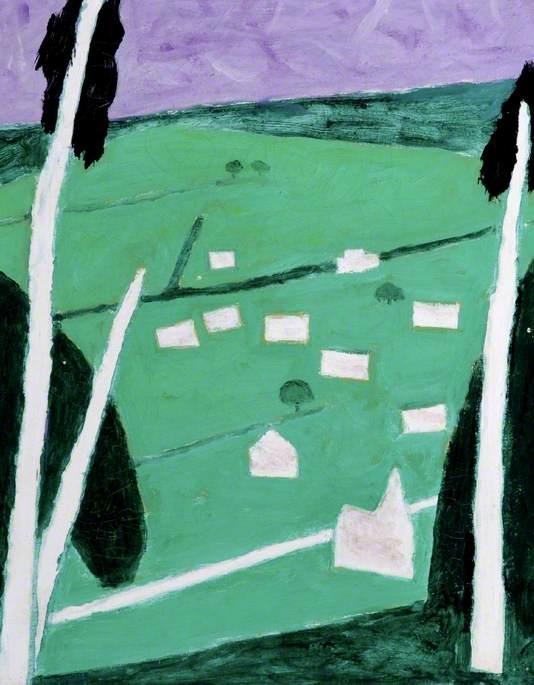
French Landscape I
 Acrylic On Canvas
- WallArt
- Surrealismus
 50.0 x 40.0 cm
 Universidad de Durham
 Ver más
Reproducción al óleo hecha a mano
Óleo sobre lienzo pintado a mano en el tamaño y marco de su elección, realizado por encargo por nuestros artistas. ( Comprar impresión Comprar imagen)




P118B $10

P118H $10

P118W $10

P438Z $10

P508JH $12

P508YH $12

P805H $10

P805Z $10

P919BZ $10

P919G $10

P919XJ $10

P959ZH $10

P968JZ $12

W106C $8

W218G $10

W218JH $8

W218Y $10

W307PJ $10

W316G $10

W316PJ $8

W316Y $10

W398PJ $8

W4111J $10

W500HY $15

W500JH $15

W692G $12

W849H $8

W940BG $15

W953PJ $8




Elija entre nuestros tamaños predefinidos que respetan las proporciones originales de la obra.

Puede ingresar sus propias dimensiones para adaptarse a un marco o espacio específico. Si el tamaño seleccionado no coincide con las proporciones de la imagen original, recortaremos la obra o extenderemos la pintura con elementos adicionales pintados a mano. Se le enviará una maqueta digital para su aprobación antes de comenzar la producción.
Tenga en cuenta que la vista previa en pantalla no refleja el recorte o la extensión reales. Solo la maqueta mostrará con precisión la composición final.
Si bien existen tamaños personalizados, recomendamos seleccionar una dimensión de la lista predefinida para preservar las proporciones originales.
Tras realizar el pedido, el equipo de ArtsDot.com enviará un correo electrónico al cliente para solicitar instrucciones y proporcionarle una vista previa del boceto.
Envío a todo el mundo () en 3-4 semanas en lugar de las 5 semanas estándar. (23 agosto). Sin comprometer la calidad.

Envío exprés gratuito a todo el mundo

Lienzo de lino de alta calidad

Seguro de envío total

Garantía de reembolso de impuestos aduaneros

Garantía de fidelidad cromática exacta

Política de devolución de 60 días (solo por defectos)

Garantía de devolución del 100% del dinero

Descuento por cantidad
 La opción de vidrio solo está disponible en tamaños inferiores a 110 cm.

French Landscape I
Técnica de reproducción
Dimensiones de la reproducción
-


Precio total final
$ 263
Descripción de la obra
French Landscape I – Julian Trevelyan: A Vision of Tranquility
Julian Otto Trevelyan (1910–1988), born in Dorking, Surrey, was a British surrealist painter and printmaker whose artistic legacy extends far beyond his celebrated landscapes. He wasn’t merely capturing scenery; he was channeling emotion into pigment, striving to distill the essence of nature's beauty into powerfully evocative images. Trevelyan’s formative years at Bedales School instilled in him a profound appreciation for independent thought and observation—qualities that would permeate his entire artistic career. His academic pursuits at Trinity College, Cambridge, provided him with intellectual grounding alongside exposure to the burgeoning avant-garde movements of the 1930s, particularly Surrealism, which profoundly shaped his aesthetic sensibilities. Trevelyan’s artistic journey culminated in a riverside studio in Hammersmith, London—a space that served as both home and incubator for his creative endeavors throughout his life. Unlike many artists of his era preoccupied with grand narratives or overtly political statements, Trevelyan focused on capturing subtle nuances of the natural world, prioritizing atmosphere and mood over literal representation. This dedication to detail is evident in “French Landscape I,” a painting that exemplifies his signature style—characterized by lyrical brushwork and an almost dreamlike quality.Style & Technique: Surrealist Impressionism
“French Landscape I” seamlessly blends elements of Surrealist and Impressionistic techniques. Trevelyan’s approach eschews the rigid formalism of Cubism or Futurism, opting instead for a looser, more expressive style reminiscent of Monet and Sisley. However, unlike Impressionists who sought to capture fleeting moments of light and color, Trevelyan imbued his canvases with symbolic resonance—drawing inspiration from Surrealist explorations of subconscious imagery and dreamlike landscapes. The artist utilized glazing techniques—applying thin layers of translucent paint over underlying colors—to achieve luminous effects and create a sense of depth that transcends mere visual perception.Historical Context: The Mid-Century British Landscape
Painted in the late 1960s, “French Landscape I” reflects the broader artistic landscape of Britain during the mid-century period. Following the austerity of wartime Britain, artists like Trevelyan embraced optimism and experimentation, seeking to redefine beauty and explore new modes of expression. Surrealism’s influence was particularly pronounced at this time, fostering a fascination with irrationality and challenging conventional notions of reality—themes that find subtle articulation in Trevelyan's depiction of the Thames Valley. The painting speaks to a yearning for serenity amidst an increasingly complex world, mirroring the humanist values prevalent in British culture during the era.Symbolism & Emotional Impact: A Meditation on Nature’s Quiet Power
The muted palette of “French Landscape I”—dominated by greens and blues—contributes significantly to its emotional impact. Trevelyan skillfully employs color psychology to convey a feeling of tranquility and contemplation, inviting viewers into a meditative state. The composition itself—featuring a distant village nestled amongst rolling hills—suggests both vulnerability and resilience. The artist’s meticulous attention to detail—capturing the textures of grass, trees, and water—further enhances the painting's immersive quality. Ultimately, “French Landscape I” transcends mere visual representation; it embodies Trevelyan’s belief in art as a conduit for conveying profound emotional truths about the human condition.Provenance & Reproduction
“French Landscape I” is currently housed at Durham University, showcasing its enduring appeal to curators and collectors alike. ArtsDot.com offers high-quality reproductions of this masterpiece, allowing enthusiasts worldwide to experience Trevelyan’s vision firsthand. Each print adheres to stringent standards of archival quality, ensuring that the artwork's vibrancy and detail are faithfully preserved for generations to come.Obras relacionadas
Biografía del artista
A Life Immersed in Imagination: The World of Julian Trevelyan
Julian Otto Trevelyan, born in Dorking, Surrey, in 1910, was a figure who navigated the currents of 20th-century British art with an independent spirit and a deeply personal vision. He wasn’t merely a painter or printmaker; he was a storyteller, a dreamer, and a dedicated educator whose influence resonated through generations of artists. Trevelyan's lineage hinted at a life steeped in intellectualism – his grandfather was the liberal politician Sir George Trevelyan, and his uncle the historian G.M. Macaulay Trevelyan – yet he forged his own path, one that led him from the hallowed halls of Cambridge to the vibrant artistic milieu of 1930s Paris and ultimately back to a riverside studio in Hammersmith, London, which would become both home and creative sanctuary for the rest of his life. His early education at Bedales School fostered an environment of free thought, while studies in English Literature at Trinity College, Cambridge, provided a foundation for the narrative quality that would permeate much of his work. However, it was the pull towards visual expression that proved strongest, prompting him to abandon academic pursuits and seek artistic training abroad.Early Life and Artistic Influences
Trevelyan’s formative years instilled in him a profound appreciation for literature and intellectual discourse—a legacy inherited from his distinguished family history. Bedales School nurtured his inquisitive mind, encouraging exploration beyond the confines of conventional subjects. Cambridge University cemented this foundation with rigorous study of English Literature, shaping his artistic sensibilities and fostering an inclination toward storytelling. Crucially, Trevelyan recognized that “to dream is to create,” a conviction that would guide him throughout his life’s artistic endeavors. This belief fueled his decision to pursue formal training in Paris, where he enrolled at Atelier Dix-Sept, Stanley William Hayter's influential engraving school—a crucible of experimentation and innovation. Here, he encountered luminaries of the avant-garde: Max Ernst, Oskar Kokoschka, Joan Miró, and Pablo Picasso – artists who challenged artistic conventions and embraced the expressive potential of the subconscious. These encounters profoundly impacted Trevelyan’s artistic trajectory, shaping his stylistic choices and informing his conceptual framework.Parisian Surrealism and Artistic Collaboration
The Parisian years constituted a transformative period for Trevelyan's artistic development. Atelier Dix-Sept provided him with unparalleled access to cutting-edge printmaking techniques and fostered an environment of collaborative creativity. He joined the British Surrealist Group in 1936, aligning himself with a movement that championed irrationality, dream imagery, and automatism—a deliberate rejection of representational realism. This affiliation resulted in participation in the International Surrealist Exhibition held in London that same year, showcasing his commitment to artistic exploration beyond accepted norms. Trevelyan’s collaboration with fellow artists extended beyond mere technical partnership; it involved a shared intellectual curiosity and an eagerness to grapple with complex philosophical ideas—a characteristic that would define his artistic practice for decades to come. He resigned from the group in 1938, prioritizing independent artistic freedom and allowing him to pursue stylistic innovations unconstrained by collective dogma.Wartime Service and Printmaking Innovation
The Second World War dramatically altered Trevelyan’s life course. Recognizing his aptitude for visual communication, he enlisted in the Royal Engineers, serving as a camouflage officer during Operation Barbarossa—a pivotal experience that honed his observational skills and deepened his understanding of deception. This service demanded meticulous attention to detail and fostered an acute awareness of perceptual processes—skills that would subsequently enrich his artistic endeavors. Trevelyan’s inventive approach to camouflage involved pioneering novel techniques for concealing military installations, demonstrating a remarkable capacity for problem-solving and adapting to challenging circumstances. Following the war, he returned to England and dedicated himself to teaching at Chelsea School of Art and later at the Royal College of Art—where he became Head of the Etching Department—inspiring countless aspiring artists and establishing himself as a respected mentor. His unwavering passion for printmaking propelled him to revolutionize modern etching techniques, earning him recognition as a visionary innovator who reshaped the artistic landscape of his time.A Legacy of Imaginative Vision
Throughout his prolific career, Trevelyan’s subject matter encompassed diverse themes—from industrial landscapes and portraits to fantastical scenes populated by enigmatic figures and symbolic objects. However, he consistently returned to the River Thames, capturing its beauty and history in a series of evocative prints that exemplify his artistic sensibility. These works transcended mere topographical representation; they conveyed emotional resonance and explored the river’s cultural significance—a testament to Trevelyan's ability to infuse visual imagery with narrative depth and psychological insight. His paintings and prints are characterized by their lyrical quality, imaginative compositions, and subtle use of color—reflecting his belief that art should aspire to capture the essence of experience rather than simply mirroring it. Julian Trevelyan received a Senior Fellowship at the Royal College of Art in 1986 and was appointed a Royal Academician in 1987, solidifying his place within British artistic history. He died peacefully in Hammersmith in 1988, leaving behind an enduring legacy—a testament to his unwavering commitment to artistic exploration and imaginative vision that continues to inspire artists today. His work remains celebrated for its poetic beauty and profound engagement with the human condition.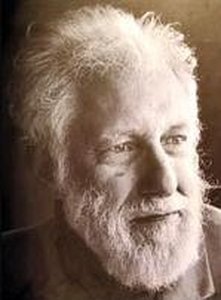
Julian Trevelyan
1910 - 1988 , Reino Unido
Datos clave
- Artistic Movement Or Style: Surrealism, Printmaking
- Artists Or Movements Influenced By This Artist: ['Royal College of Art, London']
- Artists Who Influenced This Artist:
- Max Ernst
- Joan Miró
- Pablo Picasso
- Date Of Birth: 1910
- Date Of Death: 1988
- Full Name: Julian Otto Trevelyan
- Nationality: British
- Notable Artworks:
- Self-portrait (1940)
- Standing Figure...
- Boat Race
- Thames Suite (1969)
- Place Of Birth: Dorking, UK
Artículos relacionados

Paisajes Románticos: 10 Obras Maestras que Definieron un Movimiento Artístico
Descubre los 10 paisajes románticos más influyentes de artistas como Caspar David Friedrich y Turner. Explora la belleza, el simbolismo y las técnicas del movimiento romántico. Reproducciones de arte exclusivas en ArtsDot.com.

John Constable: Las 25 Obras Maestras del Paisaje Inglés | ArtsDot
Descubre las 25 obras maestras de John Constable, el pintor romántico inglés que capturó la belleza del paisaje. Explora su técnica, historia y significado en ArtsDot.com. Reproducciones de arte de alta calidad para tu hogar.

Evocations of Place: A Historical Journey Through Landscape Art
Explore the rich history of landscape art with ArtsDot. Discover renowned artists, movements like Impressionism & Romanticism, and expert guidance for collecting timeless pieces. Find your perfect serene escape today!

Evocations of Place: A Historical Journey Through Landscape Art
Explore the rich history of landscape art with ArtsDot. Discover renowned artists, movements like Impressionism & tonalism, and expert guidance for collecting timeless pieces. Find your perfect serene escape today!
Evoking Atmosphere & Identity: A Journey Through Landscape Painting's History
Explore the rich history of landscape painting! Discover renowned artists, movements like Romanticism, & techniques such as atmospheric perspective. Find inspiration and quality reproductions at ArtsDot.