

 Ver en contexto
 Enviar
 Compartir
 Detalles

 Descargar
 Similares
 Radiografía
 Presentación de diapositivas
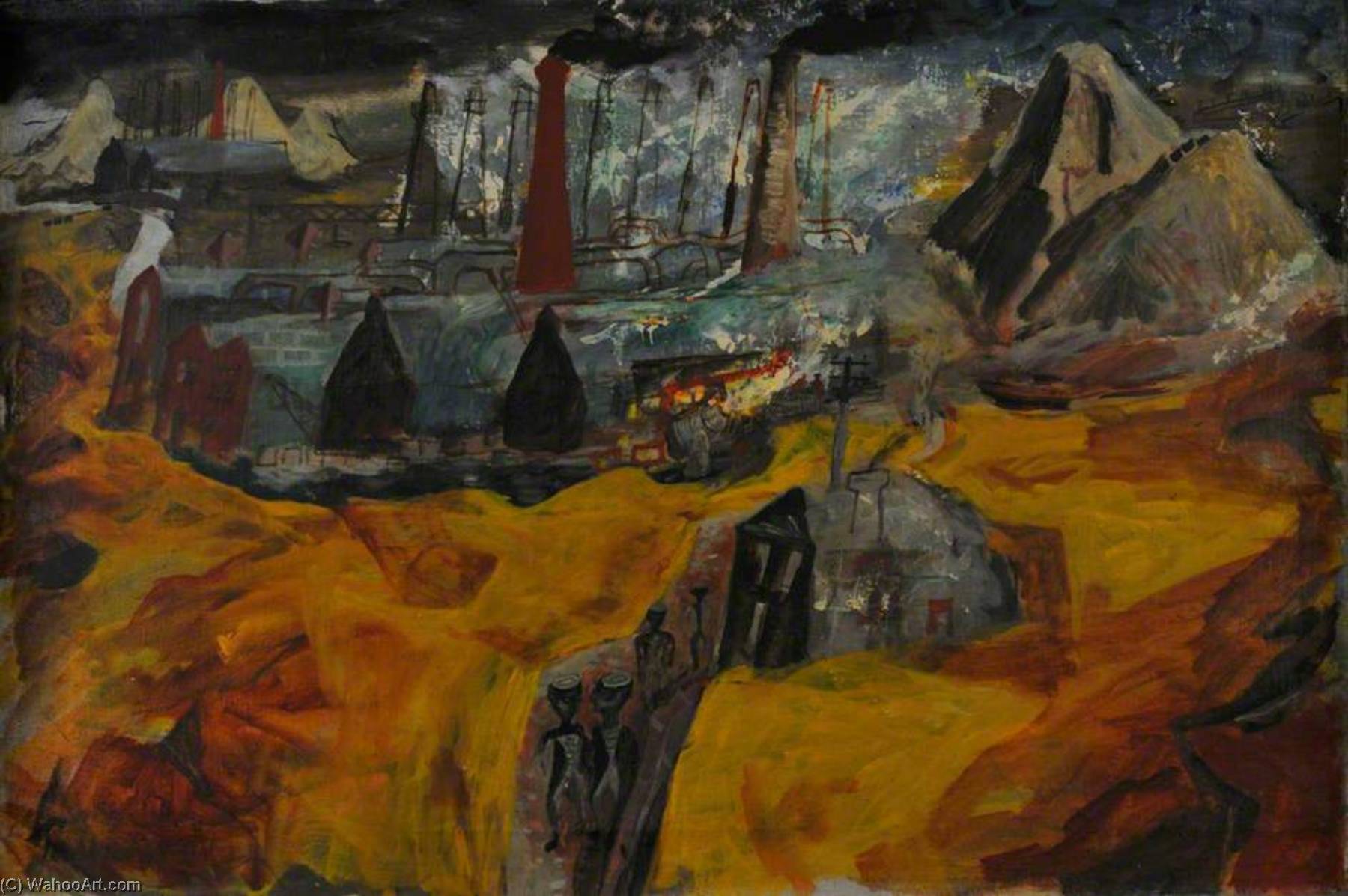
Steel Works near Swansea
 1944
1944 52.0 x 67.0 cm
 La Colección Argyll
 Ver más
Adquiera una imagen digital de alta resolución y optimizada, muy superior a la vista previa en línea.
Cada archivo es preparado meticulosamente por nuestros especialistas internos mediante el uso de herramientas avanzadas y un experto retoque manual. Nos aseguramos de que cada imagen posea una claridad excepcional, una precisión cromática impecable y un detalle minucioso.
El archivo final se entrega por correo electrónico en un plazo de 72 horas, optimizado para su uso inmediato en entornos profesionales, editoriales y de impresión. Esta es la misma calidad en la que confían los estudios de diseño, las editoriales y las galerías de primer nivel.
Imagen Digital
Descarga un archivo de alta resolución para exhibición personal, impresión y proyectos creativos. ( Comprar impresión Comprar pintura hecha a mano)
Incluido en cada pedido de imágenes digitales
Entrega digital experta, garantizada.
Al elegir ArtsDot.com, no solo está adquiriendo una imagen; está recibiendo una obra de arte digital mejorada profesionalmente, elaborada con precisión y respaldada por una garantía de satisfacción. Esto es todo lo que incluye su pedido, automáticamente:

Entrega rápida por email
Recibirá su archivo de imagen digital en alta resolución por correo electrónico en un plazo de 72 horas tras realizar su pedido, listo para su uso inmediato.

Archivo digital optimizado por IA
Su obra de arte se optimiza profesionalmente mediante herramientas avanzadas de IA y edición manual, garantizando el máximo detalle, claridad y precisión cromática.

Reenvío gratuito de por vida
¿Has borrado o perdido tu archivo por error? No te preocupes: te lo volveremos a enviar en cualquier momento, sin coste adicional.

Sin gastos de importación, siempre
Disfrute de su obra de arte al instante sin aduanas, aranceles ni gastos de envío; las descargas digitales siempre están libres de impuestos.

Garantía de fidelidad de color
Garantizamos que su imagen digital refleje los colores originales con la mayor fidelidad posible, mediante el uso de herramientas profesionales y gestión del color.

Garantía de satisfacción de 60 días
Si no está satisfecho con su imagen digital, la revisaremos o le reembolsaremos el 100% en un plazo de 60 días, sin preguntas.

100% Garantía de devolución de dinero
¿No está satisfecho? Obtenga un reembolso completo dentro de los 60 días posteriores a la recepción de su archivo digital, sin necesidad de explicaciones.

Descuentos por pedidos grandes
Compra 3 imágenes, ahorra 10% - Compra 5, ahorra 15% - Compra 10+, ahorra 20%. Ideal para proyectos creativos, galerías y agencias.
Obras relacionadas









Biografía del artista
A Life Immersed in Imagination: The World of Julian Trevelyan
Julian Otto Trevelyan, born in Dorking, Surrey, in 1910, was a figure who navigated the currents of 20th-century British art with an independent spirit and a deeply personal vision. He wasn’t merely a painter or printmaker; he was a storyteller, a dreamer, and a dedicated educator whose influence resonated through generations of artists. Trevelyan's lineage hinted at a life steeped in intellectualism – his grandfather was the liberal politician Sir George Trevelyan, and his uncle the historian G.M. Macaulay Trevelyan – yet he forged his own path, one that led him from the hallowed halls of Cambridge to the vibrant artistic milieu of 1930s Paris and ultimately back to a riverside studio in Hammersmith, London, which would become both home and creative sanctuary for the rest of his life. His early education at Bedales School fostered an environment of free thought, while studies in English Literature at Trinity College, Cambridge, provided a foundation for the narrative quality that would permeate much of his work. However, it was the pull towards visual expression that proved strongest, prompting him to abandon academic pursuits and seek artistic training abroad.Early Life and Artistic Influences
Trevelyan’s formative years instilled in him a profound appreciation for literature and intellectual discourse—a legacy inherited from his distinguished family history. Bedales School nurtured his inquisitive mind, encouraging exploration beyond the confines of conventional subjects. Cambridge University cemented this foundation with rigorous study of English Literature, shaping his artistic sensibilities and fostering an inclination toward storytelling. Crucially, Trevelyan recognized that “to dream is to create,” a conviction that would guide him throughout his life’s artistic endeavors. This belief fueled his decision to pursue formal training in Paris, where he enrolled at Atelier Dix-Sept, Stanley William Hayter's influential engraving school—a crucible of experimentation and innovation. Here, he encountered luminaries of the avant-garde: Max Ernst, Oskar Kokoschka, Joan Miró, and Pablo Picasso – artists who challenged artistic conventions and embraced the expressive potential of the subconscious. These encounters profoundly impacted Trevelyan’s artistic trajectory, shaping his stylistic choices and informing his conceptual framework.Parisian Surrealism and Artistic Collaboration
The Parisian years constituted a transformative period for Trevelyan's artistic development. Atelier Dix-Sept provided him with unparalleled access to cutting-edge printmaking techniques and fostered an environment of collaborative creativity. He joined the British Surrealist Group in 1936, aligning himself with a movement that championed irrationality, dream imagery, and automatism—a deliberate rejection of representational realism. This affiliation resulted in participation in the International Surrealist Exhibition held in London that same year, showcasing his commitment to artistic exploration beyond accepted norms. Trevelyan’s collaboration with fellow artists extended beyond mere technical partnership; it involved a shared intellectual curiosity and an eagerness to grapple with complex philosophical ideas—a characteristic that would define his artistic practice for decades to come. He resigned from the group in 1938, prioritizing independent artistic freedom and allowing him to pursue stylistic innovations unconstrained by collective dogma.Wartime Service and Printmaking Innovation
The Second World War dramatically altered Trevelyan’s life course. Recognizing his aptitude for visual communication, he enlisted in the Royal Engineers, serving as a camouflage officer during Operation Barbarossa—a pivotal experience that honed his observational skills and deepened his understanding of deception. This service demanded meticulous attention to detail and fostered an acute awareness of perceptual processes—skills that would subsequently enrich his artistic endeavors. Trevelyan’s inventive approach to camouflage involved pioneering novel techniques for concealing military installations, demonstrating a remarkable capacity for problem-solving and adapting to challenging circumstances. Following the war, he returned to England and dedicated himself to teaching at Chelsea School of Art and later at the Royal College of Art—where he became Head of the Etching Department—inspiring countless aspiring artists and establishing himself as a respected mentor. His unwavering passion for printmaking propelled him to revolutionize modern etching techniques, earning him recognition as a visionary innovator who reshaped the artistic landscape of his time.A Legacy of Imaginative Vision
Throughout his prolific career, Trevelyan’s subject matter encompassed diverse themes—from industrial landscapes and portraits to fantastical scenes populated by enigmatic figures and symbolic objects. However, he consistently returned to the River Thames, capturing its beauty and history in a series of evocative prints that exemplify his artistic sensibility. These works transcended mere topographical representation; they conveyed emotional resonance and explored the river’s cultural significance—a testament to Trevelyan's ability to infuse visual imagery with narrative depth and psychological insight. His paintings and prints are characterized by their lyrical quality, imaginative compositions, and subtle use of color—reflecting his belief that art should aspire to capture the essence of experience rather than simply mirroring it. Julian Trevelyan received a Senior Fellowship at the Royal College of Art in 1986 and was appointed a Royal Academician in 1987, solidifying his place within British artistic history. He died peacefully in Hammersmith in 1988, leaving behind an enduring legacy—a testament to his unwavering commitment to artistic exploration and imaginative vision that continues to inspire artists today. His work remains celebrated for its poetic beauty and profound engagement with the human condition.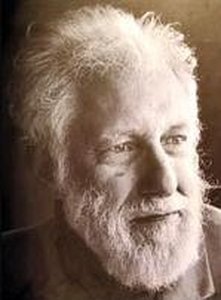
Julian Trevelyan
1910 - 1988 , Reino Unido
Breves datos
- Artistic Movement Or Style: Surrealism, Printmaking
- Artists Or Movements Influenced By This Artist: ['Royal College of Art, London']
- Artists Who Influenced This Artist:
- Max Ernst
- Joan Miró
- Pablo Picasso
- Date Of Birth: 1910
- Date Of Death: 1988
- Full Name: Julian Otto Trevelyan
- Nationality: British
- Notable Artworks:
- Self-portrait (1940)
- Standing Figure...
- Boat Race
- Thames Suite (1969)
- Place Of Birth: Dorking, UK

