

 Ver en contexto
 Enviar
 Compartir
 Detalles

 Descargar
 Similares
 Radiografía
 Presentación de diapositivas
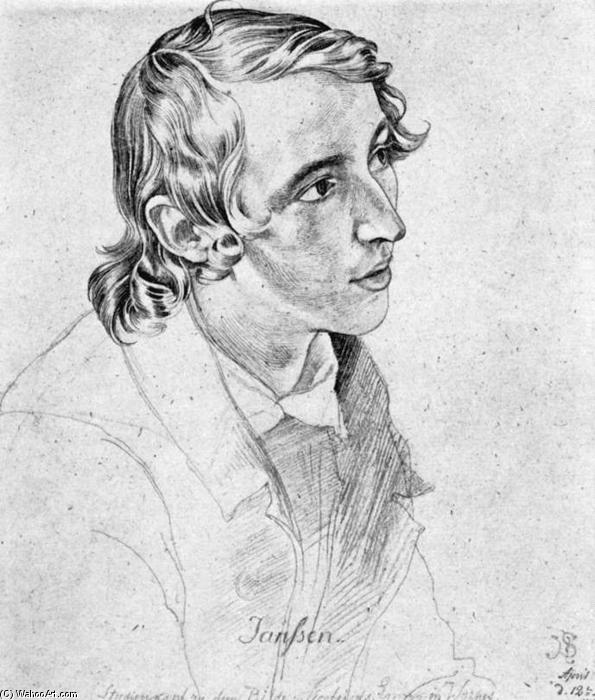
Portrait of Victor Emil Jansen
 Oil On Canvas
- WallArt
- Nazarene Revival
 300.0 x 247.0 cm
 Hamburger Kunsthalle
 Ver más
Reproducción al óleo hecha a mano
Óleo sobre lienzo pintado a mano en el tamaño y marco de su elección, realizado por encargo por nuestros artistas. ( Comprar impresión Comprar imagen)




P118B $10

P118H $10

P118W $10

P438Z $10

P508JH $12

P508YH $12

P805H $10

P805Z $10

P919BZ $10

P919G $10

P919XJ $10

P959ZH $10

P968JZ $12

W106C $8

W218G $10

W218JH $8

W218Y $10

W307PJ $10

W316G $10

W316PJ $8

W316Y $10

W398PJ $8

W4111J $10

W500HY $15

W500JH $15

W692G $12

W849H $8

W940BG $15

W953PJ $8




Elija entre nuestros tamaños predefinidos que respetan las proporciones originales de la obra.

Puede ingresar sus propias dimensiones para adaptarse a un marco o espacio específico. Si el tamaño seleccionado no coincide con las proporciones de la imagen original, recortaremos la obra o extenderemos la pintura con elementos adicionales pintados a mano. Se le enviará una maqueta digital para su aprobación antes de comenzar la producción.
Tenga en cuenta que la vista previa en pantalla no refleja el recorte o la extensión reales. Solo la maqueta mostrará con precisión la composición final.
Si bien existen tamaños personalizados, recomendamos seleccionar una dimensión de la lista predefinida para preservar las proporciones originales.
Tras realizar el pedido, el equipo de ArtsDot.com enviará un correo electrónico al cliente para solicitar instrucciones y proporcionarle una vista previa del boceto.
Envío a todo el mundo () en 3-4 semanas en lugar de las 5 semanas estándar. (31 agosto). Sin comprometer la calidad.

Envío exprés gratuito a todo el mundo

Lienzo de lino de alta calidad

Seguro de envío total

Garantía de reembolso de impuestos aduaneros

Garantía de fidelidad cromática exacta

Política de devolución de 60 días (solo por defectos)

Garantía de devolución del 100% del dinero

Descuento por cantidad
 La opción de vidrio solo está disponible en tamaños inferiores a 110 cm.

Portrait of Victor Emil Jansen
Técnica de reproducción
Dimensiones de la reproducción
-


Precio total final
$ 263
The Enigmatic Gaze: Unveiling Julius Schnorr von Carolsfeld’s Portrait of Victor Emil Jansen
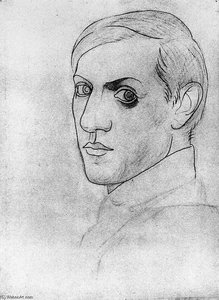
Julius Schnorr von Carolsfeld's “Portrait of Victor Emil Jansen” is more than a simple likeness; it’s a meticulously crafted window into the sensibilities of 19th-century German art. Painted around 1860, this graphite and charcoal drawing on paper captures not just a man’s appearance but also an aura of quiet contemplation and restrained formality – hallmarks of the Nazarene movement to which Schnorr belonged. The portrait immediately draws the viewer in with its stark contrasts of light and shadow, a deliberate technique employed to imbue the subject with depth and a subtle sense of melancholy. It's a piece that whispers stories of a bygone era, inviting us to decipher the unspoken narratives held within the young man’s gaze.
The composition is strikingly intimate, confining Jansen within a close-up frame that emphasizes his face and upper body. This deliberate restriction forces the viewer to confront him directly, fostering a sense of connection and encouraging careful observation. The off-center placement of his head subtly directs our attention towards his leftward gaze – an element that contributes significantly to the portrait’s overall mood. The formality of his attire—a dark coat and waistcoat—suggests a man of standing, perhaps a member of the upper class, while his serious expression hints at introspection or even a touch of sadness. The artist masterfully uses hatching and cross-hatching to build volume and texture, particularly in the rendering of Jansen’s hair, creating a tactile quality that invites us to reach out and feel its softness.
The Nazarene Revival: Contextualizing Schnorr's Style
To fully appreciate “Portrait of Victor Emil Jansen,” it’s crucial to understand the artistic context in which it was created. Julius Schnorr von Carolsfeld was a leading figure in the Nazarene movement, a reaction against the prevailing Romantic style that dominated much of 19th-century art. The Nazarenes sought to revive the principles and techniques of Renaissance artists like Fra Angelico and Leonardo da Vinci, emphasizing clarity, precision, and spiritual depth. They rejected the loose brushwork and emotional intensity favored by their contemporaries, instead prioritizing meticulous detail, balanced compositions, and a focus on religious themes. Schnorr’s work exemplifies this commitment to classical ideals, demonstrating a profound understanding of anatomy, perspective, and tonal shading – skills honed through his early training under John Flaxman.
The portrait's restrained palette—a monochrome study in shades of gray—further reinforces the Nazarene aesthetic. This deliberate choice avoids distracting color, allowing the viewer to concentrate on the interplay of light and shadow and the subtle nuances of Jansen’s expression. The use of line is paramount; each stroke carefully considered to define form and create a sense of three-dimensionality. The portrait isn't merely a representation of a man; it’s an exploration of form, texture, and the power of visual language – elements that were central to Schnorr’s artistic philosophy.
Symbolism and Emotional Resonance
Beyond its technical merits, “Portrait of Victor Emil Jansen” resonates with a quiet emotional depth. The young man's direct gaze invites us into his inner world, prompting questions about his thoughts, aspirations, and perhaps even his anxieties. The slight furrow in his brow suggests a contemplative mood, as if he’s wrestling with some internal dilemma. While the portrait offers no explicit narrative, it evokes a sense of mystery and intrigue – leaving the viewer to project their own interpretations onto the subject's face. The solemnity of the pose and the careful rendering of his features contribute to this feeling of quiet intensity.
The portrait’s enduring appeal lies in its ability to capture a fleeting moment of human experience—a glimpse into the soul of a young man grappling with the complexities of life. It's a testament to Schnorr von Carolsfeld’s skill as an artist and his profound understanding of the power of visual representation.
Obras relacionadas
Biografía del artista
Julius Schnorr von Carolsfeld: Una Vida en el Arte y la Fe
- Nacido: Leipzig, Alemania (1794)
- Fallecido: 1872
- Movimiento: Movimiento Nazarreno
Primeros Años y Formación
Julius Schnorr von Carolsfeld nació en Leipzig, hijo de Veit Hanns Schnorr von Carolsfeld (1764–1841), un dibujante, grabador y pintor. Su padre le proporcionó su educación artística inicial. A los diecisiete años, Julius ingresó a la Academia de Bellas Artes de Viena, donde estudió bajo Friedrich Heinrich Füger. Este período fue significativo ya que coincidió con la expulsión de figuras como Johann Friedrich Overbeck, quienes más tarde formarían el núcleo del movimiento Nazarreno.
El Movimiento Nazarreno y el Período Romano
En 1815, Schnorr siguió a Overbeck y a otros a Roma, uniéndose al floreciente movimiento Nazarreno. Este grupo buscaba un retorno a lo que percibían como la pureza y los valores espirituales del arte del primer Renacimiento, rechazando las tendencias artísticas contemporáneas. Inicialmente influenciado por la pintura italiana del siglo XV, particularmente Fra Angelico, el estilo de Schnorr evolucionó hacia modelos más elaborados del Alto Renacimiento. Los Nazarrenos enfatizaron la pintura al fresco y el arte monumental, lo que llevó a la comisión de Schnorr para decorar el salón de entrada de Villa Massimo cerca del Laterano con frescos que ilustran obras de Ariosto.
Regreso a Múnich y Patronazgo Real
En 1825, Schnorr dejó Roma y se estableció en Múnich. Entró al servicio de Luis I de Baviera, convirtiéndose en una figura clave en la revitalización de la pintura mural dentro de la región. Una comisión significativa implicó decorar cinco salas del nuevo palacio (la Residencia) con frescos que ilustran el Nibelungenlied. Si bien inicialmente imaginaba un programa simbólico complejo que combinara temas históricos alemanes con escenas del Antiguo Testamento, esto finalmente fue limitado por Luis I, quien prefería un enfoque narrativo más directo. A pesar de esta limitación, la obra de Schnorr demostró su habilidad en composición y dibujo, aunque algunos críticos lo encontraron demasiado elaborado.
La "Biblia Pictorial" y los Últimos Años
La carrera posterior de Schnorr se caracterizó por su extensa “Biblia Pictorial”, publicada en Leipzig entre 1852 y 1860, seguida de una edición en inglés en 1861. Esta monumental obra comprendía numerosos dibujos que representaban escenas de la Biblia, reflejando la fe luterana de Schnorr y su amplia perspectiva teológica. Si bien fue admirada por su erudición, algunos críticos encontraron los dibujos complejos y carentes de armonía. También diseñó vidrieras, demostrando su versatilidad como artista. Las comisiones incluyeron diseños para la Catedral de Glasgow y la Catedral de San Pablo en Londres, aunque estos recibieron una recepción mixta, particularmente con respecto a su percibida desviación de la estética medieval tradicional.
Legado e Influencia
El legado de Julius Schnorr von Carolsfeld se basa en sus importantes contribuciones al movimiento Nazarreno y a su prolífica producción de arte religioso. Su "Biblia Pictorial" sigue siendo un logro notable en la ilustración bíblica, mientras que sus frescos y diseños de vidrieras reflejan su compromiso con la revitalización de las tradiciones artísticas históricas. Influyó en generaciones posteriores de artistas con su mezcla de Romanticismo y revivalismo renacentista.
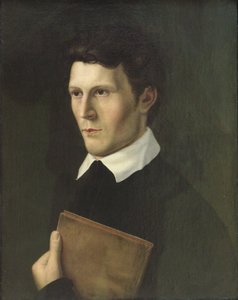
Julius Schnorr von Carolsfeld
1794 - 1872 , Alemania
Datos clave
- Artistas Que Influyeron:
- Fra Angelico
- Johann Friedrich Overbeck
- Fecha De Fallecimiento: 24 de mayo de 1872
- Fecha De Nacimiento: 26 de marzo de 1794
- Lugar De Nacimiento: Leipzig, Alemania
- Movimiento Artístico: Nazareno y Romanticismo
- Nacionalidad: Alemán
- Nombre Completo: Julius Schnorr von Carolsfeld
- Obras Notables:
- La boda en Caná
- Frescos del Nibelungenlied
- Ilustraciones de la Biblia
Artículos relacionados
Anton von Werner: Imperial Painter, Historical Witness & Shifting German Identity
Explore the life & work of Anton von Werner, Imperial Germany's leading painter. Discover his dramatic depictions of war, unification, and court life – a fascinating insight into 19th-century German history & art.
Fritz von Uhde: Bridging Realism & Symbolism in Late 19th-Century German Painting
Explore the captivating world of Fritz von Uhde, a pivotal German painter bridging Realism & Symbolism. Discover his plein-air techniques, religious themes, and influence on modern art. Learn about this fascinating artist at ArtsDot.
El Siglo XIX en el Arte: 10 Obras Maestras para Decorar con Historia y Estilo
Descubre 10 obras maestras del siglo XIX: Monet, Goya y más. Explora el impresionismo, realismo y romanticismo que definieron una época. Encuentra reproducciones de arte exclusivas para decorar tu hogar con estilo en ArtsDot.com.
Eugen von Blaas: Capturing Alpine Life & Sentiment in 19th-Century Austrian Painting
Discover the captivating world of Eugen von Blaas! Explore his exquisite 19th-century paintings capturing Venetian life & Alpine beauty. Learn about his Academic Classicism style and find museum-quality reproductions at ArtsDot.
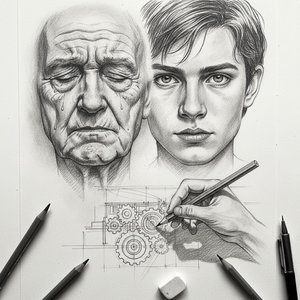
The Nuances of Graphite: Exploring Emotional Depth & Technical Mastery in Pencil Drawing
Explore the captivating world of graphite drawing! Discover its rich history, master essential techniques like chiaroscuro, and learn how artists evoke emotion through this timeless medium. Expert insights for art enthusiasts.

