

 Ver en contexto
 Enviar
 Compartir
 Detalles

 Descargar
 Similares
 Radiografía
 Presentación de diapositivas
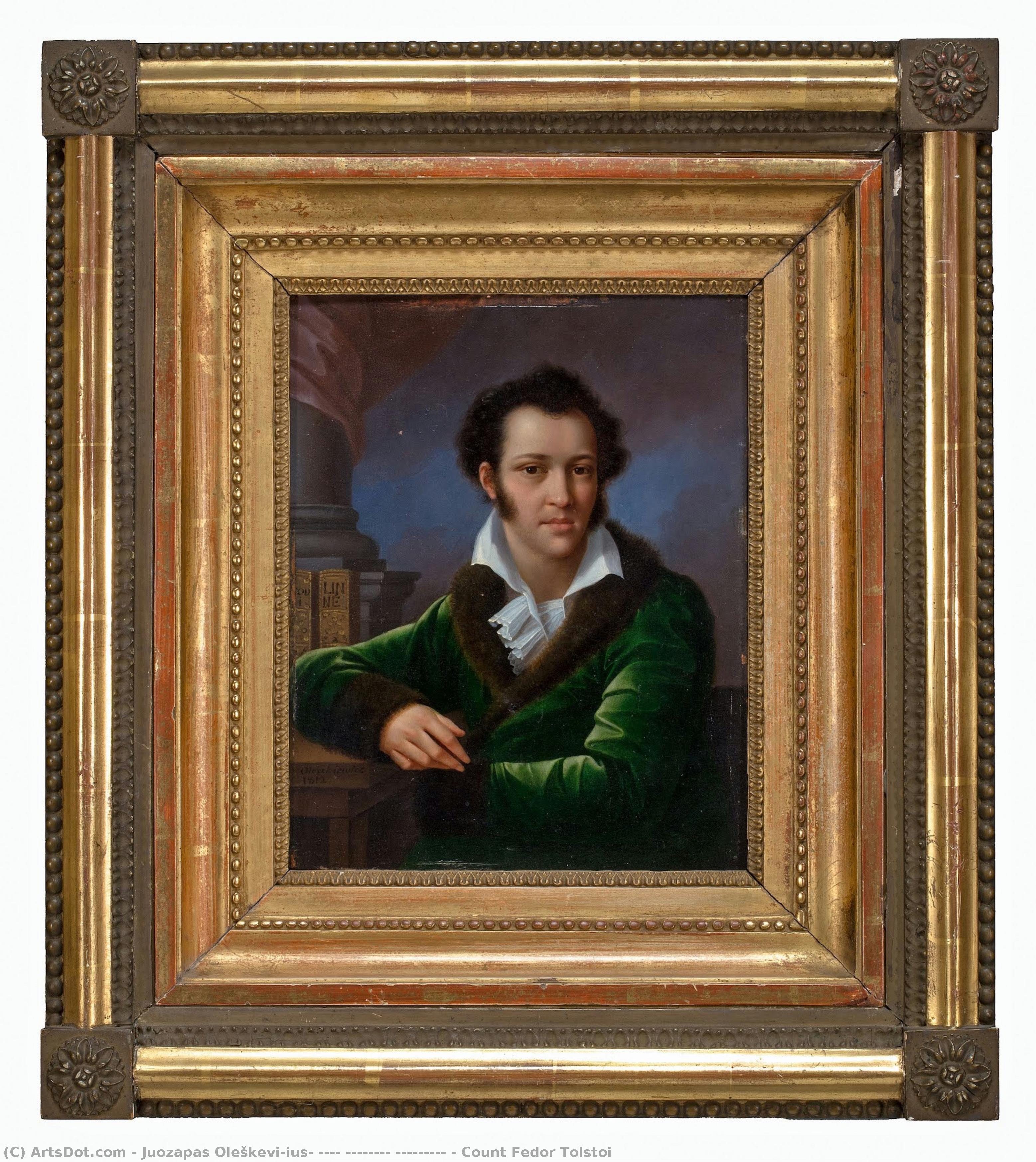
Count Fedor Tolstoi


 Ver más
Reproducción al óleo hecha a mano
Óleo sobre lienzo pintado a mano en el tamaño y marco de su elección, realizado por encargo por nuestros artistas. ( Comprar impresión Comprar imagen)




































Elija entre nuestros tamaños predefinidos que respetan las proporciones originales de la obra.

Puede ingresar sus propias dimensiones para adaptarse a un marco o espacio específico. Si el tamaño seleccionado no coincide con las proporciones de la imagen original, recortaremos la obra o extenderemos la pintura con elementos adicionales pintados a mano. Se le enviará una maqueta digital para su aprobación antes de comenzar la producción.
Tenga en cuenta que la vista previa en pantalla no refleja el recorte o la extensión reales. Solo la maqueta mostrará con precisión la composición final.
Si bien existen tamaños personalizados, recomendamos seleccionar una dimensión de la lista predefinida para preservar las proporciones originales.
Tras realizar el pedido, el equipo de ArtsDot.com enviará un correo electrónico al cliente para solicitar instrucciones y proporcionarle una vista previa del boceto.
Envío a todo el mundo () en 3-4 semanas en lugar de las 5 semanas estándar. (5 septiembre). Sin comprometer la calidad.

Envío exprés gratuito a todo el mundo

Lienzo de lino de alta calidad

Seguro de envío total

Garantía de reembolso de impuestos aduaneros

Garantía de fidelidad cromática exacta

Política de devolución de 60 días (solo por defectos)

Garantía de devolución del 100% del dinero

Descuento por cantidad
 La opción de vidrio solo está disponible en tamaños inferiores a 110 cm.

Count Fedor Tolstoi
Técnica de reproducción
Dimensiones de la reproducción
-


Precio total final
$ 263
Obras relacionadas










Biografía del artista
The Soul of Lithuanian Romanticism
Juozapas Oleškevičius, a name etched into the foundational layers of Lithuanian art history, was a painter who possessed the rare ability to breathe life into both the silent majesty of nature and the thunderous echoes of the past. Born around 1777 in the serene surroundings of Šiluva, Lithuania, his early years were steeped in an atmosphere where melody and visual beauty intertwined; as the son of a violinist, he grew up with a profound sensitivity to rhythm and harmony, qualities that would later manifest in the balanced compositions of his canvases. His artistic journey was not merely one of talent, but of rigorous intellectual pursuit, as he sought to master the very mechanics of life by studying anatomy and physiology alongside the delicate art of drawing.
The trajectory of Oleškevičius’s development was shaped by the prestigious halls of Vilnius University, where he refined his technique under the guidance of masters such as Franciszek Smuglewicz and Jan Rustem. However, it was his pilgrimage to Paris in 1803 that truly ignited his creative spirit. Immersed in the epicenter of European art at the École des Beaux-Arts, he encountered the formidable influence of Jacques-Louis David. From David, Oleškevi vičius inherited a command over dramatic composition and the use of idealized figures to convey profound emotional truths. This Parisian period infused his work with a Neoclassical precision that he would later soften with the burgeoning sensibilities of Romanticism, creating a unique stylistic bridge between structured discipline and emotive freedom.
Historical Grandeur and Natural Serenity
Upon his return to Vilnius in 1806, Oleškevičius emerged not just as a skilled painter, but as a monumental storyteller for his nation. He possessed a remarkable gift for capturing historical narratives that resonated with the collective memory of the Lithuanian people. His most celebrated achievement, the sweeping and powerful The Battle of Grunwald, stands as a testament to his ability to transform historical events into epic visual poetry, commemorating the legendary victory against the Teutonic Knights with a sense of scale and gravity that solidified his reputation among the artistic elite.
Yet, beyond the grand theater of war and history, there existed another side to his genius—a quiet, contemplative mastery of the landscape. Oleškevičius had an uncanny ability to render the Lithuanian wilderness with a profound, almost spiritual intimacy. His depictions of pine forests and woodland scenes are characterized by a serene realism that anticipates the great landscape traditions of the 19th century. In these works, the play of light through dense canopies and the subtle textures of the forest floor reveal a painter deeply in love with the quiet rhythms of the natural world, offering a sense of peace that contrasts beautifully with his more turbulent historical compositions.
Legacy and Imperial Recognition
The reach of Oleškevičius’s talent eventually extended far beyond the borders of Lithuania, drawing the gaze of the highest echelons of European society. His move to Saint Petersburg in 1806 marked a significant chapter in his career, as he found himself under the generous patronage of Count Aleksander Chodkiewicz and later secured the attention of Tsar Alexander I. This period of imperial recognition culminated in his prestigious appointment as an Academician, a distinction that placed him among the most respected artists of his era.
Though history sometimes places him in the shadow of later landscape giants like Ivan Shishkin, the significance of Juozapas Oleškevičius cannot be overstated. He was a pioneer who navigated the transition from the structured ideals of Neoclassicism to the emotive depths of Romanticism. His legacy remains preserved in the way he captured the dual essence of his homeland: the heroic struggle of its history and the enduring, tranquil beauty of its earth. Through his brush, the landscapes of Lithuania became more than mere scenery; they became vessels for national identity and timeless emotion.
juozapas oleškevičius, юзеф иванович олешкевич
1830 , Lithuania
Datos clave
- Artistic Movement Or Style: Russian Realism
- Artists Or Movements Influenced By This Artist: ['Ivanovich Shishkin']
- Artists Who Influenced This Artist:
- Jean-Simon Berthélemy
- Jacques-Louis David
- Date Of Birth: c.1777
- Date Of Death: 1830
- Full Name: Juozapas Oleškevičius
- Nationality: Lithuanian
- Notable Artworks: ['Antiochus and Stratonice']
- Place Of Birth: Šiauliai, Lithuania

