 Ver en contexto
 Enviar
 Compartir
 Detalles

 Descargar
 Similares
 Radiografía
 Presentación de diapositivas
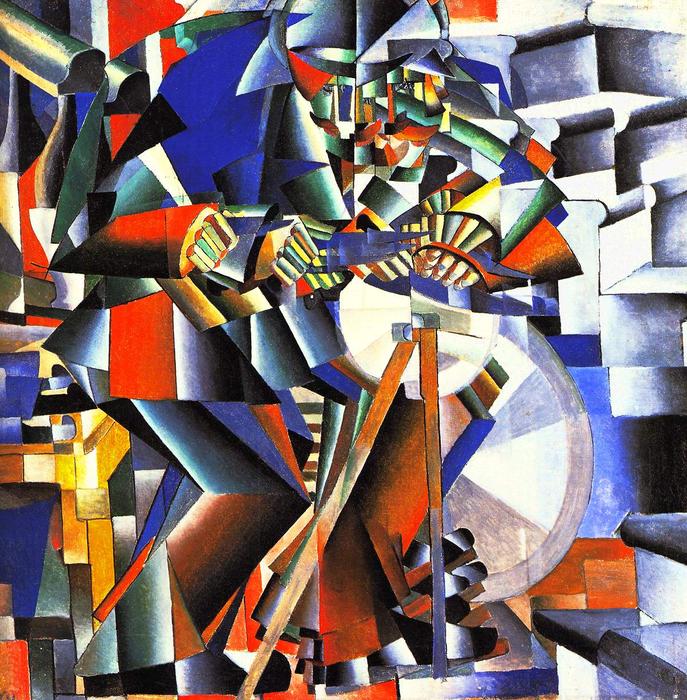
El Tochil'schik Printsip Mel'kaniia


 Ver más
Reproducción al óleo hecha a mano
Óleo sobre lienzo pintado a mano en el tamaño y marco de su elección, realizado por encargo por nuestros artistas. ( Comprar impresión Comprar imagen)




P118B $10

P118H $10

P118W $10

P438Z $10

P508JH $12

P508YH $12

P805H $10

P805Z $10

P919BZ $10

P919G $10

P919XJ $10

P959ZH $10

P968JZ $12

W106C $8

W218G $10

W218JH $8

W218Y $10

W307PJ $10

W316G $10

W316PJ $8

W316Y $10

W398PJ $8

W4111J $10

W500HY $15

W500JH $15

W692G $12

W849H $8

W940BG $15

W953PJ $8




Elija entre nuestros tamaños predefinidos que respetan las proporciones originales de la obra.

Puede ingresar sus propias dimensiones para adaptarse a un marco o espacio específico. Si el tamaño seleccionado no coincide con las proporciones de la imagen original, recortaremos la obra o extenderemos la pintura con elementos adicionales pintados a mano. Se le enviará una maqueta digital para su aprobación antes de comenzar la producción.
Tenga en cuenta que la vista previa en pantalla no refleja el recorte o la extensión reales. Solo la maqueta mostrará con precisión la composición final.
Si bien existen tamaños personalizados, recomendamos seleccionar una dimensión de la lista predefinida para preservar las proporciones originales.
Tras realizar el pedido, el equipo de ArtsDot.com enviará un correo electrónico al cliente para solicitar instrucciones y proporcionarle una vista previa del boceto.
Envío a todo el mundo () en 3-4 semanas en lugar de las 5 semanas estándar. (24 agosto). Sin comprometer la calidad.

Envío exprés gratuito a todo el mundo

Lienzo de lino de alta calidad

Seguro de envío total

Garantía de reembolso de impuestos aduaneros

Garantía de fidelidad cromática exacta

Política de devolución de 60 días (solo por defectos)

Garantía de devolución del 100% del dinero

Descuento por cantidad
 La opción de vidrio solo está disponible en tamaños inferiores a 110 cm.

El Tochil'schik Printsip Mel'kaniia
Técnica de reproducción
Dimensiones de la reproducción
-


Precio total final
$ 263
Descripción de la obra
A Glimpse into Modernity: Kazimir Malevich’s *The Knifegrinder*
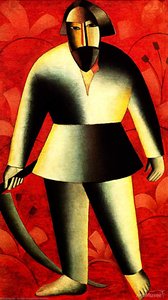
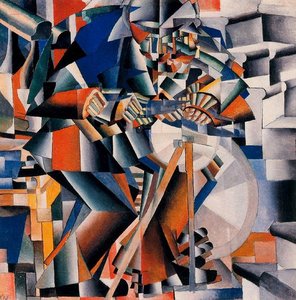
Kazimir Malevich's *The Knifegrinder*, painted in 1912, stands as a pivotal work bridging the gap between representational art and the radical abstraction that would soon define his Suprematist movement. It isn’t merely a depiction of a working man; it is an explosion of form and energy, a visual articulation of the dynamism inherent in modern life. The painting captures a knife grinder at work, yet this seemingly mundane subject is fractured and reassembled through the lens of Cubo-Futurism, a style Malevich embraced during a period of intense artistic experimentation. He doesn’t present us with a static portrait but rather an impression of movement, a sense of the grinder’s labor as a forceful interaction between man and machine. The figure is almost swallowed by the angular planes and intersecting lines that define his surroundings, hinting at the overwhelming pace and mechanization of the industrial age.The Fusion of Styles: Cubism, Futurism, and Russian Avant-Garde
To understand *The Knifegrinder*, one must appreciate its place within the burgeoning avant-garde movements of early 20th-century Europe and Russia. Malevich had recently returned from a transformative trip to Paris in 1912, where he encountered the groundbreaking work of Pablo Picasso and Georges Braque – the pioneers of Cubism. This exposure profoundly impacted his artistic direction, leading him to deconstruct forms and represent objects from multiple viewpoints simultaneously. However, *The Knifegrinder* doesn’t simply mimic Cubism; it infuses it with the energy and dynamism of Futurism, an Italian movement celebrating speed, technology, and the machine age. The fragmented composition, sharp angles, and sense of motion all echo Futurist principles. This synthesis created a uniquely Russian brand of avant-garde art, one that reflected the country’s own rapid industrialization and social upheaval. Malevich wasn't merely adopting foreign styles; he was forging something entirely new, a visual language capable of expressing the anxieties and excitements of a world on the brink of transformation.Decoding the Symbolism: Labor, Industry, and the Modern Condition
Beyond its stylistic innovations, *The Knifegrinder* carries symbolic weight. The subject itself – a humble tradesman performing essential work – is significant. Malevich often focused on depicting everyday laborers, elevating them to subjects worthy of artistic attention. In this context, the knife grinder can be seen as representing the working class, the engine driving industrial progress. Yet, the painting doesn’t offer a romanticized view of labor. The fragmented forms and harsh angles suggest a sense of alienation and dehumanization, hinting at the potential costs of modernization. The metallic palette – dominated by blues, greens, and silvers – further reinforces this feeling, evoking the coldness and impersonality of the machine age. It’s as if Malevich is presenting us with a complex portrait of modernity, acknowledging both its promise and its perils.A Precursor to Abstraction: The Path to Suprematism
*The Knifegrinder* occupies a crucial transitional space in Malevich's oeuvre. While still recognizably representational, it pushes the boundaries of form and composition to such an extent that it anticipates his later, fully abstract works. It’s a stepping stone towards Suprematism, the movement he would launch with his iconic *Black Square* in 1915. In this painting, Malevich begins to prioritize pure feeling and geometric forms over objective representation, laying the groundwork for a new visual language based on spirituality and non-objectivity. Viewing *The Knifegrinder* allows us to witness the genesis of this revolutionary artistic vision, to understand how Malevich arrived at his radical conclusion that art need not depict the visible world but could instead express something far more profound – the essence of pure sensation.Technical Details and Artistic Context
- Medium: Oil on Canvas
- Dimensions: Unknown
- Date: 1912
- Artist: Kazimir Malevich (Ukrainian, 1879–1935)
- Movement: Cubo-Futurism
Obras relacionadas
Biografía del artista
Kazimir Malevich: Un pionero del arte abstracto
Primeros años e influencias
- Nacido en el Óblast de Kyiv, Ucrania, en 1878, en una familia polaca, la vida temprana de Kazimir Severinovich Malevich fue moldeada por el paisaje rural ucraniano y su rica cultura popular.
- Su crianza le inculcó un aprecio por las expresiones artísticas tradicionales que más tarde influirían sutilmente en su obra.
- La formación formal comenzó en Kyiv, pero Malevich rápidamente buscó horizontes artísticos más amplios, moviéndose hacia Moscú y finalmente relacionándose con los movimientos vanguardistas europeos emergentes.
- Influencias clave: La exposición temprana al arte popular, combinada con un deseo de expresión moderna, formó la base de su estilo único.
Desarrollo artístico y movimientos clave
- Inicialmente, Malevich exploró varios estilos, incluyendo Impresionismo, Simbolismo, Fauvismo, y Cubismo. Un viaje decisivo a París en 1912 le expuso a los últimos avances en el arte europeo.
- Gradualmente se alejó de las formas representacionales, buscando un lenguaje artístico puramente basado en formas geométricas y color.
- Esto llevó al desarrollo de Suprematismo alrededor de 1915 – un movimiento abstracto centrado en “la supremacía del sentimiento puro” en el arte.
- El Suprematismo rechazó cualquier intento de representar objetos del mundo visible, priorizando en cambio las formas geométricas básicas como cuadrados, círculos y rectángulos.
Logros importantes y obras notables
- Cuadrado Negro (1915): Probablemente su obra más famosa, representa una ruptura radical con el arte tradicional y se considera una pieza fundacional de la pintura abstracta.
- Blanco sobre Blanco (1918): Una serie que explora la pureza de la forma y el color, presentando formas geométricas blancas contra un fondo blanco – llevando la abstracción a sus límites.
- Stroyuschiysya dom [Casa bajo construcción] (1916): Un ejemplo temprano del Suprematismo que muestra su perspectiva única sobre la cultura ucraniana a través de formas abstractas.
- También escribió extensamente sobre teoría del arte, articulando los principios filosóficos detrás del Suprematismo y abogando por una nueva conciencia artística.
Significado histórico y legado
- La obra de Malevich impactó profundamente el desarrollo del arte abstracto del siglo XX, influyendo en movimientos como Minimalismo y Constructivismo.
- Desafió las nociones convencionales de representación y allanó el camino para el arte no objetivo.
- Sus ideas sobre el sentimiento puro y la abstracción geométrica siguen resonando con los artistas de hoy en día.
- A pesar de enfrentar persecución política bajo Stalin – inicialmente apoyado, luego reprimido – Malevich perseveró en su práctica y enseñanza.
- Influencia en artistas posteriores: Influyó directamente a artistas como El Lissitzky e indirectamente moldeó a innumerables otros a través del perdurable legado del Suprematismo.
Vida tardía y muerte
- En sus últimos años, Malevich revisó la pintura figurativa, intentando sintetizar sus principios abstractos con formas representacionales.
- Continuó enseñando y escribiendo sobre arte hasta su muerte en Leningrado (ahora San Petersburgo) en 1935.
- Su obra permaneció relativamente oscura durante décadas después de su muerte, pero experimentó un resurgimiento de interés a mediados del siglo XX, consolidando su lugar como una de las figuras más importantes de la historia del arte moderno.
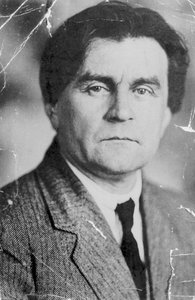
Kazimir Malevich
1878 - 1935 , Ucrania
Datos clave
- Artistas Que Influyeron:
- Impresionismo
- Simbolismo
- Fauvismo
- Cubismo
- Estilo Artístico: Suprematismo, Arte Abstracto
- Fecha De Muerte: 15 de mayo de 1935
- Fecha De Nacimiento: 23 de febrero de 1878
- Influenciado A Artistas:
- El Lissitzky
- Minimalismo
- Constructivismo
- Lugar De Nacimiento: Óblast de Kyiv, Ucrania
- Nacionalidad: Ucraniano, Ruso
- Nombre Completo: Kazimir Malevich
- Obras Notables:
- Cuadrado Negro
- Blanco sobre Blanco
- Casa bajo construcción
- Elementos Suprematistas
Artículos relacionados
Kazimir Malevich: Las 25 Obras Maestras del Suprematismo para Inspirar tu Hogar
Descubre las 25 obras maestras de Kazimir Malevich, pionero del Suprematismo. Explora la historia, el significado y la belleza del arte abstracto moderno. Reproducciones de alta calidad para inspirar tu hogar en ArtsDot.com.
Deconstruyendo la Realidad: La Revolución Estética y el Contexto Histórico del Cubo-Futurismo
Explora la revolución estética del Cubo-Futurismo ruso. Análisis profundo de Malevich, Filonov y el Constructivismo. Descubre su contexto histórico e influencia en el arte moderno con ArtsDot.

Abstracción Geométrica: 10 Obras Maestras que Transformaron el Arte Moderno | ArtsDot
Descubre las 10 obras maestras de la abstracción geométrica que revolucionaron el arte moderno. Explora a Mondrian, Malevich y Kandinsky en ArtsDot.com. Reproducciones de alta calidad para tu hogar.
David Burliuk: A Pioneer of Russian Avant-Garde & His Enduring Legacy
Explore the revolutionary art of David Burliuk, a key figure in Russian Avant-Garde & Cubo-Futurism. Discover his impact on painting, poetry, and design with ArtsDot.
Mikhail Larionov: Rayonism, Primitivism & the Dawn of Russian Avant-Garde Painting
Explore the revolutionary art of Mikhail Larionov & the Russian Avant-Garde. Discover Rayonism, Primitivism's influence, and his lasting impact on modern painting. Expert insights for collectors.