 Ver en contexto
 Enviar
 Compartir
 Detalles

 Descargar
 Similares
 Radiografía
 Presentación de diapositivas
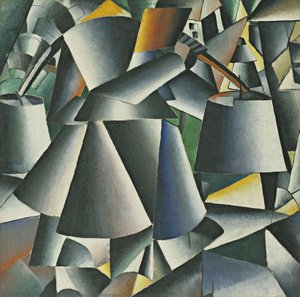
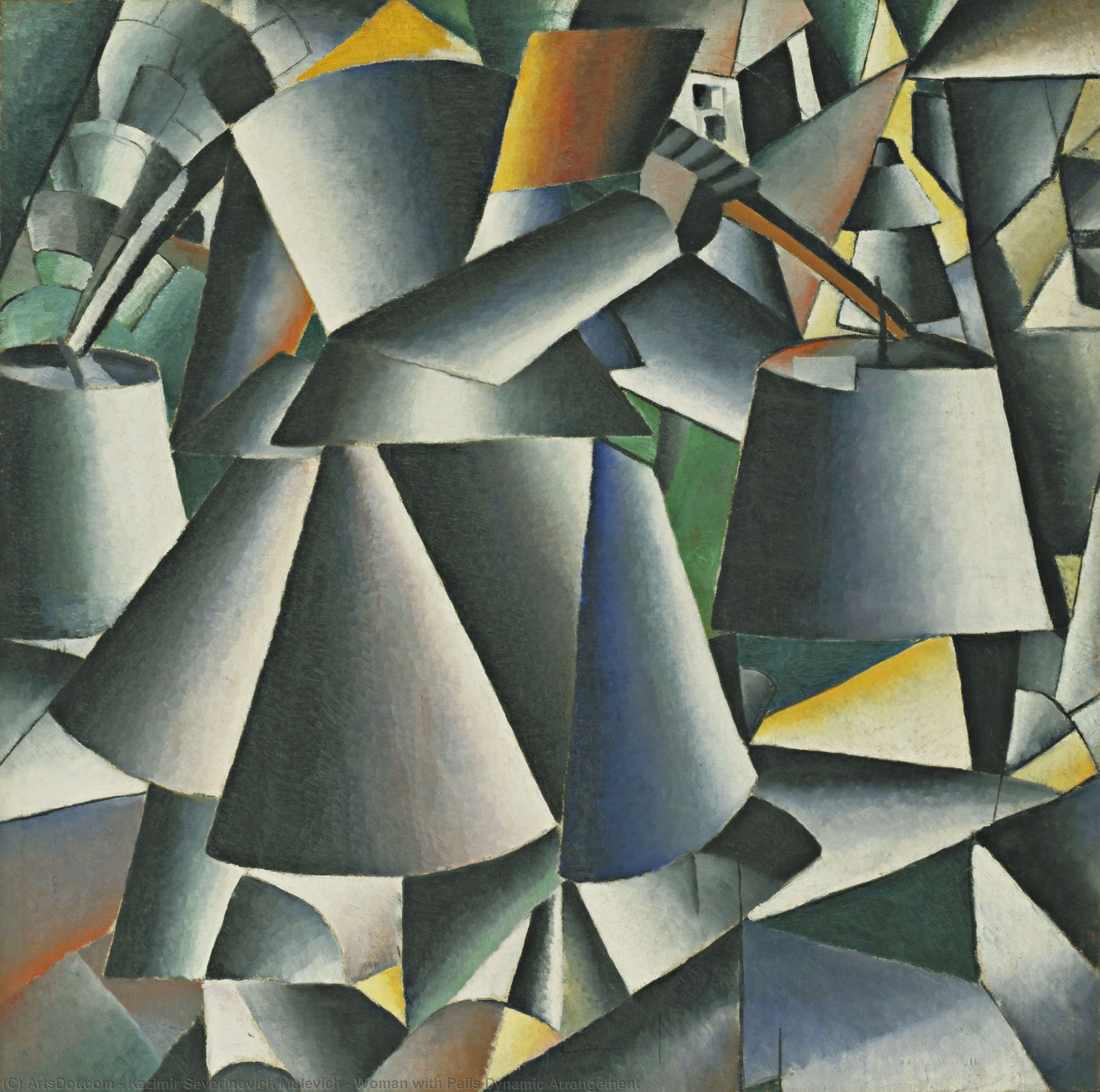
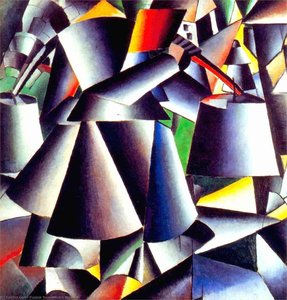
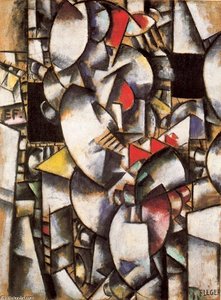
Mujer con cántaros: disposición dinámica


 Ver más
Reproducción al óleo hecha a mano
Óleo sobre lienzo pintado a mano en el tamaño y marco de su elección, realizado por encargo por nuestros artistas. ( Comprar impresión Comprar imagen)




P118B $10

P118H $10

P118W $10

P438Z $10

P508JH $12

P508YH $12

P805H $10

P805Z $10

P919BZ $10

P919G $10

P919XJ $10

P959ZH $10

P968JZ $12

W106C $8

W218G $10

W218JH $8

W218Y $10

W307PJ $10

W316G $10

W316PJ $8

W316Y $10

W398PJ $8

W4111J $10

W500HY $15

W500JH $15

W692G $12

W849H $8

W940BG $15

W953PJ $8




Elija entre nuestros tamaños predefinidos que respetan las proporciones originales de la obra.

Puede ingresar sus propias dimensiones para adaptarse a un marco o espacio específico. Si el tamaño seleccionado no coincide con las proporciones de la imagen original, recortaremos la obra o extenderemos la pintura con elementos adicionales pintados a mano. Se le enviará una maqueta digital para su aprobación antes de comenzar la producción.
Tenga en cuenta que la vista previa en pantalla no refleja el recorte o la extensión reales. Solo la maqueta mostrará con precisión la composición final.
Si bien existen tamaños personalizados, recomendamos seleccionar una dimensión de la lista predefinida para preservar las proporciones originales.
Tras realizar el pedido, el equipo de ArtsDot.com enviará un correo electrónico al cliente para solicitar instrucciones y proporcionarle una vista previa del boceto.
Envío a todo el mundo () en 3-4 semanas en lugar de las 5 semanas estándar. (23 agosto). Sin comprometer la calidad.

Envío exprés gratuito a todo el mundo

Lienzo de lino de alta calidad

Seguro de envío total

Garantía de reembolso de impuestos aduaneros

Garantía de fidelidad cromática exacta

Política de devolución de 60 días (solo por defectos)

Garantía de devolución del 100% del dinero

Descuento por cantidad
 La opción de vidrio solo está disponible en tamaños inferiores a 110 cm.

Mujer con cántaros: disposición dinámica
Técnica de reproducción
Dimensiones de la reproducción
-


Precio total final
$ 263
Descripción de la obra
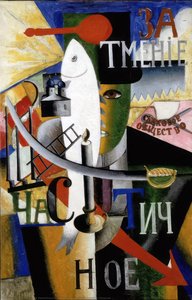
A Fragmented World: Decoding Malevich’s “Woman with Pails Dynamic Arrangement”
Kazimir Malevich's "Woman with Pails Dynamic Arrangement," painted around 1912, is not simply a depiction of figures carrying pails; it is a radical dismantling of visual representation itself. Emerging from a period of intense artistic experimentation, this work stands as a pivotal moment in the transition from Cubism towards Malevich’s own groundbreaking Suprematism. The painting doesn't invite passive observation but demands active decoding – a journey into a world fractured and reassembled according to a new logic of form and space. It is a testament to Malevich’s relentless pursuit of “pure feeling” in art, stripping away the illusionistic traditions that had dominated Western painting for centuries.
The Birth of Abstraction from Everyday Life
Before achieving complete non-objectivity with his iconic "Black Square," Malevich engaged deeply with the visual language of Cubism. However, “Woman with Pails Dynamic Arrangement” isn’t merely a mimicry of Picasso or Braque. While sharing their penchant for geometric fragmentation and multiple perspectives, Malevich infuses the scene with a distinctly Russian sensibility and a burgeoning spiritual dimension. The subject matter – peasant women engaged in a mundane task – is deliberately humble, elevating the everyday to a level of artistic significance. These are not idealized figures but rather abstracted representations of labor, rendered as interlocking planes of color and shape. The cool palette of blues, greys, greens, and whites, punctuated by accents of yellow and orange, contributes to a sense of restrained energy, avoiding the vibrant exuberance often associated with Fauvism or early Cubist works. The painting’s power lies in its ability to transform this ordinary scene into an exploration of fundamental artistic principles.
Deconstructing Form: Technique and Suprematist Tendencies
The technique employed in “Woman with Pails Dynamic Arrangement” is crucial to understanding Malevich's evolving vision. He eschews traditional modeling and chiaroscuro, opting instead for flat planes of color that intersect and overlap. Lines are sharp and angular, defining the geometric forms – triangles, rectangles, trapezoids – which seem to vibrate against one another. There’s a deliberate lack of depth; space is not created through perspective but rather suggested by the layering of these abstract shapes. This flattening of form anticipates the complete rejection of representational space that would characterize Suprematism. While still tethered to recognizable subject matter, the painting reveals Malevich's growing interest in pure geometric abstraction – an art focused on the inherent qualities of shape and color, divorced from any external reference. The smooth texture, achieved through careful application of oil paints, further emphasizes this focus on surface and form.
A Legacy of Radical Innovation
“Woman with Pails Dynamic Arrangement” occupies a unique position in art history as a bridge between the representational world and the realm of pure abstraction. It embodies Malevich’s revolutionary spirit and his unwavering commitment to pushing the boundaries of artistic expression. The painting's emotional impact is subtle yet profound – it evokes a sense of dynamism, fragmentation, and perhaps even disorientation, reflecting the anxieties and uncertainties of a rapidly changing world. More than just an aesthetic statement, this work represents a philosophical inquiry into the nature of perception and reality. It continues to inspire artists and viewers alike, reminding us that art has the power to challenge our assumptions and open up new ways of seeing.
Photo Description: --Overall Impression--
The artwork presents a dynamic and fragmented scene depicting figures carrying pails. It’s executed in a Cubist style characterized by geometric shapes, overlapping planes, and a flattened perspective. The composition is densely packed with forms, creating a sense of movement and energy.
Composition
The painting lacks traditional depth or spatial relationships. Figures are broken down into angular components and reassembled on the canvas, resulting in an abstract representation of reality. There’s no clear focal point; instead, the eye moves across the surface following the lines and shapes.
Color Palette
The color palette is predominantly cool, featuring shades of blue, grey, green, and white. Accents of yellow and orange provide contrast and visual interest. Colors are not blended smoothly but rather applied in distinct planes.
Use of Lines & Shapes
Sharp, angular lines dominate the composition, defining the geometric forms. Triangles, rectangles, and trapezoids interlock and overlap, creating a complex network of shapes. The use of these shapes contributes to the painting’s fragmented and abstract nature.
Texture
While the image is a photograph of a painting, it suggests a relatively smooth texture due to the application of paint in flat planes. There’s no visible impasto or thick brushstrokes.
Lighting
The lighting appears diffused and even, with no strong highlights or shadows. This contributes to the overall flatness of the composition.
Perspective & Depth
Traditional perspective is absent. The painting creates a sense of depth through overlapping shapes rather than linear recession.
Subject Matter
The subject matter is seemingly mundane – people carrying pails – but it’s transformed into an abstract exploration of form and space.
Symbolic/Emotional Elements
The dynamic arrangement and fragmented forms evoke feelings of movement, energy, and perhaps even a sense of disorientation. The painting challenges traditional notions of representation.
Style & Technique
This work is firmly rooted in the Cubist style, pioneered by Pablo Picasso and Georges Braque. Malevich’s interpretation incorporates his own Suprematist tendencies, emphasizing geometric abstraction.
Materials Used
Based on the image, it appears that oil paints were used on canvas.
Obras relacionadas
Biografía del artista
Kazimir Malevich: Un pionero del arte abstracto
Primeros años e influencias
- Nacido en el Óblast de Kyiv, Ucrania, en 1878, en una familia polaca, la vida temprana de Kazimir Severinovich Malevich fue moldeada por el paisaje rural ucraniano y su rica cultura popular.
- Su crianza le inculcó un aprecio por las expresiones artísticas tradicionales que más tarde influirían sutilmente en su obra.
- La formación formal comenzó en Kyiv, pero Malevich rápidamente buscó horizontes artísticos más amplios, moviéndose hacia Moscú y finalmente relacionándose con los movimientos vanguardistas europeos emergentes.
- Influencias clave: La exposición temprana al arte popular, combinada con un deseo de expresión moderna, formó la base de su estilo único.
Desarrollo artístico y movimientos clave
- Inicialmente, Malevich exploró varios estilos, incluyendo Impresionismo, Simbolismo, Fauvismo, y Cubismo. Un viaje decisivo a París en 1912 le expuso a los últimos avances en el arte europeo.
- Gradualmente se alejó de las formas representacionales, buscando un lenguaje artístico puramente basado en formas geométricas y color.
- Esto llevó al desarrollo de Suprematismo alrededor de 1915 – un movimiento abstracto centrado en “la supremacía del sentimiento puro” en el arte.
- El Suprematismo rechazó cualquier intento de representar objetos del mundo visible, priorizando en cambio las formas geométricas básicas como cuadrados, círculos y rectángulos.
Logros importantes y obras notables
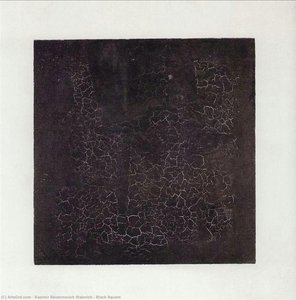
- Cuadrado Negro (1915): Probablemente su obra más famosa, representa una ruptura radical con el arte tradicional y se considera una pieza fundacional de la pintura abstracta.
- Blanco sobre Blanco (1918): Una serie que explora la pureza de la forma y el color, presentando formas geométricas blancas contra un fondo blanco – llevando la abstracción a sus límites.
- Stroyuschiysya dom [Casa bajo construcción] (1916): Un ejemplo temprano del Suprematismo que muestra su perspectiva única sobre la cultura ucraniana a través de formas abstractas.
- También escribió extensamente sobre teoría del arte, articulando los principios filosóficos detrás del Suprematismo y abogando por una nueva conciencia artística.
Significado histórico y legado
- La obra de Malevich impactó profundamente el desarrollo del arte abstracto del siglo XX, influyendo en movimientos como Minimalismo y Constructivismo.
- Desafió las nociones convencionales de representación y allanó el camino para el arte no objetivo.
- Sus ideas sobre el sentimiento puro y la abstracción geométrica siguen resonando con los artistas de hoy en día.
- A pesar de enfrentar persecución política bajo Stalin – inicialmente apoyado, luego reprimido – Malevich perseveró en su práctica y enseñanza.
- Influencia en artistas posteriores: Influyó directamente a artistas como El Lissitzky e indirectamente moldeó a innumerables otros a través del perdurable legado del Suprematismo.
Vida tardía y muerte
- En sus últimos años, Malevich revisó la pintura figurativa, intentando sintetizar sus principios abstractos con formas representacionales.
- Continuó enseñando y escribiendo sobre arte hasta su muerte en Leningrado (ahora San Petersburgo) en 1935.
- Su obra permaneció relativamente oscura durante décadas después de su muerte, pero experimentó un resurgimiento de interés a mediados del siglo XX, consolidando su lugar como una de las figuras más importantes de la historia del arte moderno.
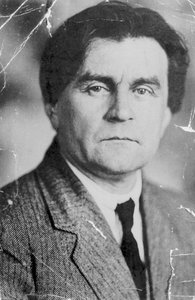
Kazimir Malevich
1878 - 1935 , Ucrania
Datos clave
- Artistas Que Influyeron:
- Impresionismo
- Simbolismo
- Fauvismo
- Cubismo
- Estilo Artístico: Suprematismo, Arte Abstracto
- Fecha De Muerte: 15 de mayo de 1935
- Fecha De Nacimiento: 23 de febrero de 1878
- Influenciado A Artistas:
- El Lissitzky
- Minimalismo
- Constructivismo
- Lugar De Nacimiento: Óblast de Kyiv, Ucrania
- Nacionalidad: Ucraniano, Ruso
- Nombre Completo: Kazimir Malevich
- Obras Notables:
- Cuadrado Negro
- Blanco sobre Blanco
- Casa bajo construcción
- Elementos Suprematistas
Artículos relacionados
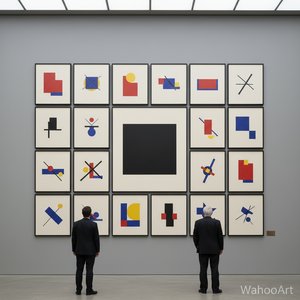
Kazimir Malevich: Las 25 Obras Maestras del Suprematismo para Inspirar tu Hogar
Descubre las 25 obras maestras de Kazimir Malevich, pionero del Suprematismo. Explora la historia, el significado y la belleza del arte abstracto moderno. Reproducciones de alta calidad para inspirar tu hogar en ArtsDot.com.

Abstracción Geométrica: 10 Obras Maestras que Transformaron el Arte Moderno | ArtsDot
Descubre las 10 obras maestras de la abstracción geométrica que revolucionaron el arte moderno. Explora a Mondrian, Malevich y Kandinsky en ArtsDot.com. Reproducciones de alta calidad para tu hogar.
Beyond Form & Color: Geometric Abstraction's Evolution in 20th/21st Century Art
Explore the evolution of geometric abstraction from Cubism to contemporary art. Discover key artists like Malevich & Mondrian, investment insights, and expert collecting advice at ArtsDot.
Beyond Form & Color: Geometric Abstraction's Enduring Legacy in Art History
Explore the captivating world of geometric abstraction! Discover its origins, key artists like Malevich & Mondrian, and why this movement remains highly valued by art collectors today. Expert insights at ArtsDot.
Kazimir Malevich: Pioneering Suprematism & the Quest for Non-Objective Art
Explore the revolutionary art of Kazimir Malevich & his groundbreaking Suprematism movement. Discover the origins, core principles, and lasting impact of this pivotal force in modern abstract painting.
![Circulo Negro [1913]](/media/artworks/images-thumb/62/67/6267e452b0c8476772a6511e19ce1616.jpg)