

 Ver en contexto
 Enviar
 Compartir
 Detalles

 Descargar
 Similares
 Radiografía
 Presentación de diapositivas
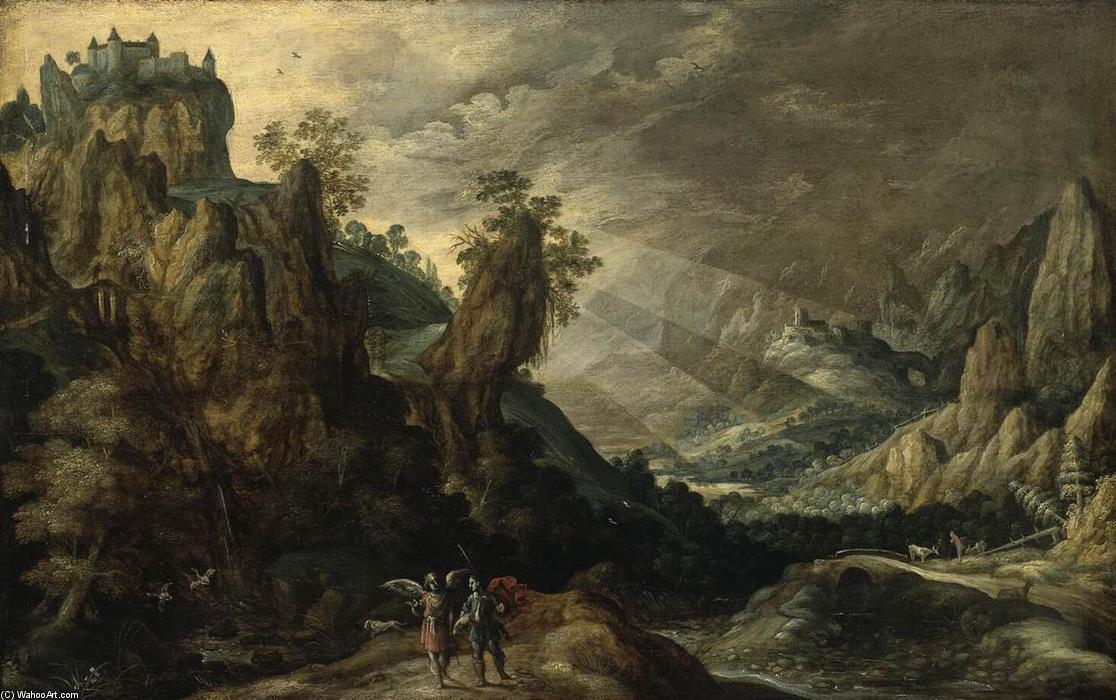
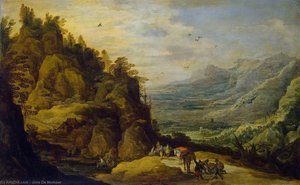
Landscape with Tobias and the Angel
 Baroque
 40.0 x 63.0 cm
 Museo del Hermitage
 Ver más
Giclée / Impresión de arte
Impresiones giclée o en lienzo de calidad de museo con producción rápida y opciones de acabado flexibles. ( Comprar pintura hecha a mano Comprar imagen)




































Elija entre nuestros tamaños predefinidos que respetan las proporciones originales de la obra.

Puede introducir sus propias dimensiones para adaptarse a un marco o espacio específico. Si el tamaño seleccionado no coincide con las proporciones de la imagen original, recortaremos la obra de arte o extenderemos la imagen con un borde con efecto espejo o de color sólido. Se enviará una maqueta digital para su aprobación antes de que comience la producción.
Tenga en cuenta que la vista previa en pantalla no refleja el recorte o la extensión real. Solo la maqueta mostrará con precisión la composición final.
Aunque existen tamaños personalizados, recomendamos seleccionar una dimensión de la lista predefinida para preservar las proporciones originales.
Envío a todo el mundo () en 2 semanas en lugar de las 4/5 semanas estándar. (27 agosto)

Envío exprés gratuito a todo el mundo

Lienzo de lino de alta calidad

Seguro de envío total

Garantía de reembolso de impuestos aduaneros

Garantía de fidelidad cromática exacta

Política de devolución de 60 días (solo por defectos)

Garantía de devolución del 100% del dinero

Descuento por cantidad
 La opción de vidrio solo está disponible en tamaños inferiores a 110 cm.

Landscape with Tobias and the Angel
Giclée / Impresión de arte
Dimensiones de la reproducción
-


Precio total final
$ 62
Obras relacionadas
Biografía del artista
The Master of Flemish Mountainscapes
In the golden age of the Flemish Baroque, amidst the bustling artistic fervor of Antwerp, there lived a painter whose brush possessed the power to conjure entire worlds of stone and sky. Kerstiaen de Keuninck, born in Kortrijk around 1560, was far more than a mere chronicler of scenery; he was an architect of atmosphere. While history often reserves its brightest spotlights for titans like Rubens or Rembrandt, De Keuninck carved out a profound niche for himself through his ability to marry the rugged, untamed majesty of mountain landscapes with the delicate, spiritual weight of biblical and mythological narratives. His life, though partially obscured by the mists of time, reflects the very essence of the Antwerp Guild of St. Luke, where he was recognized as a master in 1580, establishing himself as a cornerstone of the local artistic community.
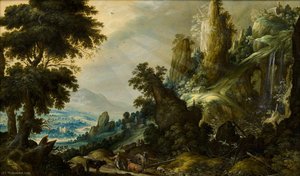
To gaze upon a De Keuninck canvas is to embark on a journey through a landscape that feels both ancient and immediate. His work is defined by a breathtaking sense of scale, where towering peaks and cascading waterfalls serve as more than just geological features. Instead, they act as emotional resonators. In masterpieces such as Landscape with Tobias and the Angel, the artist utilizes the dramatic topography to frame divine intervention. The rugged terrain, often characterized by turbulent skies and deep, shadowed valleys, provides a stark, earthly contrast to the ethereal presence of the celestial figures. This interplay between the monumental scale of nature and the intimate drama of human—or divine—interaction is what gives his oeuvre such enduring emotional resonance.
Technique, Symbolism, and Legacy
The technical prowess of De Keuninck lies in his masterful command of chiaroscuro. He understood that light is not merely a tool for visibility but a medium for storytelling. By orchestrating the dramatic interplay between brilliant highlights and profound shadows, he imbued his mountain vistas with a palpable sense of depth and moisture, as if one could feel the spray from a distant waterfall or the chill of a passing storm. His meticulous attention to detail allowed him to render the textures of rock, foliage, and water with an accuracy that grounded his more allegorical subjects in a believable, tactile reality.
Beyond the purely aesthetic, De Keuninck’s work served as a vessel for the moral and spiritual inquiries of his era. He frequently turned to classical mythology and biblical lore to weave complex tapestries of meaning. In works like Landscape with Actaeon and Diana, he utilized the dramatic setting to explore themes of hubris and divine retribution, using the landscape itself to mirror the tension of the mythological huntress's confrontation. This ability to infuse landscape painting with intellectual and moral weight helped elevate the genre from simple topographical representation to a sophisticated form of high art.
The legacy of Kerstiaen de Keuninck extends far beyond his own finished canvases, reaching into the very lineage of Flemish art through his role as a dedicated pedagogue. As a teacher, he nurtured the talents of future masters, including Engelbert Ergo and Carel van Ferrara, ensuring that his fascination with dramatic light and monumental landscapes would influence subsequent generations. His contribution to the Antwerp school remains a vital chapter in the history of the Baroque, reminding us that the true power of art often lies in its ability to find the divine within the wild, untamed corners of the natural world.
kerstiaen de keuninck
1561 - 1635 , Belgium
Datos clave
- Artistic Movement Or Style: Baroque Landscape Painter
- Date Of Birth: 1560 Kortrijk
- Date Of Death: 1632 Antwerp
- Full Name: Kerstiaen de Keuninck
- Nationality: Flemish
- Notable Artworks:
- Landscape with Tobias & the Angel
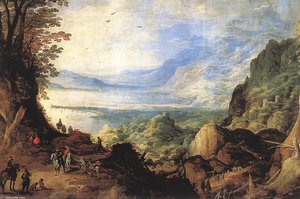
- Panoramic Landscape with Tobias and the Angel
- Landscape with Actaeon and Diana
- Place Of Birth: Belgium
Artículos relacionados

Goya: Las 25 Obras Maestras del Genio Español | Reproducciones de Arte en ArtsDot
Descubre las 25 obras maestras de Goya, el genio español. Explora retratos icónicos, 'Los Caprichos' y 'Las Pinturas Negras'. Reproducciones de arte en lienzo de alta calidad para decorar tu hogar con estilo. ¡Encuentra tu obra favorita en ArtsDot.com!

Paisajes Románticos: 10 Obras Maestras que Definieron un Movimiento Artístico
Descubre los 10 paisajes románticos más influyentes de artistas como Caspar David Friedrich y Turner. Explora la belleza, el simbolismo y las técnicas del movimiento romántico. Reproducciones de arte exclusivas en ArtsDot.com.

Evocations of Place: A Historical Journey Through Landscape Art
Explore the rich history of landscape art with ArtsDot. Discover renowned artists, movements like Impressionism & Romanticism, and expert guidance for collecting timeless pieces. Find your perfect serene escape today!

Acerca de nosotros
Descubre nuestra historia! Llevamos el arte de clase mundial a tu vida gracias a una selección experta, creaciones personalizadas y vistas previas gratuitas. Aprobado por particulares y empresas desde el año 2000.

John Constable: Las 25 Obras Maestras del Paisaje Inglés | ArtsDot
Descubre las 25 obras maestras de John Constable, el pintor romántico inglés que capturó la belleza del paisaje. Explora su técnica, historia y significado en ArtsDot.com. Reproducciones de arte de alta calidad para tu hogar.

