

 Ver en contexto
 Enviar
 Compartir
 Detalles

 Descargar
 Similares
 Radiografía
 Presentación de diapositivas
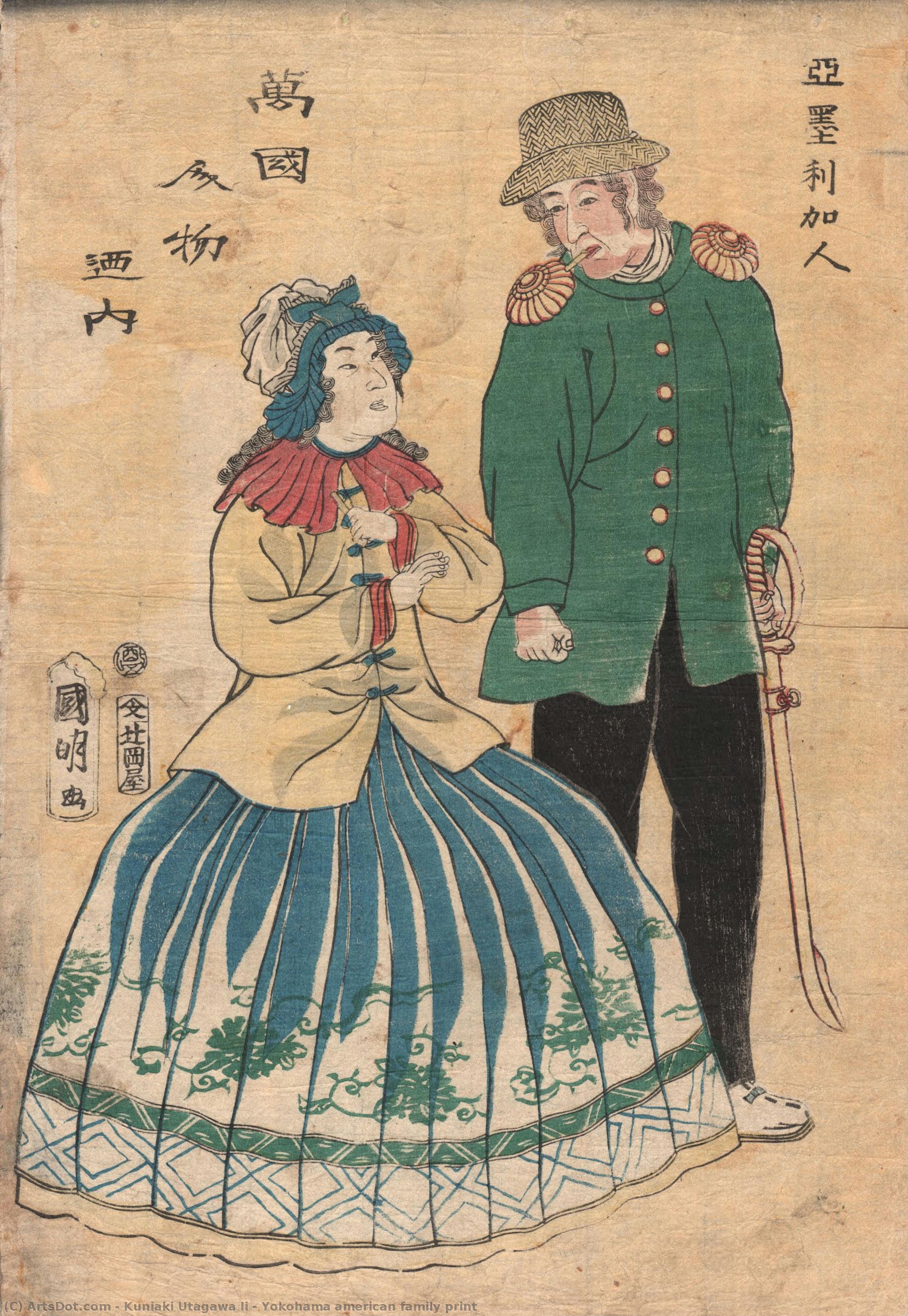
Yokohama american family print
 Woodblock Print
- Ukiyo-e
 1861
1861- 19th Century
 36.0 x 26.0 cm
 Colección Bujalance
 Ver más
Reproducción al óleo hecha a mano
Óleo sobre lienzo pintado a mano en el tamaño y marco de su elección, realizado por encargo por nuestros artistas. ( Comprar impresión Comprar imagen)




P118B $10

P118H $10

P118W $10

P438Z $10

P508JH $12

P508YH $12

P805H $10

P805Z $10

P919BZ $10

P919G $10

P919XJ $10

P959ZH $10

P968JZ $12

W106C $8

W218G $10

W218JH $8

W218Y $10

W307PJ $10

W316G $10

W316PJ $8

W316Y $10

W398PJ $8

W4111J $10

W500HY $15

W500JH $15

W692G $12

W849H $8

W940BG $15

W953PJ $8




Elija entre nuestros tamaños predefinidos que respetan las proporciones originales de la obra.

Puede ingresar sus propias dimensiones para adaptarse a un marco o espacio específico. Si el tamaño seleccionado no coincide con las proporciones de la imagen original, recortaremos la obra o extenderemos la pintura con elementos adicionales pintados a mano. Se le enviará una maqueta digital para su aprobación antes de comenzar la producción.
Tenga en cuenta que la vista previa en pantalla no refleja el recorte o la extensión reales. Solo la maqueta mostrará con precisión la composición final.
Si bien existen tamaños personalizados, recomendamos seleccionar una dimensión de la lista predefinida para preservar las proporciones originales.
Tras realizar el pedido, el equipo de ArtsDot.com enviará un correo electrónico al cliente para solicitar instrucciones y proporcionarle una vista previa del boceto.
Envío a todo el mundo () en 3-4 semanas en lugar de las 5 semanas estándar. (31 agosto). Sin comprometer la calidad.

Envío exprés gratuito a todo el mundo

Lienzo de lino de alta calidad

Seguro de envío total

Garantía de reembolso de impuestos aduaneros

Garantía de fidelidad cromática exacta

Política de devolución de 60 días (solo por defectos)

Garantía de devolución del 100% del dinero

Descuento por cantidad
 La opción de vidrio solo está disponible en tamaños inferiores a 110 cm.

Yokohama american family print
Técnica de reproducción
Dimensiones de la reproducción
-


Precio total final
$ 263
A Window into a Changing World
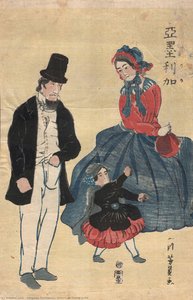
In the delicate lines of the Yokohama American Family print, we find ourselves transported to a pivotal moment in Japanese history, where the ancient traditions of the Edo period began to dance with the encroaching influences of the West. Created in 1861 by the talented Kuniaki Utagawa II, this exquisite ukiyo-e woodblock print captures the profound cultural intersection that defined the opening of Japan's ports. The scene presents a captivating tableau of two figures standing side by side—a man clad in the structured, formal attire of a Western military uniform and a woman draped in the flowing, graceful layers of traditional Japanese dress. This visual juxtaposition serves as a silent but powerful dialogue between two worlds, illustrating the curiosity and the quiet tension of an era defined by rapid modernization.
The artistry of the Utagawa school is on full display here, through a technique that balances meticulous detail with evocative atmosphere. The artist employs the classic ukiyo-e method to render textures that feel almost tactile: the crispness of the man's military tie and the soft, rhythmic folds of the woman's kimono. Every stroke of the woodblock carries an intentionality designed to guide the viewer's eye across the composition, from the subtle presence of a handbag to the delicate Japanese characters etched into the background. These calligraphic elements do more than provide context; they anchor the piece in its historical reality, reminding us that this was a time when the written word and the visual image were inseparable components of a shifting social identity.
The Soul of Yokohama-e
Beyond its technical mastery, this print belongs to the fascinating genre of Yokohama-e, a specialized subset of ukiyo-e that emerged specifically to document the arrival of foreigners in the port of Yokohama. During the mid-19th century, a wave of fascination swept through Japan, driving artists to produce hundreds of prints depicting the "exotic" customs, clothing, and people from distant lands. This particular work captures the essence of that curiosity. There is an emotional intimacy in the way the subjects are positioned; they appear engaged in a shared moment of observation, perhaps looking out upon the bustling harbor or reflecting on the changing landscape around them. It is a piece that evokes a sense of nostalgia for a lost era of discovery.
For the discerning collector or interior designer, this reproduction offers much more than mere decoration; it serves as a sophisticated conversation piece. The print’s muted yet rich palette and its historical depth make it an ideal centerpiece for a curated gallery wall or a thoughtful accent in a study lined with books. It brings a sense of worldly elegance and intellectual intrigue to any space, inviting guests to linger over the details of its storytelling. To possess such a work is to hold a fragment of history—a beautifully preserved snapshot of the moment when the sun began to rise on a new, globalized Japan.
Obras relacionadas
Biografía del artista
Kuniaki Utagawa II: Bridging Tradition and Modernity in Edo & Meiji Era Prints
Kuniaki Utagawa II (1835–1868), also known as Hachisuka Kuniaki, stands as a pivotal figure within the Utagawa school of Japanese art—a lineage that profoundly shaped the visual culture of Japan during its twilight years and nascent modernization. Born into the Hirasawa clan, he later embraced the patronage of the influential Hachisuka family, marking him at birth with connections to one of Japan’s most prominent samurai lineages. This familial background undoubtedly instilled a sense of discipline and artistic ambition that would propel him toward becoming a celebrated ukiyo-e artist—a profession simultaneously rooted in centuries-old craftsmanship and increasingly receptive to Western aesthetic ideas.- Early Life & Training: Kuniaki’s formative years were spent under the tutelage of Utagawa Kunisada I (1786–1865), arguably the most dominant artist of his time, whose stylistic innovations established a benchmark for subsequent generations. This mentorship wasn't merely about mastering technique; it was about absorbing Kunisada’s ethos—a commitment to dramatic composition and emotionally resonant storytelling—principles that would permeate Kuniaki’s own artistic endeavors.
- Artistic Style & Genre Preferences: Kuniaki II distinguished himself through a remarkable versatility across various genres, reflecting the multifaceted tastes of his era. He excelled in bijin-ga (pictures of beautiful women), capturing idealized portraits with meticulous detail and luminous color palettes—a hallmark of Utagawa school aesthetics. Equally adept was he at yakusha-e (kabuki actor prints), where he skillfully conveyed the dynamism and theatrical grandeur of performances, utilizing bold lines and expressive poses to convey emotion. Furthermore, Kuniaki produced impactful sumo wrestler prints, depicting wrestling matches with visceral energy and capturing the physicality of these ritualistic contests.
The Influence of Kunisada I & The Satsuma Rebellion
Kunisada’s influence extended far beyond mere stylistic imitation; it encompassed a broader philosophical underpinning—a belief in art as a vehicle for conveying moral lessons and capturing the spirit of the times. Kuniaki II internalized this conviction, channeling his artistic talent into documenting significant historical events, notably the Satsuma Rebellion (1877–1878)—a dramatic uprising against imperial authority that galvanized nationalist sentiment and provided fertile ground for artistic commentary. His prints from this period exemplify the Utagawa school’s willingness to engage with contemporary issues while maintaining its core aesthetic values—a testament to Kuniaki II's ability to synthesize tradition and innovation.Notable Achievements & Legacy
Kuniaki II’s prolific output solidified his reputation as one of Japan’s foremost ukiyo-e artists, securing his place within the canon of artistic excellence. His prints are celebrated for their technical mastery—particularly the vibrant hues achieved through meticulous layering of pigments—and for their expressive power—capturing fleeting moments of emotion and conveying profound narratives. Beyond individual artworks, Kuniaki II’s contribution to the Utagawa school's overall stylistic trajectory is undeniable; he helped propel it into a new era, adapting its conventions to resonate with audiences eager for depictions of both idealized beauty and momentous historical occurrences.A Synthesis of Tradition & Modernity
Ultimately, Kuniaki II’s artistic legacy resides in his embodiment of the tensions inherent within Japan's transformation from Edo feudalism to Meiji constitutional monarchy. His prints stand as a compelling record of this pivotal period—a testament to the enduring power of Japanese art to grapple with complex social and political realities while upholding timeless aesthetic ideals. Studying Kuniaki II’s oeuvre offers invaluable insight into the artistic sensibilities of his time, illuminating the path from classical Utagawa craftsmanship to the burgeoning visual culture of a nation embracing Western influences—a journey that continues to inspire artists and scholars alike.
kuniaki utagawa ii
1835 - 1888 , Japan
Datos clave
- Artistic Movement Or Style: Ukiyo-e
- Artists Or Movements Influenced By This Artist: ['Impressionism']
- Artists Who Influenced This Artist: ['Utagawa Kunisada I']
- Date Of Death: 1888
- Full Name: Kuniaki Utagawa II
- Nationality: Japanese
- Notable Artworks:
- Yokohama-e
- Yakusha-e
- Sumo prints
- Place Of Birth: Japan
Artículos relacionados

Katsushika Hokusai: Las 25 Obras Maestras del Ukiyo-e que Transformaron el Arte Japonés | ArtsDot
Descubre las 25 obras maestras de Katsushika Hokusai, el genio del ukiyo-e. Explora 'La Gran Ola', paisajes japoneses y su impacto en el arte moderno. Reproducciones de alta calidad para tu hogar en ArtsDot.com.
Ukiyo-e: Un Viaje al Corazón del Mundo Flotante Japonés y su Legado Artístico
Descubre el fascinante mundo del Ukiyo-e, el arte japonés del Período Edo. Explora las técnicas de grabado, los maestros Hokusai y Hiroshige, y su legado perdurable. ¡Un viaje cultural inolvidable!

Floating World: The Captivating Art and Legacy of Japanese Ukiyo-e
Explore the profound beauty of Japanese Ukiyo-e. Discover the history, masters like Hokusai, and the enduring legacy of the 'Floating World' through an expert art-historical lens.
Suzuki Harunobu: Pioneering Ukiyo-e & the Refinement of Edo Period Printmaking
Discover the revolutionary world of Suzuki Harunobu, a pioneer of ukiyo-e printmaking. Explore his exquisite nishiki-e techniques, diverse subjects & lasting impact on Japanese art history. Learn more at ArtsDot.
Tsukioka Yoshitoshi: A Master of Ukiyo-e's Final Flourish – Narrative, Innovation, and the Meiji Transition
Explore the life & art of Tsukioka Yoshitoshi, the last great master of ukiyo-e woodblock printing. Discover his dramatic warrior prints, innovative series like 'One Hundred Aspects of the Moon,' and legacy reflecting Japan's Meiji transition.

