 Ver en contexto
 Enviar
 Compartir
 Detalles

 Descargar
 Similares
 Radiografía
 Presentación de diapositivas
Portrait of a Newborn in a Cradle
 Oil On Panel
- Northern Renaissance
 1583
1583 113.0 x 126.0 cm
 Pinacoteca Nacional
 Ver más
Reproducción al óleo hecha a mano
Óleo sobre lienzo pintado a mano en el tamaño y marco de su elección, realizado por encargo por nuestros artistas. ( Comprar impresión Comprar imagen)




P118B $10

P118H $10

P118W $10

P438Z $10

P508JH $12

P508YH $12

P805H $10

P805Z $10

P919BZ $10

P919G $10

P919XJ $10

P959ZH $10

P968JZ $12

W106C $8

W218G $10

W218JH $8

W218Y $10

W307PJ $10

W316G $10

W316PJ $8

W316Y $10

W398PJ $8

W4111J $10

W500HY $15

W500JH $15

W692G $12

W849H $8

W940BG $15

W953PJ $8




Elija entre nuestros tamaños predefinidos que respetan las proporciones originales de la obra.

Puede ingresar sus propias dimensiones para adaptarse a un marco o espacio específico. Si el tamaño seleccionado no coincide con las proporciones de la imagen original, recortaremos la obra o extenderemos la pintura con elementos adicionales pintados a mano. Se le enviará una maqueta digital para su aprobación antes de comenzar la producción.
Tenga en cuenta que la vista previa en pantalla no refleja el recorte o la extensión reales. Solo la maqueta mostrará con precisión la composición final.
Si bien existen tamaños personalizados, recomendamos seleccionar una dimensión de la lista predefinida para preservar las proporciones originales.
Tras realizar el pedido, el equipo de ArtsDot.com enviará un correo electrónico al cliente para solicitar instrucciones y proporcionarle una vista previa del boceto.
Envío a todo el mundo () en 3-4 semanas en lugar de las 5 semanas estándar. (31 agosto). Sin comprometer la calidad.

Envío exprés gratuito a todo el mundo

Lienzo de lino de alta calidad

Seguro de envío total

Garantía de reembolso de impuestos aduaneros

Garantía de fidelidad cromática exacta

Política de devolución de 60 días (solo por defectos)

Garantía de devolución del 100% del dinero

Descuento por cantidad
 La opción de vidrio solo está disponible en tamaños inferiores a 110 cm.

Portrait of a Newborn in a Cradle
Técnica de reproducción
Dimensiones de la reproducción
-


Precio total final
$ 263
Lavinia Fontana’s “Portrait of a Newborn in a Cradle”: A Northern Renaissance Elegy
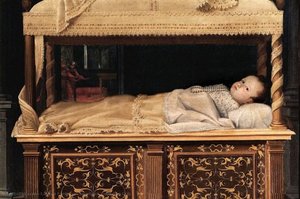
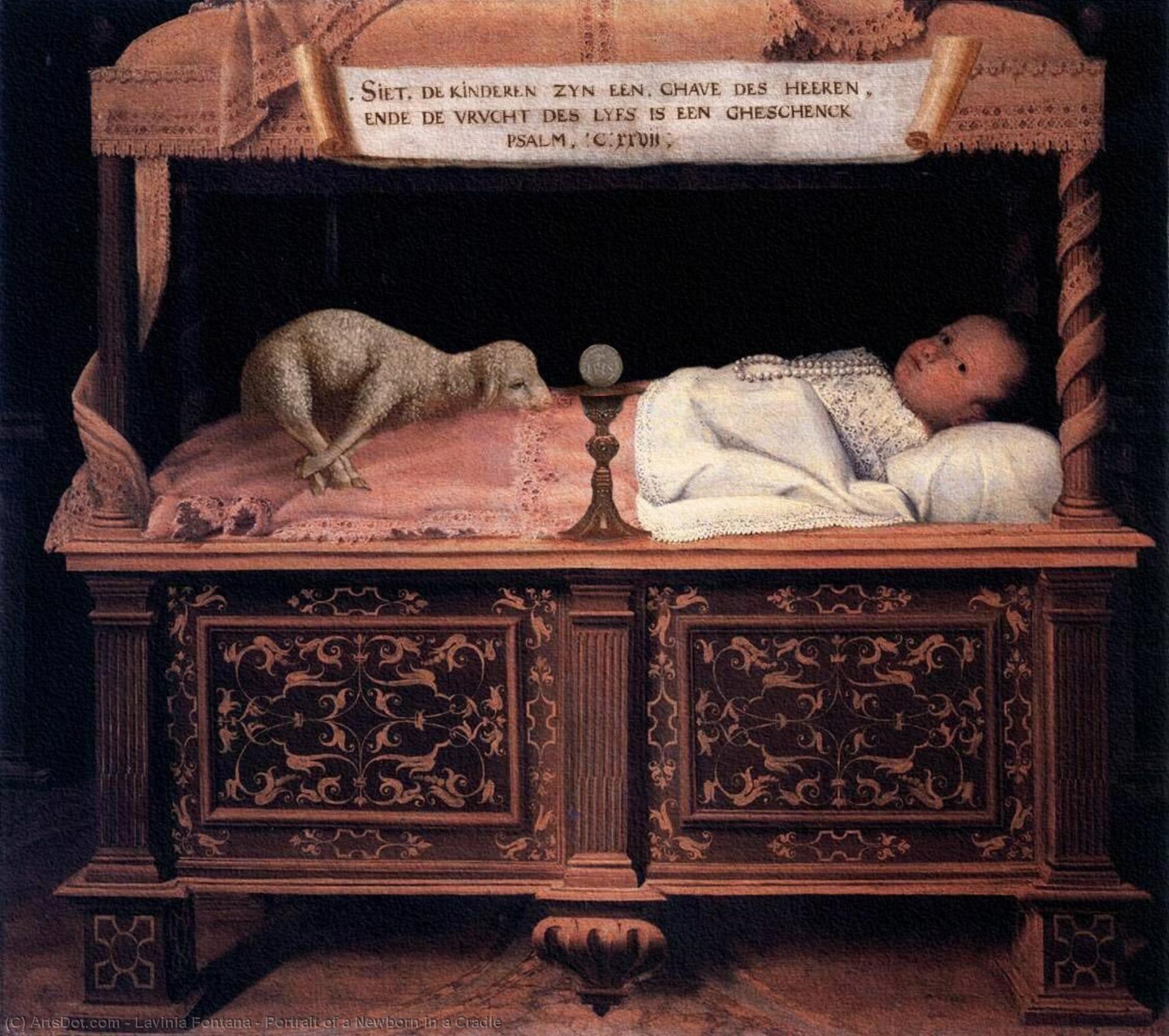
Lavinia Fontana's "Portrait of a Newborn in a Cradle," painted in 1583, is not merely a depiction of infancy; it’s a profoundly moving meditation on mortality, faith, and the poignant beauty of fleeting existence. Emerging from Bologna during a period when women were largely excluded from the established artistic circles of Italy, Fontana's work stands as a testament to her exceptional talent and unwavering determination. This painting, housed within the confines of a richly decorated coffin, immediately commands attention with its somber palette—deep blues, browns, and muted greys—evoking a sense of quiet mourning. The scene unfolds within a meticulously rendered interior: a cradle, draped in luxurious fabrics, cradles a tiny infant, his face serene and vulnerable. A faithful dog lies at the foot of the coffin, offering a silent vigil – a symbol of loyalty and companionship even in death, a poignant detail that elevates the work beyond simple portraiture.
The painting firmly anchors itself within the traditions of Northern Renaissance art, particularly evident in its meticulous attention to detail and its focus on emotional expression. Fontana’s technique is characterized by layered glazes of oil paint, creating a remarkable sense of luminosity and depth. The textures are incredibly varied – from the smooth skin of the baby to the rough-hewn wood of the coffin's frame and the delicate folds of the drapery—each rendered with painstaking precision. The perspective, while somewhat flattened in line with Renaissance conventions, skillfully directs the viewer’s gaze towards the central figure, emphasizing the vulnerability of the newborn and the solemnity of the scene. The scroll above the coffin, bearing Dutch text, adds a layer of religious significance, hinting at biblical themes of mortality and redemption.
A Symbolism Laden with Meaning
Beyond its technical mastery, “Portrait of a Newborn in a Cradle” is rich in symbolic weight. The coffin itself represents not just death but also the cycle of life—a reminder that all things eventually return to dust. The dog’s presence speaks volumes about loyalty and faithfulness, suggesting that even in the face of loss, companionship endures. The infant embodies innocence and vulnerability, a poignant symbol of humanity's fleeting existence. The inclusion of the scroll with its Dutch text further reinforces the painting’s religious context, likely referencing passages from scripture concerning the brevity of life and the promise of eternal salvation. The careful arrangement of objects—the pearl necklace adorning the baby, the rich fabrics surrounding the cradle—all contribute to a complex tapestry of meaning, inviting contemplation on themes of mortality, faith, and the human condition.
Lavinia Fontana: A Pioneer in Her Time
Understanding “Portrait of a Newborn in a Cradle” requires acknowledging the extraordinary circumstances of Lavinia Fontana’s life and career. Born in Bologna in 1552, she defied societal expectations by establishing herself as a professional artist—a rare feat for a woman during the Renaissance. She was trained initially by her father, Prospero Fontana, a respected painter himself, and later benefited from instruction under Denis Calvaert, a prominent figure in the Bolognese art scene. Fontana’s success wasn't simply due to talent; it was forged through sheer determination and a willingness to challenge the established norms of the art world. Her decision to marry and continue her artistic practice—a highly unusual arrangement for the time—demonstrates her commitment to both family and career. The fact that she earned a substantial income from her commissions, often depicting wealthy patrons and their families, further underscores her remarkable achievement.
A Timeless Masterpiece: Reproduction Possibilities
“Portrait of a Newborn in a Cradle” remains a powerfully evocative work of art, captivating viewers with its somber beauty and profound symbolism. ArtsDot offers meticulously crafted hand-painted reproductions that faithfully capture the essence of Fontana’s original masterpiece. These reproductions are created using the same techniques and materials as the original painting—oil paints applied to wood panel—ensuring a stunningly authentic representation. Whether adorning a private residence or gracing a corporate space, a reproduction of this poignant work will serve as a timeless reminder of life's fragility, faith’s solace, and the enduring power of art to move and inspire.
Obras relacionadas
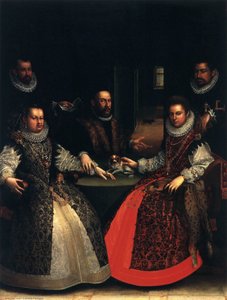
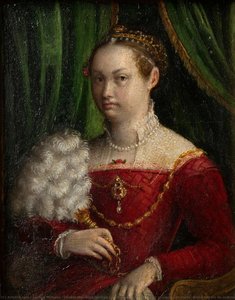
Biografía del artista
Vida Temprana y Formación
- Nacida: 24 de agosto de 1552, Bolonia, Italia
- Fallecida: 1614
- Lavinia Fontana nació en una familia de artistas. Su padre, Prospero Fontana, fue un pintor destacado de la Escuela de Bolonia.
- Recibió su formación de su padre y continuó el negocio familiar, lo cual era típico en aquella época.
- Su primera obra conocida, "Niño Mono", fue pintada en 1575 cuando tenía 23 años.
Estilo Artístico y Obras Notables
- Inicialmente, el estilo artístico de Lavinia Fontana se asemejaba al de su padre. Gradualmente adoptó el estilo carracciesco con un fuerte color casi veneciano.
- Era conocida por pintar a los residentes de clase alta de Bolonia, notablemente mujeres nobles. Sus relaciones con clientas femeninas fueron a menudo inusualmente cálidas.
- Obras Notables:
- Retrato Matrimonial Doble (también conocido como Autorretrato de Lavinia Fontana): Una obra maestra que muestra elegancia y sofisticación del arte del siglo XVI, ubicada en el Museo de Zaragoza.
- Venus y Cupido (1592): Un retrato barroco con ricos detalles y belleza simbólica.
- Bebé Recién Nacido en una Cuna (1583): Un retrato manierista que muestra riqueza y ternura.
- Judit con la Cabeza de Holofernes (1600): Una obra maestra dramática del Renacimiento.
- Retrato de un Bebé Recién Nacido en una Cuna (1583): Una conmovedora pintura al óleo del Renacimiento nórdico.
Desarrollo e Influencias
- Influencias: Denis Calvaert, un artista neerlandés que dirigió una influyente escuela de pintura en Bolonia, también influyó en su formación.
- El estilo artístico de su padre inicialmente moldeó su trabajo, pero evolucionó hacia el estilo carracciesco.
- El patrocinio del Papa Gregorio XIII y su familia impactaron significativamente su carrera, lo que llevó a encargos para retratos de individuos prominentes.
Logros Mayores y Significado Histórico
- Primera Artista Profesional Femenina: Lavinia Fontana es considerada la primera artista femenina en trabajar dentro del mismo ámbito que sus colegas masculinos fuera de una corte o convento.
- Pintora Retratista Pionera: Se convirtió en una de las retratistas más importantes en Bolonia durante finales del siglo XVI.
- Primera Artista Femenina en Pintar Nudos Femeninos: Fontana fue una de las primeras artistas femeninas en pintar nudos femeninos, aunque esto sigue siendo un tema de debate entre los historiadores del arte.
- Reconocimiento y Honores: Fue elegida en la Accademia di San Luca en Roma y recibió numerosos honores, incluyendo una medalla de bronce conmemorativa fundida en 1611.
Legado
- El legado de Lavinia Fontana continúa inspirando a artistas y amantes del arte por igual.
- Su obra se puede encontrar en varios museos y colecciones de todo el mundo, incluyendo el Museo de Zaragoza y la Accademia di San Luca en Roma.
- Equilibró una exitosa carrera artística con la crianza de once hijos, demostrando una resiliencia y dedicación notables.
- La capacidad de Fontana para asegurar encargos y apoyo de patrocinadores prominentes allanó el camino para las futuras generaciones de artistas femeninas.
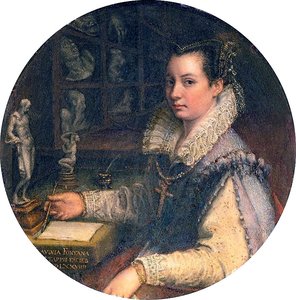
Lavinia Fontana
1552 - 1614 , Italia
Datos clave
- Artistas Que Influyeron:
- Prospero Fontana
- Denis Calvaert
- Fecha De Fallecimiento: 1614
- Fecha De Nacimiento: 24 de agosto de 1552
- Lugar De Nacimiento: Bolonia, Italia
- Movimiento Artístico: Manierismo
- Nacionalidad: Italiana
- Nombre Completo: Lavinia Fontana
- Obras Notables:
- Retrato nupcial doble
- Venus y Cupido
- Bebé recién nacido en cuna
- Judit con la cabeza de Holofernes
- Retrato de un bebé en cuna
Artículos relacionados

The Enduring Legacy of Oil on Canvas: Technique, History & Aesthetic Impact
Explore the rich history & techniques of oil painting – from Renaissance masters to Impressionism. Discover pigments, layering methods, and why this timeless medium endures. Expert insights for artists & art enthusiasts.

El Óleo sobre Lienzo: Historia, Técnica y la Persistencia de un Medio Artístico Atemporal
Descubre la historia y técnica del óleo sobre lienzo. Explora reproducciones fieles hechas a mano, personalización artística y consejos de expertos con ArtsDot. ¡Colecciona arte con confianza!

The Enduring Power of Painting: A Historical & Contemporary Exploration of Form and Emotion
Explore the rich history & enduring techniques of oil painting with ArtsDot. Discover masterpieces, learn about art collecting, and find authentic handmade reproductions crafted by skilled artists.

El Legado Duradero del Óleo sobre Lienzo: Técnica, Historia y Práctica Contemporánea
Descubre la historia y técnica del óleo sobre lienzo. Explora reproducciones fieles hechas a mano, personalización artística y consejos de expertos con .
10 Obras Maestras al Óleo sobre Tabla que Revolucionaron la Historia del Arte | ArtsDot
Descubre 10 obras maestras al óleo sobre tabla que revolucionaron el arte. Explora la historia de Van Gogh, Monet y otros artistas clave. Encuentra reproducciones de alta calidad e inspírate para decorar tu hogar con ArtsDot.com.