

 Ver en contexto
 Enviar
 Compartir
 Detalles

 Descargar
 Similares
 Radiografía
 Presentación de diapositivas
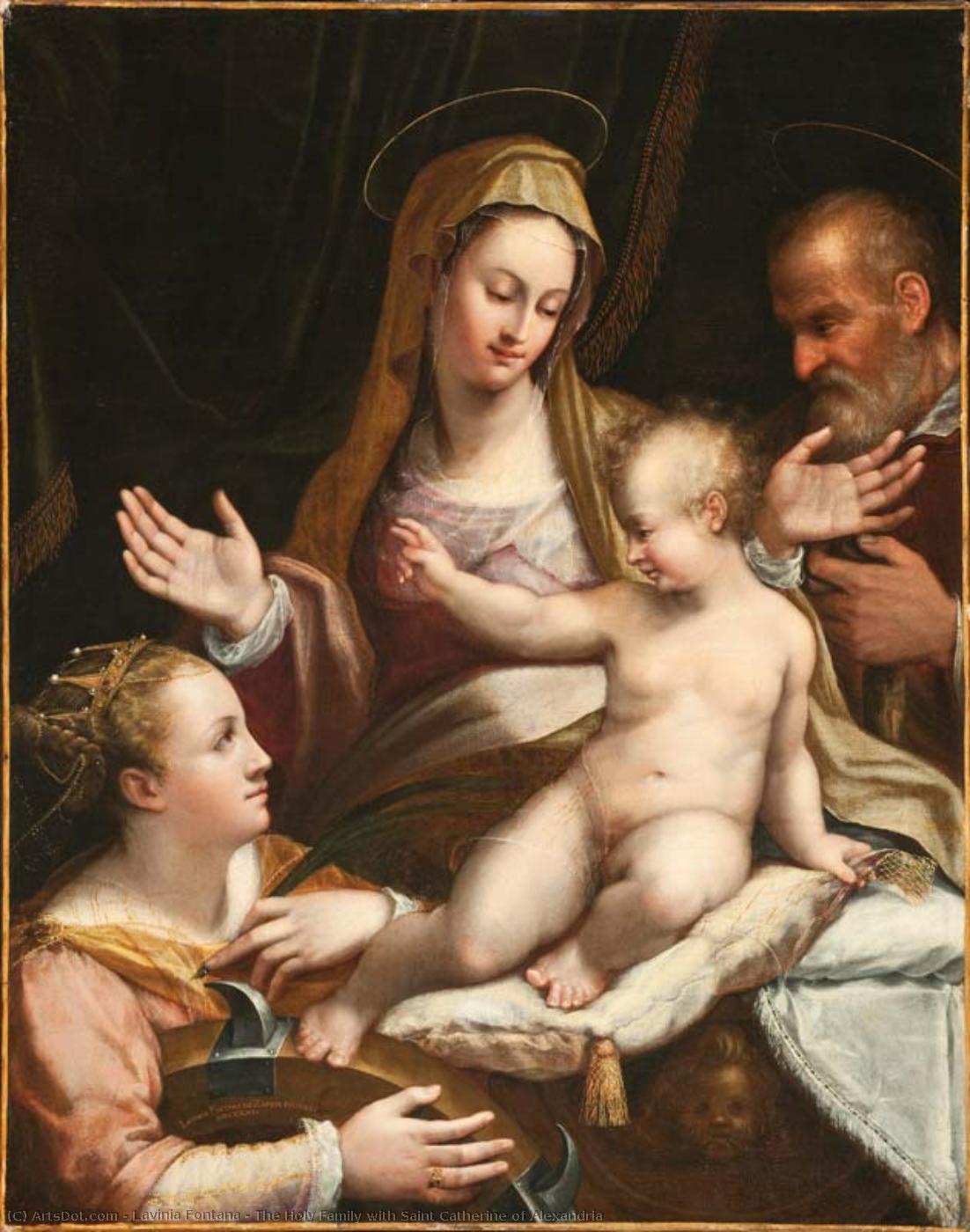
The Holy Family with Saint Catherine of Alexandria
 Oil On Canvas
- WallArt
- Venetian Renaissance
 1581
1581 130.0 x 112.0 cm
 Museo de Arte del Condado de Los Ángeles
 Ver más
Adquiera una imagen digital de alta resolución y optimizada, muy superior a la vista previa en línea.
Cada archivo es preparado meticulosamente por nuestros especialistas internos mediante el uso de herramientas avanzadas y un experto retoque manual. Nos aseguramos de que cada imagen posea una claridad excepcional, una precisión cromática impecable y un detalle minucioso.
El archivo final se entrega por correo electrónico en un plazo de 72 horas, optimizado para su uso inmediato en entornos profesionales, editoriales y de impresión. Esta es la misma calidad en la que confían los estudios de diseño, las editoriales y las galerías de primer nivel.
Imagen Digital
Descarga un archivo de alta resolución para exhibición personal, impresión y proyectos creativos. ( Comprar impresión Comprar pintura hecha a mano)
Incluido en cada pedido de imágenes digitales
Entrega digital experta, garantizada.
Al elegir ArtsDot.com, no solo está adquiriendo una imagen; está recibiendo una obra de arte digital mejorada profesionalmente, elaborada con precisión y respaldada por una garantía de satisfacción. Esto es todo lo que incluye su pedido, automáticamente:

Entrega rápida por email
Recibirá su archivo de imagen digital en alta resolución por correo electrónico en un plazo de 72 horas tras realizar su pedido, listo para su uso inmediato.

Archivo digital optimizado por IA
Su obra de arte se optimiza profesionalmente mediante herramientas avanzadas de IA y edición manual, garantizando el máximo detalle, claridad y precisión cromática.

Reenvío gratuito de por vida
¿Has borrado o perdido tu archivo por error? No te preocupes: te lo volveremos a enviar en cualquier momento, sin coste adicional.

Sin gastos de importación, siempre
Disfrute de su obra de arte al instante sin aduanas, aranceles ni gastos de envío; las descargas digitales siempre están libres de impuestos.

Garantía de fidelidad de color
Garantizamos que su imagen digital refleje los colores originales con la mayor fidelidad posible, mediante el uso de herramientas profesionales y gestión del color.

Garantía de satisfacción de 60 días
Si no está satisfecho con su imagen digital, la revisaremos o le reembolsaremos el 100% en un plazo de 60 días, sin preguntas.

100% Garantía de devolución de dinero
¿No está satisfecho? Obtenga un reembolso completo dentro de los 60 días posteriores a la recepción de su archivo digital, sin necesidad de explicaciones.

Descuentos por pedidos grandes
Compra 3 imágenes, ahorra 10% - Compra 5, ahorra 15% - Compra 10+, ahorra 20%. Ideal para proyectos creativos, galerías y agencias.
Lavinia Fontana’s Venetian Renaissance Masterpiece: The Holy Family with Saint Catherine of Alexandria
Within the hallowed halls of the Los Angeles County Museum of Art resides a painting that whispers tales of resilience, artistic innovation, and profound devotion – Lavinia Fontana's “The Holy Family with Saint Catherine of Alexandria,” completed in 1581. More than just a depiction of Mary, Jesus, and Joseph, this work stands as a testament to the extraordinary journey of one of Europe’s first professional female artists, a woman who defied societal constraints and carved her own path within the fiercely competitive world of Renaissance art. The painting immediately draws the eye with its rich palette – deep reds, blues, and golds—a hallmark of Venetian artistic style, where luminosity and vibrant color were prized above all else. Yet, it’s not merely a feast for the eyes; Fontana masterfully employs chiaroscuro lighting, dramatically contrasting areas of light and shadow to sculpt the figures and imbue the scene with an almost palpable sense of intimacy and serenity.
Fontana's composition is rooted in classical principles, notably the pyramidal structure—a technique borrowed from Raphael and Correggio—that lends stability and harmony to the arrangement. Mary, positioned at the apex, cradles the infant Jesus, while Joseph stands protectively beside them. The inclusion of Saint Catherine of Alexandria, a prominent early Christian martyr known for her wisdom and virtue, adds another layer of symbolic depth. Catherine’s presence elevates the scene beyond a simple domestic portrait, transforming it into a meditation on faith, family, and divine grace. The architectural setting, though somewhat flattened in perspective—a characteristic of Renaissance painting—suggests a richly decorated interior space, hinting at the sanctity and importance of the family within.
A Pioneer’s Path: Lavinia Fontana and the Counter-Reformation
Understanding “The Holy Family” requires acknowledging the remarkable circumstances surrounding its creation. Lavinia Fontana was not simply an artist; she was a trailblazer in a period when women were largely excluded from formal artistic training and professional opportunities. Born into a family of artists in Bologna, Italy, she received her initial education from her father, Prospero Fontana, a respected painter known for his Mannerist style. However, it was through her marriage to Gian Paolo Zappi, one of her father’s pupils, that Fontana secured the freedom and resources necessary to pursue her artistic career with genuine dedication. This unique arrangement—a husband who supported her work rather than hindering it—was unprecedented at the time, allowing her to establish herself as a professional artist.
Fontana's work during this period was deeply influenced by the Counter-Reformation, the Catholic Church’s response to the Protestant Reformation. Cardinal Gabriele Paleotti, a key figure in shaping artistic theory during this era, advocated for art that would inspire piety and emotional engagement. Fontana embraced these principles, striving to create images that moved viewers spiritually rather than merely depicting religious subjects with detached accuracy. Her attention to detail, particularly in rendering the expressions of the figures—a subtle hint of tenderness in Mary’s gaze, a protective warmth in Joseph's posture—reflects this commitment to conveying emotion and fostering a connection between the viewer and the sacred narrative.
Technique and Materials: A Masterful Oil Painting
The painting itself is executed with meticulous skill using oil paints on canvas – a technique that allowed for layering, glazing, and subtle tonal variations, creating an astonishingly rich and luminous surface. Fontana’s brushwork is remarkably refined, particularly in the rendering of drapery, which flows with graceful curves and folds, adding depth and texture to the scene. The smooth surfaces of the figures' faces contrast subtly with the tactile quality of the fabric, further enhancing the sense of realism. Close examination reveals a careful attention to detail—the delicate folds of Mary’s robes, the intricate patterns on the architectural elements, and the subtle nuances in the expressions of each figure.
The use of color is particularly noteworthy. Fontana employs a vibrant palette of reds, blues, and golds, creating a sense of warmth and opulence that reflects the Venetian artistic tradition. The lighting—a dramatic chiaroscuro effect—casts strong shadows, highlighting the forms of the figures and adding depth to the composition. This masterful manipulation of light and shadow not only enhances the visual impact of the painting but also contributes to its emotional resonance.
A Legacy of Innovation: Beyond the Canvas
Lavinia Fontana’s “The Holy Family with Saint Catherine of Alexandria” is more than just a beautiful artwork; it's a symbol of artistic courage and perseverance. It represents the triumph of talent over adversity, the breaking down of societal barriers, and the assertion of a woman’s right to pursue her creative passions. Her story continues to inspire artists and art lovers alike, reminding us that innovation often emerges from unexpected places and that true artistry knows no gender.
Obras relacionadas
Biografía del artista
Vida Temprana y Formación
- Nacida: 24 de agosto de 1552, Bolonia, Italia
- Fallecida: 1614
- Lavinia Fontana nació en una familia de artistas. Su padre, Prospero Fontana, fue un pintor destacado de la Escuela de Bolonia.
- Recibió su formación de su padre y continuó el negocio familiar, lo cual era típico en aquella época.
- Su primera obra conocida, "Niño Mono", fue pintada en 1575 cuando tenía 23 años.
Estilo Artístico y Obras Notables
- Inicialmente, el estilo artístico de Lavinia Fontana se asemejaba al de su padre. Gradualmente adoptó el estilo carracciesco con un fuerte color casi veneciano.
- Era conocida por pintar a los residentes de clase alta de Bolonia, notablemente mujeres nobles. Sus relaciones con clientas femeninas fueron a menudo inusualmente cálidas.
- Obras Notables:
- Retrato Matrimonial Doble (también conocido como Autorretrato de Lavinia Fontana): Una obra maestra que muestra elegancia y sofisticación del arte del siglo XVI, ubicada en el Museo de Zaragoza.
- Venus y Cupido (1592): Un retrato barroco con ricos detalles y belleza simbólica.
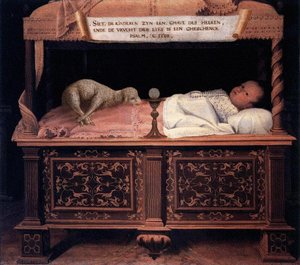
- Bebé Recién Nacido en una Cuna (1583): Un retrato manierista que muestra riqueza y ternura.
- Judit con la Cabeza de Holofernes (1600): Una obra maestra dramática del Renacimiento.
- Retrato de un Bebé Recién Nacido en una Cuna (1583): Una conmovedora pintura al óleo del Renacimiento nórdico.
Desarrollo e Influencias
- Influencias: Denis Calvaert, un artista neerlandés que dirigió una influyente escuela de pintura en Bolonia, también influyó en su formación.
- El estilo artístico de su padre inicialmente moldeó su trabajo, pero evolucionó hacia el estilo carracciesco.
- El patrocinio del Papa Gregorio XIII y su familia impactaron significativamente su carrera, lo que llevó a encargos para retratos de individuos prominentes.
Logros Mayores y Significado Histórico
- Primera Artista Profesional Femenina: Lavinia Fontana es considerada la primera artista femenina en trabajar dentro del mismo ámbito que sus colegas masculinos fuera de una corte o convento.
- Pintora Retratista Pionera: Se convirtió en una de las retratistas más importantes en Bolonia durante finales del siglo XVI.
- Primera Artista Femenina en Pintar Nudos Femeninos: Fontana fue una de las primeras artistas femeninas en pintar nudos femeninos, aunque esto sigue siendo un tema de debate entre los historiadores del arte.
- Reconocimiento y Honores: Fue elegida en la Accademia di San Luca en Roma y recibió numerosos honores, incluyendo una medalla de bronce conmemorativa fundida en 1611.
Legado
- El legado de Lavinia Fontana continúa inspirando a artistas y amantes del arte por igual.
- Su obra se puede encontrar en varios museos y colecciones de todo el mundo, incluyendo el Museo de Zaragoza y la Accademia di San Luca en Roma.
- Equilibró una exitosa carrera artística con la crianza de once hijos, demostrando una resiliencia y dedicación notables.
- La capacidad de Fontana para asegurar encargos y apoyo de patrocinadores prominentes allanó el camino para las futuras generaciones de artistas femeninas.
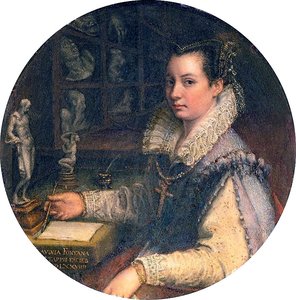
Lavinia Fontana
1552 - 1614 , Italia
Breves datos
- Artistas Que Influyeron:
- Prospero Fontana
- Denis Calvaert
- Fecha De Fallecimiento: 1614
- Fecha De Nacimiento: 24 de agosto de 1552
- Lugar De Nacimiento: Bolonia, Italia
- Movimiento Artístico: Manierismo
- Nacionalidad: Italiana
- Nombre Completo: Lavinia Fontana
- Obras Notables:
- Retrato nupcial doble
- Venus y Cupido
- Bebé recién nacido en cuna
- Judit con la cabeza de Holofernes
- Retrato de un bebé en cuna

