

 Ver en contexto
 Enviar
 Compartir
 Detalles

 Descargar
 Similares
 Radiografía
 Presentación de diapositivas
 Estadísticas
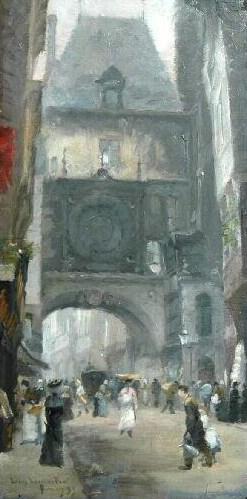
Le Gros Horloge, Rouen


 Ver más
Reproducción al óleo hecha a mano
Óleo sobre lienzo pintado a mano en el tamaño y marco de su elección, realizado por encargo por nuestros artistas. ( Cambiar a Impresión Cambiar a imagen digital)




































Elija entre nuestros tamaños predefinidos que respetan las proporciones originales de la obra.

Puede ingresar sus propias dimensiones para adaptarse a un marco o espacio específico. Si el tamaño seleccionado no coincide con las proporciones de la imagen original, recortaremos la obra o extenderemos la pintura con elementos adicionales pintados a mano. Se le enviará una maqueta digital para su aprobación antes de comenzar la producción.
Tenga en cuenta que la vista previa en pantalla no refleja el recorte o la extensión reales. Solo la maqueta mostrará con precisión la composición final.
Si bien existen tamaños personalizados, recomendamos seleccionar una dimensión de la lista predefinida para preservar las proporciones originales.
Tras realizar el pedido, el equipo de ArtsDot.com enviará un correo electrónico al cliente para solicitar instrucciones y proporcionarle una vista previa del boceto.
Envío a todo el mundo () en 3-4 semanas en lugar de las 5 semanas estándar. (12 septiembre). Sin comprometer la calidad.

Envío exprés gratuito a todo el mundo

Lienzo de lino de alta calidad

Seguro de envío total

Garantía de reembolso de impuestos aduaneros

Garantía de fidelidad cromática exacta

Política de devolución de 100 días (solo por defectos)

Garantía de devolución del 100% del dinero

Descuento por cantidad
 La opción de vidrio solo está disponible en tamaños inferiores a 110 cm.

Le Gros Horloge, Rouen
Técnica de reproducción
Dimensiones de la reproducción
-


Precio total final
$ 263
Obras relacionadas










Biografía del artista
Léon Jules Lemaitre: Bridging Renaissance Ideals and Impressionistic Vision
Léon Jules Lemaitre (1850 – 1905) stands as a singular figure in the artistic landscape of late nineteenth-century Italy, embodying a fascinating confluence of classical architectural principles and the burgeoning expressive currents of Impressionism. Born in Rouen, France, Lemaitre’s formative years instilled within him an appreciation for meticulous craftsmanship and geometric harmony—influences that would profoundly shape his architectural endeavors and permeate his paintings. While often overshadowed by contemporaries like Giuseppe Verdi and Giovanni Battista Crespi, Lemaitre nonetheless achieved considerable renown as a designer of churches and public buildings, leaving behind a legacy of elegant structures reflecting both humanist ideals and the burgeoning aesthetic sensibilities of his time.- Early Life & Education: Lemaitre’s artistic inclinations began to blossom during his studies at École Supérieure des Beaux-Arts in Paris, where he honed his skills under the tutelage of Jean-Léon Gérôme and Alexandre Cabanel—artists deeply rooted in academic tradition. This grounding provided him with a foundational understanding of disegno anatomico and perspectiva, disciplines crucial for mastering architectural representation.
- Architectural Achievements: Lemaitre’s architectural career ascended rapidly upon his return to Italy. He swiftly gained prominence as a designer of churches throughout Lombardy and Emilia-Romagna, notably undertaking the ambitious Sant'Andrea Mantua project—a monumental basilica commissioned by Saint Anselmo Cathedral in Mantua. His design prioritized symmetry, proportion, and classical ornamentation, reflecting Alberti’s humanist vision of architecture as a tool for elevating the human spirit. The Palazzo Ruccelai in Lucca exemplifies his mastery of Tuscan Renaissance style, showcasing refined facades adorned with sculptures and intricate detailing.
The Impressionistic Touch: Exploring Color & Atmosphere
Despite his unwavering commitment to architectural rigor, Lemaitre’s artistic output extended beyond monumental structures. He embraced Impressionism, experimenting with vibrant color palettes and capturing fleeting moments of light and atmosphere—a stylistic departure that nonetheless remained consistent with his underlying aesthetic sensibilities. His paintings often depict landscapes bathed in dappled sunlight, conveying a sense of immediacy and emotional resonance. Consider “Bords de la Seine (effet du matin),” where Lemaitre skillfully employs muted tones to evoke the tranquil beauty of a riverside dawn. The painting’s delicate brushstrokes capture the subtle nuances of light filtering through foliage—a testament to his ability to synthesize classical precision with Impressionistic spontaneity.- Notable Paintings: Among Lemaitre's most celebrated works are “Sortie de messe à l’église Saint Jean” and “La rue du Gros Horloge,” both executed in 1905. “Sortie de messe à l’église Saint Jean” portrays a rainy cathedral interior with remarkable sensitivity, utilizing atmospheric perspective to convey the solemn grandeur of the space. Similarly, “La rue du Gros Horloge” captures the vibrancy of Rouen’s cityscape—a bustling street scene rendered in Impressionistic brushstrokes that imbue it with palpable energy.
Influences & Legacy
Lemaitre's artistic trajectory was undeniably shaped by the intellectual currents of his era. He absorbed the humanist principles championed by Alberti and Michelangelo Buonarroti—artists who advocated for architecture as a reflection of human dignity and virtue. Furthermore, he engaged with the burgeoning Impressionist movement spearheaded by Monet, Renoir, and Sisley, recognizing its potential to transcend mere representation and communicate profound emotional experiences. Lemaitre’s enduring contribution lies in his ability to synthesize these disparate influences into a distinctive artistic idiom—a testament to his intellectual curiosity and creative vision.Concluding Remarks
Léon Jules Lemaitre remains an artist whose work deserves renewed appreciation. His architectural designs stand as beacons of Renaissance elegance, while his paintings exemplify the expressive power of Impressionism. By bridging the gap between classical idealism and modern sensibility, Lemaitre cemented his place in art history—a figure who reminds us that true artistic innovation arises from a harmonious dialogue between tradition and experimentation.
léon jules lemaître
1850 - 1905
Datos clave
- Artistic Movement Or Style: Impressionism
- Artists Or Movements Influenced By This Artist: ['Impressionism']
- Artists Who Influenced This Artist: ['Gustave Moreau']
- Date Of Death: 1905
- Full Name: Léon Jules Lemaitre
- Nationality: French
- Notable Artworks:
- Bords de la Seine (effet du matin)
- Sortie de messe à l'église Saint Jean
- La rue du Gros Horloge, Rouen
- Place Of Birth: Rouen, France