

 Vista previa
 Compartir
 Compartir
 Ver detalles

 Descargar
 Ver similares
 Radiografía
 Presentación de diapositivas
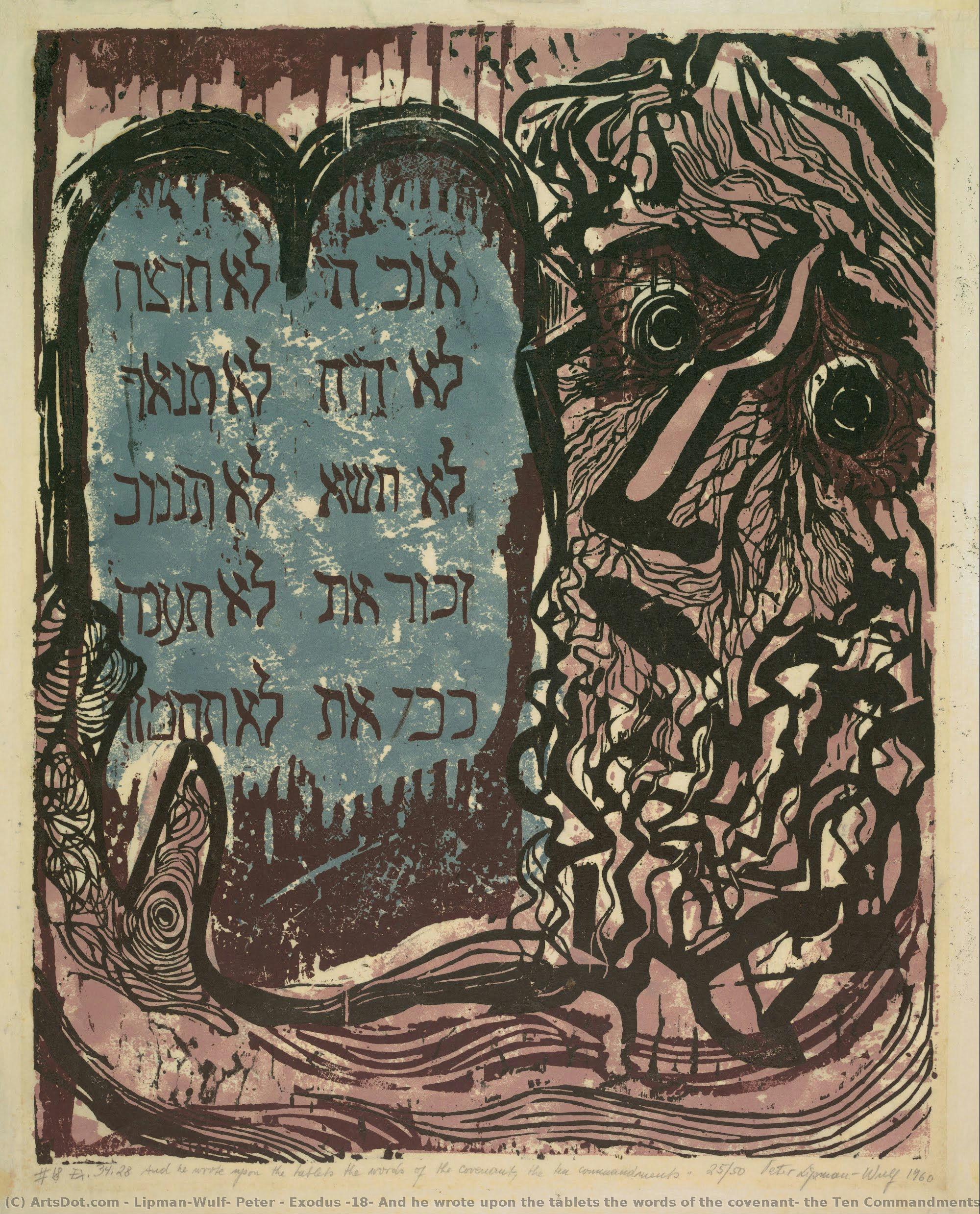
Exodus #18, And he wrote upon the tablets the words of the covenant, the Ten Commandments
 German Expressionism
 1960
1960- Modern
 51.0 x 65.0 cm
 Instituto Leo Baeck
 Leer más
Giclée / Impresión de arte
Impresiones giclée o en lienzo de calidad de museo con producción rápida y opciones de acabado flexibles. ( Encargar reproducción pintada a mano Comprar descarga)




P118B $10

P118H $10

P118W $10

P438Z $10

P508JH $12

P508YH $12

P805H $10

P805Z $10

P919BZ $10

P919G $10

P919XJ $10

P959ZH $10

P968JZ $12

W106C $8

W218G $10

W218JH $8

W218Y $10

W307PJ $10

W316G $10

W316PJ $8

W316Y $10

W398PJ $8

W4111J $10

W500HY $15

W500JH $15

W692G $12

W849H $8

W940BG $15

W953PJ $8




Elija entre nuestros tamaños predefinidos que respetan las proporciones originales de la obra.

Puede introducir sus propias dimensiones para adaptarse a un marco o espacio específico. Si el tamaño seleccionado no coincide con las proporciones de la imagen original, recortaremos la obra de arte o extenderemos la imagen con un borde con efecto espejo o de color sólido. Se enviará una maqueta digital para su aprobación antes de que comience la producción.
Tenga en cuenta que la vista previa en pantalla no refleja el recorte o la extensión real. Solo la maqueta mostrará con precisión la composición final.
Aunque existen tamaños personalizados, recomendamos seleccionar una dimensión de la lista predefinida para preservar las proporciones originales.
Envío a todo el mundo () en 2 semanas en lugar de las 4/5 semanas estándar. (22 agosto)

Envío exprés gratuito a todo el mundo

Lienzo de lino de alta calidad

Seguro de envío completo

Garantía de reembolso de aranceles aduaneros

Garantía de fidelidad cromática exacta

Política de devolución de 60 días (solo por defectos)

Garantía de devolución del 100% del dinero

Oferta por volumen
 La opción de vidrio solo está disponible en tamaños inferiores a 110 cm.

Exodus #18, And he wrote upon the tablets the words of the covenant, the Ten Commandments
Giclée / Impresión de arte
Tamaño de la reproducción
-


Precio total
$ 62
Descripción de la pieza
A Divine Encounter in Ink and Wood
In the profound stillness of Peter Lipman-Wulf’s 1960 masterpiece, Exodus #18, And he wrote upon the tablets the words of the covenant, the Ten Commandments, we are invited to witness a moment of cosmic significance. This evocative work transcends mere biblical illustration, offering instead a visceral connection to the sacred. The painting presents a striking close-up of two weathered wooden tablets, their surfaces etched with the ancient Hebrew script of the Decalogue. There is an undeniable weight to the composition; the texture of the wood and the deliberate, almost rhythmic engraving of the letters suggest a permanence that defies the passage of time. Through his masterful use of detail, Lipman-Wulf captures not just the text of the covenant, but the very essence of divine law being etched into the physical world.
The brilliance of this piece lies in its unexpected visual tension. While the tablets serve as the structural anchor of the work, a hauntingly beautiful element emerges from the periphery: a face peeking softly from behind the heavy wood. This subtle inclusion transforms the painting from a historical tableau into a psychological experience. It introduces a sense of divine presence—or perhaps human witness—that watches over the sacred text with an intensity that is both protective and awe-struck. This interplay between the tangible, textured tablets and the ethereal, partially obscured figure creates a dynamic composition that keeps the viewer’s eye moving, searching for meaning within the shadows and the light.
Expressionist Roots and Spiritual Depth
Drawing from his rich heritage of German Expressionism, Lipman-Wulf employs a technique that favors emotional truth over photographic realism. The bold lines and the interplay of light and shadow serve to heighten the drama of the Exodus narrative. As a sculptor and printmaker by training, the artist brings a tactile sensibility to this painting; one can almost feel the grain of the wood and the depth of the incisions. This mastery of form allows the artwork to resonate with a profound sense of gravity, making it an ideal centerpiece for those who appreciate art that speaks to the soul. The piece serves as a bridge between the turbulent history of the twentieth century and the timelessness of ancient myth.
For the discerning collector or interior designer, this reproduction offers more than just aesthetic beauty; it provides a focal point of contemplation. Whether placed in a quiet study, a grand library, or a contemporary living space, the painting’s rich textures and deep symbolic layers command attention. It is a work that invites conversation, prompting reflections on law, morality, and the unseen forces that shape human existence. Owning such a piece is an opportunity to surround oneself with a fragment of history that remains vibrantly alive, capturing a moment where the earthly and the divine momentarily intersect.
Obras relacionadas
Biografía del artista
early life and education
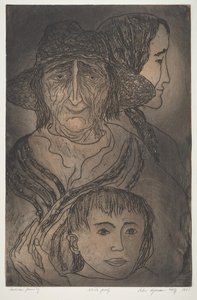
Peter Lipman-Wulf (1905-1993) fue un escultor y grabado alemán nacido en Berlín, Alemania. Su padre, abogado, y su madre, escultora y pintorretratoista, inculcaron en él desde temprana edad una apreciación por las artes. Lipman-Wulf estudió en la Academia de Berlín, estableciendo así los fundamentos para sus futuros esfuerzos artísticos.
artistic career and migration
En 1933, con el ascenso del régimen nazi, Lipman-Wulf abandonó Alemania, inmigrando a Estados Unidos. Este movimiento decisivo marcó un cambio significativo en su carrera, convirtiéndose en profesor en la Universidad Adelphi en Garden City, NY.
artistic style and influences
El trabajo de Lipman-Wulf, caracterizado por sus tonos expresionistas, refleja la época turbulenta en que vivió. Sus esculturas y grabados, frecuentemente con líneas audaces y colores vibrantes, demuestran una mezcla única entre el expresionismo alemán y las influencias estadounidenses.
notable works and collections
Las obras de Lipman-Wulf se encuentran en diversas colecciones, incluyendo la Colección Lippmann (Berlín, Alemania), que muestra una amplia gama de estilos y períodos artísticos. Sus grabados y aguafrescos, como los que aparecen en la Colección Lippmann, evidencian su dominio técnico. Similar a las obras de Ernst Ludwig Kirchner, como Variedad Danzaría, las piezas de Lipman-Wulf suelen capturar la esencia de la experiencia humana.
legacy and later life
Lipman-Wulf falleció el 25 de septiembre de 1993, en Hamburgo, Alemania. Sin embargo, su legado perdura a través de su arte, que sigue inspirando nuevas generaciones.
Peter Lipman-Wulf
1905 - 1993 , Alemania
Datos clave
- Artistic Movement Or Style: Expressionism
- Artists Or Movements Influenced By This Artist: ['German Expressionism']
- Artists Who Influenced This Artist: ['Ernst Ludwig Kirchner']
- Date Of Birth: April 27, 1905
- Date Of Death: September 25, 1993
- Full Name: Peter Lipman-Wulf
- Nationality: German
- Notable Artworks:
- Fire--The Descent, #3
- In its foliage, leaf by leaf, thickly gathered as dew-drops sat, #8
- The night circled in its immense space, the orb turned by Atlas, #4
- Place Of Birth: Berlin, Germany
Artículos relacionados
Expresionismo Alemán: 10 Obras Maestras que Transformaron el Arte | ArtsDot
Descubre las 10 obras maestras del Expresionismo Alemán: Kirchner, Munch y más. Explora la historia, técnica y emoción detrás de estos lienzos icónicos. Reproducciones de arte de museo en ArtsDot.com. ¡Inspira tu hogar con arte!
Anton von Werner: Imperial Painter, Historical Witness & Shifting German Identity
Explore the life & work of Anton von Werner, Imperial Germany's leading painter. Discover his dramatic depictions of war, unification, and court life – a fascinating insight into 19th-century German history & art.
The Northern Awakening: Artistic Innovation & Cultural Transformation in the German Renaissance
Explore the artistic innovation of the German Renaissance! Discover Dürer, the Danube School & Reformation art. Learn about techniques, materials & lasting influence. Find museum-quality reproductions at ArtsDot.
Neue Sachlichkeit: Objetividad, Realismo y Comentario Social en el Arte Alemán de Entreguerras
Explore la Neue Sachlichkeit: un movimiento artístico alemán clave del entreguerras. Análisis profundo de su realismo, fotografía y literatura. Descubra a sus artistas más destacados y su legado en el arte moderno.
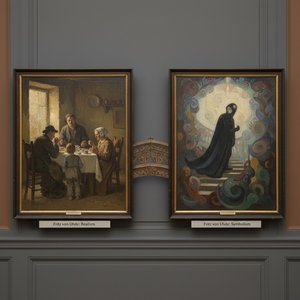
Fritz von Uhde: Bridging Realism & Symbolism in Late 19th-Century German Painting
Explore the captivating world of Fritz von Uhde, a pivotal German painter bridging Realism & Symbolism. Discover his plein-air techniques, religious themes, and influence on modern art. Learn about this fascinating artist at ArtsDot.

