 Ver en contexto
 Enviar
 Compartir
 Detalles

 Descargar
 Similares
 Radiografía
 Presentación de diapositivas
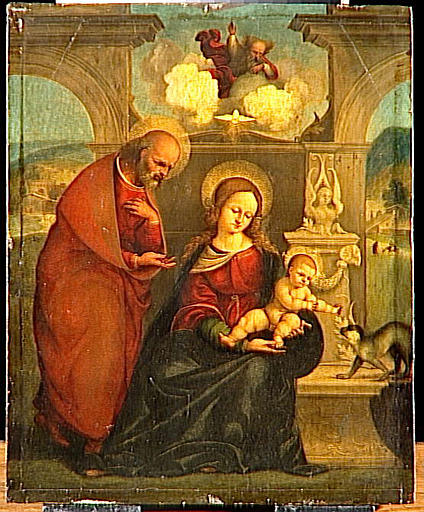
LA SAINTE FAMILLE ET LA SAINTE TRINITE.L'ENFANT JESUS PRESENTE A UN SINGE, SYMBOLE DU MAL, LES RAISINS DE LA PASSION QUE LUI TEND SAINT JOSEPH


 Ver más
Reproducción al óleo hecha a mano
Óleo sobre lienzo pintado a mano en el tamaño y marco de su elección, realizado por encargo por nuestros artistas. ( Comprar impresión Comprar imagen)




P118B $10

P118H $10

P118W $10

P438Z $10

P508JH $12

P508YH $12

P805H $10

P805Z $10

P919BZ $10

P919G $10

P919XJ $10

P959ZH $10

P968JZ $12

W106C $8

W218G $10

W218JH $8

W218Y $10

W307PJ $10

W316G $10

W316PJ $8

W316Y $10

W398PJ $8

W4111J $10

W500HY $15

W500JH $15

W692G $12

W849H $8

W940BG $15

W953PJ $8




Elija entre nuestros tamaños predefinidos que respetan las proporciones originales de la obra.

Puede ingresar sus propias dimensiones para adaptarse a un marco o espacio específico. Si el tamaño seleccionado no coincide con las proporciones de la imagen original, recortaremos la obra o extenderemos la pintura con elementos adicionales pintados a mano. Se le enviará una maqueta digital para su aprobación antes de comenzar la producción.
Tenga en cuenta que la vista previa en pantalla no refleja el recorte o la extensión reales. Solo la maqueta mostrará con precisión la composición final.
Si bien existen tamaños personalizados, recomendamos seleccionar una dimensión de la lista predefinida para preservar las proporciones originales.
Tras realizar el pedido, el equipo de ArtsDot.com enviará un correo electrónico al cliente para solicitar instrucciones y proporcionarle una vista previa del boceto.
Envío a todo el mundo () en 3-4 semanas en lugar de las 5 semanas estándar. (4 septiembre). Sin comprometer la calidad.

Envío exprés gratuito a todo el mundo

Lienzo de lino de alta calidad

Seguro de envío total

Garantía de reembolso de impuestos aduaneros

Garantía de fidelidad cromática exacta

Política de devolución de 60 días (solo por defectos)

Garantía de devolución del 100% del dinero

Descuento por cantidad
 La opción de vidrio solo está disponible en tamaños inferiores a 110 cm.

LA SAINTE FAMILLE ET LA SAINTE TRINITE.L'ENFANT JESUS PRESENTE A UN SINGE, SYMBOLE DU MAL, LES RAISINS DE LA PASSION QUE LUI TEND SAINT JOSEPH
Técnica de reproducción
Dimensiones de la reproducción
-


Precio total final
$ 313
A Vision of Divine Narrative: Exploring Mazzolino's Sacred Scene
To stand before this depiction of La Sainte Famille et la Sainte Trinité is to step directly into the devotional heart of the Italian Renaissance. Lodovico Mazzolino masterfully captures a moment charged with profound theological weight, far beyond a simple portrait of family life. The composition centers on the sacred figures—the Virgin Mary, the infant Jesus, and Saint Joseph—yet it pulses with an undercurrent of dramatic symbolism. One is immediately drawn into the rich narrative tapestry woven by the artist, whose technique speaks volumes about the artistic currents of the early 16th century.
Mastery in Form and Feeling: Style and Technique
Mazzolino’s handling of paint suggests a dedication to devotional cabinet pictures, characteristic of his period. The style exhibits a fascinating blend; while rooted in the detailed naturalism emerging from the Renaissance, there are subtle echoes of Mannerist elongation in the figures' grace and posture. Observe the drapery: it falls with rich folds, catching the dramatic light source that seems to emanate from within the scene itself. The technique, likely oil on wood panel, allows for a saturation of color—deep reds, earthy tones, and luminous skin passages—that gives the work an immediate, tangible presence. Though the perspective is not rigidly classical, it guides the eye inexorably toward the central mystery, creating a sense of sacred enclosure within the architectural setting.
The Weight of Symbolism: Interpreting the Details
What elevates this piece from mere religious illustration to profound art lies in its symbolism. The inclusion of the monkey, presented by the infant Jesus, is particularly arresting; it serves as a potent visual allegory for sin or the temptations of the flesh, juxtaposed against the purity of the divine lineage. Furthermore, Saint Joseph’s gesture, offering the grapes—a clear reference to the Passion—grounds the celestial event in human sacrifice and ultimate redemption. These elements invite contemplation, urging the viewer not just to look, but to interpret the deep currents of faith that Mazzolino so eloquently portrays.
An Echo for the Modern Collector
For those who appreciate art history, this reproduction offers an intimate connection to a pivotal moment in Italian painting. The emotional resonance is one of profound reverence and serene drama. Owning a piece inspired by Mazzolino allows one to bring home not just decoration, but a narrative anchor—a contemplation point for the modern sanctuary or drawing-room. It speaks to an enduring human need to connect with stories of grace, family, and divine mystery, rendered through the exquisite skill of a Renaissance master.
Obras relacionadas

Biografía del artista
Early Life and Training
Lodovico Mazzolino, also known as Mazzolini da Ferrara, Lodovico Ferraresa, and Il Ferrarese, was born in Ferrara, Italy, around 1480 – a pivotal year for the burgeoning Renaissance. His formative years were deeply intertwined with the artistic landscape of his native city, a region renowned for its rich patronage and vibrant creative scene. He began his artistic journey under the tutelage of Lorenzo Costa, a master painter whose workshop served as a crucible for talent during that era. Costa’s influence was particularly significant, shaping Mazzolino's early style and introducing him to the techniques and principles of the time. However, Mazzolino’s training extended beyond simply mimicking his teacher; he also drew inspiration from Ercole de’ Roberti, another prominent artist who had previously nurtured the talents of figures like Dosso Dossi and Cosimo Tura. This diverse exposure to artistic lineages contributed to the unique character of Mazzolino's work – a blend of influences that set him apart within the broader context of Renaissance painting.Artistic Style and Notable Works
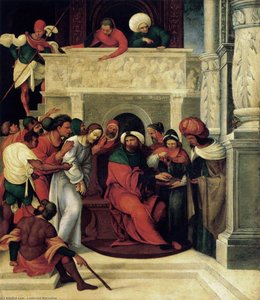
Mazzolino’s distinctive style is immediately recognizable by its captivating combination of devotional cabinet pictures, often imbued with a sense of primitivism or regressive charm when compared to the increasingly polished classicism prevalent during his time. These small-scale works, frequently depicting scenes from Christian iconography, were highly sought after by wealthy patrons and served as intimate objects of devotion. His paintings are characterized by a remarkable expressiveness, achieved through bold colors, dynamic compositions, and a willingness to embrace unconventional perspectives. Among his most celebrated achievements are “Christ and the Woman Taken in Adultery,” a poignant depiction of a biblical narrative; “The Nativity,” which captures the serene beauty of the Virgin Mary and infant Jesus; and “Christ disputing with the Doctors,” a complex composition that showcases Mazzolino’s ability to convey intellectual debate through visual means. These works, along with others like "Museological Significance" (available on ArtsDot.com), demonstrate his mastery of portraying religious themes with both emotional depth and artistic innovation.Museumological Significance and Personal Life
Mazzolino's legacy is preserved in several notable museums across Italy. The SS. Martino e Vittorio in Bologna houses a significant collection of Renaissance art, including several pieces attributed to Mazzolino that offer valuable insights into his oeuvre. The museum’s holdings provide a comprehensive overview of the artist’s career and demonstrate his enduring appeal as a master of devotional painting. Furthermore, Mazzolino's life was tragically cut short by the devastating plague that swept through Ferrara in 1528 – an event that robbed the art world of a promising talent before he could fully realize his potential. Despite this untimely demise, his work continues to be studied and admired for its unique blend of emotional intensity, technical skill, and artistic originality. More information about Mazzolino’s works can be found on ArtsDot.com.Legacy and Historical Context
Lodovico Mazzolino stands as a significant figure in the early Renaissance art of Italy, particularly within the context of Ferrara. His work represents a fascinating transitional phase between the stylistic conventions of the late Quattrocento and the more refined aesthetics of the High Renaissance. While he embraced certain classical influences, he retained a distinctly personal style characterized by a raw emotionality and an avoidance of overly formal arrangements. This approach resonated with contemporary viewers who appreciated his paintings for their sincerity and immediacy. Mazzolino’s influence extended beyond his own creations; his techniques and compositional strategies were adopted by later artists, contributing to the evolution of Italian painting during the 16th century. His story serves as a poignant reminder of the fragility of artistic genius and the enduring power of art to transcend time and connect with audiences across generations.
Ludovico Mazzolino
1480 - 1528 , Italia
Datos clave
- Artistic Movement Or Style: Imágenes devocionales
- Artists Or Movements Influenced By This Artist: ['Ercole Roberti']
- Artists Who Influenced This Artist: ['Lorenzo Costa']
- Date Of Birth: 1480, Ferrara, Italia
- Date Of Death: c. 1528
- Full Name: Ludovico Mazzolino
- Nationality: Italiane Renaissance
- Notable Artworks:
- Cristo y la mujer
- La Natividad
- Place Of Birth: Ferrara, Italia
Artículos relacionados

The Enduring Legacy of Oil on Canvas: Technique, History & Aesthetic Impact
Explore the rich history & techniques of oil painting – from Renaissance masters to Impressionism. Discover pigments, layering methods, and why this timeless medium endures. Expert insights for artists & art enthusiasts.

El Óleo sobre Lienzo: Historia, Técnica y la Persistencia de un Medio Artístico Atemporal
Descubre la historia y técnica del óleo sobre lienzo. Explora reproducciones fieles hechas a mano, personalización artística y consejos de expertos con ArtsDot. ¡Colecciona arte con confianza!

Oil on Board: A Historical Survey of Technique, Aesthetic Qualities & Enduring Appeal
Explore the rich history of oil on board painting! Discover techniques, aesthetic qualities & enduring appeal from early masters to modern practice. Expert insights for collectors and art enthusiasts.

The Enduring Power of Painting: A Historical & Contemporary Exploration of Form and Emotion
Explore the rich history & enduring techniques of oil painting with ArtsDot. Discover masterpieces, learn about art collecting, and find authentic handmade reproductions crafted by skilled artists.

El Legado Duradero del Óleo sobre Lienzo: Técnica, Historia y Práctica Contemporánea
Descubre la historia y técnica del óleo sobre lienzo. Explora reproducciones fieles hechas a mano, personalización artística y consejos de expertos con .