 Ver en contexto
 Enviar
 Compartir
 Detalles

 Descargar
 Similares
 Radiografía
 Presentación de diapositivas
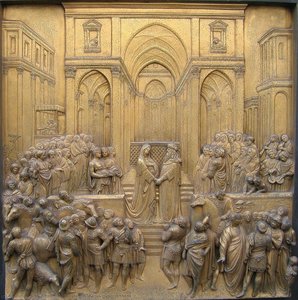
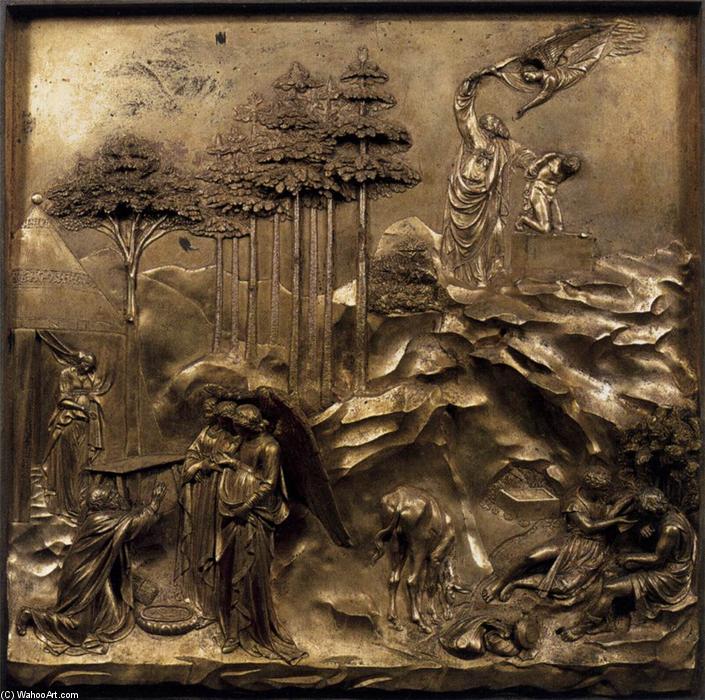
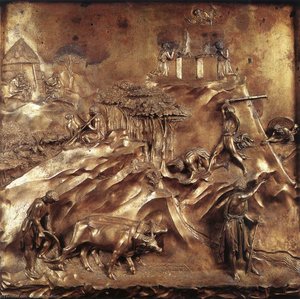
The Story of Abraham
 Acrílico
- Arte de pared
- Renaissance Humanism
 1425
1425 79.0 x 79.0 cm
 Bautismio
 Ver más
Giclée / Impresión de arte
Impresiones giclée o en lienzo de calidad de museo con producción rápida y opciones de acabado flexibles. ( Comprar pintura hecha a mano Comprar imagen)




P118B $10

P118H $10

P118W $10

P438Z $10

P508JH $12

P508YH $12

P805H $10

P805Z $10

P919BZ $10

P919G $10

P919XJ $10

P959ZH $10

P968JZ $12

W106C $8

W218G $10

W218JH $8

W218Y $10

W307PJ $10

W316G $10

W316PJ $8

W316Y $10

W398PJ $8

W4111J $10

W500HY $15

W500JH $15

W692G $12

W849H $8

W940BG $15

W953PJ $8




Elija entre nuestros tamaños predefinidos que respetan las proporciones originales de la obra.

Puede introducir sus propias dimensiones para adaptarse a un marco o espacio específico. Si el tamaño seleccionado no coincide con las proporciones de la imagen original, recortaremos la obra de arte o extenderemos la imagen con un borde con efecto espejo o de color sólido. Se enviará una maqueta digital para su aprobación antes de que comience la producción.
Tenga en cuenta que la vista previa en pantalla no refleja el recorte o la extensión real. Solo la maqueta mostrará con precisión la composición final.
Aunque existen tamaños personalizados, recomendamos seleccionar una dimensión de la lista predefinida para preservar las proporciones originales.
Envío a todo el mundo () en 2 semanas en lugar de las 4/5 semanas estándar. (26 agosto)

Envío exprés gratuito a todo el mundo

Lienzo de lino de alta calidad

Seguro de envío total

Garantía de reembolso de impuestos aduaneros

Garantía de fidelidad cromática exacta

Política de devolución de 60 días (solo por defectos)

Garantía de devolución del 100% del dinero

Descuento por cantidad
 La opción de vidrio solo está disponible en tamaños inferiores a 110 cm.

The Story of Abraham
Giclée / Impresión de arte
Dimensiones de la reproducción
-


Precio total final
$ 62
Descripción de la pieza
Lorenzo Ghiberti: The Sculptor Behind Florence’s Gates of Paradise
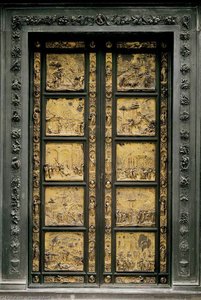
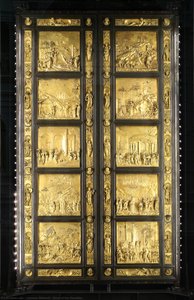
Florence Cathedral’s East Doors – known universally as “The Gates of Paradise” – stand as an unparalleled testament to Renaissance artistry and humanist vision. Crafted by Lorenzo Ghiberti between 1425 and 1452, these monumental bronze panels represent not merely decorative splendor but a profound engagement with biblical narrative and theological contemplation. Commissioned for the Baptistery of San Giovanni, the doors embody Florence’s ambition to elevate civic art to new heights, reflecting the city's intellectual ferment and its yearning for spiritual transcendence.A Masterpiece of Bronze Casting Technique
Ghiberti’s genius lay not only in his conceptual understanding but also in his mastery of bronze casting – a technique that was undergoing significant innovation during his lifetime. He employed the lost wax method, a process perfected by Aristides of Syracuse centuries earlier, to create intricate reliefs with astonishing detail and textural richness. This painstaking craft involved creating a wax model, investing it in molten metal, melting away the wax residue, and applying thin layers of clay to sculpt the final surface. The resulting patina – a greenish hue achieved through oxidation – lends an ethereal quality to the sculptures, enhancing their visual impact and conveying a sense of timeless beauty.Biblical Narrative Illuminated: Symbolism and Interpretation
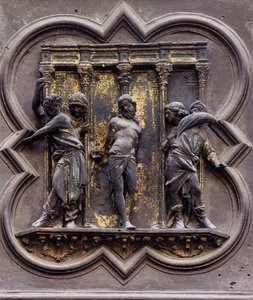
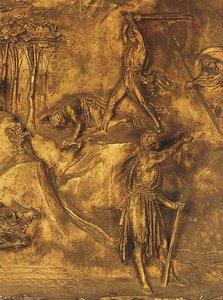
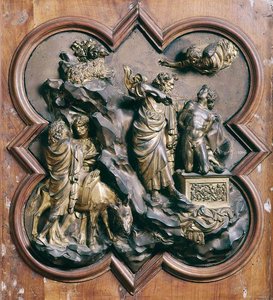
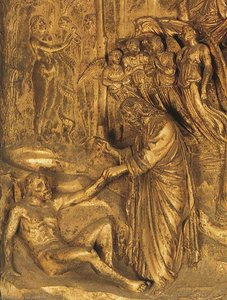
The Gates of Paradise depict ten scenes from Genesis, meticulously chosen to convey key theological themes. Each panel is imbued with symbolic resonance, reflecting Ghiberti’s humanist conviction that art could illuminate the spiritual dimension of human experience. The Sacrifice of Isaac, arguably the most poignant image, embodies the concept of atonement and foreshadows Christ's sacrificial death – a central dogma of Christian faith. Similarly, the Presentation at Cana symbolizes divine providence and celebrates the Eucharist, highlighting the transformative power of religious ritual. Angels appear throughout the panels, representing God’s grace and guiding humanity toward salvation. The meticulous depiction of flora and fauna underscores Ghiberti’s fascination with nature—a reflection of Renaissance humanist ideals that championed observation and understanding of the natural world.Historical Context: Florence at the Dawn of the Renaissance
Florence in the mid-fifteenth century was experiencing a remarkable cultural revival, fueled by patronage from wealthy families like the Medici and driven by intellectual currents emanating from Padua and Rome. Ghiberti’s work exemplifies this era's commitment to reviving classical ideals—particularly those championed by Plato and Aristotle—while simultaneously embracing Christian piety. The Gates of Paradise stand as a symbol of Florence’s aspiration to become the “cradle of humanity,” reflecting its belief in the potential for human reason and artistic creativity to elevate the soul. Michelangelo himself famously declared that Ghiberti's doors were "the most beautiful thing in the world," recognizing their enduring power to inspire awe and contemplation.Emotional Impact: A Vision of Divine Grace
The Gates of Paradise transcend mere visual representation; they evoke a profound emotional response in viewers—a sense of wonder, reverence, and spiritual illumination. The sculptures’ exquisite detail captures the human form with remarkable accuracy, conveying both physical beauty and psychological depth. Yet, it is the overarching narrative—the retelling of biblical stories—that imparts the Gates' most enduring significance. By confronting viewers with images of sacrifice, compassion, and divine grace, Ghiberti compels them to contemplate fundamental questions about faith, morality, and human destiny. The Doors continue to inspire artists and audiences alike, cementing Lorenzo Ghiberti’s legacy as one of the greatest sculptors in Renaissance history.Obras relacionadas
Biografía del artista
Lorenzo Ghiberti: Vida y Legado
Primeros Años y Formación
- Nacido en 1378 en Pelago, cerca de Florencia, Italia, Lorenzo di Bartolo – más tarde conocido como Lorenzo Ghiberti – comenzó su viaje artístico bajo la tutela de su padrastro, Bartolo di Michele, un orfebre.
- Recibió formación formal en pintura de Gherardo Starnina, ampliando sus habilidades más allá del trabajo con metales.
- El brote de la peste en 1400 lo llevó a Rimini, donde trabajó para Carlo I Malatesta, ayudando con frescos y desarrollando aún más su sensibilidad artística.
La Concurso de las Puertas del Baptisterio y Primer Éxito
- En 1401, Ghiberti regresó a Florencia y participó en un famoso concurso para diseñar las puertas de bronce para el Baptisterio de Florencia.
- Triunfó sobre competidores como Filippo Brunelleschi con su panel que representa el *Sacrificio de Isaac*, mostrando una habilidad e innovación notables.
- Esta victoria lanzó su carrera y le aseguró la comisión para las Puertas del Norte del Baptisterio.
Las Puertas del Norte y del Sur
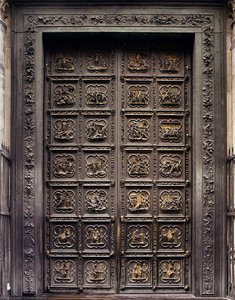
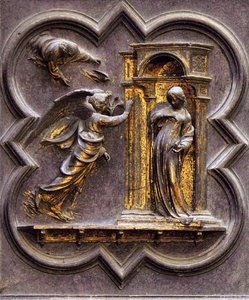
- Ghiberti pasó más de dos décadas creando las Puertas del Norte (completadas en 1424), que presentan escenas de la vida de Juan el Bautista.
- Su taller se convirtió en un centro para el talento artístico, nutriendo a futuros maestros como Donatello, Masolino y Paolo Uccello.
- Después del éxito de las Puertas del Norte, Ghiberti fue comisionado para crear un segundo conjunto – las Puertas del Este (completadas en 1452).
Las “Puertas del Paraíso”
- Las Puertas del Este, famosamente llamadas las “*Puertas del Paraíso*” por Miguel Ángel, representan la obra maestra de Ghiberti.
- Estas puertas representan escenas del Antiguo Testamento con un realismo, perspectiva y detalle artístico sin precedentes.
- Cada panel es un testimonio de su maestría en el fundido de bronce y la escultura relief.
Estilo Artístico e Influencias
- El estilo de Ghiberti fusionó la elegancia gótica con los principios emergentes del humanismo renacentista.
- Se inspiró en la antigüedad clásica, incorporando elementos del arte y la escultura romanos en su trabajo.
- Su meticuloso cuidado por el detalle, las representaciones naturalistas y el uso innovador de la perspectiva lo distinguieron de sus contemporáneos.
Commentarii y Legado
- Ghiberti escribió *Commentarii*, un tratado valioso sobre historia del arte, teoría y técnica – considerado uno de los primeros autobiografías de un artista.
- Murió en Florencia en 1455, dejando atrás un legado duradero como uno de los escultores más importantes del Renacimiento Temprano.
- Su obra influyó profundamente a las generaciones posteriores de artistas, dando forma al curso de la historia del arte occidental.
Significado Histórico
- Las contribuciones de Ghiberti fueron fundamentales para establecer Florencia como un centro artístico líder durante el Renacimiento.
- Las “Puertas del Paraíso” se convirtieron en un símbolo del orgullo cívico y el logro artístico florentino.
- Sus técnicas innovadoras y temas humanistas ayudaron a definir los ideales estéticos de la época, allanando el camino para futuros maestros como Leonardo da Vinci y Miguel Ángel.
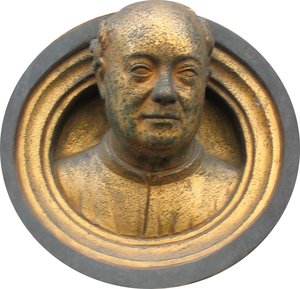
Lorenzo Ghiberti
1378 - 1455 , Italia
Datos clave
- Artistic Movement Or Style: Early Renaissance
- Artists Or Movements Influenced By This Artist:
- Donatello
- Masolino
- Paolo Uccello
- Artists Who Influenced This Artist:
- Gherardo Starnina
- Bartolo di Michele
- Date Of Birth: c. 1378
- Full Name: Lorenzo di Bartolo Ghiberti
- Nationality: Italian
- Notable Artworks:
- Puerta del Paraíso
- Sacrificio de Isaac
- Descubrimiento de la copa dorada
- Place Of Birth: Florence, Italia
Artículos relacionados

Las 10 Obras Maestras de Bronce que Revolucionaron la Historia del Arte | ArtsDot
Descubre las 10 esculturas de bronce más influyentes de la historia del arte. Explora obras maestras de Rodin, Degas y otros genios. Encuentra reproducciones de arte de calidad museo en ArtsDot.com.

Esculturas de Bronce Legendarias: 10 Obras Maestras que Transformaron el Arte | ArtsDot
Descubre las 10 esculturas de bronce más legendarias que revolucionaron el arte. Explora la historia de Rodin, Degas y otros maestros del bronce. Encuentra reproducciones de alta calidad e inspiración para tu hogar en ArtsDot.com.

The Enduring Legacy of Bronze: A Historical & Artistic Exploration for the Collector
Explore the rich history & enduring appeal of bronze sculpture with expert insights for collectors at ArtsDot. Learn about casting techniques, iconic artists, collecting tips & contemporary interpretations.
The Enduring Legacy of Bronze: History, Technique & Artistic Expression for the Collector
Explore the rich history & enduring appeal of bronze sculpture with expert insights for collectors at ArtsDot. Learn about casting techniques, iconic artists, and collecting tips.
The Enduring Legacy of Bronze Sculpture: A Collector's Guide to Form & Cultural Significance
Explore the rich history & enduring appeal of bronze sculpture with expert insights for collectors at ArtsDot. Learn about casting techniques, iconic artists, and collecting tips to build a discerning art collection.