 Ver en contexto
 Enviar
 Compartir
 Detalles

 Descargar
 Similares
 Radiografía
 Presentación de diapositivas
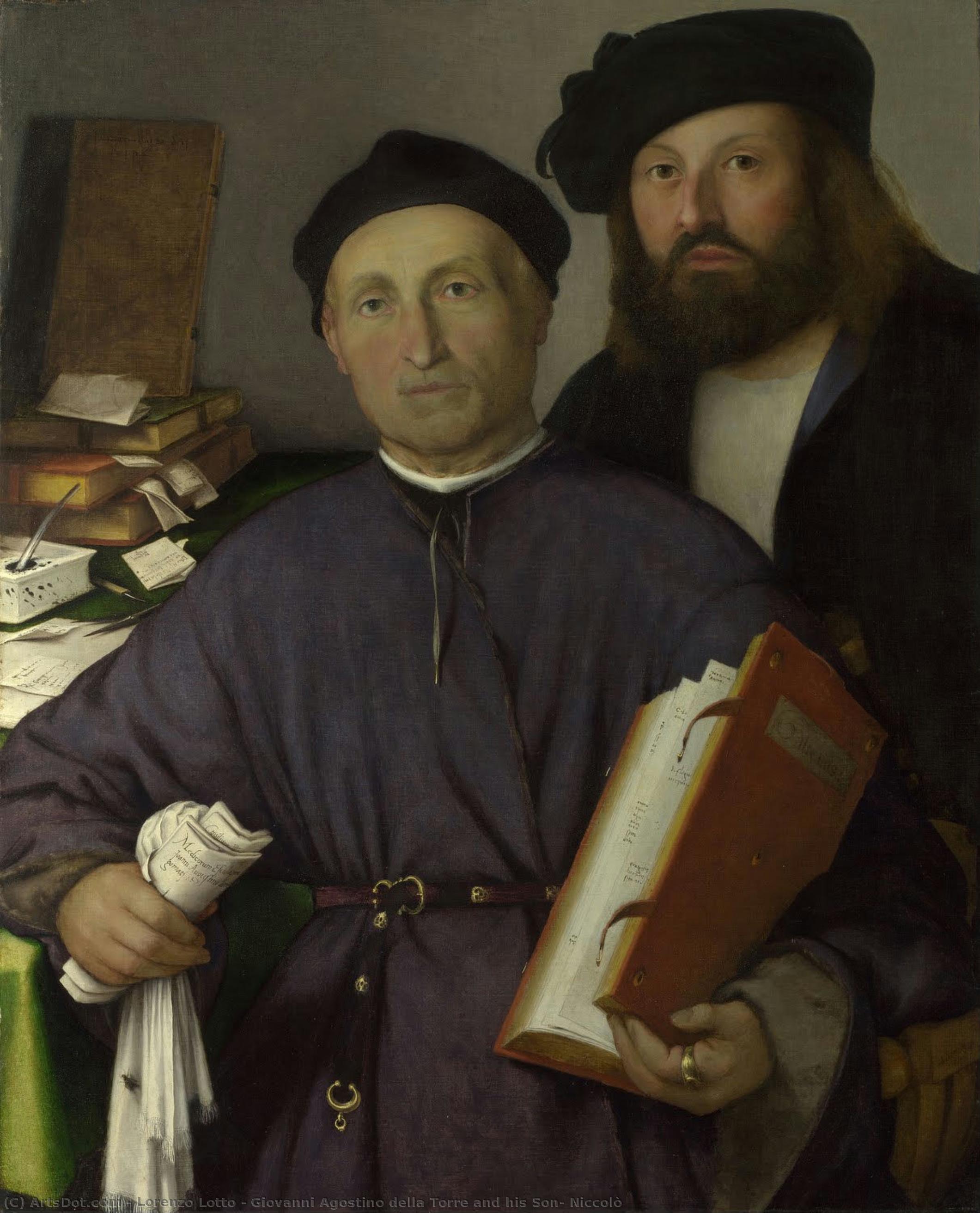
Giovanni Agostino della Torre and his Son, Niccolò
 Oil On Canvas
- WallArt
- High Renaissance
 1513
1513 85.0 x 68.0 cm
 Galería Nacional
 Ver más
Giclée / Impresión de arte
Impresiones giclée o en lienzo de calidad de museo con producción rápida y opciones de acabado flexibles. ( Comprar pintura hecha a mano Comprar imagen)




P118B $10

P118H $10

P118W $10

P438Z $10

P508JH $12

P508YH $12

P805H $10

P805Z $10

P919BZ $10

P919G $10

P919XJ $10

P959ZH $10

P968JZ $12

W106C $8

W218G $10

W218JH $8

W218Y $10

W307PJ $10

W316G $10

W316PJ $8

W316Y $10

W398PJ $8

W4111J $10

W500HY $15

W500JH $15

W692G $12

W849H $8

W940BG $15

W953PJ $8




Elija entre nuestros tamaños predefinidos que respetan las proporciones originales de la obra.

Puede introducir sus propias dimensiones para adaptarse a un marco o espacio específico. Si el tamaño seleccionado no coincide con las proporciones de la imagen original, recortaremos la obra de arte o extenderemos la imagen con un borde con efecto espejo o de color sólido. Se enviará una maqueta digital para su aprobación antes de que comience la producción.
Tenga en cuenta que la vista previa en pantalla no refleja el recorte o la extensión real. Solo la maqueta mostrará con precisión la composición final.
Aunque existen tamaños personalizados, recomendamos seleccionar una dimensión de la lista predefinida para preservar las proporciones originales.
Envío a todo el mundo () en 2 semanas en lugar de las 4/5 semanas estándar. (4 septiembre)

Envío exprés gratuito a todo el mundo

Lienzo de lino de alta calidad

Seguro de envío total

Garantía de reembolso de impuestos aduaneros

Garantía de fidelidad cromática exacta

Política de devolución de 60 días (solo por defectos)

Garantía de devolución del 100% del dinero

Descuento por cantidad
 La opción de vidrio solo está disponible en tamaños inferiores a 110 cm.

Giovanni Agostino della Torre and his Son, Niccolò
Giclée / Impresión de arte
Dimensiones de la reproducción
-


Precio total final
$ 62
A Scholar’s Embrace: Lorenzo Lotto’s Portrait of Giovanni Agostino della Torre and His Son
Lorenzo Lotto's 1515 portrait, “Giovanni Agostino della Torre and his Son, Niccolò,” is more than a simple depiction of father and son; it’s a meticulously crafted tableau of Renaissance intellect and familial devotion. Housed within the National Gallery in London, this oil-on-canvas masterpiece offers a rare glimpse into the life of a prominent Bergamo physician and his young heir, rendered with Lotto's signature blend of High Renaissance grace and subtly unsettling psychological depth.
The painting immediately draws the eye to Giovanni Agostino della Torre, seated on the left. His posture is dignified yet relaxed, suggesting a man accustomed to authority and learning. He wears the attire of a physician – a dark hat signifying his profession – and holds a book open before him, an emblem of his scholarly pursuits. His gaze is direct, engaging the viewer with a quiet confidence. Beside him stands Niccolò, his son, gazing intently at something beyond the frame, perhaps contemplating the future or absorbed in his own thoughts. The subtle asymmetry of their poses – Giovanni’s stillness contrasted with Niccolò's active observation – creates an immediate sense of dynamic tension within the composition.
A World of Knowledge: Symbolism and Context
The setting is crucial to understanding the portrait’s significance. Lotto has carefully arranged a background that speaks volumes about the family’s intellectual milieu. Scattered books, meticulously placed near the top and bottom edges of the canvas, suggest a vast repository of knowledge – a testament to Giovanni Agostino's dedication to medicine and learning. The presence of a chair on the right side further reinforces this scholarly atmosphere, implying a space for contemplation and study. Notably, scattered amongst these volumes are references to Galen, the ancient Greek physician whose works were foundational to medical thought, and Aesculapius, the god of healing, subtly weaving together classical learning with the practical realities of medicine.
The inscription on the book held by Giovanni Agostino – “Galienus” – is a deliberate nod to his expertise. The inclusion of these textual elements elevates the portrait beyond a mere likeness; it becomes a symbolic representation of the family’s intellectual heritage and their commitment to the pursuit of knowledge. The date, though now illegible, anchors the painting within its historical context—a period of burgeoning humanism and renewed interest in classical learning.
Lotto's Distinctive Style: Technique and Emotion
Lorenzo Lotto’s artistic style is immediately recognizable – a captivating blend of realism and psychological insight. He was known for his ability to capture the nuances of human emotion, often imbuing his subjects with an air of quiet introspection. In this portrait, Lotto masterfully conveys Giovanni Agostino's composure while simultaneously hinting at the complexities beneath the surface. The subtle shading and delicate rendering of fabrics contribute to a sense of realism, while Lotto’s characteristic use of color – particularly the rich reds and browns – adds depth and visual interest.
Notably, Lotto departed from strict High Renaissance ideals, introducing elements of Mannerism—a tendency towards elongated figures, distorted perspectives, and heightened emotional expression. This is evident in the slightly awkward positioning of the figures, a characteristic that sets Lotto apart from many of his contemporaries. His portraits are not simply representations of appearance; they are explorations of character and inner life.
A Legacy of Quiet Dignity
“Portrait of Giovanni Agostino della Torre and his Son, Niccolò” is a poignant testament to the values of Renaissance society—the importance of education, family, and intellectual pursuits. It’s a painting that invites contemplation, prompting viewers to consider not only the subjects themselves but also the broader context of their lives and times. Lotto's masterful technique and psychological acuity combine to create an enduring image of quiet dignity and familial connection – a timeless portrait that continues to resonate with audiences today.
Obras relacionadas
Biografía del artista
Primeros años y formación
Lorenzo Lotto, un destacado pintor, dibujante e ilustrador italiano, nació en Venecia alrededor de 1480. Sus primeros años y su formación no están bien documentados, pero se cree que estuvo influenciado por Giovanni Bellini, una figura destacada de la escuela veneciana.Estilo artístico e influencias
La obra de Lotto se caracteriza por una mezcla única del Alto Renacimiento y el manierismo. Sus pinturas a menudo presentan retablos, temas religiosos y retratos, mostrando su habilidad técnica y profundidad emocional. La influencia de Palma el Viejo, amigo de Giorgio Vasari, puede verse en los primeros trabajos de Lotto.Obras destacadas y ubicaciones
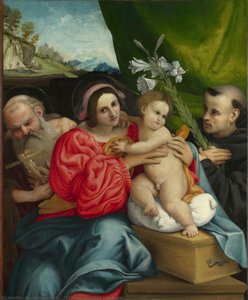
- Virgen y Niño con San Jerónimo (1506) (National Gallery of Scotland, Edimburgo)
- Alegoría de la virtud y el vicio (1505) (National Gallery of Art, Washington)
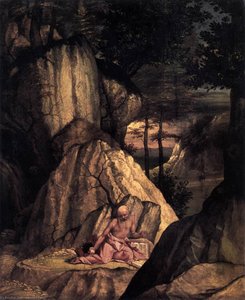
- San Jerónimo en el desierto (1500 o 1506) (Louvre, París)
Carrera y legado
La carrera de Lotto abarcó múltiples ubicaciones, incluyendo Treviso, Roma y Bergamo. Fue un pintor respetado en el norte de Italia, pero su obra fue en gran medida pasada por alto en Venecia. El estilo único de Lotto, que combinaba el clasicismo giorgionesco con los decorados dramáticos de Correggio, ha sido redescubierto en años recientes.Movimientos artísticos clave e influencias
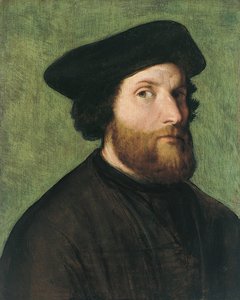
Lorenzo Lotto
1480 - 1556 , Italia
Datos clave
- Artistas Que Influyeron:
- Giovanni Bellini
- Palma el Viejo
- Giorgio Vasari
- Estilo Artístico: Renacimiento, Manierismo
- Fecha De Muerte: 1556
- Fecha De Nacimiento: 1480
- Lugar De Nacimiento: Venecia, Italia
- Nacionalidad: Italiana
- Nombre Completo: Lorenzo Lotto
- Obras Notables:
- Virgen y Niño con San Jerónimo
- Alegoría de la Virtud y el Vicio
- San Jerónimo en el desierto
Artículos relacionados
Lorenzo Lotto: Unveiling the Enigma of a Venetian Master's Portraits
Explore the captivating world of Lorenzo Lotto, a Venetian Renaissance master renowned for his psychologically insightful portraits & enigmatic symbolism. Discover his life, style, and rediscovered legacy with ArtsDot.
The Enduring Legacy of Formal Portraiture: Power, Identity & Artistic Exploration
Explore the rich history of formal portraiture & its enduring power to capture identity and shape perception. Discover investment-worthy artworks, expert appraisals, and custom reproduction services at ArtsDot.
The Enduring Gaze: Portraiture's Historical & Psychological Evolution
Explore the rich history of portraiture with expert analysis from ArtsDot. Discover iconic Renaissance masterpieces, symbolism & techniques that shaped identity. Find museum-quality art for your collection.
The Grandeur of Presence: Exploring Representations of Stately Bearing in Western Portraiture
Explore the art of stately bearing in Western portraiture with expert analysis of Renaissance & Baroque masterpieces. Discover symbolism, techniques, and the legacy of iconic portraits – a guide for discerning collectors.
The Enduring Gaze: A Historical & Artistic Exploration of Portraiture Across Cultures
Explore the rich history of portraiture with ArtsDot.com! Discover symbolism, techniques & master artists from antiquity to modern times. Expert insights for art collectors.