

 Ver en contexto
 Enviar
 Compartir
 Detalles

 Descargar
 Similares
 Radiografía
 Presentación de diapositivas
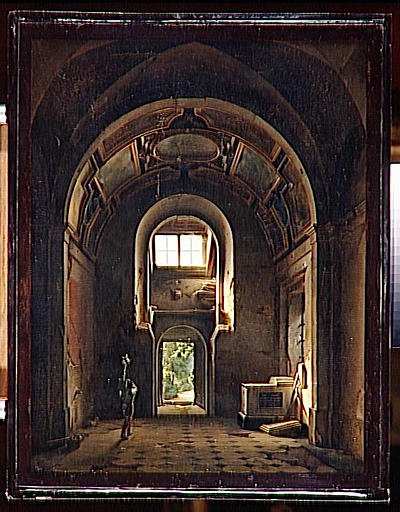
INTERIEUR D'UNE CHAPELLE DE L'EGLISE DES FEUILLANTS A PARIS


 Ver más
Reproducción al óleo hecha a mano
Óleo sobre lienzo pintado a mano en el tamaño y marco de su elección, realizado por encargo por nuestros artistas. ( Comprar impresión Comprar imagen)




P118B $10

P118H $10

P118W $10

P438Z $10

P508JH $12

P508YH $12

P805H $10

P805Z $10

P919BZ $10

P919G $10

P919XJ $10

P959ZH $10

P968JZ $12

W106C $8

W218G $10

W218JH $8

W218Y $10

W307PJ $10

W316G $10

W316PJ $8

W316Y $10

W398PJ $8

W4111J $10

W500HY $15

W500JH $15

W692G $12

W849H $8

W940BG $15

W953PJ $8




Elija entre nuestros tamaños predefinidos que respetan las proporciones originales de la obra.

Puede ingresar sus propias dimensiones para adaptarse a un marco o espacio específico. Si el tamaño seleccionado no coincide con las proporciones de la imagen original, recortaremos la obra o extenderemos la pintura con elementos adicionales pintados a mano. Se le enviará una maqueta digital para su aprobación antes de comenzar la producción.
Tenga en cuenta que la vista previa en pantalla no refleja el recorte o la extensión reales. Solo la maqueta mostrará con precisión la composición final.
Si bien existen tamaños personalizados, recomendamos seleccionar una dimensión de la lista predefinida para preservar las proporciones originales.
Tras realizar el pedido, el equipo de ArtsDot.com enviará un correo electrónico al cliente para solicitar instrucciones y proporcionarle una vista previa del boceto.
Envío a todo el mundo () en 3-4 semanas en lugar de las 5 semanas estándar. (4 septiembre). Sin comprometer la calidad.

Envío exprés gratuito a todo el mundo

Lienzo de lino de alta calidad

Seguro de envío total

Garantía de reembolso de impuestos aduaneros

Garantía de fidelidad cromática exacta

Política de devolución de 60 días (solo por defectos)

Garantía de devolución del 100% del dinero

Descuento por cantidad
 La opción de vidrio solo está disponible en tamaños inferiores a 110 cm.

INTERIEUR D'UNE CHAPELLE DE L'EGLISE DES FEUILLANTS A PARIS
Técnica de reproducción
Dimensiones de la reproducción
-


Precio total final
$ 263
A Symphony of Light and Shadow in the Heart of Paris
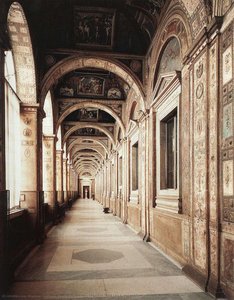
In the quiet, hallowed corridors of Louis Daguerre’s “Interior of a Chapel in the Church of the Feuillants in Paris,” we find much more than a mere architectural study; we encounter a profound meditation on the interplay between the earthly and the divine. As one gazes into this meticulously rendered space, the eye is immediately swept into a rhythmic dance of receding arches that create a breathtaking illusion of depth. This masterful use of linear perspective draws the viewer through layers of stone, columns, and shadows, guiding the soul toward a singular, luminous destination at the chapel's far end. It is a composition that breathes with the grandeur of the early 19th century, capturing a moment of stillness that feels both monumental and deeply intimate.
The atmosphere of the piece is defined by its exquisite use of chiaroscuro, a technique where the dramatic tension between light and dark imbues the scene with a palpable sense of mystery. Daguerre employs a subdued, earthy palette—rich browns, soft grays, and warm beiges—which allows the sudden flood of light from the distant altar window to act as a spiritual protagonist. This brilliance does not merely illuminate; it transforms the architectural elements, casting long, contemplative shadows that suggest the weight of history and the presence of the unseen. For the collector or interior designer, this painting offers a sophisticated anchor for a room, providing a sense of structural elegance and a quiet, dignified energy that can elevate any curated space.
The Visionary Hand of a Pioneer
To understand the soul of this artwork, one must consider the hand that held the brush. Louis Daguerre, a name forever etched in history as the father of photography, brought a scientist’s precision and a dramatist’s eye to his canvas. His background in theatre design and panoramic painting is evident in the way he orchestrates light to create a sense of theatrical spectacle within a sacred setting. Every texture, from the smooth surfaces of the stone arches to the subtle roughness of the floor tiles, is rendered with an unwavering commitment to realism that predates the photographic revolution he would later ignite. This piece serves as a beautiful bridge between the classical traditions of oil painting and the burgeoning fascination with capturing objective reality.
Beyond its technical brilliance, the painting resonates with deep symbolic resonance. The presence of the crucifix in the foreground serves as a silent sentinel, grounding the viewer in a context of devotion and spiritual contemplation. The journey from the shadowed foreground toward the radiant light at the end of the nave can be interpreted as a metaphor for enlightenment, hope, or the human quest for truth. It is this emotional depth—the ability to evoke feelings of solitude, reverence, and awe—that makes a high-quality reproduction of this work such a compelling choice for those seeking to infuse their homes or galleries with a sense of timelessness and intellectual grace.
Obras relacionadas
Biografía del artista
Louis Daguerre: The Father of Photography
Louis Daguerre (1787-1851) stands as a monumental figure in the annals of art history, yet his legacy is inextricably linked to a medium he revolutionized – photography. Born in Cormeilles-en-Parisy, France, Daguerre’s early life was marked by an apprenticeship in architecture and theatre design, disciplines that instilled within him a meticulous attention to detail and perspective—skills that would prove invaluable as he embarked on his groundbreaking scientific pursuits. He wasn't merely interested in aesthetics; he possessed a profound understanding of optics and the manipulation of light, recognizing its potential for artistic expression long before it was widely accepted as a viable art form. This intellectual curiosity fueled his determination to transcend conventional boundaries and forge new paths toward visual representation—a spirit that would define his entire career.Early Life & Training: A Foundation in Illusion
Daguerre’s formative years were spent honing his craft under Pierre Prévost, the pioneer of panoramic painting in France. This experience cultivated his mastery of theatrical illusion and instilled in him an appreciation for creating immersive visual experiences—a sensibility that would later translate into his innovative approach to diorama theatre. Prévost's influence extended beyond mere technique; it fostered a belief in the power of art to transport audiences to distant realms, shaping Daguerre’s vision of how images could communicate emotion and stimulate contemplation. He meticulously studied perspective and shading—essential elements for achieving realism—preparing him for the challenges inherent in capturing fleeting moments with unprecedented accuracy.The Diorama Theatre: Synthesizing Art & Technology
Daguerre’s contribution to the burgeoning Victorian entertainment landscape was truly transformative. He conceived and constructed the Diorama in Paris, a revolutionary theatrical spectacle that combined painted scenery with projected lighting effects to simulate realistic environments. This ambitious project cemented his reputation as a visionary artist and demonstrated his ability to synthesize artistic skill with technological innovation. The Diorama wasn’t simply about recreating landscapes or historical events; it was about crafting an emotional journey for the viewer—a feat accomplished through careful orchestration of color, light, and spatial depth. It represented Daguerre's conviction that art could elevate experience beyond mere observation, fostering a deeper connection between performer and audience.The Invention of Photography: A Paradigm Shift
Prior to Daguerre’s pivotal breakthrough, Nicéphore Niépce had painstakingly experimented with bitumen of Judea—a substance derived from asphalt—to produce the first surviving camera photograph. However, Niépce's process demanded exposures lasting for hours or even days, rendering it impractical for widespread adoption. Recognizing this limitation, Daguerre tirelessly pursued alternative methods utilizing silver salts, building upon earlier research by Johann Heinrich Schultz and others. His relentless dedication ultimately yielded a revolutionary technique—the daguerreotype—which dramatically shortened exposure times while preserving an astonishing level of detail. He meticulously analyzed the chemical reactions involved, striving to optimize each step of the process and unlock its full potential for artistic reproduction.The Daguerreotype Process: Capturing Light's Essence
Daguerre’s ingenious innovation involved exposing a thin silver-plated copper sheet to iodine vapor, creating a coating of light-sensitive silver iodide. This plate was then exposed in the camera, and subsequently developed using mercury vapor and sodium thiosulfate—a process that captured an image with remarkable accuracy. The resulting daguerreotype produced a unique tonal quality—a velvety smoothness achieved through the diffusion of light—that captivated artists and critics alike. Unlike traditional paintings, which relied on pigment to create color and texture, daguerreotypes offered a direct representation of light itself, prompting artists to reconsider their artistic priorities and explore new expressive possibilities. This breakthrough fundamentally altered the visual landscape, ushering in an era of unprecedented realism and transforming the way images were perceived and appreciated.A Legacy Beyond the Camera Lens: Artistic Influence & Remembrance
Daguerre’s impact extended far beyond the realm of photography itself. He championed the use of scientific instruments as tools for artistic exploration, arguing that “the most useful and extraordinary [...] instruments of science” were those capable of enhancing our perception of the world. His fascination with microscopy and telescopic imaging underscored his commitment to pushing the boundaries of visual observation—a spirit that resonated throughout the Victorian era and beyond. Furthermore, Daguerre’s name is etched onto the Eiffel Tower, symbolizing France’s embrace of innovation and technological advancement. He is remembered not merely for inventing photography but for reshaping artistic conventions and inspiring countless artists to explore new frontiers of creative expression – a testament to his enduring brilliance and transformative legacy.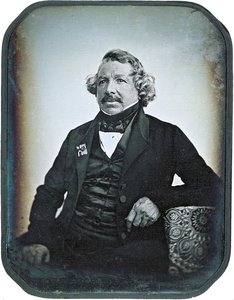
Louis Daguerre
1787 - 1851 , Francia
Datos clave
- Artistic Movement Or Style: Romanticismo
- Artists Or Movements Influenced By This Artist: ['Fotografía']
- Artists Who Influenced This Artist: ['Nicéphore Niépce']
- Date Of Birth: Noviembre 18, 1787
- Date Of Death: Julio 10, 1851
- Full Name: Louis-Jacques-Mandé Daguerre
- Nationality: Francés
- Notable Artworks:
- Ruinas de la Capilla Real
- Interior de la Capilla Rosslyn
- Valle al atardecer
- Place Of Birth: Cormeilles-en-Parisy, Francia
Artículos relacionados

The Enduring Legacy of Oil on Canvas: Technique, History & Aesthetic Impact
Explore the rich history & techniques of oil painting – from Renaissance masters to Impressionism. Discover pigments, layering methods, and why this timeless medium endures. Expert insights for artists & art enthusiasts.
Michelangelo Buonarroti: Las 25 Obras Maestras que Definen un Genio del Renacimiento | ArtsDot
Descubre las 25 obras maestras de Michelangelo Buonarroti: del David a la Capilla Sixtina. Explora su historia, técnica y significado en el Renacimiento italiano. Reproducciones de arte exclusivas para tu hogar en ArtsDot.com.

El Óleo sobre Lienzo: Historia, Técnica y la Persistencia de un Medio Artístico Atemporal
Descubre la historia y técnica del óleo sobre lienzo. Explora reproducciones fieles hechas a mano, personalización artística y consejos de expertos con ArtsDot. ¡Colecciona arte con confianza!

The Enduring Power of Painting: A Historical & Contemporary Exploration of Form and Emotion
Explore the rich history & enduring techniques of oil painting with ArtsDot. Discover masterpieces, learn about art collecting, and find authentic handmade reproductions crafted by skilled artists.
10 Obras Maestras al Óleo sobre Tabla que Revolucionaron la Historia del Arte | ArtsDot
Descubre 10 obras maestras al óleo sobre tabla que revolucionaron el arte. Explora la historia de Van Gogh, Monet y otros artistas clave. Encuentra reproducciones de alta calidad e inspírate para decorar tu hogar con ArtsDot.com.

