 Ver en contexto
 Enviar
 Compartir
 Detalles

 Descargar
 Similares
 Radiografía
 Presentación de diapositivas
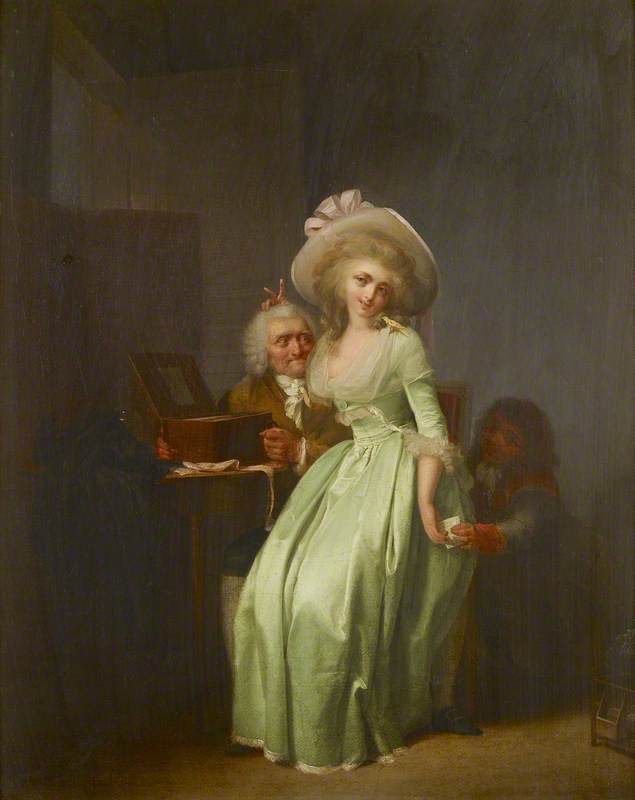
A young Woman mocking an elderly Admirer


 Ver más
Giclée / Impresión de arte
Impresiones giclée o en lienzo de calidad de museo con producción rápida y opciones de acabado flexibles. ( Comprar pintura hecha a mano Comprar imagen)




P118B $10

P118H $10

P118W $10

P438Z $10

P508JH $12

P508YH $12

P805H $10

P805Z $10

P919BZ $10

P919G $10

P919XJ $10

P959ZH $10

P968JZ $12

W106C $8

W218G $10

W218JH $8

W218Y $10

W307PJ $10

W316G $10

W316PJ $8

W316Y $10

W398PJ $8

W4111J $10

W500HY $15

W500JH $15

W692G $12

W849H $8

W940BG $15

W953PJ $8




Elija entre nuestros tamaños predefinidos que respetan las proporciones originales de la obra.

Puede introducir sus propias dimensiones para adaptarse a un marco o espacio específico. Si el tamaño seleccionado no coincide con las proporciones de la imagen original, recortaremos la obra de arte o extenderemos la imagen con un borde con efecto espejo o de color sólido. Se enviará una maqueta digital para su aprobación antes de que comience la producción.
Tenga en cuenta que la vista previa en pantalla no refleja el recorte o la extensión real. Solo la maqueta mostrará con precisión la composición final.
Aunque existen tamaños personalizados, recomendamos seleccionar una dimensión de la lista predefinida para preservar las proporciones originales.
Envío a todo el mundo () en 2 semanas en lugar de las 4/5 semanas estándar. (25 agosto)

Envío exprés gratuito a todo el mundo

Lienzo de lino de alta calidad

Seguro de envío total

Garantía de reembolso de impuestos aduaneros

Garantía de fidelidad cromática exacta

Política de devolución de 60 días (solo por defectos)

Garantía de devolución del 100% del dinero

Descuento por cantidad
 La opción de vidrio solo está disponible en tamaños inferiores a 110 cm.

A young Woman mocking an elderly Admirer
Giclée / Impresión de arte
Dimensiones de la reproducción
-


Precio total final
$ 62
Descripción de la pieza
The Enigmatic Glance: Louis Léopold Boilly’s “A Young Woman Mocking an Elderly Admirer”
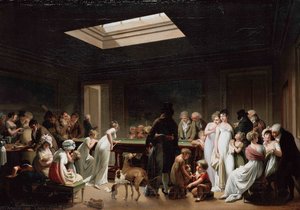
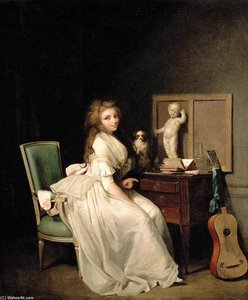
Louis Léopold Boilly's "A Young Woman Mocking an Elderly Admirer," housed within the Ashmolean Museum in Oxford, isn’t merely a painting; it’s a meticulously crafted snapshot of 19th-century Parisian life – a vibrant tableau brimming with social commentary and subtle psychological drama. Completed around 1800, this oil on canvas offers a glimpse into the bustling world of the French middle class, capturing a fleeting moment of playful defiance within a richly detailed domestic setting. The painting immediately draws the eye to its central figure: a young woman, dressed in a striking green gown adorned with a delicate white hat, who holds court with an air of confident amusement. Her gaze, direct and slightly challenging, pierces through the scene, engaging the viewer directly and hinting at a complex interplay of emotions.
The setting itself is crucial to understanding the painting’s narrative. A seated elderly gentleman, clad in a brown coat, occupies a table, seemingly engrossed in a book – an image of quiet contemplation. However, his attention is undeniably drawn to the young woman's performance, suggesting a dynamic of admiration and perhaps even gentle mockery. To the left, another figure adds further layers to the scene, their activity obscured but undoubtedly contributing to the overall atmosphere of social interaction. The dimly lit room, with its arched window offering a glimpse of an unseen exterior, creates a sense of intimacy while simultaneously emphasizing the enclosed nature of this particular moment.
Neoclassical Precision and Parisian Realism
Boilly’s artistic style is characterized by a remarkable blend of Neoclassical precision and a keen observation of everyday life. He was a master of *contre-peinture*, a technique that allowed him to create the illusion of three-dimensional objects within a flat surface – evident in the meticulously rendered details of the furniture, fabrics, and even the shadows cast across the room. This meticulous attention to detail is further enhanced by his skillful use of color, creating a harmonious yet subtly complex palette that reflects the nuances of light and atmosphere. The painting’s composition adheres closely to Neoclassical principles, with a balanced arrangement of figures and elements contributing to a sense of order and stability – a deliberate contrast to the often chaotic nature of Parisian society.
However, Boilly wasn't simply replicating reality; he was interpreting it. He possessed an astute understanding of human psychology and social dynamics, which he skillfully employed to convey subtle emotions and unspoken tensions. The young woman’s smirk, for instance, isn’t overtly aggressive but rather a playful challenge – a demonstration of her control over the situation and a subtle commentary on the expectations placed upon women in that era. The elderly gentleman's posture suggests a mixture of amusement and perhaps a touch of vulnerability, highlighting the complexities of social relationships.
Symbolism and Social Commentary
Beyond its immediate visual appeal, “A Young Woman Mocking an Elderly Admirer” offers a rich tapestry of symbolic meaning. The painting can be interpreted as a commentary on the shifting power dynamics between generations and genders in 19th-century France. The young woman’s defiance represents a rejection of traditional social constraints, while the elderly gentleman embodies the established order – a figure whose authority is subtly undermined by her playful challenge. The inclusion of the third figure adds another layer to this dynamic, suggesting the presence of an observer or perhaps a catalyst for the unfolding drama.
Furthermore, the painting reflects the broader social trends of the time – the rise of the middle class, the increasing urbanization of Paris, and the changing roles of men and women. Boilly’s meticulous depiction of Parisian life provides valuable insights into the customs, fashions, and attitudes of this era. The scene is a microcosm of society, capturing the tensions, contradictions, and complexities of everyday existence.
A Timeless Portrait of Human Interaction
“A Young Woman Mocking an Elderly Admirer” remains a captivating work of art due to its masterful execution, subtle symbolism, and enduring relevance. It’s more than just a pretty picture; it's a poignant meditation on human relationships, social dynamics, and the complexities of identity. Reproductions of this painting offer a remarkable opportunity to bring this evocative scene into your home or office, allowing you to appreciate Boilly’s artistic genius and gain a deeper understanding of 19th-century Parisian society. Consider framing it in a classic style to complement its Neoclassical aesthetic – a testament to the enduring beauty and timeless appeal of this extraordinary artwork.
Obras relacionadas
Biografía del artista
Louis Léopold Boilly: Una Vida Dedicada al Retrato y a la Sociedad Parisina
- Nacido: 5 de julio de 1761, La Bassée, Francia
- Fallecido: 4 de enero de 1845, París, Francia
Primeros Años y Desarrollo Artístico
- La trayectoria artística de Boilly comenzó temprano; produjo obras a la edad de doce años. En gran medida autodidacta, su formación inicial incluyó la pintura de trampantojo bajo la tutela de Dominique Doncre.
- Su talento fue reconocido por los agustinos de Douai en 1774, lo que llevó a una invitación del Obispo de Arras. Este período vio la creación de más de trescientas pequeñas pinturas al óleo.
- Las primeras obras a menudo presentaban temas amorosos y moralizantes, demostrando una habilidad creciente para capturar rasgos y detalles.
Estilo Artístico y Obras Clave
- Estilo: El estilo de Boilly se caracteriza por el meticuloso detalle, los colores cuidadosos y un enfoque en la representación de la vida cotidiana dentro de la clase media francesa. Combinó hábilmente el retrato con escenas de género.
- Evolución: Después de 1794, sus composiciones se volvieron más abarrotadas, reflejando la bulliciosa escena social de París. Sus retratos obtuvieron un amplio reconocimiento, con más de 5000 pintados a lo largo de su carrera.
- Obras Notables:
- El Regalo del Pretendiente – Una obra temprana que muestra temas amorosos y meticuloso detalle.
- Triunfo de Marat – Una pieza patriótica creada para evitar la condena durante el Reinado del Terror.
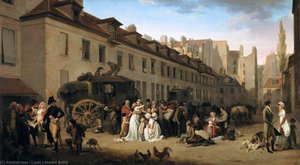
- La Llegada de un Coche de Correo al Patio de las Mensajerías – Una vibrante representación de la vida parisina y el transporte.
- Ilusiones Ópticas: Boilly estaba fascinado por la óptica, como lo demuestran obras como *Un Trampantojo*, que introdujo el término para describir su técnica de crear imágenes realistas que imitan objetos tridimensionales.
Reconocimiento y Legado
- Éxito en el Salón: Boilly recibió una medalla del Salón de París en 1804, lo que solidificó su reputación como artista habilidoso.
- Honores: Fue condecorado como Caballero de la Legión de Honor en 1833, reconociendo sus contribuciones al arte francés.
- Influencia Familiar: Su hijo, Alphonse Boilly, se convirtió en grabador profesional y aprendió el oficio en Nueva York con Asher Brown Durand.
- Significado Histórico: La obra de Boilly proporciona valiosas perspectivas sobre las costumbres sociales, la moda y la vida cotidiana de la clase media francesa durante un período de importantes cambios políticos. Es recordado como uno de los retratistas y pintores de género más celebrados de Francia.
Colecciones en Museos
- Musée des Beaux Arts, Lille: Alberga Triunfo de Marat entre otras obras.
- Museo del Louvre: Presenta selecciones de la extensa obra de Boilly.
- National Gallery of Art (Washington D.C.): Posee varias pinturas incluyendo *Autorretrato*, *Les Amateurs de Tableaux* y *El Público en el Salón del Louvre, Vistiendo la Pintura del "Sagrado"*.
- Getty Museum: Alberga una colección de obras de Boilly.
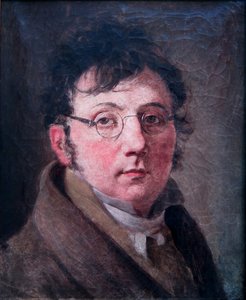
Luis Leopoldo Boilly
1761 - 1845 , Francia
Datos clave
- Artistas Que Influyeron:
- Gabriel Metsu
- Willem van Mieris
- Gerard ter Borch
- Fecha De Fallecimiento: 4 de enero de 1845
- Fecha De Nacimiento: 5 de julio de 1761
- Lugar De Nacimiento: La Bassée, Francia
- Movimiento Artístico: Pintura de género, Retrato
- Nacionalidad: Francés
- Nombre Completo: Louis Léopold Boilly
- Obras Notables:
- El regalo del pretendiente
- Triunfo de Marat
- Llegada de un correo
Artículos relacionados
Reflections of an Era: Identity & Social Commentary in 19th-Century Portraiture
Explore the captivating world of 19th-century portraiture! Discover key artists, movements like Realism & Impressionism, and the powerful social commentary embedded within these iconic artworks. Expert insights at ArtsDot.

The Enduring Legacy of Formal Portraiture: Power, Identity & Artistic Exploration
Explore the rich history of formal portraiture & its enduring power to capture identity and shape perception. Discover investment-worthy artworks, expert appraisals, and custom reproduction services at ArtsDot.
Charles-André van Loo: A Study in Rococo Portraiture & the French Court's Artistic Dynamics
Explore the elegant world of Charles-André van Loo, a master of Rococo portraiture at the French court. Discover his life, techniques, and enduring influence on 18th-century art. Hand-painted reproductions available.
Jean-Georges Béraud: Capturing Parisian Life in the Belle Époque
Explore the captivating world of Jean-Georges Béraud, master painter of Belle Époque Paris. Discover his iconic scenes, artistic evolution, and social commentary. A deep dive into 19th-century French art.
The Grandeur of Presence: Exploring Representations of Stately Bearing in Western Portraiture
Explore the art of stately bearing in Western portraiture with expert analysis of Renaissance & Baroque masterpieces. Discover symbolism, techniques, and the legacy of iconic portraits – a guide for discerning collectors.