 Ver en contexto
 Enviar
 Compartir
 Detalles

 Descargar
 Similares
 Radiografía
 Presentación de diapositivas
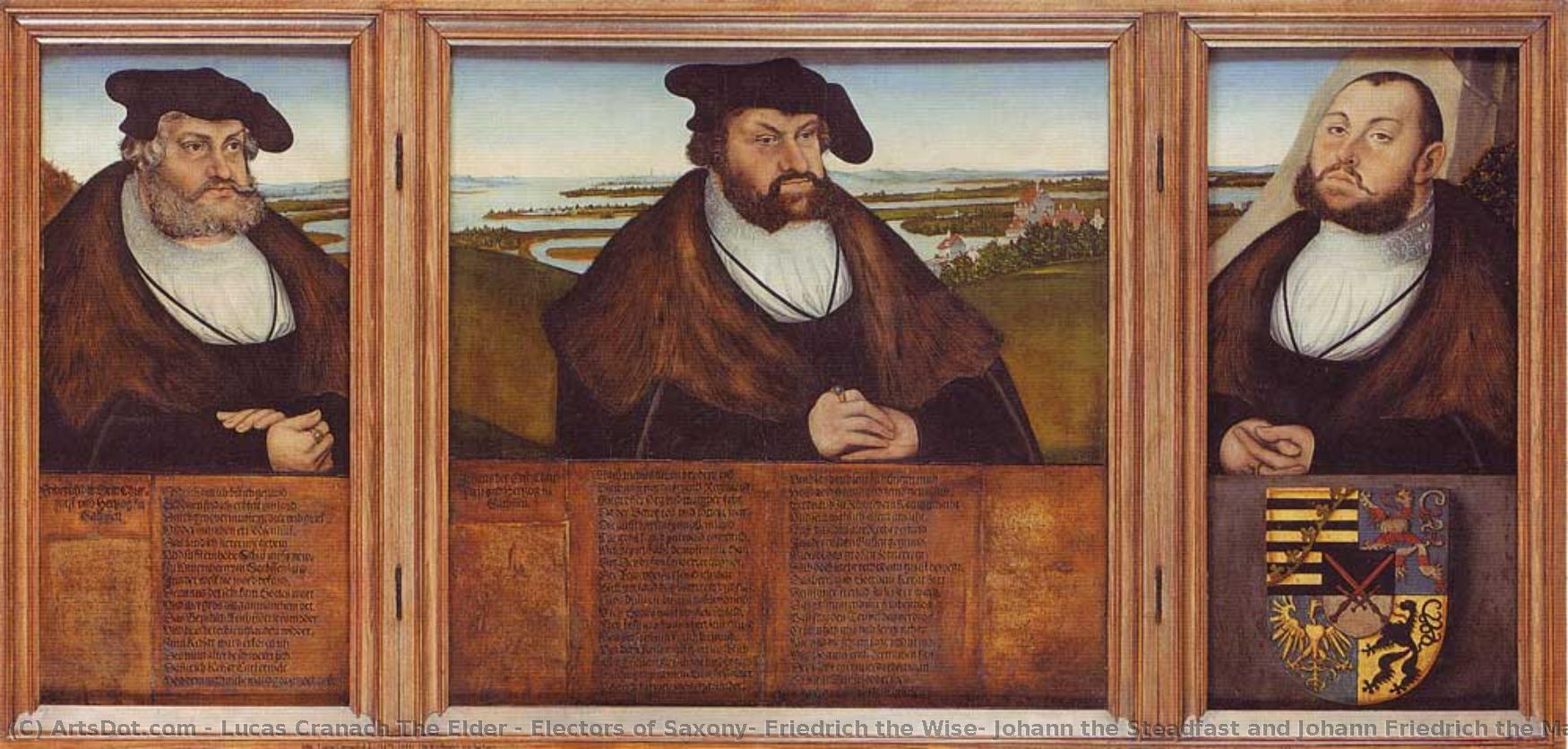
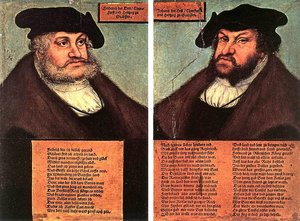
Electors of Saxony: Friedrich the Wise, Johann the Steadfast and Johann Friedrich the Magnanimous
 Oil On Canvas
- WallArt
- Northern Renaissance
 1532
1532 69.0 x 132.0 cm
 Hamburger Kunsthalle
 Ver más
Reproducción al óleo hecha a mano
Óleo sobre lienzo pintado a mano en el tamaño y marco de su elección, realizado por encargo por nuestros artistas. ( Comprar impresión Comprar imagen)




P118B $10

P118H $10

P118W $10

P438Z $10

P508JH $12

P508YH $12

P805H $10

P805Z $10

P919BZ $10

P919G $10

P919XJ $10

P959ZH $10

P968JZ $12

W106C $8

W218G $10

W218JH $8

W218Y $10

W307PJ $10

W316G $10

W316PJ $8

W316Y $10

W398PJ $8

W4111J $10

W500HY $15

W500JH $15

W692G $12

W849H $8

W940BG $15

W953PJ $8




Elija entre nuestros tamaños predefinidos que respetan las proporciones originales de la obra.

Puede ingresar sus propias dimensiones para adaptarse a un marco o espacio específico. Si el tamaño seleccionado no coincide con las proporciones de la imagen original, recortaremos la obra o extenderemos la pintura con elementos adicionales pintados a mano. Se le enviará una maqueta digital para su aprobación antes de comenzar la producción.
Tenga en cuenta que la vista previa en pantalla no refleja el recorte o la extensión reales. Solo la maqueta mostrará con precisión la composición final.
Si bien existen tamaños personalizados, recomendamos seleccionar una dimensión de la lista predefinida para preservar las proporciones originales.
Tras realizar el pedido, el equipo de ArtsDot.com enviará un correo electrónico al cliente para solicitar instrucciones y proporcionarle una vista previa del boceto.
Envío a todo el mundo () en 3-4 semanas en lugar de las 5 semanas estándar. (27 agosto). Sin comprometer la calidad.

Envío exprés gratuito a todo el mundo

Lienzo de lino de alta calidad

Seguro de envío total

Garantía de reembolso de impuestos aduaneros

Garantía de fidelidad cromática exacta

Política de devolución de 60 días (solo por defectos)

Garantía de devolución del 100% del dinero

Descuento por cantidad
 La opción de vidrio solo está disponible en tamaños inferiores a 110 cm.

Electors of Saxony: Friedrich the Wise, Johann the Steadfast and Johann Friedrich the Magnanimous
Técnica de reproducción
Dimensiones de la reproducción
-


Precio total final
$ 263
Descripción de la obra
A Portrait of Power and Reformation
Lucas Cranach the Elder’s “Electors of Saxony: Friedrich the Wise, Johann the Steadfast and Johann Friedrich the Magnanimous,” painted in 1532, is more than just a depiction of three men; it's a meticulously crafted tableau of dynastic ambition, religious transition, and the burgeoning power of the Protestant Reformation. The painting, rendered in oil on beechwood with elegant letterpress labels, captures a pivotal moment in Saxon history – a time when the Electorate navigated the turbulent waters of political maneuvering and spiritual upheaval. Cranach’s masterful use of color, light, and detail elevates this portrait beyond a simple likeness, transforming it into a potent symbol of authority and a testament to his artistic skill.
The subjects themselves – Friedrich III, Johann the Steadfast, and Johann Friedrich the Magnanimous – represent three generations of Saxon rulers. Each man is presented with an almost regal composure, clad in richly embroidered velvet robes and adorned with elaborate fur trim, indicative of their elevated status. The careful attention to detail—the intricate folds of their garments, the glint of gold on their jewelry, even the subtle expressions on their faces – speaks volumes about Cranach’s dedication to realism and his ability to capture the essence of his subjects. The inclusion of the coats of arms on the wings of the painting further reinforces their identities and underscores their roles as leaders within the Saxon realm.
Renaissance Portraiture and the Rise of Protestantism
Cranach’s work falls squarely within the Northern Renaissance style, a period characterized by a shift away from the stylized elegance of the Italian Renaissance towards a more naturalistic approach. However, this painting is deeply intertwined with the religious currents of the time. The Reformation was gaining momentum, challenging the established authority of the Catholic Church, and Cranach, while initially a devout Catholic, found himself increasingly sympathetic to the reformers’ cause. This shift is subtly reflected in the portrait – not through overt displays of Protestant symbolism, but rather through a heightened sense of realism and an emphasis on individual character.
The painting was commissioned during a period of significant political and religious change. Frederick III, the “Wise” Elector, was a shrewd diplomat who skillfully navigated the complex relationships between the Holy Roman Empire, the Catholic Church, and the emerging Protestant factions. His patronage of Cranach provided him with a powerful tool for propaganda – portraits that celebrated his lineage, reinforced his authority, and subtly promoted the values he championed. The painting’s creation coincided with the rise of Martin Luther, whose theological challenges were shaking the foundations of Christendom. While not explicitly depicting Luther, the portrait reflects the broader atmosphere of questioning and reform that permeated the era.
Symbolism and Artistic Technique
Cranach's technique is remarkable for its precision and attention to detail. He employs a sophisticated use of chiaroscuro – the contrast between light and shadow – to create a sense of depth and volume, bringing the figures to life on the panel. The rich colors—deep reds, blues, and greens—are carefully balanced to create a harmonious composition. The background landscape, rendered in a muted palette, provides a subtle yet effective backdrop for the central figures, anchoring them within their historical context.
Beyond its technical brilliance, the painting is laden with symbolism. The elaborate clothing and jewelry represent wealth, power, and status. The careful positioning of the three men—Friedrich in the center, followed by Johann the Steadfast, and then Johann Friedrich—reflects the established order of succession within the Electorate. The inclusion of the letterpress labels, a relatively new practice at the time, served to authenticate the portraits and reinforce their importance as official representations of the ruling family. The painting is a testament to Cranach’s ability to seamlessly blend artistic skill with historical narrative.
A Legacy of Power and Art
“Electors of Saxony: Friedrich the Wise, Johann the Steadfast and Johann Friedrich the Magnanimous” remains a captivating work of art, offering a glimpse into the complex world of 16th-century Saxon politics and religion. It’s a powerful reminder of the enduring legacy of Lucas Cranach the Elder – a master painter who not only captured the likenesses of his patrons but also skillfully embedded them within a rich tapestry of historical significance. Reproductions of this iconic portrait continue to resonate with art lovers and collectors alike, serving as a window into a pivotal moment in European history.
Obras relacionadas
Biografía del artista
Primeros años y formación
Lucas Cranach el Viejo, un destacado pintor y grabador del Renacimiento alemán, nació en 1472 en Kronach, Alta Franconia. Aunque la fecha exacta de su nacimiento es desconocida, se sabe que aprendió las artes del dibujo de su padre, Hans Maler, y posteriormente desarrolló sus habilidades bajo la tutela de maestros locales del sur alemán.Carrera y logros destacados
La habilidad de Cranach atrajo la atención del duque Federico III de Sajonia, también conocido como Federico el Sabio. En 1504, se convirtió en pintor de la corte de los electores de Sajonia en Wittenberg, un puesto que ocupó durante la mayor parte de su carrera.- Fue reconocido por sus retratos de príncipes alemanes y líderes de la Reforma protestante, incluyendo a Martín Lutero.
- Cranach también pintó temas religiosos, inicialmente dentro de la tradición católica, pero posteriormente explorando nuevas formas de expresar las preocupaciones luteranas en el arte.
- Su taller produjo numerosas obras, incluyendo versiones continuadas por su hijo Lucas Cranach el Joven, y otros artistas incluso después de su muerte.
Estilo artístico y evolución
El estilo artístico de Cranach evolucionó a lo largo de su carrera. Inicialmente influenciado por la escuela del Danubio, sus primeras obras muestran un uso poético del paisaje. A medida que se estableció en Wittenberg, desarrolló un estilo distintivo caracterizado por:- Retratos expresivos: Sus retratos capturan no solo la apariencia física de los sujetos, sino también su personalidad y estatus social.
- Temas religiosos innovadores: Cranach introdujo elementos luteranos en sus obras religiosas, desafiando las convenciones artísticas tradicionales.
- Uso del grabado: Fue un maestro grabador, produciendo numerosas xilografías y aguafortas que difundieron su arte a una audiencia más amplia.
Obras notables y colaboraciones
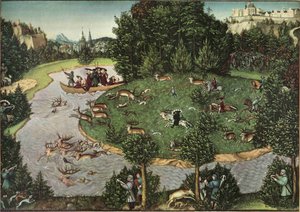
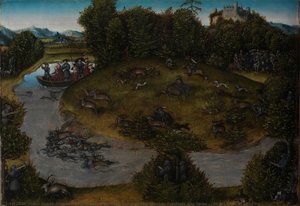
Entre las obras más destacadas de Lucas Cranach el Viejo se encuentran:- La Caza del Ciervo del Elector Federico III el Sabio (1529), una obra maestra que muestra su habilidad para capturar la esencia del estilo renacentista nórdico.
- Autorretrato, una representación impactante del artista, que exhibe su dominio de la luz y la sombra.
- El anuncio a Joaquín (1516-18), una escena llena de espíritu alegre, actualmente en el Museo de Bellas Artes de Budapest.
Legado e importancia histórica
El legado de Lucas Cranach el Viejo reside en sus significativas contribuciones al movimiento artístico del Renacimiento alemán. Como figura destacada del Renacimiento nórdico, su obra continúa inspirando a artistas y entusiastas del arte por igual. Su estrecha relación con Martín Lutero y su papel como propagandista visual de la Reforma Protestante lo convierten en una figura clave en la historia del arte y la cultura europea. Cranach no solo fue un artista talentoso, sino también un innovador que desafió las convenciones artísticas tradicionales y contribuyó a la difusión de nuevas ideas religiosas y políticas. Su taller prolífico y el legado artístico transmitido a sus hijos aseguraron su impacto duradero en el mundo del arte.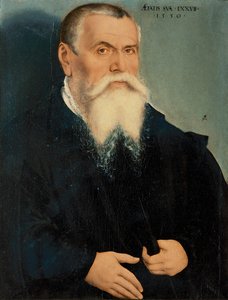
Lucas Cranach el Viejo
1472 - 1553 , Alemania
Datos clave
- Artistas Que Influyeron: ['Matthias Grünewald']
- Fecha De Muerte: 1553
- Fecha De Nacimiento: 1472
- Lugar De Nacimiento: Kronach, Alemania
- Movimiento Artístico: Renacimiento alemán
- Nacionalidad: Alemán
- Nombre Completo: Lucas Cranach el Mayor
- Obras Notables:
- Caza del Ciervo
- Retrato de Martín Lutero
- Autorretrato
Artículos relacionados
Expresionismo Alemán: 10 Obras Maestras que Transformaron el Arte | ArtsDot
Descubre las 10 obras maestras del Expresionismo Alemán: Kirchner, Munch y más. Explora la historia, técnica y emoción detrás de estos lienzos icónicos. Reproducciones de arte de museo en ArtsDot.com. ¡Inspira tu hogar con arte!
Anton von Werner: Imperial Painter, Historical Witness & Shifting German Identity
Explore the life & work of Anton von Werner, Imperial Germany's leading painter. Discover his dramatic depictions of war, unification, and court life – a fascinating insight into 19th-century German history & art.
The Northern Awakening: Artistic Innovation & Cultural Transformation in the German Renaissance
Explore the artistic innovation of the German Renaissance! Discover Dürer, the Danube School & Reformation art. Learn about techniques, materials & lasting influence. Find museum-quality reproductions at ArtsDot.
Fritz von Uhde: Bridging Realism & Symbolism in Late 19th-Century German Painting
Explore the captivating world of Fritz von Uhde, a pivotal German painter bridging Realism & Symbolism. Discover his plein-air techniques, religious themes, and influence on modern art. Learn about this fascinating artist at ArtsDot.
El Grito Visceral de una Nación: Explorando la Emoción y la Distorsión en el Expresionismo Alemán
Descubre el expresionismo alemán en profundidad. Analizamos sus orígenes, artistas clave como Kirchner y Kandinsky, técnicas innovadoras y su impacto duradero en el arte moderno. Guía para coleccionistas.