 Ver en contexto
 Enviar
 Compartir
 Detalles

 Descargar
 Similares
 Radiografía
 Presentación de diapositivas
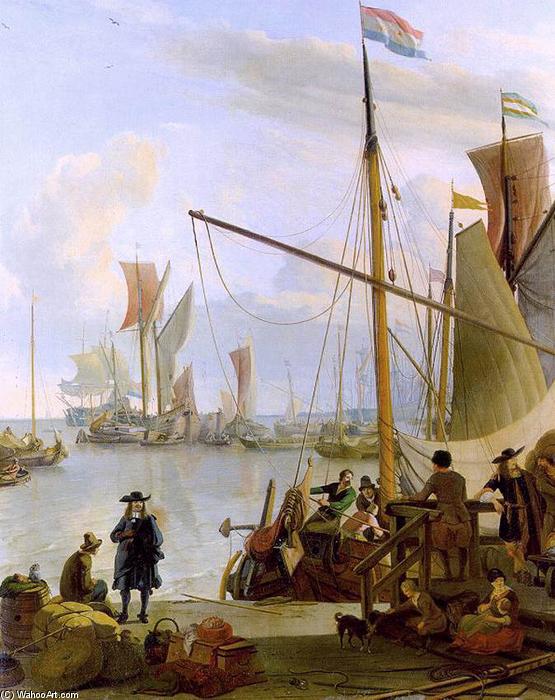
View from the Mussel Pier in Amsterdam


 Ver más
Reproducción al óleo hecha a mano
Óleo sobre lienzo pintado a mano en el tamaño y marco de su elección, realizado por encargo por nuestros artistas. ( Comprar impresión Comprar imagen)




P118B $10

P118H $10

P118W $10

P438Z $10

P508JH $12

P508YH $12

P805H $10

P805Z $10

P919BZ $10

P919G $10

P919XJ $10

P959ZH $10

P968JZ $12

W106C $8

W218G $10

W218JH $8

W218Y $10

W307PJ $10

W316G $10

W316PJ $8

W316Y $10

W398PJ $8

W4111J $10

W500HY $15

W500JH $15

W692G $12

W849H $8

W940BG $15

W953PJ $8




Elija entre nuestros tamaños predefinidos que respetan las proporciones originales de la obra.

Puede ingresar sus propias dimensiones para adaptarse a un marco o espacio específico. Si el tamaño seleccionado no coincide con las proporciones de la imagen original, recortaremos la obra o extenderemos la pintura con elementos adicionales pintados a mano. Se le enviará una maqueta digital para su aprobación antes de comenzar la producción.
Tenga en cuenta que la vista previa en pantalla no refleja el recorte o la extensión reales. Solo la maqueta mostrará con precisión la composición final.
Si bien existen tamaños personalizados, recomendamos seleccionar una dimensión de la lista predefinida para preservar las proporciones originales.
Tras realizar el pedido, el equipo de ArtsDot.com enviará un correo electrónico al cliente para solicitar instrucciones y proporcionarle una vista previa del boceto.
Envío a todo el mundo () en 3-4 semanas en lugar de las 5 semanas estándar. (25 agosto). Sin comprometer la calidad.

Envío exprés gratuito a todo el mundo

Lienzo de lino de alta calidad

Seguro de envío total

Garantía de reembolso de impuestos aduaneros

Garantía de fidelidad cromática exacta

Política de devolución de 60 días (solo por defectos)

Garantía de devolución del 100% del dinero

Descuento por cantidad
 La opción de vidrio solo está disponible en tamaños inferiores a 110 cm.

View from the Mussel Pier in Amsterdam
Técnica de reproducción
Dimensiones de la reproducción
-


Precio total final
$ 263
Descripción de la obra
A Tempestuous Vision: Ludolf Backhuysen’s “View from the Mussel Pier in Amsterdam”
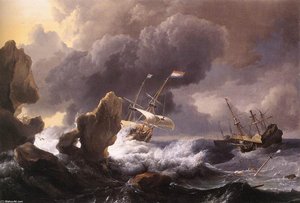
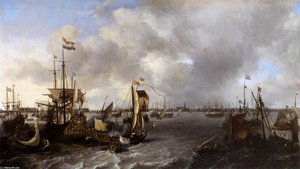
Ludolf Backhuysen's "View from the Mussel Pier in Amsterdam," painted in 1673, isn't merely a depiction of a harbor scene; it’s a visceral immersion into the heart of the Dutch Golden Age. This remarkable seascape, now housed within the Rijksmuseum in Amsterdam, pulsates with an energy born from Backhuysen’s meticulous observation of nature and his masterful command of oil paint. The painting immediately draws the eye to the churning sea – a dominant force rendered not as a serene backdrop but as a dynamic, almost sentient entity. Waves crash against the pier, threatening to engulf the small vessels clustered within, while dark clouds gather overhead, hinting at an impending storm. It’s a scene brimming with both danger and the industrious spirit that defined Amsterdam during its era of unparalleled maritime power.
Backhuysen's artistic approach was revolutionary for his time. He abandoned the idealized, often static seascapes favored by earlier painters, opting instead for a brutally honest portrayal of the sea’s unpredictable nature. He achieved this through an innovative technique – he actually ventured out to sea in a small boat, braving perilous conditions to study the waves firsthand. This dedication to realism is evident in every brushstroke; the texture of the water, the foam clinging to the ship's hulls, and the subtle shifts in color all contribute to a remarkably convincing illusion of depth and movement. The artist’s use of impasto – applying thick layers of paint directly to the canvas – further enhances this tactile quality, inviting the viewer to almost feel the spray of the waves.
The Anatomy of a Dutch Masterpiece: Technique and Materials
The painting is executed in oil on canvas, a medium that allowed Backhuysen to capture the nuances of light and shadow with exceptional precision. He employed a layering technique known as glazing, applying thin washes of color over dried underlayers to build up depth and luminosity. This method is particularly evident in the depiction of the clouds – they are not simply painted as solid masses but rather as intricate patterns of light and dark, suggesting their volatile nature. The palette itself is restrained yet powerful, dominated by shades of blue, gray, and white, punctuated by flashes of red and yellow to highlight the danger and drama of the scene. The artist’s attention to detail extends beyond the seascape; even the figures on the pier – identifiable as sailors, merchants, and onlookers – are rendered with a remarkable degree of realism, each exhibiting individual characteristics and gestures.
Symbolism and Context: Amsterdam at its Zenith
“View from the Mussel Pier in Amsterdam” is deeply rooted in the historical context of the Dutch Golden Age. Amsterdam was then the undisputed center of global trade, a bustling hub connecting Europe with Asia and beyond. The mussel pier itself – a vital component of the city’s economy – represents this thriving maritime activity. The ships depicted are not just vessels; they symbolize Amsterdam's wealth, power, and ambition. The presence of various types of cargo – barrels, chests, and sacks – further underscores the scale of the trade being conducted. Moreover, the painting subtly reflects the prevailing worldview of the time: a belief in human mastery over nature, tempered by an awareness of its inherent dangers.
A Legacy of Storms and Seascapes
Ludolf Backhuysen’s “View from the Mussel Pier in Amsterdam” remains one of the most iconic works of Dutch marine painting. His dramatic compositions, coupled with his unparalleled realism, established a new standard for depicting the sea – a standard that continues to inspire artists today. Reproductions of this powerful image offer a captivating glimpse into a pivotal moment in history and a testament to Backhuysen’s extraordinary artistic vision. It's more than just a painting; it’s an experience—a reminder of the raw beauty, unpredictable power, and enduring legacy of the sea.
Obras relacionadas
Biografía del artista
Ludolf Backhuysen I (1630–1708)
Ludolf Backhuysen I, a german-born dutch painter, was born on december 28, 1630, in emden, east frisia. he moved to amsterdam around 1650, where he initially worked as a merchant's clerk and calligrapher. however, his true passion lay in art, and he soon devoted himself to painting, studying under the esteemed masters allart van everdingen and hendrik dubbels.Rise to Prominence
Backhuysen’s artistic talent quickly gained recognition, particularly in his maritime subjects. After willem van de velde the elder and younger left for england in 1672, backhuysen became the leading dutch painter of maritime art. His compositions, characterized by intense realism, often featured rough seas. To capture the effects of storms, he would frequently venture into the open sea in a small boat. This dedication to observation and meticulous detail—a hallmark of his style—became central to his artistic vision. He was profoundly influenced by willem van de velde the elder and younger, whose dramatic depictions of naval battles captivated audiences and established a precedent for portraying turbulent weather conditions with unprecedented accuracy.Notable Works and Legacy
Some of backhuysen’s notable works include:- Ships in a Storm (1670s-1690s): These canvases exemplify Backhuysen's mastery of capturing the raw power of nature, utilizing bold brushstrokes and dramatic lighting to convey the terror and grandeur of a tempestuous sea.
- Seascape and Fishing Boats (1708): This final masterpiece showcases Backhuysen’s unwavering commitment to portraying coastal life with remarkable fidelity, reflecting his lifelong fascination with the maritime environment.
- Battle of Vigo Bay (1702): A monumental depiction of naval warfare, demonstrating Backhuysen's ability to convey both the visual spectacle and psychological tension inherent in combat situations.
- Dutchman Embarking Onto a Yacht (1670-1679): This painting captures a moment of serene contemplation amidst the vastness of the ocean, highlighting Backhuysen’s nuanced understanding of human emotion within natural landscapes.
- Johan de Liefde, Vice-Admiral: A portrait commemorating Johan de Liefde, a prominent dutch admiral, exemplifies Backhuysen's skill in capturing likeness and conveying character through subtle gestures and expressions.
Life and Artistic Development
Ludolf Backhuysen’s formative years were marked by a disciplined upbringing under his father's tutelage as a scribe—a profession that instilled in him a meticulous attention to detail and precision. Moving to amsterdam around 1650, he initially pursued mercantile endeavors alongside calligraphy, but quickly recognized the transformative potential of artistic expression. His initial studies with allart van everdingen and hendrik dubbels provided him with foundational knowledge of classical composition and technique—influences that would permeate his entire oeuvre. He honed his craft through tireless experimentation and observation, immersing himself in the maritime world to gain firsthand experience of weather conditions and seafaring life. This dedication to realism—a defining characteristic of his style—became a cornerstone of his artistic practice.Later Life and Death
Backhuysen continued to produce artwork throughout his life, establishing a gallery on the top floor of amsterdam townhall in 1699—a testament to his enduring success as an artist and entrepreneur. His travels included visits to england, where he encountered new artistic ideas and broadened his horizons. Ludolf Backhuysen I passed away peacefully in amsterdam on november 17, 1708, leaving behind a substantial body of work that continues to inspire admiration for its uncompromising realism and evocative portrayal of the sea.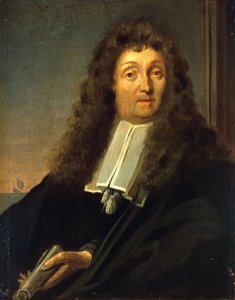
Ludolf Backhuysen I
1630 - 1708 , Alemania
Datos clave
- Artistic Movement Or Style: Dutch Baroque
- Artists Who Influenced This Artist:
- Allart van Everdingen
- Hendrik Dubbels
- Date Of Birth: December 28, 1630
- Full Name: Ludolf Backhuysen I
- Nationality: Dutch
- Notable Artworks:
- Ships in a Storm
- Seascape and Fishing Boats
- Battle of Vigo Bay
- Place Of Birth: Emden, Germany
Artículos relacionados
Ludolf Backhuysen I: Master of Dutch Marine Painting & Atmospheric Realism
Explore the captivating world of Ludolf Backhuysen I, a master of Dutch marine painting. Discover his signature realism, atmospheric seascapes & lasting influence on art history. Learn about collecting and appreciating this Golden Age artist.
Abraham Hulk Senior: Pioneering Maritime Topography of the Dutch Golden Age
Explore the captivating seascapes of Abraham Hulk Senior, a leading Anglo-Dutch marine painter of the 19th century. Discover his signature style, family legacy & collectable artworks at ArtsDot.
The Allure of the Horizon: A Comprehensive Exploration of Seascape Art Through History & Emotion
Explore the captivating world of seascape art! Discover its history, key artists & movements – from Dutch Masters to Impressionism. Expert insights for collectors and enthusiasts at ArtsDot.
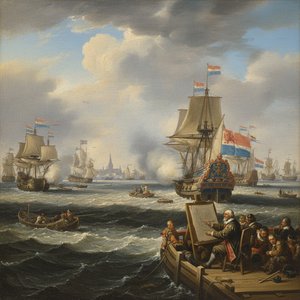
Willem van de Velde the Elder: Master of Maritime Painting & Chronicler of the Dutch Golden Age
Discover the captivating maritime paintings of Willem van de Velde the Elder, a master chronicler of the Dutch Golden Age. Explore his unparalleled realism and lasting influence on naval art history.
Bring the Ocean Home: Captivating Maritime Paintings to Transform Your Space with Timeless Elegance
Transform your home with breathtaking maritime oil paintings. From serene seascapes to dramatic nautical scenes, discover hand-painted reproductions that bring the ocean's soul to your space. Expertly crafted for collectors seeking timeless elegance and coastal tranquility.