

 Ver en contexto
 Enviar
 Compartir
 Detalles

 Descargar
 Similares
 Radiografía
 Presentación de diapositivas
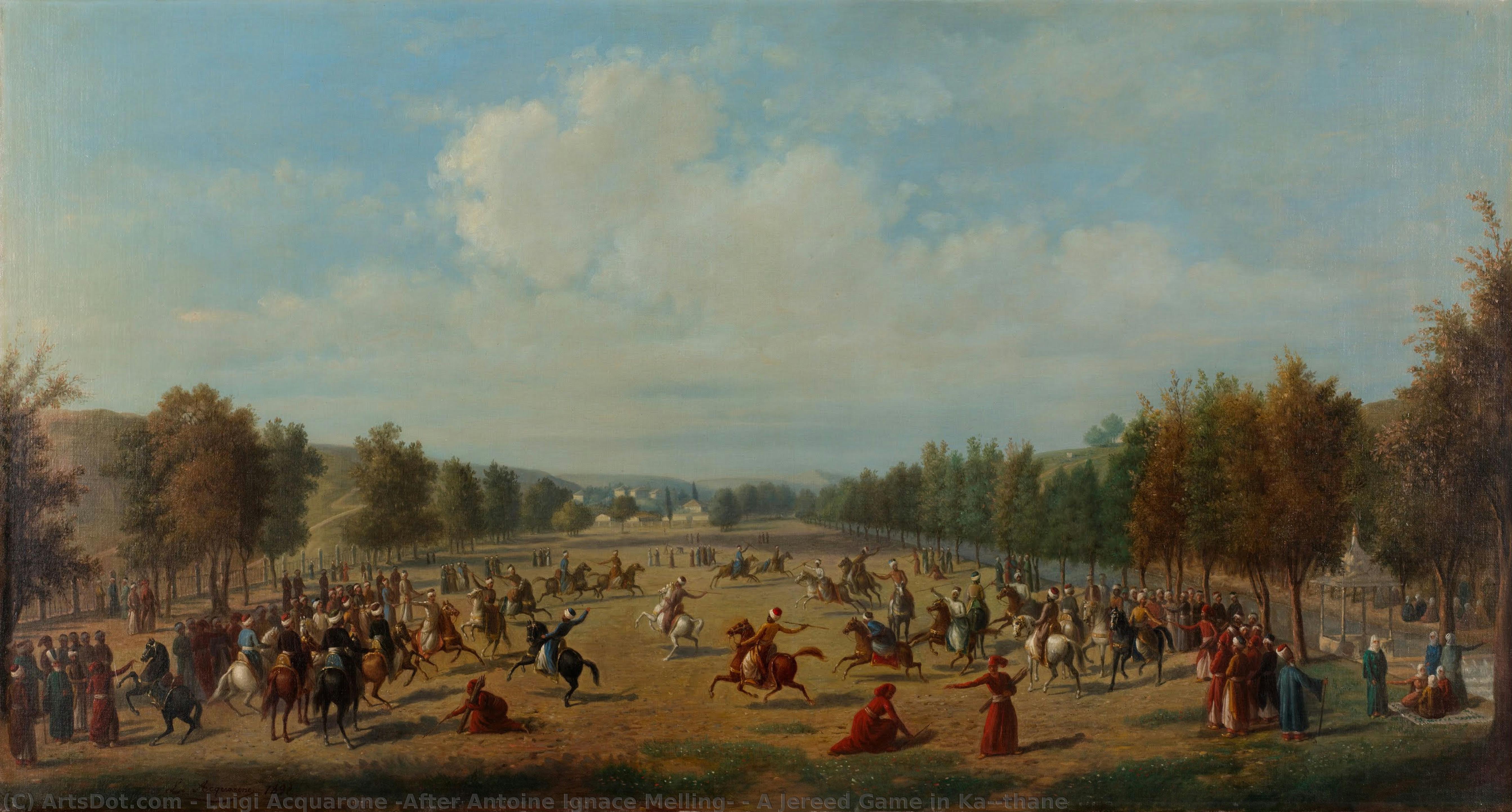
A Jereed Game in Kağıthane
 200.0 x 655.0 cm
 Museo de la Pera
 Ver más
Adquiera una imagen digital de alta resolución y optimizada, muy superior a la vista previa en línea.
Cada archivo es preparado meticulosamente por nuestros especialistas internos mediante el uso de herramientas avanzadas y un experto retoque manual. Nos aseguramos de que cada imagen posea una claridad excepcional, una precisión cromática impecable y un detalle minucioso.
El archivo final se entrega por correo electrónico en un plazo de 72 horas, optimizado para su uso inmediato en entornos profesionales, editoriales y de impresión. Esta es la misma calidad en la que confían los estudios de diseño, las editoriales y las galerías de primer nivel.
Imagen Digital
Descarga un archivo de alta resolución para exhibición personal, impresión y proyectos creativos. ( Comprar impresión Comprar pintura hecha a mano)
Incluido en cada pedido de imágenes digitales
Entrega digital experta, garantizada.
Al elegir ArtsDot.com, no solo está adquiriendo una imagen; está recibiendo una obra de arte digital mejorada profesionalmente, elaborada con precisión y respaldada por una garantía de satisfacción. Esto es todo lo que incluye su pedido, automáticamente:

Entrega rápida por email
Recibirá su archivo de imagen digital en alta resolución por correo electrónico en un plazo de 72 horas tras realizar su pedido, listo para su uso inmediato.

Archivo digital optimizado por IA
Su obra de arte se optimiza profesionalmente mediante herramientas avanzadas de IA y edición manual, garantizando el máximo detalle, claridad y precisión cromática.

Reenvío gratuito de por vida
¿Has borrado o perdido tu archivo por error? No te preocupes: te lo volveremos a enviar en cualquier momento, sin coste adicional.

Sin gastos de importación, siempre
Disfrute de su obra de arte al instante sin aduanas, aranceles ni gastos de envío; las descargas digitales siempre están libres de impuestos.

Garantía de fidelidad de color
Garantizamos que su imagen digital refleje los colores originales con la mayor fidelidad posible, mediante el uso de herramientas profesionales y gestión del color.

Garantía de satisfacción de 100 días
Si no está satisfecho con su imagen digital, la revisaremos o le reembolsaremos el 100% en un plazo de 100 días, sin preguntas.

100% Garantía de devolución de dinero
¿No está satisfecho? Obtenga un reembolso completo dentro de los 100 días posteriores a la recepción de su archivo digital, sin necesidad de explicaciones.

Descuentos por pedidos grandes
Compra 3 imágenes, ahorra 10% - Compra 5, ahorra 15% - Compra 10+, ahorra 20%. Ideal para proyectos creativos, galerías y agencias.
Obras relacionadas









Biografía del artista
Luigi Acquarone (After Antoine Ignace Melling): A Master of Evocative Genre Scenes
Luigi Acquarone, a name perhaps less familiar than his influential predecessor Antoine-Ignace Melling, nevertheless stands as a significant figure in 19th-century Italian art. Born in Geneo, Italy, around 1800, and tragically passing away in Istanbul in 1896, Acquarone’s artistic journey is inextricably linked to the legacy of Melling, a celebrated French painter known for his dramatic genre scenes depicting Venetian life. While often considered an “after” artist – meaning he produced works inspired by or imitating Melling's style – Acquarone developed a distinct voice and technique, imbuing these familiar subjects with a uniquely Italian sensibility.
Acquarone’s early training undoubtedly benefited from the proximity to Melling’s studio in Venice. The French artist had established himself as a leading interpreter of Venetian life, capturing the bustling markets, vibrant festivals, and intimate moments of everyday existence with remarkable realism and theatrical flair. Acquarone absorbed these lessons, mastering Melling's meticulous observation skills and his ability to infuse scenes with narrative tension. However, it wasn’t simply imitation; Acquarone gradually began to introduce subtle shifts in composition, color palette, and psychological depth, establishing a recognizable artistic identity.
The Influence of Melling and the Venetian Tradition
Melling's influence is undeniably pervasive throughout Acquarone’s oeuvre. The artist frequently depicted scenes mirroring those favored by his mentor: lively gatherings in taverns (as evidenced by “A Jereed Game in Kağıthane,” a particularly striking example showcasing a group of men engaged in a traditional Turkish game), bustling marketplaces overflowing with produce and merchants, and portraits of Venetian citizens immersed in their daily routines. Acquarone meticulously rendered the details – the textures of fabrics, the expressions on faces, the glimmering reflections in glassware – reflecting Melling’s commitment to realism. Yet, Acquarone's work possesses a warmer, more Italianate quality than its French counterpart. The lighting is often richer and more golden, and the figures seem imbued with a greater sense of warmth and humanity.
Furthermore, Acquarone was deeply rooted in the rich artistic traditions of Venice itself. He drew inspiration from the works of Venetian masters like Titian and Canaletto, incorporating their use of color, composition, and perspective into his own paintings. The city’s vibrant atmosphere, its complex social dynamics, and its unique cultural heritage provided a constant source of creative stimulation.
Developing a Distinct Style: Narrative Depth and Psychological Insight
While initially adhering closely to Melling's style, Acquarone gradually developed a more sophisticated approach. He began to prioritize narrative depth and psychological insight within his genre scenes. Rather than simply documenting events, he sought to capture the emotions and motivations of his subjects. His figures are not merely static representations; they are imbued with personality, vulnerability, and even a hint of melancholy. This shift is particularly evident in works like “A Jereed Game in Kağıthane,” where the expressions on the faces of the players reveal a complex interplay of camaraderie, competition, and perhaps even underlying tensions.
Acquarone’s use of color also evolved over time. Initially influenced by Melling's preference for muted tones, he gradually embraced brighter hues and bolder contrasts, creating paintings that are both visually arresting and emotionally resonant. He skillfully employed light and shadow to create a sense of drama and atmosphere, drawing the viewer into the heart of each scene.
Major Works and Historical Significance
Among Acquarone’s most notable works is “A Jereed Game in Kağıthane,” a captivating depiction of a traditional Turkish game played in Istanbul. This painting exemplifies his mastery of genre scenes, showcasing his meticulous observation skills, narrative depth, and psychological insight. Other significant paintings include portraits of Venetian citizens, lively tavern scenes, and depictions of religious festivals. His work provides valuable insights into the social and cultural life of 19th-century Venice and Istanbul.
Despite being often overshadowed by his mentor, Luigi Acquarone deserves recognition as a talented and accomplished artist in his own right. His paintings offer a unique window into the world of 19th-century Italy, blending the influence of Melling with his own distinctive artistic vision. His legacy continues to be appreciated for his evocative genre scenes, his masterful technique, and his ability to capture the essence of human experience.
luigi acquarone (after antoine ignace melling)
1800 - 1896 , Italy
Breves datos
- Artistic Movement Or Style: Genre scenes, Historical paintings
- Artists Who Influenced This Artist: ['Antoine Igne Melling']
- Date Of Birth: 1800
- Date Of Death: 1896
- Full Name: Luigi Acquarone (after Melling)
- Nationality: Italian
- Notable Artworks: ['A Jereed Game in Kağıthane']
- Place Of Birth: Geneo, Italy