 Ver en contexto
 Enviar
 Compartir
 Detalles

 Descargar
 Similares
 Radiografía
 Presentación de diapositivas
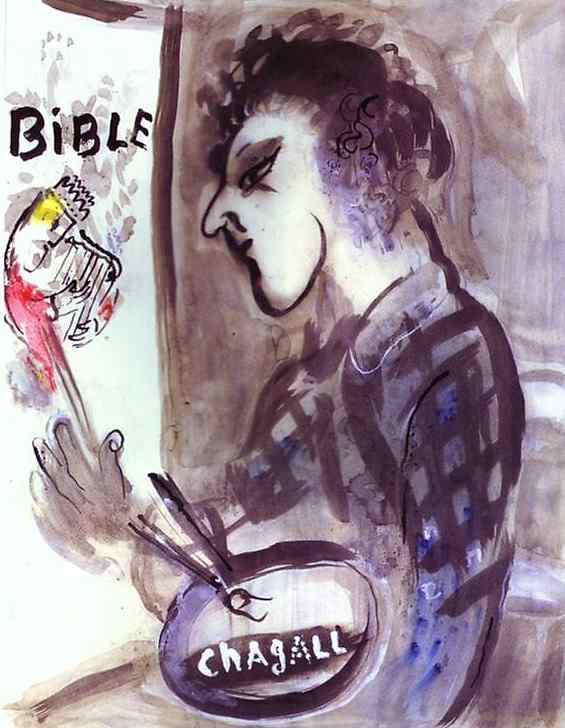
Self Portrait with a Palette
 Acrylic On Canvas
- WallArt
- Surrealism
 1955
1955 65.0 x 50.0 cm
 Ver más
Giclée / Impresión de arte
Impresiones giclée o en lienzo de calidad de museo con producción rápida y opciones de acabado flexibles. ( Comprar pintura hecha a mano Comprar imagen)




P118B $10

P118H $10

P118W $10

P438Z $10

P508JH $12

P508YH $12

P805H $10

P805Z $10

P919BZ $10

P919G $10

P919XJ $10

P959ZH $10

P968JZ $12

W106C $8

W218G $10

W218JH $8

W218Y $10

W307PJ $10

W316G $10

W316PJ $8

W316Y $10

W398PJ $8

W4111J $10

W500HY $15

W500JH $15

W692G $12

W849H $8

W940BG $15

W953PJ $8




Elija entre nuestros tamaños predefinidos que respetan las proporciones originales de la obra.

Puede introducir sus propias dimensiones para adaptarse a un marco o espacio específico. Si el tamaño seleccionado no coincide con las proporciones de la imagen original, recortaremos la obra de arte o extenderemos la imagen con un borde con efecto espejo o de color sólido. Se enviará una maqueta digital para su aprobación antes de que comience la producción.
Tenga en cuenta que la vista previa en pantalla no refleja el recorte o la extensión real. Solo la maqueta mostrará con precisión la composición final.
Aunque existen tamaños personalizados, recomendamos seleccionar una dimensión de la lista predefinida para preservar las proporciones originales.
Envío a todo el mundo () en 2 semanas en lugar de las 4/5 semanas estándar. (3 septiembre)

Envío exprés gratuito a todo el mundo

Lienzo de lino de alta calidad

Seguro de envío total

Garantía de reembolso de impuestos aduaneros

Garantía de fidelidad cromática exacta

Política de devolución de 60 días (solo por defectos)

Garantía de devolución del 100% del dinero

Descuento por cantidad
 La opción de vidrio solo está disponible en tamaños inferiores a 110 cm.

Self Portrait with a Palette
Giclée / Impresión de arte
Dimensiones de la reproducción
-


Precio total final
$ 62
A Window Into Chagall’s Soul: Exploring ‘Self Portrait with a Palette’
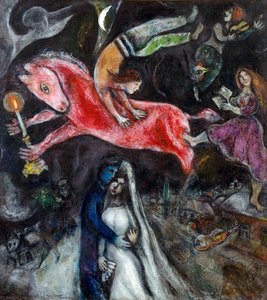
Marc Chagall's 'Self Portrait with a Palette,' painted in 1955, isn’t merely an image; it’s a distillation of the artist’s lifelong preoccupation with dreams and memory—a cornerstone of his distinctive Primitivism style. Created during a period marked by significant upheaval – the burgeoning Cold War and the anxieties surrounding artistic freedom – the painting nevertheless exudes a serene beauty that belies its turbulent backdrop. Situated in Naïve Art, Chagall eschewed academic conventions, prioritizing direct observation and emotional expression over meticulous realism. This decision is evident in every brushstroke, where color reigns supreme, transforming the canvas into an immersive landscape of feeling rather than a faithful representation of form.- Style & Technique: Chagall’s approach aligns with Naïve Art's core tenets: flattened perspective, simplified forms, and vibrant hues achieved through layering pigments—a technique that lends the painting an almost tactile quality. The artist deliberately avoids shading or blending, opting instead for bold contrasts to heighten visual impact.
- Historical Context: Painted amidst the anxieties of postwar Europe, ‘Self Portrait’ reflects Chagall's unwavering commitment to artistic integrity in the face of censorship and political pressure. Vitebsk, his hometown and enduring muse, served as a constant reminder of his roots—a visual shorthand for Jewish tradition and Belarusian folklore.
Symbolism: Layers of Meaning Beyond Appearance
The composition itself is laden with symbolic significance. The artist’s gaze directs upwards, suggesting aspiration and transcendence – mirroring the recurring motif of flying figures throughout Chagall's oeuvre. The palette—a tangible emblem of artistic creation—rests prominently in his hand, emphasizing the act of painting as a central element of his identity. Furthermore, the inclusion of a book symbolizes knowledge and contemplation, juxtaposed against the scissors representing both precision and potential disruption – hinting at the artist’s ongoing engagement with intellectual discourse and the inherent risks involved in pursuing unconventional artistic visions.- Color Palette: Chagall employs a rich tapestry of colors—primarily blues and yellows—to evoke feelings of melancholy and optimism simultaneously. These hues are deliberately juxtaposed to create visual tension, mirroring the complexities of human experience.
Emotional Resonance: Capturing the Essence of Remembrance
Ultimately, ‘Self Portrait with a Palette’ succeeds in conveying a profound sense of nostalgia—a yearning for lost landscapes and cherished memories. The painting's quiet stillness invites contemplation, prompting viewers to consider the enduring power of imagination and the importance of preserving cultural heritage. It stands as a testament to Chagall’s ability to transform personal experience into universal emotion—a timeless masterpiece that continues to inspire artists and collectors alike.- Interior Designer's Note: Consider incorporating shades of blue and yellow – reminiscent of Chagall’s palette – into interior spaces seeking warmth and tranquility. The painting’s flattened perspective lends itself beautifully to minimalist compositions, creating a sense of spaciousness and serenity.
Concluding Thoughts: An Artistic Legacy Enduring Through Time
‘Self Portrait with a Palette,’ like much of Chagall's work, transcends mere representation; it embodies the artist’s innermost convictions—a conviction that art possesses the capacity to illuminate the human condition and connect us to something larger than ourselves. Its enduring appeal lies in its ability to evoke emotion without resorting to didacticism—leaving viewers with a lingering impression of beauty and wonder—a legacy cemented as one of the most influential figures of 20th-century art.Obras relacionadas
Biografía del artista
Marc Chagall: Una Vida en Color e Imaginación
Primeros Años e Influencias
- Nacimiento y Origen: Marc Zakharovich Chagall nació el 6 de julio de 1887 (O.S. 24 de junio) en Liozna, cerca de Vitebsk, Bielorrusia, dentro de una familia judía hasidica.
- El Impacto de Vitebsk: Su infancia en Vitebsk, conocida como la “Toledo rusa”, moldeó profundamente su visión artística. La ciudad, con su mezcla única de culturas y su pintoresco paisaje – iglesias, sinagogas, bulliciosos mercados – se convirtió en motivos recurrentes en su obra.
- Tendencia Artística Temprana: A pesar de los modestos recursos de su familia, Chagall mostró un talento temprano para el arte, aprendiendo inicialmente de un pintor de letreros local antes de seguir una formación formal.
Desarrollo Artístico y Estilo
- Formación Temprana: Estudió en San Petersburgo con Léon Bakst y más tarde en París en la Academia de la Grande Chaumière, donde se encontró con movimientos vanguardistas.
- Fusión de Estilos: El estilo de Chagall es una síntesis única de diversas influencias. Absorbió elementos del Cubismo, el Simbolismo y el Fauvismo, pero nunca se adhirió por completo a un solo movimiento, forjando su propio camino distintivo.
- Características Clave: Su obra se caracteriza por colores vibrantes, imágenes oníricas, criaturas fantásticas y una sensación de nostalgia por su infancia en Vitebsk. A menudo presenta figuras flotantes, perspectivas distorsionadas y representaciones simbólicas.
Obras Maestras y Logros
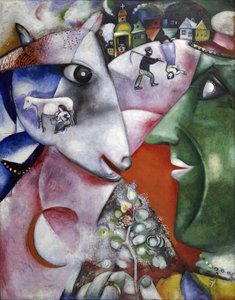
- Maestros Tempranos: Pinturas como “Yo y el Pueblo” (1911) demuestran su exploración temprana de la memoria, la identidad y la relación entre el individuo y la comunidad.
- Revolución Rusa y Regreso a Vitebsk: Después de la Revolución Rusa, Chagall regresó a Vitebsk y se involucró en iniciativas culturales, estableciendo una escuela de arte. Sin embargo, pronto se desilusionó con las restricciones impuestas por el nuevo régimen.
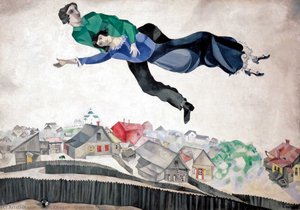
- Reconocimiento Internacional: Eventualmente dejó Rusia y se estableció en Francia, donde su carrera floreció. Obras notables de este período incluyen “Sobre Vitebsk” (1920-1922) y numerosas pinturas inspiradas en las historias bíblicas como “El Sueño de Jacob.”
- Comisiones Tardías: Chagall recibió importantes comisiones más tarde en la vida, incluyendo el techo del Opera de París (1964), vidrieras para el sinagoga del Hospital Hebreo Hadassah en Jerusalén y la Catedral de Reims.
Influencias y Legado
- Influencias Artísticas: Fue influenciado por artistas como Vladimir Lukich Borovikovsky, cuyo retrato admiraba, así como por las corrientes más amplias del modernismo temprano.
- Impacto en Artistas Posteriores: El trabajo de Chagall ha inspirado a generaciones de artistas con su calidad lírica, profundidad emocional y poder imaginativo. Su influencia se puede ver en el Surrealismo y otros movimientos que adoptaron la fantasía y el simbolismo.
- Significado Histórico: Se considera uno de los personajes más importantes del arte del siglo XX, conectando el modernismo europeo con la identidad cultural judía. Su capacidad para sintetizar la experiencia personal, las leyendas y los temas universales continúa resonando entre audiencias en todo el mundo.
- El “Artista Judío Quintesencial”: Chagall es a menudo llamado el “artista judío quintesencial del siglo XX” debido a su exploración frecuente de temas, tradiciones y experiencias judías en su arte.
Muerte y Remembrance
- Últimos Años: Marc Chagall continuó pintando y creando hasta su muerte el 28 de marzo de 1985, a la edad de 97 años, en Saint-Paul-de-Vence, Francia.
- Legado Duradero: Su obra se exhibe en importantes museos alrededor del mundo, asegurando que su visión vibrante e imaginativa continúe inspirando y cautivando a los amantes del arte por generaciones venideras.
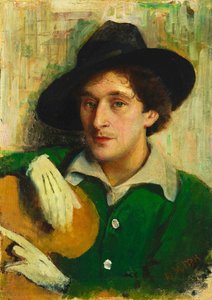
Marc Chagall
1887 - 1985 , belarus
Datos clave
- Artistas Influenciados: ['Surrealismo']
- Artistas Que Influyeron: ['Vladimir Lukich Borovikovsky']
- Fecha De Muerte: 28 de marzo de 1985
- Fecha De Nacimiento: 6 de julio de 1887
- Lugar De Nacimiento: Liozna, Bielorrusia
- Movimiento Artístico:
- Cubismo
- Simbolismo
- Fauvismo
- Nacionalidad: Ruso-Francés
- Nombre Completo: Marc Chagall (Moishe Shagal)
- Obras Notables:
- Yo y el Pueblo
- Sobre Vitebsk
- El Sueño de Jacob
- Liberación
- La Promenada
- Recién casados con París
- Pliushkin trata a Tchtchikov
- Bajo la nieve
- En el cielo sobre la Ópera
- La Mujer y las Rosas
- El pintor alado
- Pareja sobre un Fondo Rojo
- José ha sido reconocido
Artículos relacionados
Surrealismo: 10 Obras Maestras que Transformaron el Arte y la Decoración
Descubre las 10 obras maestras del Surrealismo con Dalí, Magritte y Miró. Explora la historia, el simbolismo y la técnica de estos íconos del arte moderno. Encuentra reproducciones de alta calidad para tu hogar en .
La Visión Inconvencional: Explorando el Arte Naïf y su Legado Duradero
Descubre el fascinante mundo del arte naïf: orígenes, artistas clave y su impacto en la historia del arte. Guía experta para coleccionistas y amantes del arte ingenuo.
Max Ernst: Las 25 Obras Maestras del Surrealismo para Decorar tu Hogar con Arte
Descubre las 25 obras maestras de Max Ernst, el rey del surrealismo. Explora su arte onírico, técnicas innovadoras y simbolismo profundo. Reproducciones de alta calidad para decorar tu hogar con estilo en ArtsDot.com
Dreamscapes & Disrupted Realities: Exploring Surrealism's Enduring Influence
Explore the fascinating world of Surrealism! Discover its origins, key artists like Dalí & Magritte, and enduring influence on art & culture. Expert insights & high-quality reproductions at ArtsDot.
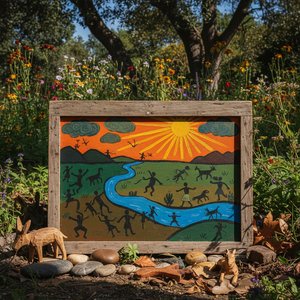
La Visión Indómita: Explorando el Arte Naïf y el Primitivismo como Rechazo a la Convención
Descubre el fascinante mundo del arte naïf y primitivismo. Explora su historia, artistas clave como Rousseau y Chagall, y su rebelde espíritu contra las convenciones artísticas. Análisis experto en ArtsDot.