 Ver en contexto
 Enviar
 Compartir
 Detalles

 Descargar
 Similares
 Radiografía
 Presentación de diapositivas
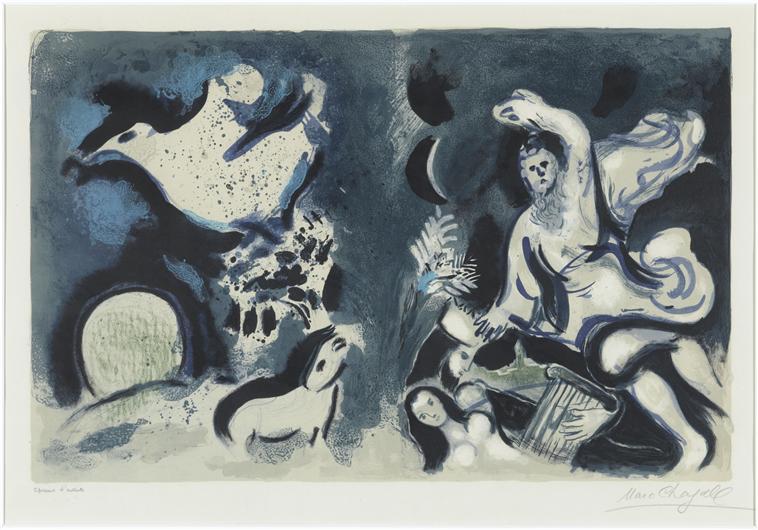
Untitled (The cover of Bible)
 Acrylic On Canvas
- WallArt
- Cubist Expressionism
 1960
1960- Modern
 52.0 x 76.0 cm
 Ver más
Giclée / Impresión de arte
Impresiones giclée o en lienzo de calidad de museo con producción rápida y opciones de acabado flexibles. ( Comprar pintura hecha a mano Comprar imagen)




P118B $10

P118H $10

P118W $10

P438Z $10

P508JH $12

P508YH $12

P805H $10

P805Z $10

P919BZ $10

P919G $10

P919XJ $10

P959ZH $10

P968JZ $12

W106C $8

W218G $10

W218JH $8

W218Y $10

W307PJ $10

W316G $10

W316PJ $8

W316Y $10

W398PJ $8

W4111J $10

W500HY $15

W500JH $15

W692G $12

W849H $8

W940BG $15

W953PJ $8




Elija entre nuestros tamaños predefinidos que respetan las proporciones originales de la obra.

Puede introducir sus propias dimensiones para adaptarse a un marco o espacio específico. Si el tamaño seleccionado no coincide con las proporciones de la imagen original, recortaremos la obra de arte o extenderemos la imagen con un borde con efecto espejo o de color sólido. Se enviará una maqueta digital para su aprobación antes de que comience la producción.
Tenga en cuenta que la vista previa en pantalla no refleja el recorte o la extensión real. Solo la maqueta mostrará con precisión la composición final.
Aunque existen tamaños personalizados, recomendamos seleccionar una dimensión de la lista predefinida para preservar las proporciones originales.
Envío a todo el mundo () en 2 semanas en lugar de las 4/5 semanas estándar. (24 agosto)

Envío exprés gratuito a todo el mundo

Lienzo de lino de alta calidad

Seguro de envío total

Garantía de reembolso de impuestos aduaneros

Garantía de fidelidad cromática exacta

Política de devolución de 60 días (solo por defectos)

Garantía de devolución del 100% del dinero

Descuento por cantidad
 La opción de vidrio solo está disponible en tamaños inferiores a 110 cm.

Untitled (The cover of Bible)
Giclée / Impresión de arte
Dimensiones de la reproducción
-


Precio total final
$ 62
Descripción de la pieza
A Tapestry of Dreams: The Ethereal Vision of Marc Chagall
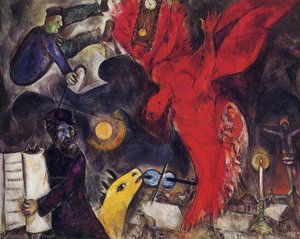
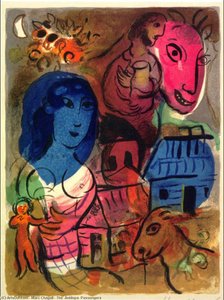
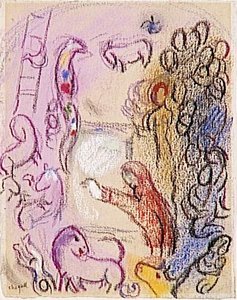
To encounter Marc Chagall’s "Untitled (The cover of Bible)" is to step through a portal where the heavy constraints of gravity and reality simply dissolve. Created in 1960, this masterpiece serves as a profound immersion into a world unbound by earthly limitations, acting as a testament to the artist’s lifelong fascination with folklore and his unwavering belief in the transformative power of the human imagination. During a period of global anxiety, Chagall offered a sanctuary of color, weaving a narrative that speaks directly to the viewer's subconscious through an arresting and lyrical visual language.
The composition is a masterclass in duality, orchestrating a dynamic interplay between movement and stillness. The canvas is divided vertically into two distinct realms, creating a sense of cosmic balance. On one side, a luminous sky pulsates with avian energy, where soaring birds symbolize the heights of freedom and spiritual aspiration against deep, evocative azure hues. A stylized dog, representing steadfastness and loyalty, anchors this celestial section, while a circular form rests below, perhaps hinting at the eternal wholeness found in biblical symbolism. In contrast, the opposing side brings us closer to the earth, depicting a pastoral landscape where figures move with a quiet, rhythmic contemplation. A man astride a horse, accompanied by companions, suggests a journey of resilience and the enduring nature of the human spirit.
The Alchemy of Color and Form
Chagall’s technical approach in this work defies easy categorization, masterfully blending the fragmented elements of Cubism with the bold, emotive intensity of Fauvism. He rejects representational accuracy in favor of emotional resonance, employing a loose, gestural brushstroke technique that allows colors to bleed and breathe into one another. The palette is dominated by ethereal blues and whites, punctuated by soft greys and subtle hints of secondary tones that emerge like half-remembered memories from a dream. This use of color is not meant to mimic the natural world but to evoke its spiritual essence.
The texture of the piece suggests the delicate layering of watercolor or gouache, creating a smooth yet luminous surface that catches the light with a soft, diffused glow. Lines are fluid and often blurred, lacking sharp or aggressive definitions; instead, they flow like poetry written in pigment. Shapes are simplified and stylized, with elongated limbs on the figures lending an air of ethereal grace to the entire scene. This flattened perspective, characteristic of Chagall’s unique style, avoids traditional depth in favor of a layered, symbolic space where objects overlap not by physical distance, but by emotional significance.
A Legacy for the Discerning Collector
For art lovers and interior designers alike, "Untitled (The cover of Bible)" offers more than mere decoration; it provides an atmosphere of profound whimsy and intellectual depth. The symbolism—drawing heavily from Jewish folklore and biblical themes—invites endless interpretation, making it a centerpiece that rewards repeated viewing. Whether placed in a contemporary gallery setting or a sophisticated residential space, the painting’s ability to evoke peace, nostalgia, and wonder is unparalleled.
Investing in a high-quality reproduction of this work allows one to bring a piece of 20th-century modernism into the home, capturing the very soul of Chagall's "Biblical Message." It is an invitation to live among dreams, surrounded by the vibrant, dancing colors of a master who saw the world not as it was, but as it could be through the lens of love and memory.
Obras relacionadas
Biografía del artista
Marc Chagall: Una Vida en Color e Imaginación
Primeros Años e Influencias
- Nacimiento y Origen: Marc Zakharovich Chagall nació el 6 de julio de 1887 (O.S. 24 de junio) en Liozna, cerca de Vitebsk, Bielorrusia, dentro de una familia judía hasidica.
- El Impacto de Vitebsk: Su infancia en Vitebsk, conocida como la “Toledo rusa”, moldeó profundamente su visión artística. La ciudad, con su mezcla única de culturas y su pintoresco paisaje – iglesias, sinagogas, bulliciosos mercados – se convirtió en motivos recurrentes en su obra.
- Tendencia Artística Temprana: A pesar de los modestos recursos de su familia, Chagall mostró un talento temprano para el arte, aprendiendo inicialmente de un pintor de letreros local antes de seguir una formación formal.
Desarrollo Artístico y Estilo
- Formación Temprana: Estudió en San Petersburgo con Léon Bakst y más tarde en París en la Academia de la Grande Chaumière, donde se encontró con movimientos vanguardistas.
- Fusión de Estilos: El estilo de Chagall es una síntesis única de diversas influencias. Absorbió elementos del Cubismo, el Simbolismo y el Fauvismo, pero nunca se adhirió por completo a un solo movimiento, forjando su propio camino distintivo.
- Características Clave: Su obra se caracteriza por colores vibrantes, imágenes oníricas, criaturas fantásticas y una sensación de nostalgia por su infancia en Vitebsk. A menudo presenta figuras flotantes, perspectivas distorsionadas y representaciones simbólicas.
Obras Maestras y Logros
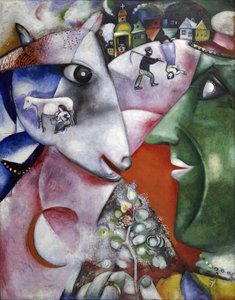
- Maestros Tempranos: Pinturas como “Yo y el Pueblo” (1911) demuestran su exploración temprana de la memoria, la identidad y la relación entre el individuo y la comunidad.
- Revolución Rusa y Regreso a Vitebsk: Después de la Revolución Rusa, Chagall regresó a Vitebsk y se involucró en iniciativas culturales, estableciendo una escuela de arte. Sin embargo, pronto se desilusionó con las restricciones impuestas por el nuevo régimen.
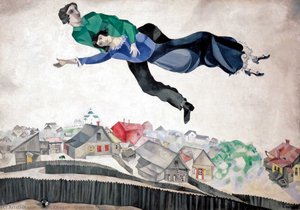
- Reconocimiento Internacional: Eventualmente dejó Rusia y se estableció en Francia, donde su carrera floreció. Obras notables de este período incluyen “Sobre Vitebsk” (1920-1922) y numerosas pinturas inspiradas en las historias bíblicas como “El Sueño de Jacob.”
- Comisiones Tardías: Chagall recibió importantes comisiones más tarde en la vida, incluyendo el techo del Opera de París (1964), vidrieras para el sinagoga del Hospital Hebreo Hadassah en Jerusalén y la Catedral de Reims.
Influencias y Legado
- Influencias Artísticas: Fue influenciado por artistas como Vladimir Lukich Borovikovsky, cuyo retrato admiraba, así como por las corrientes más amplias del modernismo temprano.
- Impacto en Artistas Posteriores: El trabajo de Chagall ha inspirado a generaciones de artistas con su calidad lírica, profundidad emocional y poder imaginativo. Su influencia se puede ver en el Surrealismo y otros movimientos que adoptaron la fantasía y el simbolismo.
- Significado Histórico: Se considera uno de los personajes más importantes del arte del siglo XX, conectando el modernismo europeo con la identidad cultural judía. Su capacidad para sintetizar la experiencia personal, las leyendas y los temas universales continúa resonando entre audiencias en todo el mundo.
- El “Artista Judío Quintesencial”: Chagall es a menudo llamado el “artista judío quintesencial del siglo XX” debido a su exploración frecuente de temas, tradiciones y experiencias judías en su arte.
Muerte y Remembrance
- Últimos Años: Marc Chagall continuó pintando y creando hasta su muerte el 28 de marzo de 1985, a la edad de 97 años, en Saint-Paul-de-Vence, Francia.
- Legado Duradero: Su obra se exhibe en importantes museos alrededor del mundo, asegurando que su visión vibrante e imaginativa continúe inspirando y cautivando a los amantes del arte por generaciones venideras.
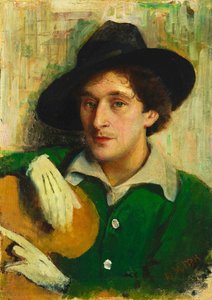
Marc Chagall
1887 - 1985 , belarus
Datos clave
- Artistas Influenciados: ['Surrealismo']
- Artistas Que Influyeron: ['Vladimir Lukich Borovikovsky']
- Fecha De Muerte: 28 de marzo de 1985
- Fecha De Nacimiento: 6 de julio de 1887
- Lugar De Nacimiento: Liozna, Bielorrusia
- Movimiento Artístico:
- Cubismo
- Simbolismo
- Fauvismo
- Nacionalidad: Ruso-Francés
- Nombre Completo: Marc Chagall (Moishe Shagal)
- Obras Notables:
- Yo y el Pueblo
- Sobre Vitebsk
- El Sueño de Jacob
- Liberación
- La Promenada
- Recién casados con París
- Pliushkin trata a Tchtchikov
- Bajo la nieve
- En el cielo sobre la Ópera
- La Mujer y las Rosas
- El pintor alado
- Pareja sobre un Fondo Rojo
- José ha sido reconocido
Artículos relacionados

Giclée Prints: Archival Quality & Aesthetic Nuances for the Discerning Collector
Explore the world of giclée prints with ArtsDot. Learn about archival quality, aesthetic nuances & investment potential. Expert guidance for discerning art collectors seeking museum-quality reproductions and lasting value.
Reproducción Artística: Explorando Medios para la Preservación y Diseminación del Patrimonio Visual
Descubre reproducciones de arte excepcionales hechas por artistas expertos. Lienzos personalizados y réplicas fieles con garantía de calidad museo. ¡Preserva el patrimonio visual!

Echoes of Time: Exploring the Enduring Appeal & Historical Context of Vintage Art Prints
Explore the captivating world of vintage art prints! Discover their history, collecting tips & enduring appeal. Expert insights on chromolithography and building a legacy collection with ArtsDot.
Más Allá de la Replicación: La Sostenibilidad del Legado Artístico a Través de Reproducciones Inspiradas en Interiores Contemporáneos
Descubra reproducciones de pintura al óleo hechas a mano por artistas expertos. Invierta en arte con confianza y cree un legado duradero. Asesoramiento personalizado y calidad excepcional.

The Enduring Legacy of Fine Art Prints: Technique, History & Aesthetic Impact
Explore the rich history & techniques of fine art prints. Discover investment potential, assess authenticity, and learn how to preserve your collection with expert guidance. Trusted insights for discerning collectors.