

 Ver en contexto
 Enviar
 Compartir
 Detalles

 Descargar
 Similares
 Radiografía
 Presentación de diapositivas
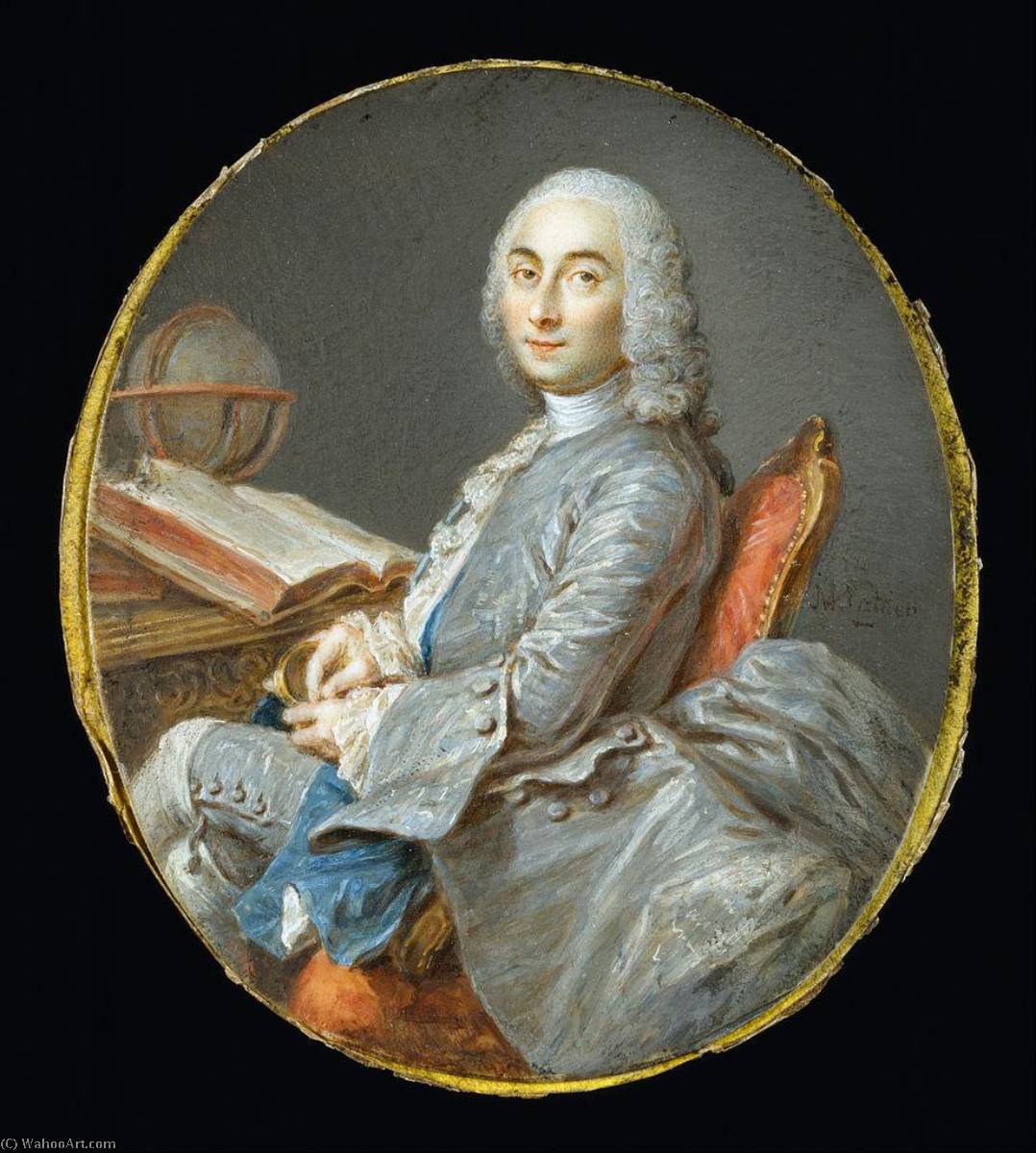
Miniature Portrait of César François Cassini de Thury


 Ver más
Adquiera una imagen digital de alta resolución y optimizada, muy superior a la vista previa en línea.
Cada archivo es preparado meticulosamente por nuestros especialistas internos mediante el uso de herramientas avanzadas y un experto retoque manual. Nos aseguramos de que cada imagen posea una claridad excepcional, una precisión cromática impecable y un detalle minucioso.
El archivo final se entrega por correo electrónico en un plazo de 72 horas, optimizado para su uso inmediato en entornos profesionales, editoriales y de impresión. Esta es la misma calidad en la que confían los estudios de diseño, las editoriales y las galerías de primer nivel.
Imagen Digital
Descarga un archivo de alta resolución para exhibición personal, impresión y proyectos creativos. ( Comprar impresión Comprar pintura hecha a mano)
Incluido en cada pedido de imágenes digitales
Entrega digital experta, garantizada.
Al elegir ArtsDot.com, no solo está adquiriendo una imagen; está recibiendo una obra de arte digital mejorada profesionalmente, elaborada con precisión y respaldada por una garantía de satisfacción. Esto es todo lo que incluye su pedido, automáticamente:

Entrega rápida por email
Recibirá su archivo de imagen digital en alta resolución por correo electrónico en un plazo de 72 horas tras realizar su pedido, listo para su uso inmediato.

Archivo digital optimizado por IA
Su obra de arte se optimiza profesionalmente mediante herramientas avanzadas de IA y edición manual, garantizando el máximo detalle, claridad y precisión cromática.

Reenvío gratuito de por vida
¿Has borrado o perdido tu archivo por error? No te preocupes: te lo volveremos a enviar en cualquier momento, sin coste adicional.

Sin gastos de importación, siempre
Disfrute de su obra de arte al instante sin aduanas, aranceles ni gastos de envío; las descargas digitales siempre están libres de impuestos.

Garantía de fidelidad de color
Garantizamos que su imagen digital refleje los colores originales con la mayor fidelidad posible, mediante el uso de herramientas profesionales y gestión del color.

Garantía de satisfacción de 60 días
Si no está satisfecho con su imagen digital, la revisaremos o le reembolsaremos el 100% en un plazo de 60 días, sin preguntas.

100% Garantía de devolución de dinero
¿No está satisfecho? Obtenga un reembolso completo dentro de los 60 días posteriores a la recepción de su archivo digital, sin necesidad de explicaciones.

Descuentos por pedidos grandes
Compra 3 imágenes, ahorra 10% - Compra 5, ahorra 15% - Compra 10+, ahorra 20%. Ideal para proyectos creativos, galerías y agencias.
A Brushstroke of Elegance: The Life and Art of Jean-Marc Nattier
Jean-Marc Nattier stands as a monumental figure in the annals of French Rococo art, celebrated for his exquisitely rendered portraits that captured not merely likenesses but also the very essence of aristocratic refinement. Born in Paris in 1685 into a family deeply rooted in artistic heritage—his father, Marc Nattier, was himself a respected portrait painter and his mother, Marie Courtois, excelled as a miniaturist—Nattier’s formative years instilled within him an unwavering dedication to mastering the visual arts. This upbringing proved invaluable as he embarked upon his artistic journey, diligently studying under his father's tutelage while simultaneously immersing himself in the masterpieces housed at the Luxembourg Gallery, absorbing the stylistic nuances and compositional principles that would define his distinctive oeuvre. Despite being presented with the alluring prospect of pursuing scholarly pursuits at the prestigious French Academy in Rome—a tradition aimed at nurturing artistic talent—Nattier resolutely opted to remain in Paris, asserting that he could best cultivate his singular artistic vision independently. This decision underscored his conviction that Parisian intellectual and social circles offered a richer environment for fostering creativity than the formal confines of academic institutions. He skillfully navigated the complexities of his time, establishing himself as a prominent artist while simultaneously maintaining an astute awareness of prevailing aesthetic trends.The Portrait Style: Rococo Refinement
Nattier’s artistic style epitomized the Rococo movement—a decadent and ornamental artistic style that flourished in France during the reign of Louis XV. Unlike the solemn grandeur of Neoclassical art, which prioritized rationality and idealized forms, Rococo embraced fluidity, asymmetry, and playful ornamentation. Nattier's portraits eschewed rigid poses and austere backgrounds, favoring instead relaxed postures and delicately draped fabrics—elements designed to convey an atmosphere of effortless grace and aristocratic leisure. The artist’s meticulous attention to detail extended beyond mere representation; he painstakingly recreated textures, capturing the subtle nuances of satin, velvet, and lace with breathtaking accuracy.Technique: Delicate Watercolor and Gouache
Nattier achieved his remarkable visual effects primarily through watercolor and gouache—a technique characterized by layering translucent washes of pigment onto a toned surface. This method allowed for unparalleled luminosity and subtlety, capturing the softest shades of color and conveying an ethereal quality that was characteristic of Rococo painting. Furthermore, Nattier skillfully employed glazing techniques—applying thin layers of transparent paint over opaque pigments—to build up depth and richness in his compositions. The result was a captivating interplay of light and shadow that accentuated the contours of the subject’s face and drapery, creating an illusion of palpable presence.Historical Context: Aristocratic Society Under Louis XV
Nattier's portraits emerged during a period of considerable social upheaval—the reign of Louis XV witnessed a burgeoning fascination with pleasure and indulgence among the French aristocracy. Artists like Nattier catered to the tastes of this elite clientele, producing images that celebrated wealth, status, and refined sensibilities. His subjects were invariably members of the royal family or prominent nobles—individuals who commissioned portraits not merely as commemorative artworks but also as symbols of their social standing and familial lineage. The artist’s canvases served as visual embodiments of aristocratic ideals—a testament to the opulent lifestyle enjoyed by France's ruling elite during this transformative era.Symbolism: Expression of Inner Character
Beyond mere likeness, Nattier’s portraits conveyed profound insights into his subjects’ inner character—revealing their emotions, intellect, and aspirations through subtle gestures and facial expressions. He skillfully utilized visual cues to communicate psychological states—a furrowed brow signifying contemplation, a wistful gaze conveying melancholy, or a radiant smile radiating joy. These expressive details elevated the portrait beyond a simple depiction of appearance, transforming it into a compelling exploration of human psychology. Nattier’s masterful manipulation of light and color further amplified these symbolic resonances, enhancing the emotional impact of his artworks and cementing their place as enduring masterpieces of Rococo art.Obras relacionadas
Biografía del artista
Vida Temprana y Formación
- Nacido: París, Francia (17 de marzo de 1685)
- Fallecido: 7 de noviembre de 1766
- Antecedentes Familiares: Hijo de Marc Nattier (1642–1705), un retratista, y Marie Courtois (1655–1703), una miniaturista.
- Formación Temprana: Inicialmente formado por su padre, aprendiendo los fundamentos del retrato. También copió cuadros en la Galería de Luxemburgo, perfeccionando sus habilidades para capturar rasgos y comprender la composición.
- Oportunidad Académica Rechazada: A pesar de tener la oportunidad de estudiar en la Academia Francesa de Roma, eligió permanecer en París y centrarse en desarrollar su oficio de forma independiente.
Estilo Artístico y Obras Notables
- Enfoque en el Retrato: Nattier es conocido principalmente por sus retratos de las damas de la corte del rey Luis XV.
- Vestimenta Mitológica: Sus retratos se caracterizan por el uso de vestimenta mitológica clásica, añadiendo un aire de sofisticación y fantasía a sus sujetos.
- Uso de la Luz: Empleó hábilmente la luz en sus pinturas para crear una sensación de profundidad y dimensionalidad, atrayendo al espectador a la escena.
- Técnicas Innovadoras: La atención al detalle y las técnicas innovadoras de Nattier lo distinguieron como una figura destacada en el mundo del arte.
- Obras Notables:
- El Artista Rodeado por su Familia (1730)
- Marie Lečinska (Museo de Dijon)
- Magdalena (Louvre)
- Comtesse de Tillières y Mademoiselle de Clermont en Sultana (The Wallace Collection)
- Madame Le Fèvre de Caumartin como Hebe (National Gallery of Art)
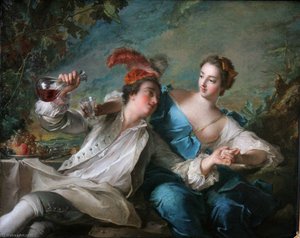
- Los Amantes (Alte Pinakothek Museum, Munich)
Influencias y Legado
- Influencia Paterna: Su padre, Marc Nattier, sirvió como su mentor inicial, proporcionando una base en la pintura de retratos.
- Orientación de Jean Jouvenet: Recibió más instrucción de su tío, Jean Jouvenet, un pintor de historia.
- Inspiración de Rubens: La copia de pinturas de Peter Paul Rubens en el Palacio de Luxemburgo influyó significativamente en su desarrollo artístico.
- Pionero del Estilo Rococó: Nattier es considerado una figura clave en el movimiento rococó, conocido por su elegancia, gracia y representaciones juguetonas de la vida aristocrática.
- Influencia en Artistas Posteriores: Sus técnicas innovadoras y estilo inspiraron a numerosos artistas que lo siguieron.
Significado Histórico
- Pintor de Corte para Luis XV: Su posición como pintor oficial de retratos del rey Luis XV consolidó su reputación e influencia.
- Revival de los Retratos Alegóricos: Se le atribuye la revitalización del género de los retratos alegóricos, combinando el realismo con temas mitológicos.
- Reflejo de la Sociedad Rococó: Sus obras proporcionan valiosas perspectivas sobre la moda, la cultura y la dinámica social de la aristocracia francesa del siglo XVIII.
- Reconocimiento Generalizado: Las pinturas de Nattier se encuentran en prestigiosos museos de todo el mundo, incluyendo el Louvre, The Wallace Collection y la Alte Pinakothek, lo que atestigua su legado perdurable.
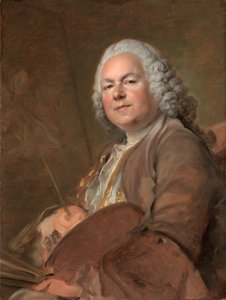
Marc Nattier
1685 - 1766 , Francia
Breves datos
- Artistas Que Influyeron: ['Peter Paul Rubens']
- Fecha De Fallecimiento: 7 de noviembre de 1766
- Fecha De Nacimiento: 17 de marzo de 1685
- Lugar De Nacimiento: París, Francia
- Movimiento Artístico: Rococó
- Nacionalidad: Francés
- Nombre Completo: Jean-Marc Nattier
- Obras Notables:
- El artista con su familia
- Marie Lečinska
- Madame Le Fèvre de Caumartin
- Los amantes

