 Ver en contexto
 Enviar
 Compartir
 Detalles

 Descargar
 Similares
 Radiografía
 Presentación de diapositivas
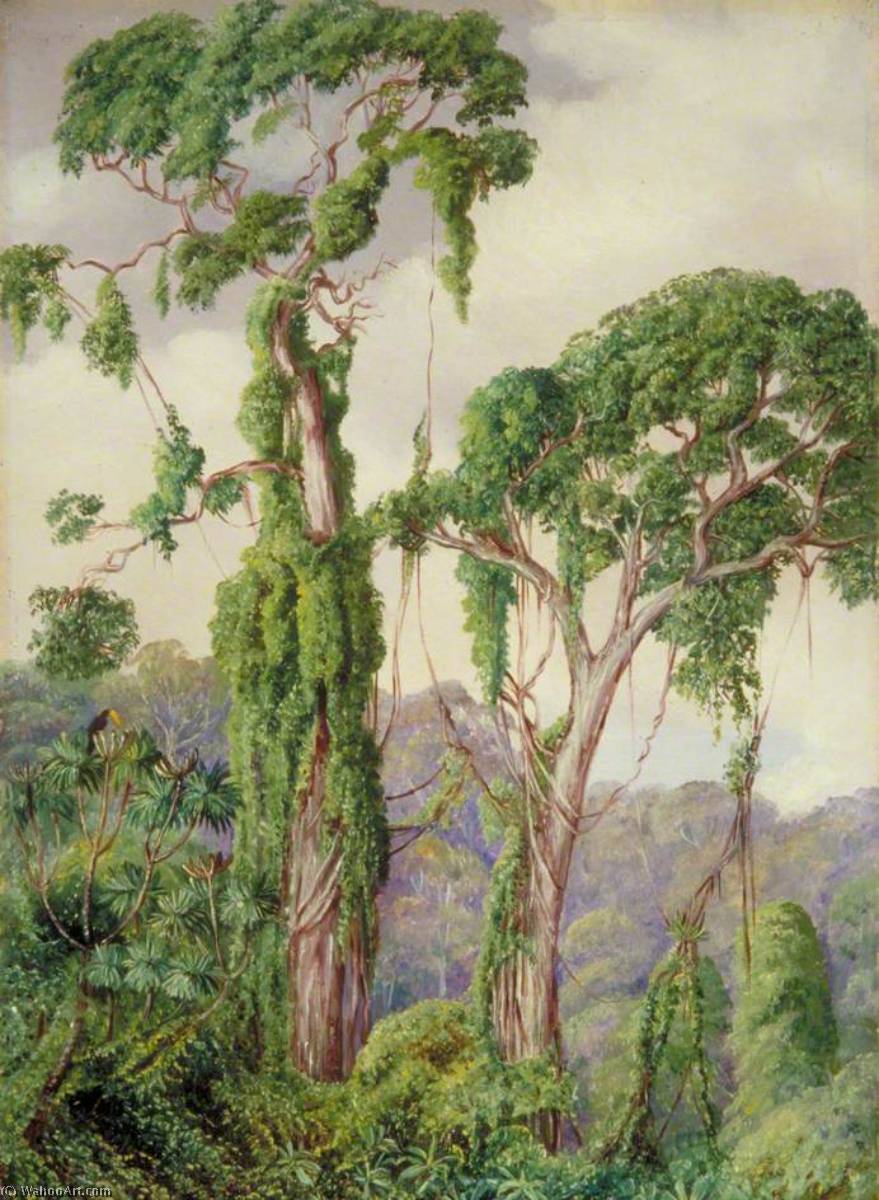
Árboles de madera amarilla y trepadoras en el Perie Bush
 Óleo sobre tabla
- Botánica Victoriana
 1882
1882 35.0 x 26.0 cm
 Galería Marianne North
 Ver más
Giclée / Impresión de arte
Impresiones giclée o en lienzo de calidad de museo con producción rápida y opciones de acabado flexibles. ( Comprar pintura hecha a mano Comprar imagen)




P118B $10

P118H $10

P118W $10

P438Z $10

P508JH $12

P508YH $12

P805H $10

P805Z $10

P919BZ $10

P919G $10

P919XJ $10

P959ZH $10

P968JZ $12

W106C $8

W218G $10

W218JH $8

W218Y $10

W307PJ $10

W316G $10

W316PJ $8

W316Y $10

W398PJ $8

W4111J $10

W500HY $15

W500JH $15

W692G $12

W849H $8

W940BG $15

W953PJ $8




Elija entre nuestros tamaños predefinidos que respetan las proporciones originales de la obra.

Puede introducir sus propias dimensiones para adaptarse a un marco o espacio específico. Si el tamaño seleccionado no coincide con las proporciones de la imagen original, recortaremos la obra de arte o extenderemos la imagen con un borde con efecto espejo o de color sólido. Se enviará una maqueta digital para su aprobación antes de que comience la producción.
Tenga en cuenta que la vista previa en pantalla no refleja el recorte o la extensión real. Solo la maqueta mostrará con precisión la composición final.
Aunque existen tamaños personalizados, recomendamos seleccionar una dimensión de la lista predefinida para preservar las proporciones originales.
Envío a todo el mundo () en 2 semanas en lugar de las 4/5 semanas estándar. (29 agosto)

Envío exprés gratuito a todo el mundo

Lienzo de lino de alta calidad

Seguro de envío total

Garantía de reembolso de impuestos aduaneros

Garantía de fidelidad cromática exacta

Política de devolución de 60 días (solo por defectos)

Garantía de devolución del 100% del dinero

Descuento por cantidad
 La opción de vidrio solo está disponible en tamaños inferiores a 110 cm.

Árboles de madera amarilla y trepadoras en el Perie Bush
Giclée / Impresión de arte
Dimensiones de la reproducción
-


Precio total final
$ 62
A Verdant Sanctuary: Marianne North’s “Yellow Wood Trees and Creepers in the Perie Bush”
Marianne North's "Yellow Wood Trees and Creepers in the Perie Bush," painted in 1882, is more than just a depiction of a forest; it’s a vibrant testament to a Victorian explorer’s unwavering dedication to capturing the beauty of the natural world. This oil on board painting transports the viewer into a dense, humid jungle – a meticulously rendered slice of the Perie Bush region of Syria, then part of the Ottoman Empire. North, a remarkably independent and adventurous woman for her time, embarked on decades-long expeditions across continents, driven by an insatiable curiosity and a profound respect for botanical diversity. Unlike many artists who sought grand landscapes or historical scenes, North focused almost exclusively on documenting the flora of remote locales, a pursuit that required immense courage, resilience, and a willingness to immerse herself in challenging environments.
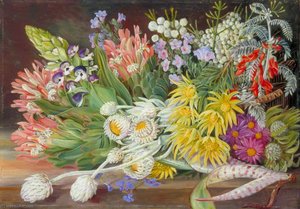
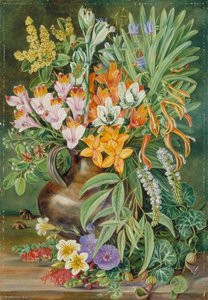
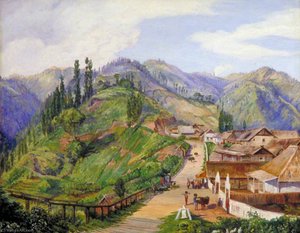
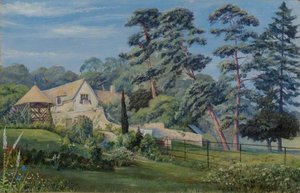
The painting’s immediate impact is one of overwhelming lushness. The palette is dominated by deep greens – emerald, viridian, and sap green – layered with ochres, browns, and hints of yellow, creating an almost palpable sense of humidity and warmth. North's technique is characterized by a remarkable level of detail; every leaf, vine, and root system is rendered with painstaking accuracy. However, she doesn’t simply aim for photographic realism. Instead, she employs a loose, expressive brushstroke that imbues the scene with movement and vitality. The trees themselves aren’t depicted as static forms but rather as dynamic entities, their branches reaching upwards in a tangle of foliage, while creepers cascade downwards, creating a sense of interwoven life.
The Victorian Explorer and Her Botanical Obsession
Marianne North's journey to create this painting – and countless others like it – was profoundly shaped by the intellectual currents of the late 19th century. The Victorian era witnessed an unprecedented surge in scientific exploration, fueled by advancements in technology and a growing fascination with the “exotic.” Botanists, driven by Darwinian theory and a desire to classify and understand the natural world, were actively seeking new species and documenting their habitats. North embraced this spirit of discovery, but she went beyond mere cataloging. She was an artist first and foremost, using her paintings not just as scientific records but also as expressions of her deep emotional connection with the landscapes she encountered.
Her travels weren’t undertaken with a formal expeditionary force. Instead, North often traveled alone or with a small team, establishing temporary camps in remote areas where she could meticulously observe and paint the local flora. She funded these expeditions herself, relying on the sale of her paintings to support her ongoing work. This remarkable self-sufficiency speaks volumes about her determination and artistic vision. She deliberately chose subjects that were often overlooked by other artists – the tangled undergrowth, the vibrant colors of lesser-known plants, and the intricate relationships between species within a complex ecosystem.
Symbolism and the Spirit of the Jungle
Beyond its botanical accuracy, “Yellow Wood Trees and Creepers in the Perie Bush” resonates with symbolic meaning. The dense jungle itself represents a realm of mystery, abundance, and primal energy – a space untouched by civilization and teeming with life. The vibrant greens evoke feelings of renewal, growth, and vitality, while the dappled sunlight filtering through the canopy suggests a sense of tranquility and seclusion. The inclusion of birds, subtly integrated into the foliage, adds to the feeling of a thriving ecosystem, highlighting the interconnectedness of all living things.
North’s choice of subject matter – a relatively obscure region of Syria – also holds symbolic weight. It reflects her desire to venture beyond the well-trodden paths of European art and explore the hidden corners of the world. The painting can be interpreted as an allegory for the artist's own journey—a quest for knowledge, beauty, and self-discovery amidst challenging circumstances.
A Legacy in Paint: Reproductions and Artistic Inspiration
Today, “Yellow Wood Trees and Creepers in the Perie Bush” stands as a remarkable achievement of Victorian botanical art. Marianne North’s meticulous observation, expressive brushwork, and profound appreciation for the natural world continue to inspire artists and collectors alike. High-quality reproductions capture the painting's rich colors and intricate details, offering a window into this extraordinary corner of the Perie Bush. Whether displayed in a private collection or incorporated into interior design schemes, this artwork evokes a sense of wonder, reminding us of the beauty and fragility of our planet’s diverse ecosystems.
Obras relacionadas
Biografía del artista
Marianne North: Una Vida en Arte Botánico
Primeros Años y Formación
- Nacida el 24 de octubre de 1830 en Hastings, Reino Unido, Marianne North fue la hija mayor de una familia acomodada propietaria de tierras.
- Su vida temprana incluyó formación como cantante bajo Charlotte Helen Sainton-Dolby. Sin embargo, sus aspiraciones vocales fueron truncadas por problemas de salud.
- Tras este revés, se dedicó a la pintura de flores, que se convertiría en su pasión y foco definitorio de su carrera.
Viajes Extensos y Descubrimientos Botánicos
- Marianne North emprendió extensos viajes por todo el mundo, comenzando en sus 40 años – un esfuerzo notablemente independiente para una mujer victoriana.
- Sus viajes la llevaron a Siria, el Nilo, Sicilia, Canadá, Estados Unidos, Jamaica, Brasil, Tenerife, California, Japón, Borneo, Java, Ceylon (Sri Lanka), India, Australia y Nueva Zelanda.
- Estos viajes no fueron meras visitas turísticas; documentó meticulosamente la flora de cada región a través de detalladas pinturas botánicas.
- Descubrió numerosas especies vegetales durante sus expediciones, contribuyendo significativamente al conocimiento botánico.
Estilo Artístico y Desarrollo
- El estilo artístico de North se caracteriza por su realismo detallado y vibrante paleta de colores.
- Trabajó principalmente en óleo, creando pinturas que capturaban la esencia de las plantas y paisajes exóticos con notable precisión.
- Su enfoque fue en gran medida autodidacta; desarrolló sus habilidades a través de la observación y la práctica durante sus viajes.
- Si bien no se alineaba formalmente con un movimiento artístico específico, su obra refleja elementos del naturalismo victoriano e ilustración científica.
Obras Notables y la Galería de Kew
- Algunas de sus obras más celebradas incluyen Foliaje, Flores y Fruta del Cajú, Tanjore, India, Elefantes, Peces Exóticos y Insecto Hoja.
- Reconociendo la importancia de su colección, Marianne North donó aproximadamente 800 pinturas a los Jardines Botánicos Reales de Kew.
- En 1882, se construyó una galería dedicada en Kew específicamente para albergar su obra – la Galería Marianne North. Esta sigue siendo una atracción popular hoy en día.
Legado e Importancia Histórica
- Marianne North desafió las expectativas victorianas convencionales para las mujeres al perseguir una carrera artística profesional y viajes independientes.
- Sus pinturas proporcionan documentación valiosa de la vida vegetal del mundo durante el siglo XIX, sirviendo como arte y registro científico.
- La restauración de la Galería Marianne North en Kew en 2008 puso de manifiesto su perdurable legado e importancia para la botánica y el arte.
- Es recordada como una pionera artista botánica y un espíritu aventurero que desafió las normas sociales para perseguir sus pasiones.
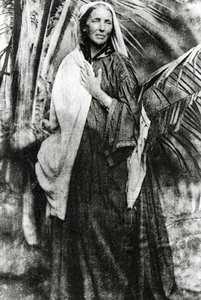
Marianne North
1830 - 1890 , United Kingdom
Datos clave
- Artistas Que Influyeron:
- Edward Lear
- Charles Darwin
- Fecha De Muerte: 30 de agosto de 1890
- Fecha De Nacimiento: 24 de octubre de 1830
- Lugar De Nacimiento: Hastings, Reino Unido
- Movimiento Artístico: Naturalismo Victoriano
- Nacionalidad: Británica
- Nombre Completo: Marianne North
- Obras Notables:
- Hojas, Flores y Fruta del Cajú
- Elefantes
- Peces Exóticos
- Insecto Hoja
Artículos relacionados
Marianne North: Las 25 Obras Maestras de una Artista Victoriana en ArtsDot
Descubre las 25 obras maestras de Marianne North, la artista victoriana que capturó la belleza exótica de la botánica. Pinturas vibrantes y llenas de historia. Reproducciones de arte exclusivas en ArtsDot.com.
Victorian Botanical Painting: Science, Art & Aesthetic Sensibility
Explore the exquisite world of Victorian botanical art! Discover the science & artistry behind stunning floral illustrations by Gould, Muckley & more. Learn about collecting, value & investment at ArtsDot.
The Flourishing Canvas: A Historical Journey Through Botanical Illustration
Explore the captivating history of botanical illustration! Discover renowned artists like Robert Havell & Mary Walcott, learn about techniques, and find museum-quality art at ArtsDot.com.
El Floreciente Lienzo: Un Viaje Histórico a Través de la Ilustración Botánica
Descubre la fascinante historia de la ilustración botánica, desde sus orígenes científicos hasta su renacimiento artístico actual. Técnicas, artistas y recursos para amantes del arte y la naturaleza.
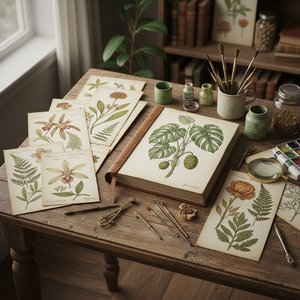
The Flourishing Canvas: A Historical & Artistic Exploration of Botanical Illustration
Explore the rich history of botanical illustration! Discover key artists like Havell & Barraband, learn about scientific accuracy & aesthetic beauty. Shop museum-quality reproductions at ArtsDot.