

 Ver en contexto
 Enviar
 Compartir
 Detalles

 Descargar
 Similares
 Radiografía
 Presentación de diapositivas
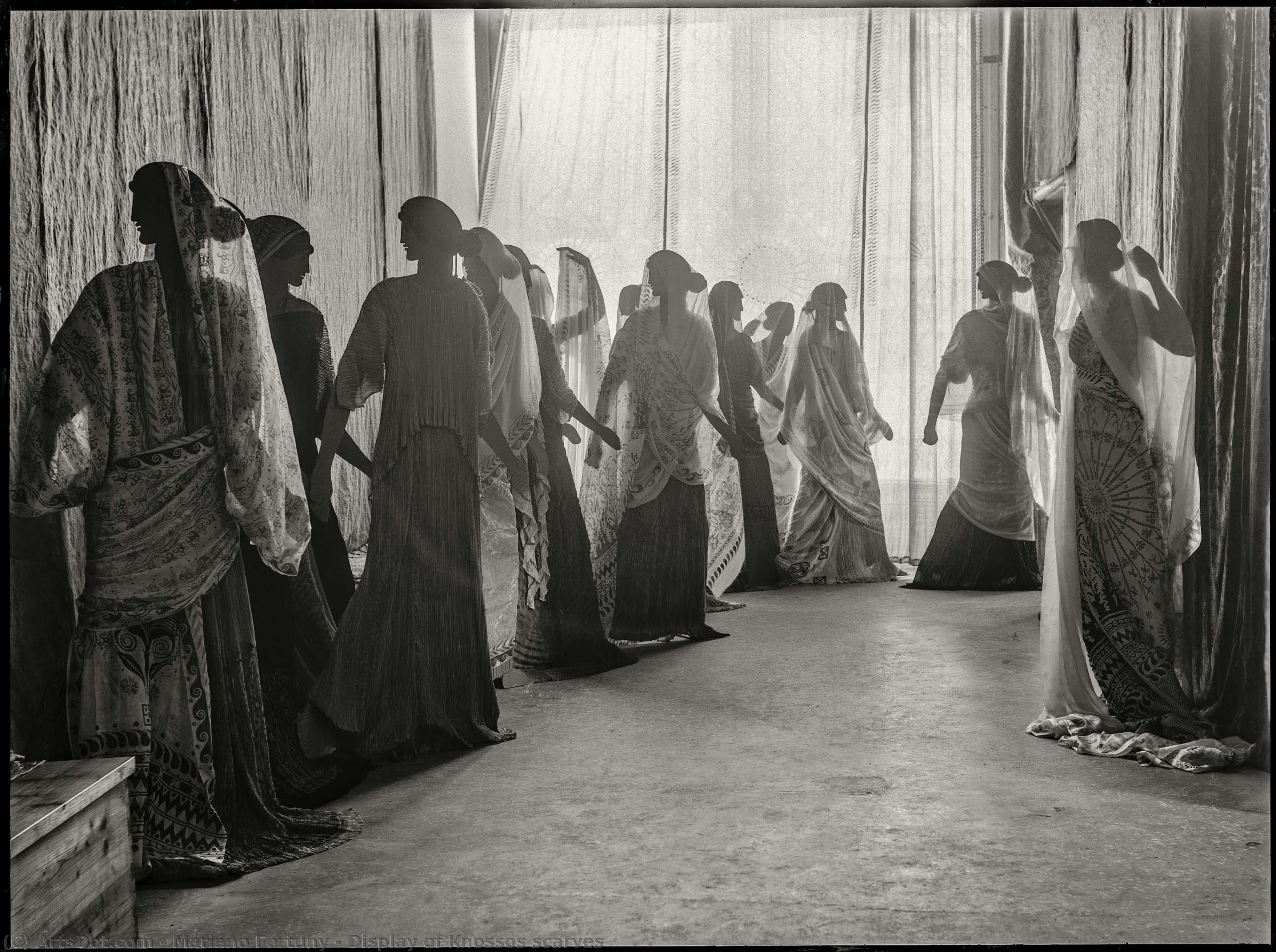
Display of Knossos scarves
 Acrylic On Canvas
- WallArt
- Orientalist Painting
 1910
1910- 19th Century
 18.0 x 24.0 cm
 Palazzo Fortuny
 Ver más
Adquiera una imagen digital de alta resolución y optimizada, muy superior a la vista previa en línea.
Cada archivo es preparado meticulosamente por nuestros especialistas internos mediante el uso de herramientas avanzadas y un experto retoque manual. Nos aseguramos de que cada imagen posea una claridad excepcional, una precisión cromática impecable y un detalle minucioso.
El archivo final se entrega por correo electrónico en un plazo de 72 horas, optimizado para su uso inmediato en entornos profesionales, editoriales y de impresión. Esta es la misma calidad en la que confían los estudios de diseño, las editoriales y las galerías de primer nivel.
Imagen Digital
Descarga un archivo de alta resolución para exhibición personal, impresión y proyectos creativos. ( Comprar impresión Comprar pintura hecha a mano)
Incluido en cada pedido de imágenes digitales
Entrega digital experta, garantizada.
Al elegir ArtsDot.com, no solo está adquiriendo una imagen; está recibiendo una obra de arte digital mejorada profesionalmente, elaborada con precisión y respaldada por una garantía de satisfacción. Esto es todo lo que incluye su pedido, automáticamente:

Entrega rápida por email
Recibirá su archivo de imagen digital en alta resolución por correo electrónico en un plazo de 72 horas tras realizar su pedido, listo para su uso inmediato.

Archivo digital optimizado por IA
Su obra de arte se optimiza profesionalmente mediante herramientas avanzadas de IA y edición manual, garantizando el máximo detalle, claridad y precisión cromática.

Reenvío gratuito de por vida
¿Has borrado o perdido tu archivo por error? No te preocupes: te lo volveremos a enviar en cualquier momento, sin coste adicional.

Sin gastos de importación, siempre
Disfrute de su obra de arte al instante sin aduanas, aranceles ni gastos de envío; las descargas digitales siempre están libres de impuestos.

Garantía de fidelidad de color
Garantizamos que su imagen digital refleje los colores originales con la mayor fidelidad posible, mediante el uso de herramientas profesionales y gestión del color.

Garantía de satisfacción de 60 días
Si no está satisfecho con su imagen digital, la revisaremos o le reembolsaremos el 100% en un plazo de 60 días, sin preguntas.

100% Garantía de devolución de dinero
¿No está satisfecho? Obtenga un reembolso completo dentro de los 60 días posteriores a la recepción de su archivo digital, sin necesidad de explicaciones.

Descuentos por pedidos grandes
Compra 3 imágenes, ahorra 10% - Compra 5, ahorra 15% - Compra 10+, ahorra 20%. Ideal para proyectos creativos, galerías y agencias.
Descripción del coleccionable
A Glimpse into a Venetian World: The “Display of Knossos Scarves”
Mariano Fortuny’s “Display of Knossos Scarves,” painted in 1910, isn't merely a depiction of women; it’s a portal to a meticulously constructed world steeped in the allure of antiquity and the burgeoning spirit of early 20th-century artistic innovation. The painting captures a moment within a richly appointed room, likely a salon or drawing-room, where nine figures – elegantly dressed in flowing gowns and draped with luxurious scarves – are engaged in an unspoken tableau. The scene’s power lies not just in its formal composition but in the subtle interplay of light, shadow, and texture that Fortuny masterfully orchestrates. The muted palette—dominated by creams, browns, and hints of gold—evokes a sense of timelessness, while the carefully rendered fabrics whisper of wealth and sophistication.
- Composition: The arrangement is deliberately asymmetrical, drawing the eye through the scene with a dynamic flow. The figures are not uniformly positioned; some lean towards the viewer, others recede into the background, creating depth and inviting contemplation.
- Light & Shadow: Fortuny’s use of chiaroscuro—the dramatic contrast between light and dark—is particularly striking. It highlights the textures of the fabrics, emphasizing their luxuriousness and adding a sense of drama to the scene.
- Color Palette: The restrained color scheme contributes significantly to the painting's overall mood – one of quiet elegance and understated luxury.
The Echoes of Minoan Crete
The title itself, “Display of Knossos Scarves,” immediately anchors the work within a specific historical context: the Minoan civilization of Crete. Fortuny’s fascination with this ancient culture was profound and deeply influential throughout his career. The scarves themselves are reminiscent of the elaborate textiles found in Minoan archaeological sites – particularly those depicting scenes from daily life, mythology, and ritual. The women's attire echoes the draped garments favored by Minoan women, creating a visual connection to a distant past. This deliberate reference to Crete speaks to Fortuny’s desire to fuse classical ideals of beauty with his own artistic vision.
It is believed that this painting was inspired by Fortuny’s travels and studies in Italy, where he encountered numerous artifacts and artworks related to the Minoan civilization. He sought to capture not just the aesthetic qualities of these objects but also the spirit of their culture – a spirit characterized by grace, beauty, and a deep connection to nature.Fortuny's Revolutionary Techniques
“Display of Knossos Scarves” is a testament to Fortuny’s innovative approach to painting. He was a pioneer in the use of *trompe-l'oeil* techniques—creating an illusion of three-dimensionality on a two-dimensional surface—and his mastery of color and texture is evident throughout the work. Notably, he employed a technique called “wet-on-wet,” where paint was applied to a wet canvas, allowing colors to blend seamlessly and creating soft, atmospheric effects. This method contributed significantly to the painting’s luminous quality and its sense of immediacy.
Furthermore, Fortuny's use of layering and glazing—applying thin layers of translucent color over one another—allowed him to build up complex textures and create a remarkable sense of depth and realism.Symbolism and Emotional Resonance
Beyond its technical brilliance, “Display of Knossos Scarves” is rich in symbolic meaning. The women’s averted gazes suggest a certain reserve or introspection, while their elegant attire speaks to their social status and refinement. The room itself—with its richly decorated walls and opulent furnishings—represents the comforts and pleasures of upper-class life. The painting evokes a sense of quiet contemplation, inviting viewers to ponder the lives and experiences of these enigmatic figures. It’s a scene frozen in time, capturing a fleeting moment of beauty and sophistication – a testament to Fortuny's ability to transform historical references into timeless works of art.
Obras relacionadas
Biografía del artista
Early Life and Inspiration
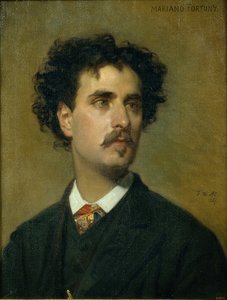
Mariano Fortuny y Marsal (Granada, May 11, 1871 – Venice, May 3, 1949) was a Spanish painter, inventor, sculptor, photographer, architect, and theatrical stage lighting designer. His father, Mariano Fortuny y Marsal, was a genre painter who tragically passed away when Mariano was just three years old, profoundly shaping his formative years. This event led to the family’s relocation to Paris, France, where Mariano's mother introduced him to textiles and fabrics—a pivotal influence on his artistic vision. From a young age, Fortuny demonstrated exceptional talent in painting, drawing, and sculpting, showcasing skills that quickly distinguished him from his peers. He studied at the École Supérieure des Beaux-Arts in Paris alongside Jean-Joseph Benjamin-Constant, absorbing stylistic influences that would permeate his subsequent work. His fascination with Richard Wagner’s operas fueled his artistic explorations and inspired him to delve into theatrical design—a passion he pursued relentlessly throughout his life.Artistic Talents and Inventions
Fortuny's artistic prowess extended beyond painting; he mastered diverse mediums, including photography, sculpture, architecture, etching, and theatrical stage lighting. He revolutionized theater design with the invention of the fortuny cyclorama dome, a quarter dome constructed of plaster or cloth that utilized indirect lighting to create seamless transitions between scenes—a groundbreaking technique that dramatically enhanced visual impact. His treatise “Éclairage scénique” (1904) meticulously documented his discovery of reflecting light off different surfaces, altering its color, intensity, and properties—a scientific breakthrough that underpinned his theatrical innovations. Fortuny’s inventive spirit manifested in over twenty patented inventions between 1901 and 1934, transforming various industries and solidifying his reputation as a visionary innovator. Among his most notable achievements was the creation of the “Delphos gown,” a revolutionary textile design featuring intricate pleats that achieved its characteristic undulating texture through a complex mechanical process—a testament to Fortuny’s meticulous craftsmanship and artistic ingenuity.Notable Contributions and Collaborations
Fortuny gained international acclaim in the 1920s, collaborating with prominent figures such as Richard Wagner and Marcel Proust. He served as stage designer for Wagner's operas, adapting his dome specifically for La Scala opera house in Milan—a feat of engineering that ensured its structural integrity during performances. His work profoundly impacted theatrical aesthetics, elevating visual storytelling to new heights. Fortuny’s artistic legacy extends beyond theater; he contributed significantly to the revival of classical motifs and techniques in decorative arts, influencing generations of artists. He collaborated closely with his brother-in-law Raimundo de Madrazo on numerous paintings—a testament to their shared artistic sensibilities and creative partnership.Legacy and Later Life
Mariano Fortuny’s influence resonated throughout his life, culminating in his relocation to Venice in 1911 where he established a studio dedicated to preserving and disseminating his artistic heritage. He continued to experiment with new materials and techniques, pushing the boundaries of artistic expression—a characteristic trait that defined his creative journey. Fortuny's work inspired Marcel Proust’s masterpiece “À la recherche du temps perdu,” capturing the essence of Parisian intellectual life during the Belle Époque. His final years were marked by a dedication to perfecting his craft and honoring his artistic vision—a poignant reminder of his unwavering commitment to excellence. He passed away peacefully in Venice on May 3, 1949, leaving behind an enduring legacy as one of Spain’s most celebrated artists.Selected Paintings by Mariano Fortuny
- Teagown (Museum of Fine Arts, Boston)
- Portrait of Henriette Fortuny
Mariano Fortuny
1871 - 1949 , España
Breves datos
- Artistic Movement Or Style: Orientalism art
- Artists Or Movements Influenced By This Artist: ['Marcel Proust']
- Artists Who Influenced This Artist: ['Richard Wagner']
- Date Of Birth: May 11, 1871
- Date Of Death: May 3, 1949
- Full Name: Mariano Fortuny y Marsal
- Nationality: Spanish
- Notable Artworks:
- Teagown
- Portrait of Henriette Fortuny
- Place Of Birth: Granada, Spain

