 Enviar
 Compartir
 Detalles

 Descargar
 Similares
 Presentación de diapositivas
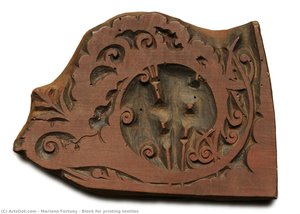
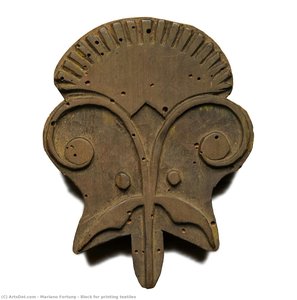
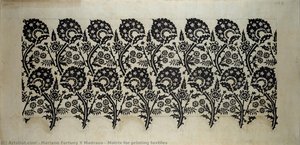
Matrix for printing textiles


 Ver más
Reproducción al óleo hecha a mano
Óleo sobre lienzo pintado a mano en el tamaño y marco de su elección, realizado por encargo por nuestros artistas. ( Comprar impresión Comprar imagen)




































Elija entre nuestros tamaños predefinidos que respetan las proporciones originales de la obra.

Puede ingresar sus propias dimensiones para adaptarse a un marco o espacio específico. Si el tamaño seleccionado no coincide con las proporciones de la imagen original, recortaremos la obra o extenderemos la pintura con elementos adicionales pintados a mano. Se le enviará una maqueta digital para su aprobación antes de comenzar la producción.
Tenga en cuenta que la vista previa en pantalla no refleja el recorte o la extensión reales. Solo la maqueta mostrará con precisión la composición final.
Si bien existen tamaños personalizados, recomendamos seleccionar una dimensión de la lista predefinida para preservar las proporciones originales.
Tras realizar el pedido, el equipo de ArtsDot.com enviará un correo electrónico al cliente para solicitar instrucciones y proporcionarle una vista previa del boceto.
Envío a todo el mundo () en 3-4 semanas en lugar de las 5 semanas estándar. (23 agosto). Sin comprometer la calidad.

Envío exprés gratuito a todo el mundo

Lienzo de lino de alta calidad

Seguro de envío total

Garantía de reembolso de impuestos aduaneros

Garantía de fidelidad cromática exacta

Política de devolución de 60 días (solo por defectos)

Garantía de devolución del 100% del dinero

Descuento por cantidad
 La opción de vidrio solo está disponible en tamaños inferiores a 110 cm.

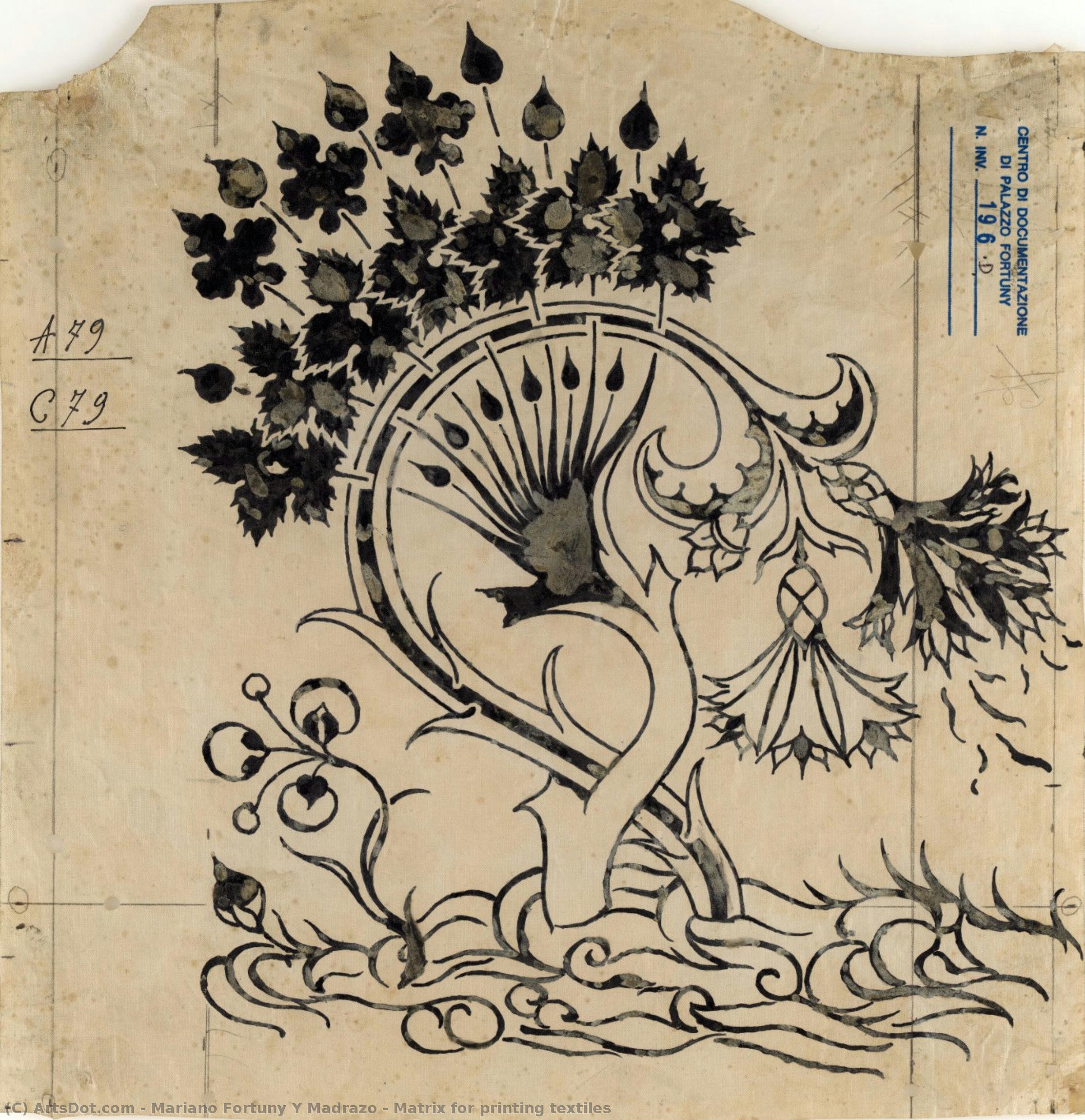
Matrix for printing textiles
Técnica de reproducción
Dimensiones de la reproducción
-


Precio total final
$ 263
Descripción de la obra
A Symphony of Botanical Lines: Unveiling ‘Matrix for Printing Textiles’
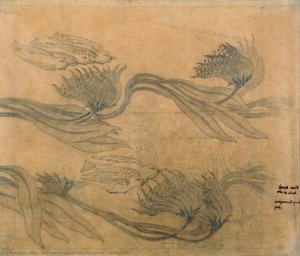
Mariano Fortuny y Madrazo's “Matrix for Printing Textiles” (1910) isn’t merely a decorative design; it’s an immersive experience captured on paper. This captivating monochrome drawing, born from the meticulous hand of a Venetian polymath, pulsates with a quiet dynamism—a testament to Fortuny’s profound understanding of both nature and artistic technique. The image immediately draws the eye into a dense, swirling world of stylized flora and fauna, rendered in intricate hatching and cross-hatching that suggests texture and depth without resorting to traditional shading. It's a deliberate choice, reflecting Fortuny’s fascination with textile design and his desire to mimic the appearance of woven fabrics through visual means.
- Subject Matter: The core of the artwork is an exuberant botanical arrangement—a riot of stylized vines, leaves, and flowers. These aren't realistic depictions; rather, they’re distilled into elegant, flowing forms, echoing the Art Nouveau movement’s embrace of organic shapes and a rejection of rigid academic styles.
- Style & Influence: Fortuny’s work is deeply rooted in the late 19th-century aesthetic, blending elements of Art Nouveau with influences from Orientalism – a hallmark of his Venetian period. The swirling lines and intricate details recall the decorative motifs found in textiles from the East, while the overall composition possesses a distinctly European sensibility.
The Technique: A Masterclass in Pen and Ink
The execution of “Matrix for Printing Textiles” is as remarkable as its subject matter. Fortuny’s mastery of pen and ink is immediately apparent, evidenced by the subtle variations in line weight and pressure that create a sense of movement and volume. The hatching technique—the use of closely spaced parallel lines to build up tone—is particularly noteworthy. It's not simply applied uniformly; instead, it’s strategically employed to suggest the texture of foliage, the shadows cast by leaves, and the delicate veins of flowers. The artist’s control is exquisite, demonstrating a deep understanding of how line can be used to evoke form and atmosphere.
Materials: Paper and Ink – The simplicity of these materials belies the complexity of the artwork's execution. Fortuny’s ability to achieve such rich visual effects with just pen and ink speaks volumes about his skill and artistic vision.Historical Context: Venice, Innovation, and the Textile Industry
To fully appreciate “Matrix for Printing Textiles,” it’s essential to understand the context in which Fortuny worked. He was a pivotal figure in the late 19th and early 20th centuries—a time of rapid technological and artistic innovation. Venice, with its rich history as a center of trade and craftsmanship, provided an ideal environment for his creative explorations. Fortuny’s work directly addressed the burgeoning textile industry, designing patterns specifically intended for printing on fabrics. His designs were highly sought after by fashion houses and manufacturers, contributing significantly to the aesthetic trends of the era.
Additional Research:- Useful Links: Google Arts & Culture
- WikiArt: WikiArt Store
- Wikipedia: Wikipedia - Woodblock Printing on Textiles
A Legacy of Beauty and Innovation
“Matrix for Printing Textiles” is more than just a beautiful drawing; it’s a window into the mind of a brilliant artist and innovator. Fortuny's ability to seamlessly blend artistic vision with technical skill—to capture the essence of nature through the precise manipulation of line—solidifies his place as one of the most significant figures in 20th-century art and design. Reproductions of this piece offer a chance to bring its intricate beauty into your own space, serving as a constant reminder of Fortuny’s enduring legacy.
Obras relacionadas
Biografía del artista
Primeros años y formación
Mariano Fortuny y Madrazo, un renombrado polímata español, artista, inventor y diseñador de moda, nació el 11 de mayo de 1871 en Granada, España. Como hijo de Mariano Fortuny y Marsal, un pintor, las inclinaciones artísticas de Mariano fueron cultivadas desde una edad temprana. Su familia se trasladó a París tras la muerte de su padre cuando él tenía solo tres años, donde recibió educación artística junto a su hermano Raimundo, bajo la tutela de Jean-Joseph Benjamin-Constant. También estudió dibujo y química en Francia y Alemania, sentando las bases para sus futuras innovaciones técnicas.Desarrollo artístico y profesional
Fortuny se estableció en Venecia alrededor de 1888, donde se sumergió en el estudio de antiguos textiles y técnicas de teñido. En 1906, abrió su casa de alta costura en el Palacio Pesaro degli Orfei, que operó hasta 1946, revolucionando el mundo de la moda con sus diseños innovadores. Su taller se convirtió en un centro para artistas y artesanos, donde experimentaba con nuevos materiales y técnicas. Además de la moda, Fortuny continuó desarrollando su talento como pintor, exhibiendo sus obras en Londres, París, Milán y Barcelona.Innovaciones y contribuciones
Mariano Fortuny fue un prolífico inventor y diseñador. Sus contribuciones abarcaron múltiples disciplinas:- Diseño de moda: Creó el icónico vestido "Delphos", inspirado en las túnicas griegas, caracterizado por su plisado único y su fluidez. También desarrolló el velo "Knossos", un accesorio elegante y versátil.
- Textiles: Fortuny experimentó con técnicas de teñido y estampado para crear telas con efectos únicos y colores vibrantes, imitando la apariencia de antigüedades. Patentó varios procesos innovadores en este campo.
- Iluminación escénica: Diseñó sistemas de iluminación revolucionarios para teatros, mejorando significativamente la calidad visual de las producciones escénicas.
- Escenografía: Colaboró en el diseño de escenarios y vestuario para óperas y obras de teatro, incluyendo producciones en La Scala de Milán.
Legado e influencia
El legado de Mariano Fortuny y Madrazo perdura hasta nuestros días. Su enfoque innovador del diseño, su experimentación con materiales y técnicas, y su visión artística han influenciado a generaciones de artistas y diseñadores. Sus creaciones en moda y textiles siguen siendo admiradas por su elegancia atemporal y su calidad excepcional. Su trabajo es un testimonio de la importancia de la creatividad, la innovación y la búsqueda constante de la perfección. Sus diseños se pueden encontrar en museos de todo el mundo, incluyendo el Museo del Traje en Madrid y el Museo de Bellas Artes en Boston.Obras destacadas
- Vestido Delphos: Un diseño icónico que revolucionó la moda femenina a principios del siglo XX.
- Velo Knossos: Un accesorio elegante y versátil, conocido por su ligereza y fluidez.
- Fetching Water (pintura): Una obra representativa de su talento como pintor, que muestra su dominio del color y la luz.
- Tejidos Fortuny: Sus innovadores textiles, con sus colores vibrantes y efectos únicos, son altamente valorados por coleccionistas y diseñadores.
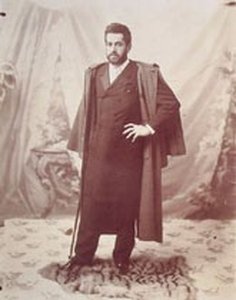
Mariano Fortuny Y Madrazo
1871 - 1949 , España
Datos clave
- Artistas Que Influyeron: ['Richard Wagner']
- Fecha De Fallecimiento: 3 de mayo de 1949
- Fecha De Nacimiento: 11 de mayo de 1871
- Influenciado A:
- Diseñadores de moda
- Textiles
- Lugar De Nacimiento: Granada, España
- Movimiento Artístico: Art Déco, Veneciano
- Nacionalidad: Española
- Nombre Completo: Mariano Fortuny y Madrazo
- Obras Notables:
- Fetching Water
- Teagown
- Swatch
Artículos relacionados
Mariano Fortuny: A Fusion of Art, Fashion & Design – Exploring a Venetian Innovator's Legacy
Explore the captivating world of Mariano Fortuny – artist, designer & innovator. Discover his revolutionary textiles, iconic Delphos gown, and lasting influence on art, fashion & interiors. A collector's guide to a Venetian master.

Las 10 Pinturas Más Famosas Dominadas por el Negro | Arte y Decoración
Descubre las 10 pinturas más impactantes dominadas por el negro. Explora obras maestras de Rembrandt, Goya y Rothko, su historia y significado. Encuentra reproducciones de arte exclusivas para transformar tu hogar en .
The Flourishing Canvas: A Historical Journey Through Botanical Illustration
Explore the captivating history of botanical illustration! Discover renowned artists like Robert Havell & Mary Walcott, learn about techniques, and find museum-quality art at ArtsDot.com.

Victorian Botanical Painting: Science, Art & Aesthetic Sensibility
Explore the exquisite world of Victorian botanical art! Discover the science & artistry behind stunning floral illustrations by Gould, Muckley & more. Learn about collecting, value & investment at ArtsDot.
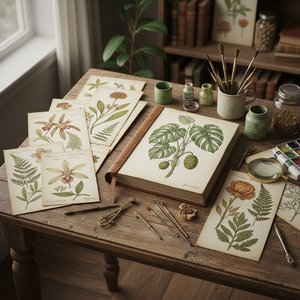
The Flourishing Canvas: A Historical & Artistic Exploration of Botanical Illustration
Explore the rich history of botanical illustration! Discover key artists like Havell & Barraband, learn about scientific accuracy & aesthetic beauty. Shop museum-quality reproductions at ArtsDot.