 Ver en contexto
 Enviar
 Compartir
 Detalles

 Descargar
 Similares
 Radiografía
 Presentación de diapositivas
 Estadísticas
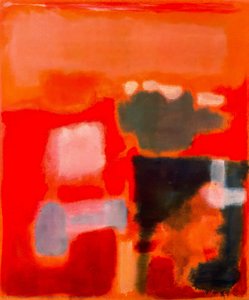
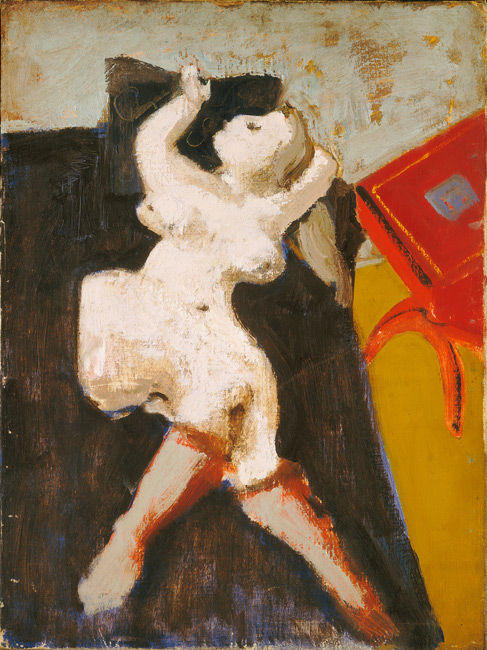
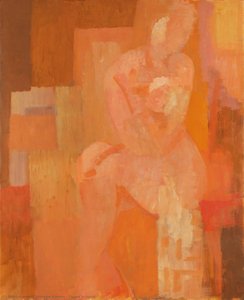
Untitled (reclining nude)


 Ver más
Reproducción al óleo hecha a mano
Óleo sobre lienzo pintado a mano en el tamaño y marco de su elección, realizado por encargo por nuestros artistas. ( Cambiar a Impresión Cambiar a imagen digital)




P118B $10

P118H $10

P118W $10

P438Z $10

P508JH $12

P508YH $12

P805H $10

P805Z $10

P919BZ $10

P919G $10

P919XJ $10

P959ZH $10

P968JZ $12

W106C $8

W218G $10

W218JH $8

W218Y $10

W307PJ $10

W316G $10

W316PJ $8

W316Y $10

W398PJ $8

W4111J $10

W500HY $15

W500JH $15

W692G $12

W849H $8

W940BG $15

W953PJ $8




Elija entre nuestros tamaños predefinidos que respetan las proporciones originales de la obra.

Puede ingresar sus propias dimensiones para adaptarse a un marco o espacio específico. Si el tamaño seleccionado no coincide con las proporciones de la imagen original, recortaremos la obra o extenderemos la pintura con elementos adicionales pintados a mano. Se le enviará una maqueta digital para su aprobación antes de comenzar la producción.
Tenga en cuenta que la vista previa en pantalla no refleja el recorte o la extensión reales. Solo la maqueta mostrará con precisión la composición final.
Si bien existen tamaños personalizados, recomendamos seleccionar una dimensión de la lista predefinida para preservar las proporciones originales.
Tras realizar el pedido, el equipo de ArtsDot.com enviará un correo electrónico al cliente para solicitar instrucciones y proporcionarle una vista previa del boceto.
Envío a todo el mundo () en 3-4 semanas en lugar de las 5 semanas estándar. (9 septiembre). Sin comprometer la calidad.

Envío exprés gratuito a todo el mundo

Lienzo de lino de alta calidad

Seguro de envío total

Garantía de reembolso de impuestos aduaneros

Garantía de fidelidad cromática exacta

Política de devolución de 100 días (solo por defectos)

Garantía de devolución del 100% del dinero

Descuento por cantidad
 La opción de vidrio solo está disponible en tamaños inferiores a 110 cm.

Untitled (reclining nude)
Técnica de reproducción
Dimensiones de la reproducción
-


Precio total final
$ 263
The Weight of Absence: A Journey into Rothko’s Introspection
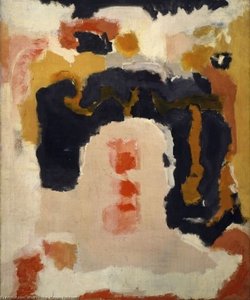
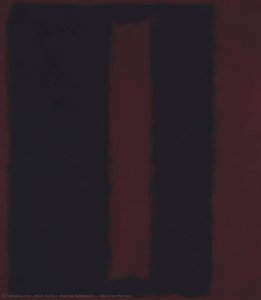
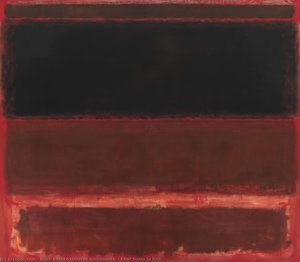
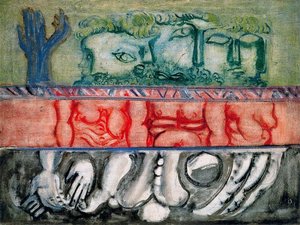
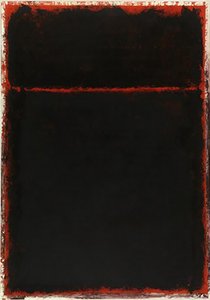
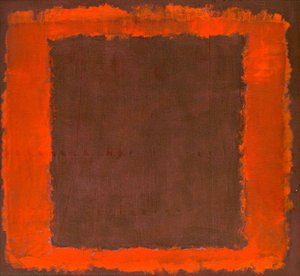
To stand before Mark Rothko's Untitled (reclining nude) is to enter a sanctuary where the boundaries between the physical self and the infinite begin to dissolve. Painted during the transformative years of 1953 and 1954, this work serves as a profound bridge between the artist's earlier explorations of figuration and his eventual mastery of the color field. While the canvas suggests the presence of a woman in a reclining position, Rothko deliberately avoids the trap of explicit representation. Instead, he offers us an amorphous, luminous suggestion of form—a visual dialogue between stillness and movement that invites the viewer to look far beyond the surface of the pigment.
The painting’s power resides in its ability to evoke a visceral response rooted in deep emotion and memory. At first glance, one might perceive the limbs of a figure or the presence of objects like a chair or books, yet these elements are rendered with an abstract expressionist fluidity that prioritizes atmosphere over detail. This ambiguity is intentional; Rothko seeks to capture the essence of human existence—the heavy, often silent weight of our shared experiences of loss, longing, and transcendence.
Technique and the Alchemy of Color
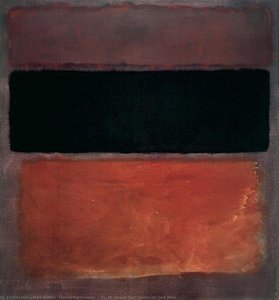
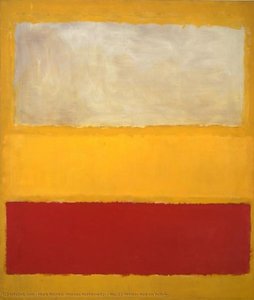
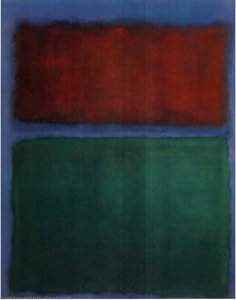
The technical brilliance of this piece lies in Rothko’s signature method of layering thin, translucent washes of color onto the canvas. This meticulous process achieves a remarkable textural depth that avoids the aggression of heavy brushstrokes, opting instead for a velvety surface that seems to absorb and radiate light simultaneously. The subtle gradations of hue create a hypnotic effect, drawing the eye into a meditative state where the colors appear to breathe and hover within the frame.
For the discerning collector or interior designer, this technique offers an unparalleled sensory experience. The way the darker rectangles overlay the lighter, more luminous shapes creates a sense of architectural depth, making the artwork feel less like a flat object and more like a window into another dimension. This interplay of light and shadow provides a sophisticated focal point for any space, offering a quiet, contemplative energy that can anchor a room with both elegance and emotional gravity.
A Legacy of Existential Resonance
Understanding the historical context of Untitled (reclining nude) is essential to grasping its profound significance. Emerging from the intellectual ferment of post-war America, Rothko was deeply influenced by existentialist thinkers like Sartre and Camus. His work mirrors a broader societal preoccupation with confronting mortality and searching for meaning in an era defined by uncertainty. The painting reflects this spirit of introspection, acting as a vessel for the anxieties and the profound beauty found within the human condition.
For those seeking to bring a piece of art history into their personal environment, a high-quality reproduction of this masterpiece offers more than mere decoration; it provides an invitation to reflection. Whether placed in a quiet study or a grand living space, Rothko’s work continues to command presence through its rhythmic breathing of color, reminding us that even in the absence of explicit form, the most profound truths are often felt rather than seen.
Obras relacionadas
Biografía del artista
vida temprana e influencias
Mark Rothko (Marcus Rothkowitz), un reconocido artista estadounidense, nació el 25 de septiembre de 1903 en Dvinsk, Letonia. Su familia emigró a los Estados Unidos cuando tenía solo diez años. Este cambio cultural influyó más tarde en su estilo artístico.evolución artística
La obra temprana de Rothko se caracterizó por el **expresionismo abstracto**, un estilo que enfatizaba el proceso de creación del arte más que el producto final. Sus pinturas, como No. 18 (1948) y Untitled (1948), mostraban su enfoque único del color y la forma.- **Campo de color:** El uso de campos de color rectangulares audaces por Rothko, a menudo en marcado contraste entre sí, creó una sensación de profundidad y emoción.
- **Estructura orgánica:** Sus pinturas parecían respirar vida, como si los colores fueran entidades vivientes.
obras notables y exposiciones
- No. 10 (1950), una pintura que marcó un cambio significativo en el estilo de Rothko, ahora forma parte de la colección del Museo de Arte Moderno.
- Las murales de Seagram, una serie de pinturas encargadas para el restaurante Four Seasons, mostraron la capacidad de Rothko para adaptar su estilo a diferentes entornos.
- No. 3 (1950), una pintura que ejemplifica el uso de campos de color rectangulares audaces por Rothko.
vida tardía y legado
La vida de Rothko estuvo marcada por las luchas con la salud mental y un matrimonio tumultuoso. Falleció el 25 de febrero de 1970, a los 66 años. A pesar de sus desafíos, Rothko dejó una huella imborrable en el mundo del arte. Ocre y rojo sobre rojo (campo de color), una pintura que muestra el enfoque único del color de Rothko, se puede encontrar en la colección ArtsDot.com. La página de Wikipedia de Mark Rothko proporciona más información sobre su vida y estilo artístico.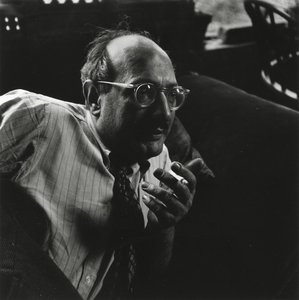
Mark Rothko
1903 - 1970 , Letonia
Datos clave
- Artistas Que Influyeron:
- Edward Hopper
- Pablo Picasso
- Fecha De Muerte: 25 de febrero de 1970
- Fecha De Nacimiento: 25 de septiembre de 1903
- Influencia En Artistas:
- Minimalismo
- Arte contemporáneo
- Lugar De Nacimiento: Daugavpils, Letonia
- Movimiento Artístico: Expresionismo Abstracto
- Nacionalidad: Estadounidense
- Nombre Completo: Mark Rothko (Marcus Rothkowitz)
- Obras Notables:
- No. 18 (1948)
- No. 10 (1950)
- Murales Seagram
- No. 3 (1950)
Artículos relacionados
Más Allá de la Representación: Explorando el Paisaje Emocional del Expresionismo Abstracto
Descubra el Expresionismo Abstracto en profundidad. Análisis de artistas clave como Rothko y Richter, su contexto histórico e inversión en arte. Guía experta para coleccionistas.
Mark Rothko: Las 25 Obras Maestras que Definen la Expresión Abstracta | ArtsDot
Descubre las 25 obras maestras de Mark Rothko, pionero del expresionismo abstracto. Explora la historia, el significado y los colores vibrantes que definen su arte emocional. Reproducciones de alta calidad en ArtsDot.com.
Expresionismo Abstracto: 10 Obras Maestras que Transformaron el Arte |
Descubre las 10 obras maestras del Expresionismo Abstracto: Pollock, Rothko y más. Explora la historia, técnica y significado de estos lienzos icónicos. Reproducciones de arte exclusivas en .
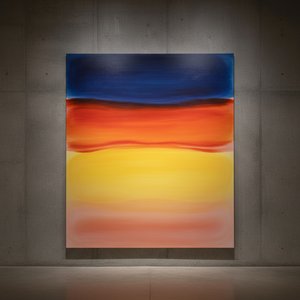
The Sublimity of Color: Exploring the Emotional Landscapes of Mark Rothko's Abstract Expressionism
Explore the profound emotional depth of Mark Rothko's abstract expressionism. Discover the history, techniques & lasting impact of this pivotal Color Field painter. Expert insights for collectors and art enthusiasts.
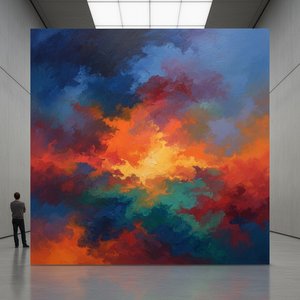
Atmósferas Cromáticas: Explorando los Fundamentos Filosóficos de la Pintura Color Field
Descubra la profunda filosofía y técnica detrás de la pintura Color Field. Explore las obras maestras de Rothko, Newman, Frankenthaler y más. Guía experta para coleccionistas.