 Vista previa
 Compartir
 Compartir
 Ver detalles

 Descargar
 Ver similares
 Radiografía
 Presentación de diapositivas
Grupo Folclórico Chambi
 Acrílico sobre lienzo
- Arte de pared
- Early Documentary Photography
 1929
1929 20.0 x 25.0 cm
 Museo de Culturas - MUDEC
 Leer más
Reproducción al óleo hecha a mano
Óleo sobre lienzo pintado a mano en el tamaño y marco de su elección, realizado por encargo por nuestros artistas. ( Pedir impresión Comprar descarga)




P118B $10

P118H $10

P118W $10

P438Z $10

P508JH $12

P508YH $12

P805H $10

P805Z $10

P919BZ $10

P919G $10

P919XJ $10

P959ZH $10

P968JZ $12

W106C $8

W218G $10

W218JH $8

W218Y $10

W307PJ $10

W316G $10

W316PJ $8

W316Y $10

W398PJ $8

W4111J $10

W500HY $15

W500JH $15

W692G $12

W849H $8

W940BG $15

W953PJ $8




Elija entre nuestros tamaños predefinidos que respetan las proporciones originales de la obra.

Puede ingresar sus propias dimensiones para adaptarse a un marco o espacio específico. Si el tamaño seleccionado no coincide con las proporciones de la imagen original, recortaremos la obra o extenderemos la pintura con elementos adicionales pintados a mano. Se le enviará una maqueta digital para su aprobación antes de comenzar la producción.
Tenga en cuenta que la vista previa en pantalla no refleja el recorte o la extensión reales. Solo la maqueta mostrará con precisión la composición final.
Si bien existen tamaños personalizados, recomendamos seleccionar una dimensión de la lista predefinida para preservar las proporciones originales.
Tras realizar el pedido, el equipo de ArtsDot.com enviará un correo electrónico al cliente para solicitar instrucciones y proporcionarle una vista previa del boceto.
Envío a todo el mundo () en 3-4 semanas en lugar de las 5 semanas estándar. (21 agosto). Sin comprometer la calidad.

Envío exprés gratuito a todo el mundo

Lienzo de lino de alta calidad

Seguro de envío completo

Garantía de reembolso de aranceles aduaneros

Garantía de fidelidad cromática exacta

Política de devolución de 60 días (solo por defectos)

Garantía de devolución del 100% del dinero

Oferta por volumen
 La opción de vidrio solo está disponible en tamaños inferiores a 110 cm.

Grupo Folclórico Chambi
Técnica de reproducción
Tamaño de la reproducción
-


Precio total
$ 563
Descripción de la obra
Combapata folkloric group: A Window Into Andean Identity
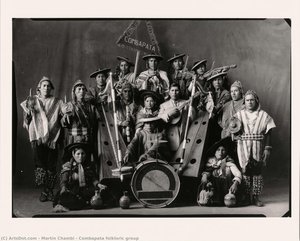
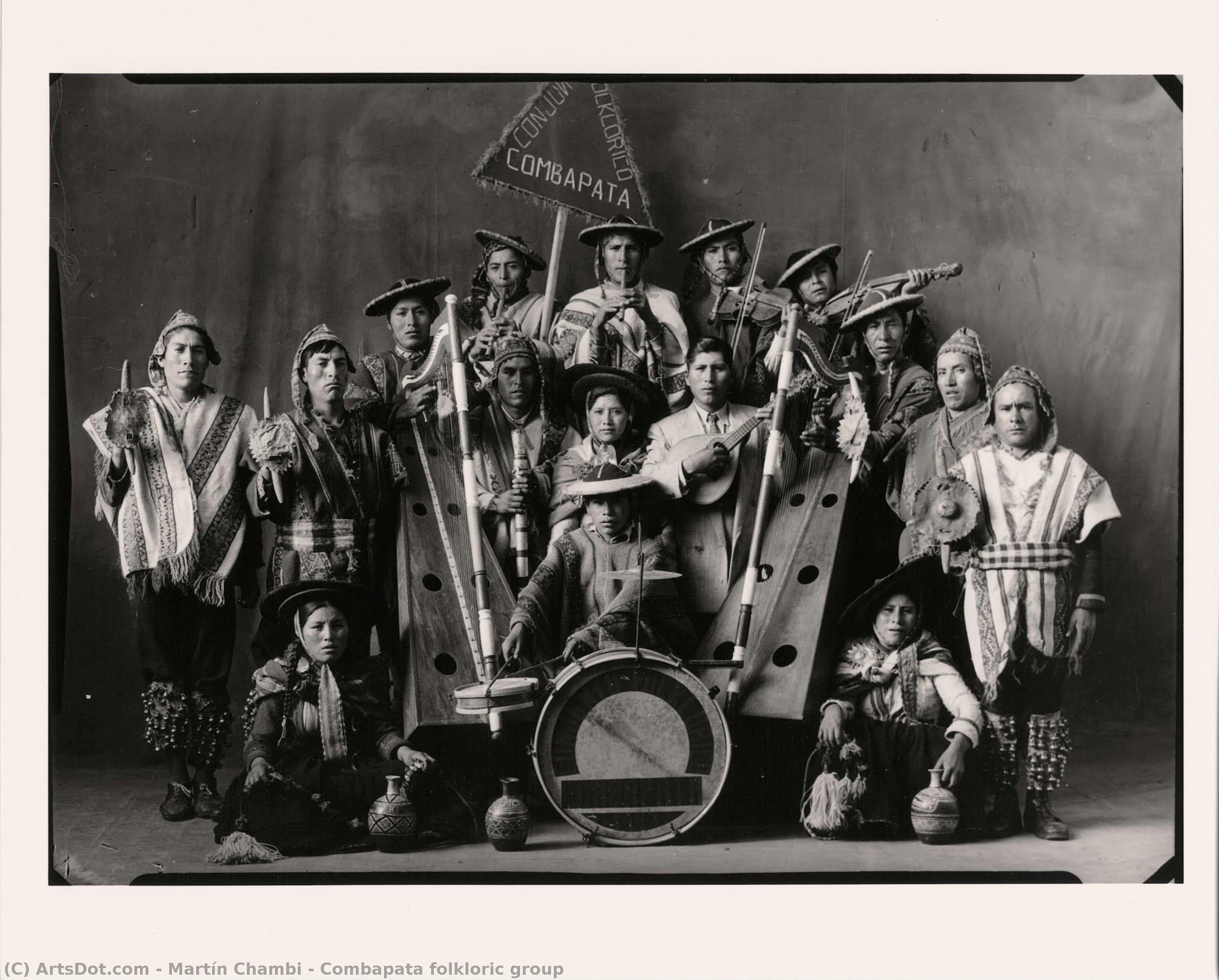
Martín Chambi’s photograph “Combapata folkloric group,” created in 1929, transcends mere documentation; it's a masterful snapshot of Peruvian Andean culture at the cusp of modernity. Captured against a simple fabric backdrop, the image portrays thirteen individuals—primarily men and women—engaged in a traditional dance ritual within the village of Combapata, nestled in Cusco’s Chancis province.
- Composition & Technique: Chambi employs a studio photograph technique utilizing silver gelatin print on baryta paper, prioritizing realism while minimizing harsh shadows. The careful arrangement of figures—staggered rows—ensures optimal visibility and contributes to the overall sense of formality. Lines are defined by clothing details – intricate patterns on ponchos, chullos (Andean hats), and waistbands – creating a textured surface that reflects the materiality of Andean life.
- Subject Matter & Symbolism: The photograph’s core is centered around a folkloric dance group performing the ‘yesban,’ a ritualistic movement characterized by rhythmic shaking—a tradition rooted in pre-Hispanic times and still practiced today. Notably, Chambi incorporates symbolic elements like the ‘vara,’ representing authority and leadership within Andean society, and terracotta pots decorated in Inca style, signifying Peru’s rich cultural heritage and referencing ongoing archaeological discoveries.
- Historical Context: Shot during a period of burgeoning archaeological expeditions—particularly focused on Machu Picchu—and fueled by the indigenism movement advocating for reconnection with indigenous traditions—Chambi's work captures a pivotal moment in Peruvian history. It reflects the fascination with Andean culture and its preservation amidst rapid modernization.
- Color Palette & Texture: The monochrome palette—ranging from deep blacks to bright whites—highlights textures and forms, emphasizing the roughness of the fabric backdrop and the woven patterns of clothing. This deliberate choice underscores Chambi’s commitment to portraying Andean reality with uncompromising honesty.
More than just a portrait of a dance group, “Combapata folkloric group” is an emblem of Andean identity—a testament to Chambi's artistic vision and his ability to distill the essence of Peruvian culture into a single compelling image. Its enduring appeal lies in its meticulous detail, evocative lighting, and profound respect for tradition.
The Artist’s Vision: Martín Chambi Jiménez
Martín Chambi Jiménez (1891-1973) stands as one of Peru's foremost photographic artists—a pioneer who reshaped the visual representation of Andean society. Born in Coaza, a region marked by colonial exploitation and enduring Quechua traditions, Chambi’s formative years were shaped by serendipitous encounters that propelled him to become celebrated chronicler of Andean life.
His artistic journey began with an apprenticeship under Max T. Vargas, whose studio instilled foundational photographic skills. Chambi's early influences fostered a passion for capturing the beauty and complexity of his homeland—a dedication reflected in his prolific oeuvre encompassing portraits and landscapes.
A Legacy of Documentary Photography
Chambi’s work distinguishes itself through its unwavering commitment to realism and social documentation—a hallmark of early 20th-century documentary photography. He skillfully employed techniques like silver gelatin print on baryta paper, prioritizing clarity and textural detail while minimizing artificial enhancements.
His photographs serve as invaluable historical records—illuminating Andean traditions and capturing the spirit of a nation undergoing transformation. Chambi’s legacy continues to inspire artists and collectors alike who appreciate his profound understanding of Peruvian culture and his masterful execution of photographic art.
Obras relacionadas

Biografía del artista
Martín Chambi: A Pioneer of Andean Documentary Photography
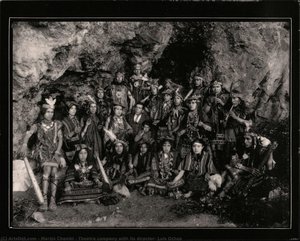
Martín Chambi Jiménez (1891-1973) stands as one of the most important figures in Peruvian photography and a trailblazer for indigenous Latin American visual culture. Born into humble beginnings in Coaza, Peru—a region scarred by colonial exploitation and marked by the enduring presence of Quechua traditions—Chambi’s life was profoundly shaped by circumstance and serendipitous encounters that ultimately propelled him to become a celebrated chronicler of Andean society. His artistic vision wasn't cultivated in formal academies but rather nurtured by an early fascination with photography sparked during his father’s stint in a gold mine, establishing a formative connection with the burgeoning art form. Early Influences: Chambi’s initial exposure to photography came from Max T. Vargas, whose studio in Arequipa provided invaluable apprenticeship experience and instilled foundational photographic skills. Vargas recognized Chambi's innate talent for capturing light and emotion—a skill that would become central to his artistic style. This mentorship proved crucial in shaping Chambi’s understanding of composition and technique, laying the groundwork for his future achievements as a documentary photographer. The Studio of Vargas & Sicuani: Recognizing the potential for professional advancement, Chambi moved to Arequipa and subsequently established his own studio in Sicuani in 1917, marking a pivotal moment in his artistic journey. Situated amidst the vibrant textile industry of Cuzco Province, Chambi’s studio became a hub for documenting Andean life—a mission he pursued with unwavering dedication throughout his career. He meticulously crafted images that captured both the grandeur of Machu Picchu and the everyday realities of rural communities, reflecting a deep respect for indigenous traditions and perspectives. Pioneering Postcards: Chambi's commitment to disseminating Andean culture extended beyond portraiture; he skillfully utilized the emerging medium of postcards to reach a wider audience—a strategy that effectively pioneered this format within Peru. These small prints served as windows into Cuzco’s landscapes and cultural heritage, fostering appreciation for Peruvian identity during an era marked by growing nationalist sentiment. Chambi's photographic vision was distinguished by its humanist empathy and commitment to preserving Andean traditions. Technique & Artistic Style: Chambi’s artistic style was characterized by meticulous technique—primarily albumen printing—which ensured exceptional tonal range and detail in his photographs. He prioritized capturing authentic representations of Andean communities, eschewing staged compositions for candid portraits that revealed the dignity and complexity of indigenous life. His subjects ranged from miners and artisans to religious figures and everyday families, offering invaluable insights into Peruvian culture during the early twentieth century. Chambi’s masterful use of light—a hallmark of his oeuvre—transformed ordinary scenes into evocative narratives, conveying emotion and capturing the essence of Andean experience with remarkable precision. Legacy & Recognition: Chambi's enduring contribution lies in providing a uniquely perceptive perspective on Peruvian history and culture—a testament to the transformative power of artistic observation and dedication. Images like “Indian Varayoc and Family,” “Theatre company with its director, Luis Ochoa” and “Pilgrims at Qoyllurit” exemplify his ability to convey emotion and narrative through carefully framed compositions and masterful tonal control. His photographs continue to inspire artists and scholars alike—serving as a cornerstone of Latin American documentary photography and a symbol of Peru’s rich cultural heritage. Chambi's work was honored internationally, culminating in a MoMA retrospective that cemented his place as a pivotal figure in Latin American photography and artistic history.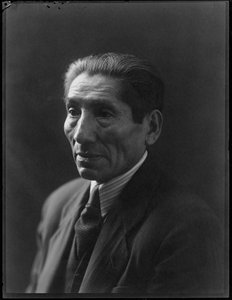
Martín Chambi
1891 - 1973 , Perú
Datos clave
- Artistic Movement Or Style: Documentary photography
- Artists Who Influenced This Artist: ['Max T. Vargas']
- Date Of Birth: November 5, 1891
- Date Of Death: September 13, 1973
- Full Name: Martín Chambi Jiménez
- Nationality: Peruvian
- Notable Artworks:
- Indian Varayoc and Family
- Theatre company with its director, Luis Ochoa
- Pilgrims at Qoyllurit
- Place Of Birth: Coaza, Peru
Artículos relacionados

Monochrome Visions: Exploring the Aesthetic & Historical Significance of Black & White Photography
Explore the rich history & artistic power of black and white photography. From early techniques to iconic masters like Ansel Adams, discover why monochrome continues to captivate art lovers today. Expert insights for collectors.

Beyond the Lens: Photography's Enduring Influence on Modern & Contemporary Art
Explore photography's pivotal role in shaping modern & contemporary art. Discover key movements, influential artists like Stieglitz, and expert collecting advice from ArtsDot.

Pictorialismo: La Búsqueda del Alma de la Fotografía Artística – Estética, Técnicas y Legado
Descubre el Pictorialismo, un movimiento clave en la historia de la fotografía artística. Explora sus técnicas, figuras emblemáticas y su legado perdurable. Guía experta para coleccionistas y amantes del arte.
Witnessing History Through Lens & Light: Documentary Photography's Enduring Legacy
Explore the powerful history of documentary photography – from its origins to contemporary masters like Gordon Parks & W. Eugene Smith. Discover how this art form shapes our understanding of society and witness pivotal moments in time.

Los 10 Maestros de la Fotografía Documental: Obras que Cambiaron el Arte y la Decoración
Descubre los 10 iconos de la fotografía documental que cambiaron el arte. Explora las historias detrás de obras maestras de Dorothea Lange, Robert Capa y más. Reproducciones de alta calidad para decorar tu hogar con arte atemporal en .