 Ver en contexto
 Enviar
 Compartir
 Detalles

 Descargar
 Similares
 Radiografía
 Presentación de diapositivas
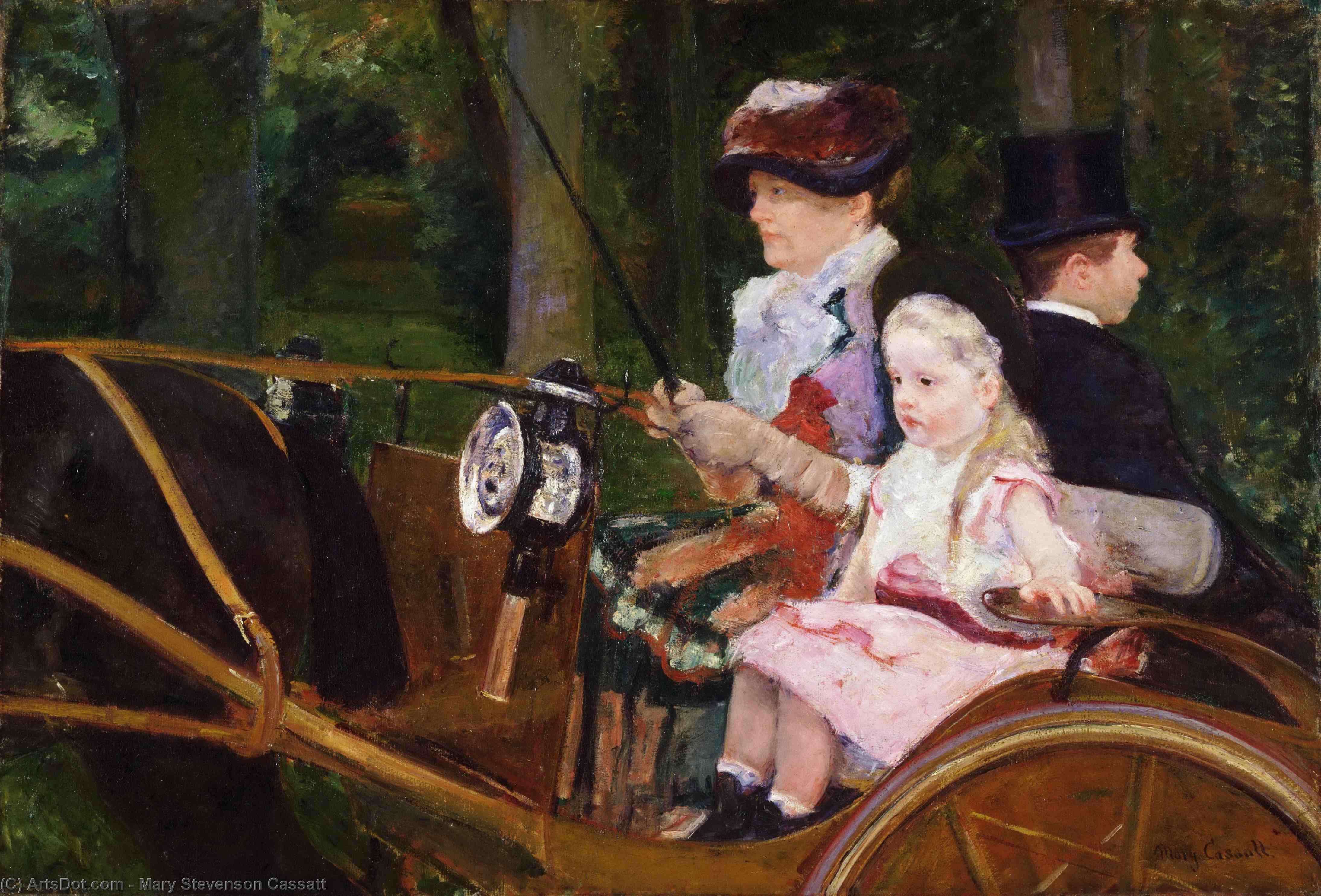
Woman and Child Driving


 Ver más
Reproducción al óleo hecha a mano
Óleo sobre lienzo pintado a mano en el tamaño y marco de su elección, realizado por encargo por nuestros artistas. ( Comprar impresión Comprar imagen)




P118B $10

P118H $10

P118W $10

P438Z $10

P508JH $12

P508YH $12

P805H $10

P805Z $10

P919BZ $10

P919G $10

P919XJ $10

P959ZH $10

P968JZ $12

W106C $8

W218G $10

W218JH $8

W218Y $10

W307PJ $10

W316G $10

W316PJ $8

W316Y $10

W398PJ $8

W4111J $10

W500HY $15

W500JH $15

W692G $12

W849H $8

W940BG $15

W953PJ $8




Elija entre nuestros tamaños predefinidos que respetan las proporciones originales de la obra.

Puede ingresar sus propias dimensiones para adaptarse a un marco o espacio específico. Si el tamaño seleccionado no coincide con las proporciones de la imagen original, recortaremos la obra o extenderemos la pintura con elementos adicionales pintados a mano. Se le enviará una maqueta digital para su aprobación antes de comenzar la producción.
Tenga en cuenta que la vista previa en pantalla no refleja el recorte o la extensión reales. Solo la maqueta mostrará con precisión la composición final.
Si bien existen tamaños personalizados, recomendamos seleccionar una dimensión de la lista predefinida para preservar las proporciones originales.
Tras realizar el pedido, el equipo de ArtsDot.com enviará un correo electrónico al cliente para solicitar instrucciones y proporcionarle una vista previa del boceto.
Envío a todo el mundo () en 3-4 semanas en lugar de las 5 semanas estándar. (24 agosto). Sin comprometer la calidad.

Envío exprés gratuito a todo el mundo

Lienzo de lino de alta calidad

Seguro de envío total

Garantía de reembolso de impuestos aduaneros

Garantía de fidelidad cromática exacta

Política de devolución de 60 días (solo por defectos)

Garantía de devolución del 100% del dinero

Descuento por cantidad
 La opción de vidrio solo está disponible en tamaños inferiores a 110 cm.

Woman and Child Driving
Técnica de reproducción
Dimensiones de la reproducción
-


Precio total final
$ 263
Descripción de la obra
A Moment Frozen in Time: Mary Cassatt’s “Woman and Child Driving”
Mary Stevenson Cassatt's "Woman and Child Driving," painted in 1881, isn’t merely a depiction of a horse-drawn carriage; it’s a carefully constructed tableau of domesticity, burgeoning female autonomy, and the quiet intimacy of family life. Captured during her pivotal years in Paris, this Impressionist masterpiece offers a glimpse into the evolving social landscape of late 19th-century France, where traditional roles were being subtly challenged and women began to assert their presence beyond the confines of the home.
The scene unfolds within the Bois de Boulogne, a sprawling expanse of woodland just outside Paris – a popular destination for leisurely outings among the city’s elite. Cassatt masterfully captures the dappled sunlight filtering through the trees, lending an ethereal quality to the composition. The muted palette—primarily soft blues, greens, and browns—evokes a sense of tranquility and understated elegance, characteristic of the Impressionist movement's focus on capturing fleeting moments and atmospheric effects rather than precise detail.
The Composition: Asymmetry and Narrative
What immediately draws the eye is Cassatt’s deliberate use of asymmetry. The woman, Lydia Cassatt, the artist’s sister, confidently steers the carriage, her hand firmly gripping the reins – a gesture that powerfully subverts traditional gender roles. Her gaze is directed forward, focused on the road ahead, suggesting agency and control. In contrast, the young girl seated beside her appears somewhat passive, gazing out at the passing scenery with an air of quiet contemplation. The groom, Mathieu, stands slightly apart, his posture conveying a sense of detached observation.
The cropped composition—a hallmark of Cassatt’s style—creates a feeling of immediacy and intimacy, as if we are privy to a private moment within the family's routine. The figures are rendered with loose brushstrokes, typical of Impressionism, emphasizing the play of light and shadow rather than sharp outlines or detailed representations. This technique contributes to the painting’s overall sense of movement and spontaneity.
Symbolism and Social Context
“Woman and Child Driving” is more than just a snapshot of a family outing; it's laden with symbolic meaning. The carriage itself represents status and privilege, reflecting the Cassatt family’s comfortable position within Parisian society. The fact that Lydia is driving—a role typically reserved for men—is a deliberate statement about shifting gender dynamics. It speaks to the growing number of women who were gaining access to education, travel, and professional opportunities, challenging Victorian ideals of female subservience.
Furthermore, the painting reflects the broader social context of the time – the rise of the “New Woman,” an independent and educated woman who was beginning to assert her presence in public life. Cassatt’s work aligns with this movement by portraying women as active participants in society, rather than simply decorative figures within the domestic sphere.
Emotional Resonance: A Quiet Moment of Connection
Despite its subtle complexities, “Woman and Child Driving” evokes a powerful sense of warmth and connection. The painting captures a fleeting moment of shared experience—a simple pleasure enjoyed by family members. The quiet intimacy between Lydia and her child, the gentle sway of the carriage, and the dappled sunlight all contribute to an atmosphere of serenity and contentment.
It’s a reminder that even in the midst of rapid social change, moments of domestic tranquility could still provide solace and connection. “Woman and Child Driving” remains a poignant testament to the enduring power of family bonds and the evolving role of women in shaping their own destinies – a timeless image rendered with Cassatt's signature Impressionistic grace.
Obras relacionadas
Biografía del artista
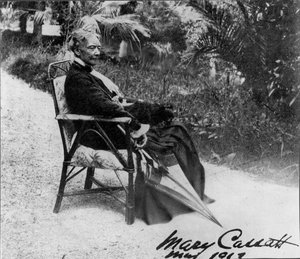
Mary Stevenson Cassatt: Una Vida Dedicada al Impresionismo y la Domesticidad
- Nacimiento: 22 de mayo de 1844, Allegheny City (ahora parte de Pittsburgh), Pensilvania, EE. UU.
- Fallecimiento: 14 de junio de 1926, Château de Berneval, Francia
Mary Stevenson Cassatt fue una pintora y grabadora estadounidense fundamental que pasó la mayor parte de su carrera en Francia. Nacida en una familia rica y culturalmente progresista de ascendencia hugonote francesa, recibió una educación que fomentó tanto la ambición artística como los viajes internacionales; experiencias que moldearon profundamente su desarrollo artístico. Su madre, Katherine Kelso Johnston, jugó un papel importante al animar el interés temprano de Cassatt por el arte.
Formación Temprana e Inmersión en París
- Estudios Iniciales: Cassatt comenzó a estudiar pintura en la Academia de Bellas Artes de Pensilvania en Filadelfia a los quince años. A pesar de enfrentar escepticismo por parte de instructores y estudiantes masculinos, perseveró durante varios años de estudio durante la Guerra Civil Americana (1861-1865).
- Traslado a París (1866): Un momento crucial llegó cuando Cassatt se mudó a París en 1866. Estudió privadamente con artistas destacados de la École des Beaux-Arts, incluido Jean-Léon Gérôme. Esta inmersión en los círculos artísticos parisinos la llevó hacia el floreciente movimiento impresionista.
- Asociación con Degas: Se formó una relación crucial con Edgar Degas, quien reconoció su talento y la invitó a exponer con los impresionistas. Su colaboración se extendió más allá de las exposiciones; Degas la animó a experimentar con técnicas de grabado, particularmente el aguafuerte en color.
Estilo Artístico y Temas: Capturando la Vida Femenina Moderna
- Técnicas Impresionistas: El estilo de Cassatt evolucionó para abrazar los rasgos característicos del impresionismo: pinceladas visibles, énfasis en la luz y el color, y un enfoque en capturar momentos fugaces. Sin embargo, su trabajo conservaba una claridad y precisión distintas que lo diferenciaban de algunos de sus contemporáneos.
- Enfoque en la Vida Doméstica: A diferencia de muchos impresionistas masculinos que representaban la vida nocturna parisina o paisajes, Cassatt centró su arte en la vida social y privada de las mujeres, particularmente madres e hijos. Representó escenas domésticas con una intimidad y profundidad psicológica notables.
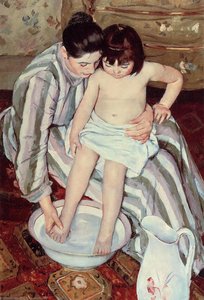
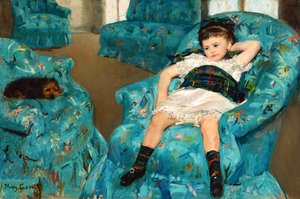
- Obras Notables: Obras clave que ilustran su estilo incluyen El Partido de Remeros (1894), El Baño del Niño (varias versiones), La Niña en el Sillón Azul, y la serie de grabados que representan a madres e hijos.
- Influencia del Japonismo: Cassatt estuvo profundamente influenciada por el arte japonés, particularmente las estampas *ukiyo-e*. Esta influencia es evidente en sus composiciones, uso de la perspectiva aplanada y elecciones audaces de color.
Legado y Significado Histórico
- "Una de las Tres Grandes Damas": Cassatt se reconoce a menudo como una de las "tres grandes damas" del impresionismo junto con Berthe Morisot y Marie Bracquemond.
- Impresionismo Americano: Jugó un papel vital en la conexión entre el arte estadounidense y europeo, introduciendo ideas impresionistas ante un público americano y contribuyendo significativamente al desarrollo del impresionismo americano.
- Representación de las Mujeres: El trabajo de Cassatt ofreció una representación matizada y simpática de la vida de las mujeres durante un período en el que a menudo eran marginadas o estereotipadas en el arte. Sus representaciones de la maternidad son particularmente celebradas por su honestidad y profundidad emocional.
- Presencia en Museos: Sus obras se encuentran en museos prestigiosos de todo el mundo, incluido el Art Institute of Chicago (El Baño del Niño), la National Portrait Gallery en Londres (retrato de Degas) y muchos otros.
Mayor Exploración
Mary Stevenson Cassatt
1843 - 1926 , Estados Unidos de América
Datos clave
- Artistas Influenciados: ['Henri-Edmond Cross']
- Artistas Que Influyeron: ['Jean-Léon Gérôme']
- Fecha De Nacimiento: 22 de mayo de 1844
- Lugar De Nacimiento: Allegheny City, EE. UU.
- Movimiento Artístico: Impresionismo
- Nacionalidad: Estadounidense
- Nombre Completo: Mary Stevenson Cassatt
- Obras Notables:
- The Boating Party
- El baño del niño
- Madre e hijo
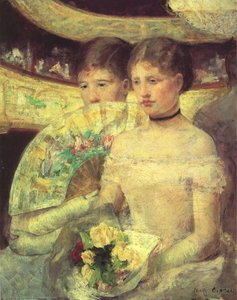
- La loge
- Niña en un sillón azul
Artículos relacionados
Los 10 Maestros del Impresionismo: Obras que Revolucionaron el Arte y la Decoración
Descubre los 10 cuadros más emblemáticos del Impresionismo con Monet, Renoir y Degas. Explora la historia, técnica y belleza de estas obras maestras. Reproducciones de arte en para decorar tu hogar con estilo.
Mary Cassatt: Modernity, Motherhood & the Impressionist Gaze – A Timeless Legacy
Explore the life & art of Mary Cassatt, a pivotal American Impressionist renowned for intimate portrayals of women & children. Discover her unique style, legacy, and groundbreaking techniques at ArtsDot.
Los 10 Maestros Impresionistas que Revolucionaron el Arte | ArtsDot
Descubre los 10 cuadros impresionistas más influyentes de Monet, Renoir y Degas. Explora la historia, técnica y belleza de este movimiento artístico. Reproducciones de arte en ArtsDot.com para decorar tu hogar con estilo.
Frederick Childe Hassam: American Impressionism's Chronicler of Light & Modern Life
Explore the captivating world of Frederick Childe Hassam, a pioneer of American Impressionism. Discover his iconic paintings capturing light, urban life & coastal beauty. Learn about his legacy and influence on American art history.

Paul Cézanne: Las 25 Obras Maestras que Definieron el Arte Moderno | ArtsDot
Descubre las 25 obras maestras de Paul Cézanne que revolucionaron el arte moderno. Explora su técnica, inspiración y significado en paisajes, bodegones y retratos. Reproducciones de alta calidad para decorar tu hogar con arte inolvidable. ¡Explora la colección completa en ArtsDot.com!