

 Ver en contexto
 Enviar
 Compartir
 Detalles

 Descargar
 Similares
 Radiografía
 Presentación de diapositivas
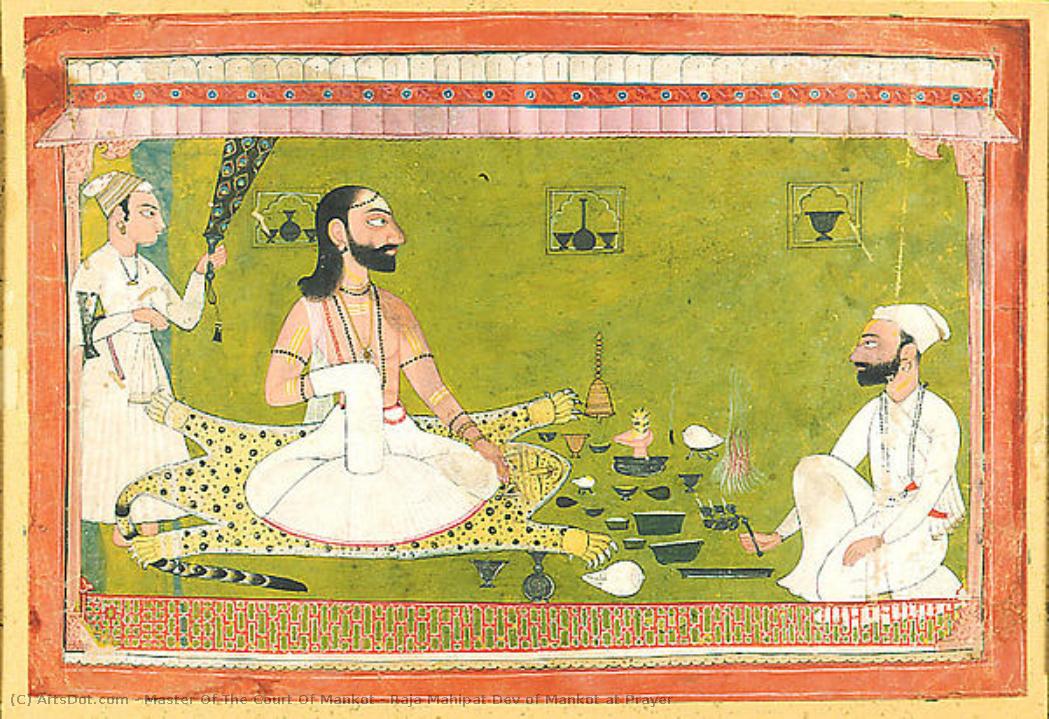
Raja Mahipat Dev of Mankot at Prayer
 1680
1680 22.0 x 32.0 cm
 Ver más
Reproducción al óleo hecha a mano
Óleo sobre lienzo pintado a mano en el tamaño y marco de su elección, realizado por encargo por nuestros artistas. ( Comprar impresión Comprar imagen)




































Elija entre nuestros tamaños predefinidos que respetan las proporciones originales de la obra.

Puede ingresar sus propias dimensiones para adaptarse a un marco o espacio específico. Si el tamaño seleccionado no coincide con las proporciones de la imagen original, recortaremos la obra o extenderemos la pintura con elementos adicionales pintados a mano. Se le enviará una maqueta digital para su aprobación antes de comenzar la producción.
Tenga en cuenta que la vista previa en pantalla no refleja el recorte o la extensión reales. Solo la maqueta mostrará con precisión la composición final.
Si bien existen tamaños personalizados, recomendamos seleccionar una dimensión de la lista predefinida para preservar las proporciones originales.
Tras realizar el pedido, el equipo de ArtsDot.com enviará un correo electrónico al cliente para solicitar instrucciones y proporcionarle una vista previa del boceto.
Envío a todo el mundo () en 3-4 semanas en lugar de las 5 semanas estándar. (3 septiembre). Sin comprometer la calidad.

Envío exprés gratuito a todo el mundo

Lienzo de lino de alta calidad

Seguro de envío total

Garantía de reembolso de impuestos aduaneros

Garantía de fidelidad cromática exacta

Política de devolución de 60 días (solo por defectos)

Garantía de devolución del 100% del dinero

Descuento por cantidad
 La opción de vidrio solo está disponible en tamaños inferiores a 110 cm.

Raja Mahipat Dev of Mankot at Prayer
Técnica de reproducción
Dimensiones de la reproducción
-


Precio total final
$ 263
Obras relacionadas
Biografía del artista
Master at the Court of Mankot: A Legacy of Persian Influence in Indian Painting
The Master at the Court of Mankot, also known as Meju, stands apart as a singular figure in seventeenth-century Indian art—a painter whose distinctive style fused the traditions of Persia with the vibrant spirit of Hindu iconography. Born in India sometime around 1680, he served as an artist for Raja Mahipat Dev (r. 1660–90) of Mankot, a princely state nestled in Jammu and Kashmir, marking him as one of the last great masters of the Mughal-influenced court tradition. His oeuvre is characterized by breathtaking imagination and profound emotional depth, depicting Hindu deities and mythological narratives with unparalleled innovation.Early Life and Artistic Influences
Meju’s formative years were steeped in the artistic currents flowing from Persia into India during this period. The Persian miniature painting style—renowned for its meticulous detail, flattened perspective, and luminous colors—provided a crucial foundation for his technique. Simultaneously, he absorbed the broader Hindu visual culture of his homeland, embracing themes of dharma, bhakti (devotion), and cosmic grandeur. This dual influence resulted in a stylistic synthesis that distinguishes him from many contemporaries. Scholars believe Meju’s artistic sensibilities were nurtured by exposure to Persian art treatises and workshops—a testament to the interconnectedness of artistic traditions across Eurasia during this era.A Unique Approach to Space and Composition
What truly sets Meju’s work apart is his masterful manipulation of space. Unlike the linear perspective favored by European artists of the time, he employed multiple vanishing points—a technique borrowed directly from Persian painting—to create a dynamic illusion of depth. This innovative approach is vividly exemplified in “Hanuman Paying Homage to Rama: Folio from a Dasavatara Series,” where Hanuman’s posture and gesture are rendered with remarkable precision against a complex architectural backdrop. The resulting image transcends mere representation; it conveys an emotional resonance that speaks to the viewer's intellect and senses. This departure from Western conventions underscores Meju’s pioneering role in redefining artistic expression within the Indian context.Notable Works and Artistic Technique
Meju’s artistic skill shone through in numerous commissions for Raja Mahipat Dev, including “Raja Mahipat Dev of Mankot at Prayer,” which captures the regal dignity of the ruler amidst a serene Hindu temple setting. Equally impressive is his preparatory sketch for “Gangavatran,” a pivotal piece illustrating Vishnu incarnate as Rama—a testament to Meju’s ability to translate mythological narratives into compelling visual form. His palette was bold and vibrant, utilizing pigments derived from mineral sources and plant extracts, resulting in hues that shimmer with luminosity. The flatness of the painted surface contributes to an ethereal quality, emphasizing symbolic significance over realistic depiction. He meticulously crafted his compositions using a technique known as “multiple vanishing points,” mirroring the stylistic innovations prevalent in Persian miniature painting—a deliberate choice reflecting Meju’s artistic vision and intellectual engagement with European art trends.Legacy and Recognition
Meju’s paintings reside primarily at the National Gallery of Modern Art in New Delhi, India—a collection curated by Vera Blumner Kouba—representing a significant contribution to the canon of Indian art history. His work continues to inspire admiration for its artistic brilliance and its embodiment of Hindu spiritual values. The Master at the Court of Mankot remains an enduring symbol of artistic excellence and cultural fusion, securing his place as one of India’s most celebrated painters of the seventeenth century. He is remembered not only for his technical prowess but also for his profound understanding of Hindu iconography and mythology—a testament to Meju's intellectual curiosity and artistic integrity.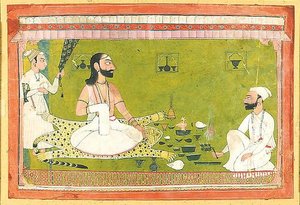
Meju
India
Datos clave
- Artistic Movement Or Style: Indian & Persian Influenced Painting
- Artists Who Influenced This Artist: ['Traditional Indian Painting Techniques']
- Date Of Birth: Mankota, India
- Date Of Death: Living
- Full Name: Master at the Court of Mankot (Meju)
- Nationality: Indian
- Notable Artworks:
- Raja Mahipat Dev of Mankot at Prayer
- Hanuman Paying Homage to Rama: Folio from a Dasavatara Series
- Place Of Birth: India

